6.7 Cummins Manual Regen Switch Location And Dpf Initiation Guide

When your 6.7 Cummins displays an “Exhaust Filter Full” warning, the search for a manual regeneration switch becomes an urgent priority to avoid costly limp mode scenarios. For many owners, this is the moment they realize that finding the physical button isn’t always as straightforward as checking the owner’s manual. Many Ram owners struggle to locate a physical manual regen switch because its placement varies significantly by model year, trim level, and vehicle configuration. This guide will pinpoint exactly where to find the manual regen switch, how to use digital menus to initiate a burn, and the step-by-step safety protocols required to maintain your DPF system effectively.


Section 1: Identifying the 6.7 Cummins Manual Regen Switch Location and Vehicle Configuration
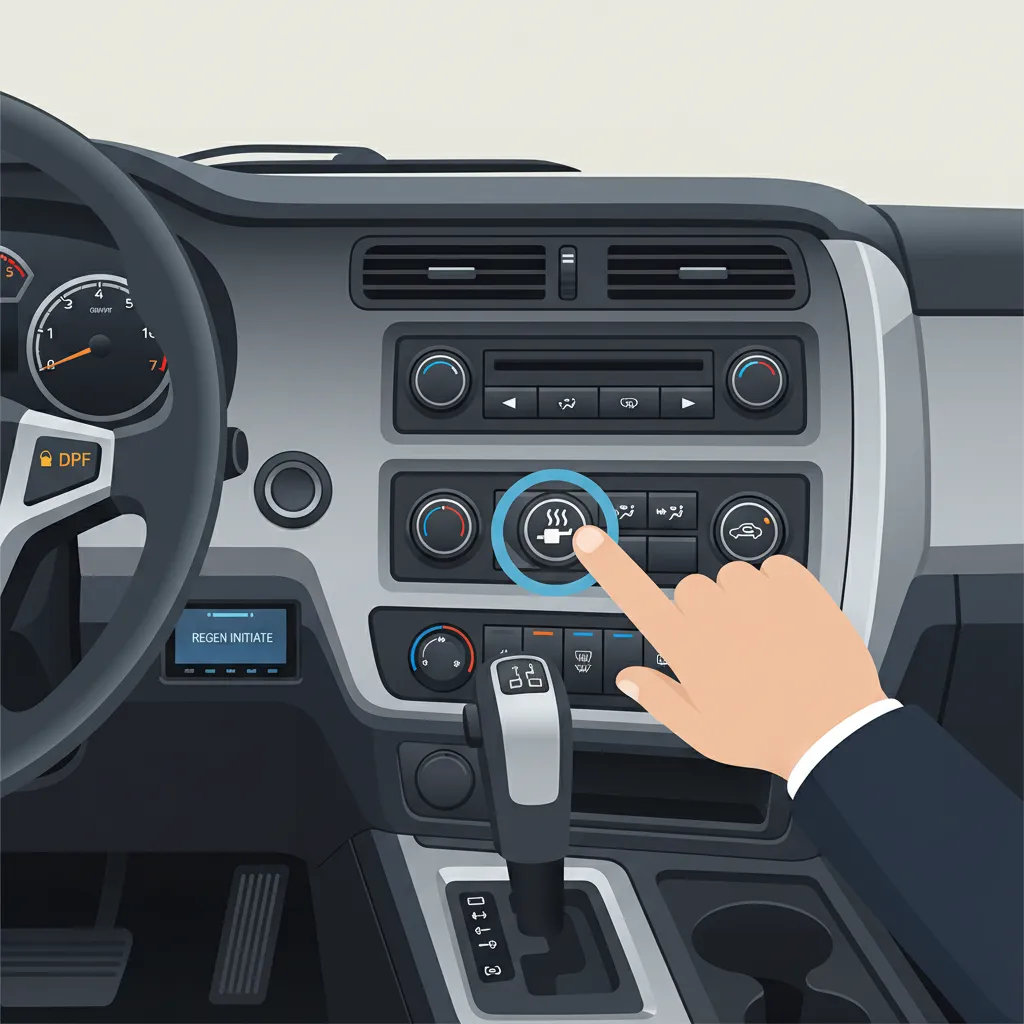
The presence of a physical manual regeneration switch is one of the most misunderstood features of the 6.7L Cummins-powered Ram trucks. In my 15 years of industry experience, the most common call I receive from fleet managers involves a driver unable to find a button that may not even exist in their specific cab. There is a distinct line between Chassis Cab models and standard Ram 2500/3500 pickups regarding factory-installed switches. Chassis Cabs are designed for vocational use—often idling at jobsites for hours—and thus frequently come equipped with a dedicated “DPF Regen” or “Manual Regen” switch.
If your vehicle is equipped with one, the switch is typically located on the lower center stack or within the auxiliary switch bank, often nearby the trailer brake controller. You are looking for a symbol that depicts an exhaust pipe icon with heat waves rising from it, usually accompanied by the text “REGEN.” For example, a 2019 Ram 4500 Chassis Cab with the “Mobile Power Outlet” and “Auxiliary” package will almost certainly have this button ready for use. Conversely, a 2022 Ram 2500 Laramie, designed as a premium consumer vehicle, lacks this physical button, relying instead on digital prompts within the high-definition Ram specs menu system.
Research indicates that DPF replacement costs typically range between $1,500 and $5,000, making the identification of your regeneration method a critical maintenance step. For vehicles serving the local community in stop-and-go delivery roles, aftermarket switch installations are an accessible and convenient solution to ensure the DPF is cleared before a “limp mode” event occurs.

Section 2: Initiating Manual Regeneration via the Vehicle Information Display (VID)
If your 6.7 Cummins does not have a physical switch, don’t panic. Modern Ram trucks utilize the Electronic Vehicle Information Center (EVIC) to manage exhaust health. Accessing this requires navigating the digital dashboard using the directional pads on your steering wheel. You must navigate to the “Vehicle Info” menu group and scroll until you find the “Exhaust Filter Status” screen.
There is a significant difference in software versions between older 4th Gen Ram trucks and the newer 5th Gen high-definition displays. In newer models, if the soot level reaches a specific threshold (usually 80% or higher), the display will show an “OK to Regen” prompt. This prompt is only available when certain safety conditions are met, such as the vehicle being in “Park.” According to the official guide, a clogged DPF can reduce fuel economy by up to 10% due to increased exhaust backpressure, making it vital to trigger this burn as soon as the option appears.
If your truck lacks the menu option for manual regeneration (common in certain older consumer trims), using a trusted local diesel tuning device or an OBDII monitor like the Edge Insight can provide a “forced regen” capability that the factory software hides.
In a typical scenario, a driver might be navigating through the “Settings” menu while parked at a rest stop to clear a “Filter 80% Full” message. By following the prompts and holding the “OK” button, the engine’s ECM will take over, ramping up the idle to begin the thermal oxidation process. Failure to act on these digital prompts is the primary cause of DPF-related engine derating.


Section 3: Step-by-Step Procedure for Performing a Stationary Manual Regeneration
Performing a stationary manual regeneration (often called a “Parked Regen”) is a high-heat event that requires strict adherence to safety protocols. During this process, exhaust gas temperatures (EGTs) can exceed 1,100°F. This is not the time to be parked over dry grass or near flammable materials. Ensure the vehicle is on a non-combustible surface like concrete or gravel in a well-ventilated area.
📋
Stationary Regen Protocol
Ensure the fuel level is above 1/4 tank and the engine is at operating temperature (minimum 180°F). The ECM will often block regeneration if the engine is cold.
Place the transmission in ‘Park’ (automatic) or ‘Neutral’ (manual) and engage the parking brake. Ensure no pedals are depressed.
Activate the switch or menu command. The RPMs will increase to 1,100–1,500. The process typically takes 20-40 minutes. Do not interrupt the cycle unless there is an emergency.
Once the cycle completes, the engine RPM will return to a normal idle. It is vital to perform a post-regen inspection. Check for abnormal odors or persistent “Service Exhaust System” messages. If you are parked nearby dry brush or debris, move the vehicle immediately after the cycle to allow the exhaust components to cool down in a safer area. I have seen several avoidable fires caused by operators initiating a burn in tall summer grass—always prioritize your surroundings.
Section 4: When and Why to Use the Manual Regen Switch: Preventing Clogged DPFs
Understanding the why behind manual regeneration is just as important as knowing the how. Passive regeneration occurs naturally during sustained highway driving when the exhaust gets hot enough to burn off soot without extra fuel injection. However, research shows that 40% of urban drivers fail to achieve the 20-30 minutes of sustained highway speeds required for passive cleaning. This is particularly problematic for vehicles serving the local community in stop-and-go environments.
Combat Excessive Idling
Stationary burns counteract the rapid soot accumulation caused by long idle times at jobsites.
Rescue from Limp Mode
Using the switch early prevents the “Service Exhaust” light from locking the truck into a derated power state.
Early warning signs like “Exhaust Filter Nearly Full” should never be ignored. At this stage, the manual switch serves as a “rescue” tool. Furthermore, the health of your DPF is heavily influenced by the quality of the diesel exhaust fluid (DEF) and engine oil you use. Always use oil specifically formulated for DPF-equipped engines, which is readily available at most convenient fueling stations. Incorrect oil contains ash-forming additives that can permanently plug the filter, rendering manual regeneration useless.
Section 5: Troubleshooting Failed Regeneration and Seeking Professional Diesel Service
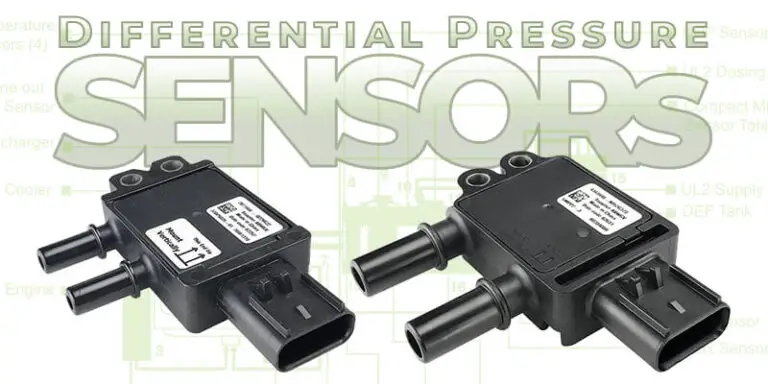
Sometimes, despite your best efforts, the manual regeneration will not start. You might see a “Regen Inhibited” message on the dash. This typically points to a sensor failure—either an EGT sensor, a DPF pressure sensor, or an engine coolant temperature sensor—providing the ECM with faulty data. If the soot load exceeds 100%, the vehicle’s computer will often block all regeneration attempts as a fire safety measure, assuming the filter is too restricted to safely handle the heat.
By The Numbers
Potential Fuel Economy Loss
Flow Restored by Pro Cleaning
Max DPF Replacement Cost
When this happens, you must locate a trusted local specialized diesel technician who can perform a “Forced Regen” using a professional-grade diagnostic tool like a Snap-On or Autel scanner. For more complex issues, consulting expert tips from Cummins can help identify if the problem lies within the turbocharger’s variable geometry mechanism, which also plays a role in generating heat for the DPF.
If your truck enters a derated state (limp mode), do not attempt to continue driving long distances. This can cause permanent structural damage to the DPF substrate, turning a $500 cleaning job into a $5,000 replacement.
Professional DPF cleaning services are an excellent alternative to total replacement for high-mileage trucks. These shops use pneumatic cleaning and thermal ovens to restore a filter to nearly 95% of its original flow capacity for a fraction of the cost of a new unit. There are many community resources and local shops serving Ram owners with specialized Cummins diagnostic equipment—finding one nearby is your best defense against catastrophic exhaust failure.
In summary, the manual regen switch location depends on whether you drive a Chassis Cab or a standard pickup. Stationary regeneration is a critical tool for drivers who idle frequently or drive short distances. Ignoring DPF warnings can lead to fuel economy losses and multi-thousand dollar repair bills. If your 6.7 Cummins is unable to complete a regeneration cycle or remains in a derated state, contact a certified diesel specialist nearby to perform a forced diagnostic regeneration today.
Frequently Asked Questions
Where is the manual regen switch located on my 6.7 Cummins?
If your vehicle is equipped with one, the switch is usually located on the lower dashboard or center console auxiliary bank. On most Ram Chassis Cab models, it is a physical button with an exhaust icon. On standard Ram 2500/3500 pickups, the ‘switch’ is often a digital option found within the ‘Exhaust Filter’ menu of the instrument cluster display.
How do I initiate a manual DPF regeneration on my Ram truck?
To initiate a manual regeneration, ensure the engine is at operating temperature and parked in a safe, open area. Navigate to the ‘Vehicle Info’ menu on your dashboard, scroll to the ‘Exhaust Filter’ status, and if the soot level is high enough, follow the prompt to ‘Press OK to Regen.’ You must remain in ‘Park’ with the parking brake engaged for the duration.
Why is my DPF light on even after highway driving?
If the DPF light persists, your soot load may have reached a level where passive regeneration is no longer sufficient. This often happens due to a faulty EGT sensor, a leaking EGR valve, or a DPF that has reached the end of its service life. A manual or ‘forced’ regeneration via a scan tool may be required to clear the message.
How often should I perform a manual DPF regeneration?
Manual regeneration should only be performed when the vehicle prompts you or when the ‘Soot Load’ indicator exceeds 70-80% and you are unable to drive at highway speeds. For most drivers, the truck handles this automatically. However, those who idle for long periods may need to use the manual switch every few weeks to prevent clogging.
What happens if I ignore the DPF regeneration requests?
Ignoring DPF prompts will eventually cause the Engine Control Module (ECM) to put the truck into ‘Limp Mode,’ which significantly reduces engine power and speed. If soot continues to accumulate, the DPF can become ‘cracked’ or ‘melted,’ necessitating a full replacement costing upwards of $5,000, as the filter can no longer be cleaned.

![2016 Ram 2500 Turbo Actuator: Guide to Costs: Complete Guide [2026]](https://truckguider.com/wp-content/uploads/2026/03/2016-ram-2500-turbo-actuator-featured.webp)