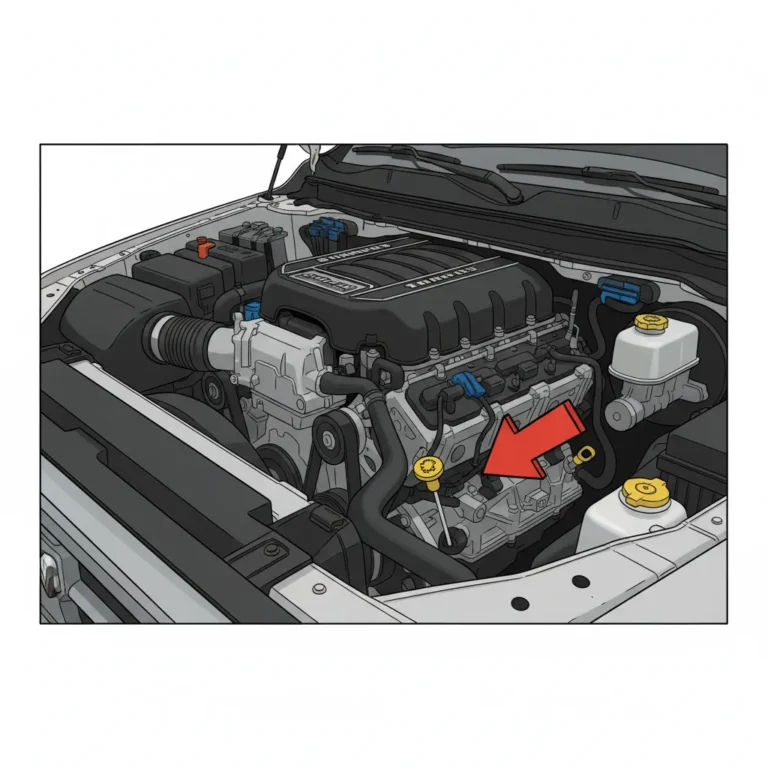
6.7 Cummins Particulate Matter Sensor Location And Replacement Guide For Ram Owners

For 6.7 Cummins owners, the ‘Check Engine’ light is often the start of a frustrating hunt through the complex maze of the diesel aftertreatment system. When your truck throws an exhaust-related code, finding the exact 6.7 Cummins particulate matter sensor location is the first step toward avoiding a costly ‘limp mode’ or a failed emissions test. This guide provides the specific location of the PM sensor across various model years, explains its critical function, and helps you decide whether to tackle the replacement yourself or seek help from a local community specialist.

Understanding the Role of the PM Sensor in the 6.7 Cummins Aftertreatment System
Recommended Best Deal Products

The Particulate Matter (PM) sensor, frequently referred to within the industry as the “soot sensor,” is a vital component of the modern 6.7 Cummins engine’s Selective Catalytic Reduction (SCR) and Diesel Particulate Filter (DPF) systems. While many owners focus on the NOx sensors, the PM sensor serves as the final auditor of the filtration process. Its primary responsibility is to monitor the efficiency of the DPF by measuring the actual concentration of soot particles exiting the tailpipe. This ensures that the engine meets stringent environmental standards and that the filtration system hasn’t suffered internal damage, such as a cracked ceramic substrate.
Functionally, the sensor is an engineering marvel that uses a heating element and a series of interleaved electrodes. As exhaust gases pass over the sensor, soot particles accumulate on the sensor element, creating a bridge between the electrodes. This changes the electrical resistance, which the sensor’s dedicated control module calculates and transmits to the Engine Control Module (ECM). Maintaining a functional PM sensor is essential for the truck’s regeneration cycle. An inaccurate reading can lead to unnecessary, frequent active regenerations—which waste fuel—or, worse, a soot-clogged filter that the ECM believes is clean, eventually forcing the truck into a restricted “limp mode.”
In my 15 years of diesel service, I’ve observed that many drivers confuse “passive regeneration” with “active regeneration.” Passive regeneration occurs naturally during highway speeds when exhaust temperatures are high enough to burn off soot. However, when the PM sensor detects levels exceeding a specific threshold, the ECM initiates an active regeneration by injecting fuel into the exhaust stream. According to expert tips from industry leaders and EPA Diesel Emissions Reduction Program reports, a properly functioning PM sensor is a cornerstone in reducing particulate matter emissions by up to 90% in modern diesel engines. Without it, the delicate balance of the SCR system fails, leading to increased environmental impact and decreased engine longevity.
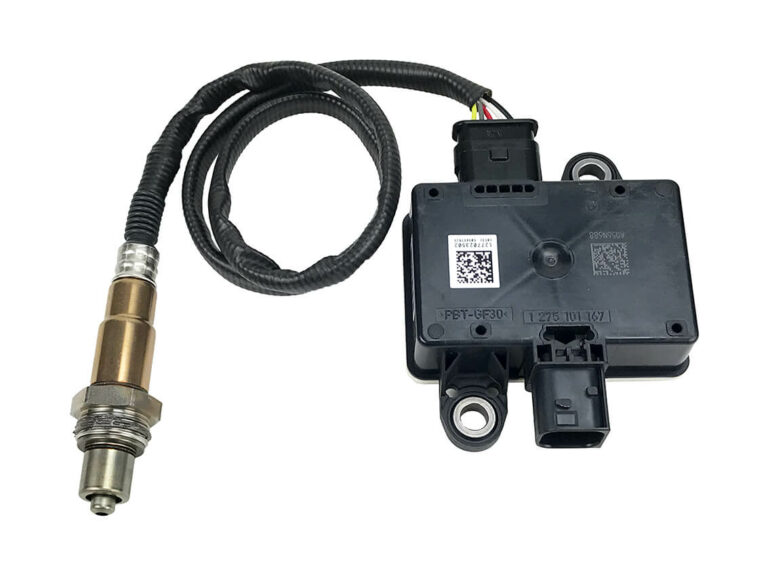
Identifying the 6.7 Cummins Particulate Matter Sensor Location by Model Year
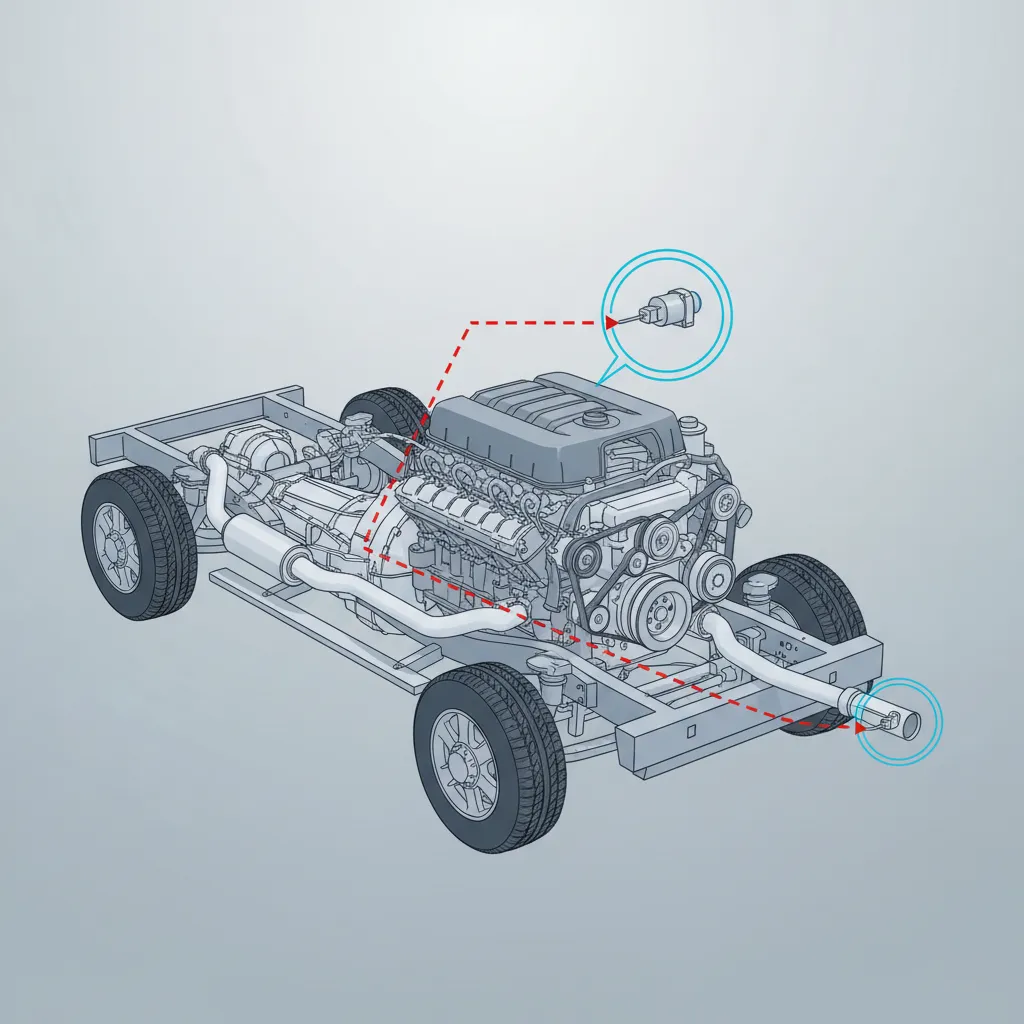
Finding the sensor can be challenging because it is tucked away underneath the chassis, often obscured by heat shields or the frame rail. For the majority of 2013-2018 Ram 2500 and 3500 models, the PM sensor is located downstream of the SCR catalyst and DPF. If you are lying under the truck, follow the exhaust pipe from the large DPF canister toward the rear bumper. You will typically find the PM sensor threaded into the exhaust pipe just before it reaches the resonator or the tailpipe exit. It is usually the last sensor in the exhaust stream before the gas reaches the atmosphere.
For newer 2019+ models, the location remains in the post-catalyst stream, but the packaging has become tighter. Ram engineers revised the wiring harness path, often requiring technicians to access the PM sensor control module—a small metal box—mounted directly to the frame rail near the passenger side. The sensor itself consists of two distinct parts: the ceramic probe threaded into the exhaust and the module that processes the data. This dual-component design is intended to protect the sensitive electronics from the extreme heat of the exhaust pipe, though it creates more potential points for harness failure or corrosion.
📋
Visual Walk-Through: Finding Your Sensor
Recommended Best Deal Products

Slide under the passenger side of the truck. Find the largest cylindrical component in the exhaust system—this is your Diesel Particulate Filter.
Move your eyes toward the rear of the truck. Look past the NOx sensor (which is closer to the DPF) until you see a sensor with a thick, heat-shielded wire.

Audible — Listen Free for 30 Days
One free credit a month and thousands of titles included.
Listen Free for 30 DaysFollow that wire to where it connects to a small metal “brain box” bolted to the frame. This unit is the PM sensor control module.
In industrial or non-Ram 6.7 Cummins applications, such as those found in medium-duty trucks or buses, the sensor location can vary significantly due to different exhaust routing. However, the engineering rule remains the same: the sensor is always placed “downstream” of the filtration units. This ensures it is measuring exactly what the filter failed to catch. It is one of four primary sensors in the 2013+ exhaust stream, working alongside NOx sensors and Exhaust Gas Temperature (EGT) probes to provide a full picture of engine health.
Symptoms of a Faulty PM Sensor and Diagnostic Troubleshooting
Recognizing the early warning signs of PM sensor failure can save you from being stranded on the side of the road. Most modern Ram trucks will notify the driver via the Electronic Vehicle Information Center (EVIC) with a “Service Exhaust System” or “See Dealer” message. However, the most definitive way to identify a failure is through Diagnostic Trouble Codes (DTCs). The most common codes associated with this component include P24C6 (PM Sensor Particulate Matter Sensor Temperature Circuit) and P24C7 (PM Sensor Temperature Circuit Range/Performance).
When a PM sensor fails, it often defaults to a “rich” safety margin. Because the ECM can no longer trust the data regarding soot output, it assumes the worst-case scenario. This typically results in a noticeable drop in fuel economy and significantly more frequent DPF regeneration cycles. I once consulted for a fleet owner whose trucks were regenerating every 150 miles; the culprit was a faulty PM sensor that was “soot-blinded” due to internal circuit degradation. If ignored, these codes will eventually trigger a derate condition, limiting the truck’s speed to 5 MPH until the system is serviced by a trusted local technician.
By The Numbers
Emissions Reduction
DPF-Related Issues
Average Repair Cost
Research and surveys of diesel mechanics indicate that PM sensor failure accounts for approximately 15% of all DPF-related issues in 6.7 Cummins engines. The primary causes are environmental: road salt and moisture can corrode the sensor’s wiring harness, while the extreme vibrations of diesel operation can crack the internal ceramic element. Before replacing the sensor, it is crucial to perform a visual inspection of the harness. Often, a “faulty sensor” is simply a wire that has rubbed through against the frame rail, a common issue in trucks used for heavy towing or off-road work.
The Logistics of Repair: DIY Replacement vs. Professional Service
When it comes to replacement, owners have a choice between a convenient DIY fix or a professional service. The average cost to replace a PM sensor on a 6.7 Cummins, including labor at a shop, typically ranges from $300 to $600. For the DIY enthusiast, the part itself can be sourced for roughly half that amount. However, there are significant hurdles. Replacing the sensor requires a specialized 22mm (7/8″) flared sensor socket to prevent stripping the hex nut, which is often seized due to thousands of heat cycles.
The most critical part of the repair isn’t the physical wrenching; it’s the electronic handshake. After installing a new sensor, you must use a diagnostic scan tool capable of performing a “PM Sensor Regeneration” or a reset of the learned values in the ECM. Without this step, the truck may continue to display fault codes or operate in a sub-optimal state because it is still using the calibration data from the old, failed sensor. This is where professional technicians serving our community provide the most value—they have the high-level equipment required to ensure the repair is complete.
Audible Premium Plus — Annual Membership
12 audiobook credits up front, plus the full Audible catalogue.
See Annual Plans✅ DIY Pros
- Lower overall part cost
- No labor fees ($120+/hr)
- Personal satisfaction
- Flexible schedule
❌ DIY Cons
- Requires specialized 22mm socket
- Seized sensors are hard to remove
- Needs high-end scan tool for reset
- No warranty on labor
When searching for a nearby location to handle this repair, always insist that they use OEM Cummins or Mopar specs components. Aftermarket PM sensors are notorious for having communication issues with the Ram’s high-speed CAN bus, often leading to “U-codes” or intermittent data loss. A professional shop will also verify that the sensor failure wasn’t caused by a more serious upstream issue, such as a leaking fuel injector that is “over-sooting” the exhaust, which would quickly destroy a brand-new sensor.
Preventative Maintenance Tips for Maximizing Sensor Longevity
While sensors are technically “wear items,” you can significantly extend their lifespan through proactive maintenance. One of the most overlooked factors is the type of engine oil used. You must use a high-quality, low-ash engine oil (meeting CJ-4 or CK-4 standards). Low-ash oil reduces the amount of metallic compounds that can bypass the piston rings and enter the exhaust stream. These compounds can coat the PM sensor probe in a process known as “poisoning,” leading to inaccurate resistance readings and premature failure. Studies show that using the correct oil can extend the life of exhaust sensors by up to 25%.
During every oil change, spend 60 seconds inspecting the PM sensor wiring harness. Look for signs of “chafing” against the frame or melting from exhaust heat. Applying a small amount of high-temp wire loom can prevent a $500 repair down the road.
Another critical factor is ensuring the exhaust system remains leak-free. If there is a leak upstream of the PM sensor, oxygen can enter the exhaust stream, skewing the sensor’s readings and confusing the ECM. This often results in the sensor reporting “implausible data” codes. Furthermore, ensure that the sensor module remains securely bolted to the chassis. Vibration is the silent killer of circuit boards; a loose module will eventually succumb to internal solder joint failure. By staying proactive with these steps, you ensure your truck is always accessible and available for heavy duty without the threat of unexpected downtime.
Finally, engaging with a trusted local community of diesel owners can provide invaluable real-world data on which sensor brands are currently performing best. Staying informed through these networks ensures you are using the most current best practices for your specific engine generation.
Conclusion
The PM sensor is a small but mighty component located downstream of the DPF, vital for monitoring soot levels and maintaining 90% emissions efficiency. Symptoms of failure include P24C6/P24C7 codes and frequent DPF regenerations, often requiring a $300-$600 replacement. While DIY replacement is possible with the right tools, professional resets are often necessary to clear the ECM’s memory. Regular inspection of the wiring harness and the use of high-quality low-ash oil can significantly extend the life of your sensor and prevent unexpected breakdowns. If your Ram is showing symptoms of a faulty sensor, contact a diesel specialist nearby today to have your aftertreatment system professionally diagnosed and serviced.
Frequently Asked Questions
Can I drive my 6.7 Cummins with a bad particulate matter sensor?
While the truck may initially run normally, driving with a faulty PM sensor is not recommended. The ECM relies on this data to manage DPF regenerations. Ignoring the issue will eventually trigger a ‘limp mode’ or derate condition, limiting your speed and power to protect the engine, potentially leaving you stranded.
Do I need to program the new PM sensor after replacement?
You do not necessarily need to ‘program’ the hardware, but you must use a diagnostic scan tool to perform a ‘PM Sensor Reset’ or clear the learned values in the ECM. This tells the truck a new sensor is present, allowing it to begin accurate monitoring immediately without triggering ‘old’ error codes.
Is the particulate matter sensor the same as the NOx sensor?
No, they are different components with distinct roles. The NOx sensor measures nitrogen oxide levels to manage Diesel Exhaust Fluid (DEF) dosing, while the PM sensor specifically measures soot particles to monitor DPF health. They are located in different sections of the exhaust stream but work together for emissions compliance.
How long does a PM sensor typically last on a 6.7 Cummins?
Under normal driving conditions, a PM sensor should last between 100,000 and 150,000 miles. However, factors like excessive idling, frequent short trips that prevent full regeneration, or using poor-quality fuel can significantly shorten this lifespan, leading to premature failure as early as 50,000 miles.
What tools are needed to change the PM sensor yourself?
To replace the sensor, you will need a 22mm (or 7/8 inch) flared oxygen sensor socket, a ratchet with an extension, and potentially a heat gun or penetrating oil if the sensor is seized in the exhaust pipe. You will also need a compatible OBD-II scan tool to reset the codes.
![Aisin vs. 68RFE: Specs & Fitment Guide [2026]](https://truckguider.com/wp-content/uploads/2026/03/aisin-transmission-ram-3500-featured.webp)
![P203F Code 6.7 Cummins: Diagnose & Fix [2026]](https://truckguider.com/wp-content/uploads/2026/03/p203f-code-6-7-cummins-featured.webp)