
AMP Research PowerStep Maintenance [2026]

The most critical aspect of AMP Research PowerStep maintenance is the regular application of a non-stick PTFE or silicone-based dry lubricant to all linkage pivot points. Avoiding heavy grease or WD-40 is essential to prevent premature motor failure caused by grit accumulation.
🎯 Key Takeaways
Recommended Best Deal Products


- Use only dry-film PTFE or silicone lubricants to prevent grit accumulation.
- Identify and lubricate all six pivot points on each step linkage.
- Avoid heavy grease or WD-40 as they attract damaging road debris.
- Pressure wash hinge mechanisms regularly, especially after off-roading or winter driving.
- Perform quarterly inspections of mounting bolts and wiring harness connections.
To keep your AMP Research PowerSteps operating smoothly, you must regularly clean the pivot points and apply a high-quality dry-film lubricant. Neglecting this basic maintenance leads to slow deployment, sticking, or complete motor failure because of increased resistance. The set-it-and-forget-it mentality eventually causes the linkage to seize, especially in regions with salt, mud, or heavy dust.
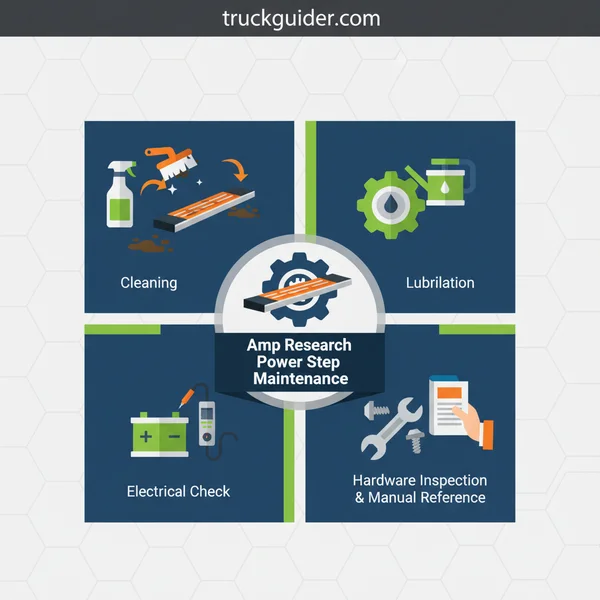
Practically speaking, the electric motor is only designed to move a free-swinging arm. When grit builds up in the hinges, the motor has to work twice as hard, eventually tripping the internal thermal breaker or stripping the internal gears. By following a specific cleaning and lubrication schedule, you ensure the steps remain fast, quiet, and reliable for the life of your truck.
Recommended Lubricants vs. Substances to Avoid
Choosing the right chemical is the difference between a five-minute fix and a permanent hardware failure. You need a lubricant that leaves a dry, non-tacky film behind. Anything that remains “wet” or “sticky” will quickly become your worst enemy on the road.
The Dry-Film Advantage
Traditional grease and oil-based sprays are not suitable for exposed articulated linkages. While they provide initial smoothness, they act as a magnet for road grime, sand, and salt. This creates an abrasive paste that grinds down the bushings and binds the linkage. Instead, use a high-quality dry-film silicone or PTFE (Teflon) spray. These products are designed to penetrate the tight tolerances of the pivot pins and then evaporate, leaving a slick, microscopic coating that does not attract dust.
- Dry PTFE Sprays: Brands like DuPont or Blaster work best. They dry in seconds and leave a slick coating that repels contaminants.
- Multi-Purpose Dry Lube: Ensure the label specifically states it is a “dry” formula. These provide excellent water resistance and UV protection for the moving parts without creating a mess.
- Avoid WD-40 Multi-Use: Standard WD-40 is a solvent, not a long-term lubricant. It will strip away existing protection and evaporate, leaving the metal bone-dry and prone to rust.
Why Grease is Prohibited
You might be tempted to use white lithium grease or heavy marine grease because they last a long time. However, these are too thick for the tight tolerances of the PowerStep hinges. They cannot penetrate deep into the center of the pivot pins where the friction actually occurs. Furthermore, once grease traps road salt against the aluminum casting, it can accelerate oxidation, leading to the very “seizing” issue you are trying to prevent.
AMP Research Power Step Maintenance Made Easy: Your Essential Action Plan
Recommended Best Deal Products


AMP Research Power Steps are a sophisticated blend of mechanical engineering and electrical automation, designed to provide seamless access to your truck or SUV. However, because they are mounted to the undercarriage, they are constantly bombarded by road salt, mud, grime, and moisture. Regular maintenance is not just a recommendation; it is a necessity to prevent the motors from burning out and the linkages from seizing. This guide covers everything from deep cleaning and proper lubrication to electrical inspections, ensuring your steps deploy smoothly every single time you open your door.
Step 1: Preparation and Secure Deployment
What you need: A level parking surface, an assistant (optional), and the vehicle’s ignition key.
Instructions: To properly maintain your power steps, you must have them in the deployed (down) position while the vehicle is stationary. Park your vehicle on a flat, level surface and engage the parking brake. Open the doors to allow the steps to extend. If your vehicle is equipped with a manual override switch, use it to keep the steps down even if the doors are closed. If you do not have an override switch, keep the doors slightly ajar. Ensure the area around the steps is clear of any obstructions. For safety, never perform maintenance while someone is actively opening or closing the doors, as the pinch points in the linkage can cause serious injury.
Pro Tip: If your steps are already sticking and won’t deploy, have an assistant gently apply downward pressure on the board while you open the door to help “break” any surface tension caused by dried mud or salt.
Step 2: Thorough Pressure Cleaning
What you need: A garden hose with a high-pressure nozzle or a low-power pressure washer, a soft-bristle brush, and mild automotive soap.
Instructions: The primary cause of power step failure is debris buildup in the pivot points. Start by rinsing the entire length of the running board and the four main linkage assemblies. Focus your water spray directly into the pivot pins and the “hinge” areas where the arms rotate. Use a soft-bristle brush and soapy water to scrub away stubborn road film and salt crust. Avoid using harsh degreasers or steam cleaners, as these can strip away the internal factory grease from the pins. Pay special attention to the rear of the linkage where the motor is housed, ensuring no clumps of mud are resting against the motor casing.
Pro Tip: When using a pressure washer, keep the nozzle at least 12 inches away from the electrical connectors and motor seals to prevent water from being forced into the sensitive electronics.
Step 3: Drying and Debris Extraction
What you need: Compressed air (a canned air duster or a shop compressor) and a clean microfiber towel.
Instructions: Once the steps are clean, you must remove as much standing water as possible before applying any lubricant. Use a microfiber towel to wipe down the exterior of the linkages and the step surface. For the internal pivot points, use compressed air to blow out any trapped water and remaining fine grit. This is a critical step because applying lubricant over water will trap moisture inside the pins, eventually leading to internal corrosion. Inspect the pivot gaps while blowing them out; if you see brown or “rusty” water coming out, it is a sign that the internal pins are beginning to oxidize and require extra attention.
Pro Tip: Don’t forget to dry the LED light pods mounted under the vehicle, as standing water can eventually bypass the seals and cause the lights to flicker or fail.
Step 4: Precision Lubrication of Pivot Points
What you need: A high-quality dry silicone spray or a Teflon-based (PTFE) lubricant. Avoid WD-40 (the original formula) or heavy grease.
Instructions: AMP Research specifically recommends a dry lubricant that does not attract dust and road grime. Locate the pivot pins on each linkage arm (there are typically four main pivot points per assembly). Spray a generous amount of silicone or PTFE lubricant into the gaps of these pins. While the lubricant is still wet, cycle the steps by opening and closing the doors 5 to 10 times. This movement allows the lubricant to penetrate deep into the bushing. Wipe away any excess lubricant that drips onto the running board or the ground, as silicone can make the step surface extremely slippery and dangerous.
Pro Tip: Never use heavy chassis grease or “wet” oils. These substances act like a magnet for dirt, creating a “grinding paste” that will wear down your bushings faster than if you used no lubricant at all.
Step 5: Hardware and Torque Inspection
What you need: A 13mm socket or wrench, and a 3/16″ hex key (Allen wrench).
Instructions: The constant vibration of driving, combined with the weight of passengers, can cause the mounting hardware to loosen over time. Use your 13mm socket to check the bolts that secure the linkage assemblies to the vehicle’s body or frame. They should be snug but not over-tightened (typically around 16 ft-lbs of torque). Next, use the 3/16″ hex key to check the two bolts per linkage that hold the running board itself to the arms. If these are loose, the board may creak or feel unstable when stepped upon. If you find a bolt that is consistently loosening, remove it, apply a small drop of blue (medium strength) thread locker, and reinstall it.
Pro Tip: Check the motor mounting bolts as well; if the motor is slightly loose, it can cause the gears to misalign, leading to a loud grinding noise during operation.
Step 6: Electrical Connection and Wire Harness Audit
What you need: A flashlight and a small tube of dielectric grease.
Instructions: Crawl underneath the vehicle and trace the wire harness from the motor back toward the frame. Look for any signs of “wire loom” degradation, fraying, or areas where the wires might be rubbing against sharp metal edges. Ensure all plastic zip ties are intact and the harness is tucked away from the exhaust system. Unplug the main connector at the motor and inspect it for green or white corrosion. If the pins look clean, apply a small amount of dielectric grease to the seal and plug it back in. Finally, check the fuse holder (usually located near the vehicle battery) to ensure the 30-amp fuse is clean and free of oxidation.
Pro Tip: If your steps are lagging but the linkages are clean, the issue is often a poor ground connection. Ensure the ground wire is attached to clean, unpainted metal on the vehicle frame.
Step 7: Functional Testing and Resistance Check
What you need: Your hands and ears.
Instructions: Perform a final operational test. Open the door and listen closely. The steps should deploy with a consistent, smooth hum. Any high-pitched squealing indicates a need for more lubricant, while a “thumping” or “stuttering” sound suggests a mechanical obstruction or a failing motor. Test the safety resistance feature: as the step is retracting, gently apply pressure with your foot. The step should immediately stop and reverse its direction. This is a critical safety feature that prevents injury. If the step does not reverse, the control module may need to be reset or the sensors checked for debris.
Pro Tip: If the steps retract halfway and then drop back down, it is usually because the system’s “anti-pinch” sensor is detecting too much friction. This is a clear sign that the pivot points need a deeper cleaning or more silicone spray.
✅ Final Checklist
- All 8 pivot points (4 per side) have been cleaned and treated with dry silicone spray.
- The running board mounting bolts (3/16 hex) and linkage bolts (13mm) are tightened.
- The electrical harness is securely zip-tied away from heat sources and moving parts.
- The steps deploy and retract fully without stuttering or making grinding noises.
- The LED entry lights illuminate when the steps deploy and turn off after the delay.
Important Notes:
- Safety Warning: Keep fingers, clothing, and pets away from the linkage arms during operation. The motor exerts significant force that can cause serious injury.
- Maintenance Frequency: Perform this maintenance every 3 to 6 months. If you live in a “salt belt” state or frequently drive off-road, perform this monthly.
- Professional Help: If you hear internal grinding from the motor or if the step is bent, seek professional repair. Attempting to disassemble the motor can void your warranty.
- Estimated Time: 30–45 minutes.
- Estimated Cost: $10–$20 for cleaning supplies and silicone spray.
Identifying Critical Linkage and Pivot Point Locations
Knowing where to spray is just as important as what you use. Each PowerStep assembly features two main linkage points: the front drive assembly (connected to the motor) and the rear idler assembly. Each of these units contains multiple “elbows” or pivot points that allow the step to tuck and deploy. To maintain them, you must address every moving joint.
Pinpointing the Friction Zones
To find these points, deploy your steps by opening the door. If your steps are already sticking, you may need to carefully assist them downward with your foot. Look at the aluminum arms that connect the step board to the vehicle body. You will see several stainless steel pins passing through the aluminum castings. These pins are the heart of the mechanism and are the primary points of failure if left dry.
- Upper Pivot Pins: These are located closest to the mounting bracket attached to the truck frame. They handle the bulk of the weight and leverage.
- Lower Pivot Pins: These connect the linkage arms directly to the running board itself. They are often the first to get hit by road spray and debris.
- The Drive Arm Interface: Locate the point where the motor’s gear drives the main linkage arm. A light application here ensures the motor doesn’t struggle during the initial “break-away” movement.
The “8-Point” Inspection
Every single hinge point where metal moves against metal needs attention. There are usually four primary pivot pins per assembly, totaling eight points per side of the vehicle. When you apply the lubricant, do not just spray the outside of the pin. Aim for the gaps between the moving arm and the stationary bracket. This allows the fluid to “wick” into the center of the joint. If you miss even one pin, the entire linkage can bind, putting undue stress on the electric motor and causing the step to stop halfway through its cycle.
Safe Cleaning and Debris Removal Techniques
Recommended Best Deal Products


Lubricating over dirt is counterproductive. You must clear the “channels” of the linkage before applying your dry-film spray. This prevents you from simply “sealing in” the abrasive material that causes the steps to squeak or hang up. A clean surface allows the PTFE or silicone to bond directly to the metal pins.
Manual Cleaning vs. Pressure Washing
While PowerSteps are built to withstand the elements, you should avoid blasting the motor housing directly with high-pressure water. The seals are robust, but a 3000-PSI stream held inches away can force water past the gaskets and into the internal electronics. Instead, use a more surgical approach to cleaning the hinges.
- Low-Pressure Rinse: Use a standard garden hose to soak the linkage arms. This softens dried mud or road salt that has caked into the pivot gaps.
- Soft Bristle Brush: Use a detailing brush or even an old toothbrush to scrub around the pins. This is the only way to ensure the gap between the arm and the bracket is truly clear of grit.
- Compressed Air: After washing, use compressed air to blow out the standing water from the pivot points. This ensures your lubricant can penetrate the tight tolerances without being blocked or diluted by moisture.
- Degreaser Usage: If you previously used a “wet” grease, use a mild citrus-based degreaser to strip it away before applying the new dry-film lubricant.
Regular cleaning is especially vital in winter. Road salt can calcify inside the hinges, effectively “cementing” the steps in the up or down position. A quick spray-down at a self-service car wash once a week during winter can save you hours of teardown time later in the spring.
Environmental Factors Impacting PowerStep Performance
Your AMP Research PowerSteps are engineered for the outdoors, but nature can be relentless. Understanding how your specific environment affects the mechanics of your running boards is the first step toward preventing premature wear. Whether you are battling coastal humidity or mountain winters, the elements play a massive role in how smoothly those steps deploy.
The Threat of Road Salt and Corrosives
If you live in a “salt state,” your PowerSteps face a constant chemical uphill battle. Road salt and liquid de-icers are incredibly corrosive to the aluminum and stainless steel components of the assembly. These chemicals can penetrate the pivot points, leading to oxidation that creates a “gritty” feel during operation.
- Coastal Salt Air: Constant exposure to salt spray in the air can lead to surface pitting and hardware degradation even if you aren’t driving on treated roads.
- Magnesium Chloride: This common liquid de-icer sticks to the linkage better than rock salt, making it harder to wash off and more likely to cause long-term binding issues.
- Frequency of Exposure: The more often your vehicle is exposed to these elements, the more frequently the pivot points require a fresh water rinse to neutralize the chemical reaction.
Mud, Sand, and Heavy Debris
For off-road enthusiasts or those living on gravel roads, debris is the primary enemy. Small pebbles can lodge themselves within the folding mechanism, while thick mud can add significant weight to the step, forcing the motor to work twice as hard. Over time, this extra resistance can lead to the motor’s internal thermal protection shutting the system down to prevent a burnout.
- Hardened Mud: When mud dries inside the linkage, it acts like concrete, physically blocking the step from retracting fully.
- Sand Ingress: Fine sand acts as an abrasive, essentially “sanding” down the protective coatings on the pins and bushings every time the step moves.
- Winter Slush: Frozen slush can build up in the wheel wells and drop onto the steps, physically obstructing the path and causing the safety sensors to trigger.
Preventative Inspection Checkpoints for Motor Longevity
The motor is the heart of your AMP Research system, and keeping it healthy is the most cost-effective way to maintain your truck. Most motor failures don’t happen overnight; they are usually the result of months of increased resistance that could have been identified during a quick visual and auditory inspection.
Auditory Cues and Cycle Timing
One of the easiest ways to gauge the health of your PowerSteps is to simply listen. A healthy system should sound smooth and consistent from the moment the door opens until the step is fully locked into position. Any change in the “song” your steps sing is a signal that something is beginning to fail or requires attention.
- Squeaking or Chirping: This is a clear cry for lubrication. Metal-on-metal contact creates friction that eventually leads to the motor straining.
- Grinding Noises: Usually indicates that sand or grit has entered the gear housing or is trapped deep within a pivot point.
- Sluggish Deployment: If one step takes significantly longer to drop than the other, the motor is likely fighting through a lack of lubrication or a bent linkage arm.
Linkage and Pivot Point Integrity
Because the PowerStep relies on a complex geometry to tuck away cleanly, even a slight misalignment can cause issues. Periodic inspections of the hardware and the “play” in the system will help you catch small problems before they require a full component replacement. This keeps the mechanical leverage in your favor rather than working against the motor.
- Hardware Tightness: Vibration from daily driving can gradually loosen the mounting bolts. A quick check ensures the assembly remains rigid against the vehicle frame.
- Wiring Harness Security: Check that the looms aren’t sagging or rubbing against the frame, which can lead to electrical shorts or intermittent power loss.
- Pivot Bushings: Look for any excessive side-to-side “slop” in the steps. If the bushings are worn, the step may hang at an angle, putting uneven torque on the motor drive shaft.
Maintaining Your Investment
AMP Research PowerSteps are a premium addition to any truck or SUV, providing a level of convenience and “cool factor” that static boards simply cannot match. However, that convenience relies on a system of moving parts that demand a small amount of attention. By staying aware of how your environment affects the linkage and keeping a watchful eye (and ear) on the motor’s performance, you can ensure your steps operate flawlessly for years to come.
Take five minutes this weekend to cycle your steps and check for any debris or unusual sounds. A little bit of preventative awareness today prevents a stuck step tomorrow. Keep them clean, keep them clear, and enjoy the ease of entry your vehicle was meant to have!
💬 Quick Questions & Answers
What lubricant is best for AMP PowerSteps?
A high-quality dry-film PTFE or silicone spray is recommended to prevent attracting dust and grime.
Can I use WD-40 on the hinges?
No, standard WD-40 is a solvent that can strip factory grease; use a dedicated dry lubricant instead.
How often should I clean the steps?
Clean them whenever you wash your vehicle, or more frequently if exposed to road salt or mud.
Why are my steps moving slowly?
This is usually caused by debris buildup in the pivot points or a lack of proper lubrication.
Is it safe to pressure wash the motor?
Yes, the motors are sealed, but avoid direct high-pressure spray on the electrical connectors for extended periods.
❓ Frequently Asked Questions
Why should I avoid using heavy grease on the pivot points?
Heavy grease acts like a magnet for road grit, sand, and salt, creating an abrasive paste that wears down the bushings. Over time, this friction increases the load on the motor, potentially leading to total system failure.
How do I identify all the pivot points that need lubrication?
Each step assembly typically has six pivot points located on the linkage arms where they connect to the mounting brackets and the step board. Look for any moving joint where the metal arms hinge during deployment or retraction.
What are the signs that my PowerSteps need immediate maintenance?
Warning signs include squeaking or grinding noises during operation, the steps hesitating or stopping midway, or the steps failing to retract fully against the vehicle body.
Does road salt in winter affect the maintenance schedule?
Yes, road salt is highly corrosive and can cause the linkages to seize; you should rinse the hinges with fresh water weekly and reapply dry lubricant more frequently during winter months.
What should I check during a preventative wiring inspection?
Look for frayed wires near the motor, loose grounding connections, and ensure the weather-proof seals on the connectors are intact and free of green corrosion or moisture.
Are the motors user-serviceable if the steps stop moving?
The motors are generally sealed units and not designed for internal repair; maintenance focuses on keeping the external mechanical linkages moving freely to protect the motor from burning out.


![4×4 Truck Tire Rotation Patterns [2026]](https://truckguider.com/wp-content/uploads/2026/03/4x4-truck-tire-rotation-pattern-featured.webp)