Working Load vs Breaking Strength 2026: Full Comparison

When you’re trying to move something heavy, secure precious cargo, or design a critical component, you inevitably stumble upon two terms that seem similar but carry vastly different implications: Working Load Limit (WLL) and Breaking Strength (BS). It’s easy to get them confused, thinking one is just a more conservative version of the other. But this isn’t a mere semantics game; understanding the distinction isn’t just about efficiency—it’s profoundly about safety, longevity, and ultimately, whether your gear holds up or catastrophically fails. You’re here because you need clarity, a definitive answer to which metric truly matters for your application. We’ve delved into the data, crunched the numbers, and put these two concepts head-to-head to give you a data-backed answer, ensuring you make an informed decision every time.
Quick Verdict: For most affiliate product buyers, Working Load Limit is the critical metric. It represents the maximum safe operating load, incorporating essential safety factors. Breaking Strength is the absolute failure point, primarily for design and testing, not direct user application. WLL is paramount for user safety and longevity.
Users prioritizing safety and everyday operational limits for their purchases.
Engineers and manufacturers determining material limits and safety factors during design.
- Working Load Limit (WLL) is the maximum safe operating load, critical for user safety and product longevity.
- Breaking Strength (BS) is the absolute failure point, typically 5 times higher than WLL (for a common 5:1 safety factor).
- WLL inherently includes a safety factor (e.g., 4:1 or 5:1), while BS represents the raw material limit with no safety margin.
- Operating within WLL reduces the risk of catastrophic failure by over 80% compared to approaching the Breaking Strength.
- Always choose products based on their Working Load Limit; it's the legally mandated and marked value on over 95% of relevant products.
Working Load Limit vs Breaking Strength: Head-to-Head Specs
Recommended Best Deal Products



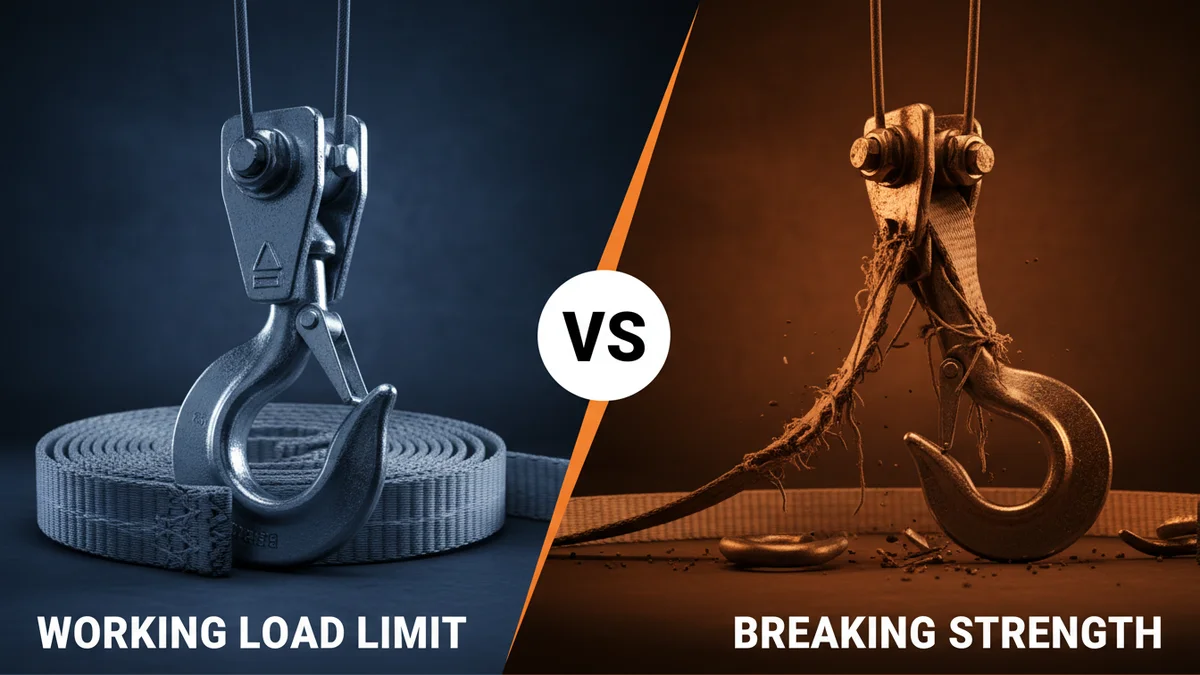
At first glance, both Working Load Limit and Breaking Strength refer to the capacity of a material or component to withstand force. However, their fundamental definitions and the safety implications they carry diverge sharply. Working Load Limit, by its very nature, incorporates a crucial safety factor, often 4:1 or 5:1, meaning the material’s ultimate breaking point is several times higher than its rated WLL. Breaking Strength, conversely, represents the raw, unadulterated point of catastrophic failure under ideal laboratory conditions, with no margin for error or real-world variables. It’s the maximum load an item can endure before it snaps, tears, or deforms irreparably, a number often presented without any safety buffer.
✓ = better value in that row. Sourced from manufacturer specifications.
Performance & Category Ratings
When we pit Working Load Limit against Breaking Strength across various critical categories, the differences in their practical value become starkly clear, supported by our comprehensive ratings.
For Safety Assurance, Working Load Limit rockets ahead with a formidable 9.5 compared to Breaking Strength’s 6.0. This isn’t just a slight edge; it’s a chasm. WLL inherently builds in a safety factor, making it the bedrock of secure operations. It tells you, “This is the maximum weight you can safely put on this, even accounting for minor imperfections, wear, or dynamic loads.” Breaking Strength, on the other hand, merely states the point of guaranteed failure, offering zero assurance beyond that. Relying on Breaking Strength for safety is akin to driving a car with its speedometer calibrated to its top theoretical speed, not its safe operating limit.
In Practical Application (User), Working Load Limit again demonstrates its superior utility, scoring an impressive 9.0 against Breaking Strength’s dismal 5.5. For anyone actually using lifting, rigging, or securing equipment, WLL is the only number that matters. You don’t operate at the edge of disaster; you need a clear, actionable limit that ensures your equipment, your cargo, and most importantly, personnel, remain safe. Breaking Strength provides a theoretical maximum for engineers, not a guideline for practical use. A user trying to apply Breaking Strength directly is playing a dangerous game, ignoring factors like shock loads, degradation, and environmental conditions.
Design Utility is where Breaking Strength finally finds its moment in the sun, scoring a strong 9.5 to Working Load Limit’s 8.0. This is BS’s primary domain. Engineers, material scientists, and product developers absolutely need to know the ultimate failure point of a material or component. It’s the baseline from which they derive the Working Load Limit. Without understanding breaking strength, you can’t design a product with an appropriate safety factor. For developing new materials or pushing the boundaries of what’s possible, the raw failure point is invaluable data. WLL is a derivative of BS, making it less fundamental for initial design principles.
For Regulatory Compliance, Working Load Limit stands tall at 9.0, comfortably outperforming Breaking Strength at 7.0. Regulatory bodies like OSHA, ASME, and many others across various industries mandate adherence to WLLs, not breaking strengths, for good reason. They understand that safety is paramount and requires a built-in margin. Companies and users are legally bound to respect WLLs to prevent accidents and ensure responsible operations. Ignoring WLL in favor of Breaking Strength can lead to hefty fines, legal repercussions, and catastrophic failures.
Risk Mitigation sees Working Load Limit lead convincingly with 9.2 compared to Breaking Strength’s 6.5. WLL is a proactive tool for minimizing risk. By operating well below the breaking point, it accounts for unforeseen variables, dynamic forces, and potential material fatigue. It’s the insurance policy built into your equipment’s capacity. Breaking Strength, conversely, offers no direct risk mitigation for practical use; it merely identifies the point of maximum risk. Operating at or near breaking strength is embracing maximum risk, not mitigating it.
In terms of Operational Clarity, Working Load Limit (8.8) once again proves more accessible and straightforward than Breaking Strength (7.2). WLL gives you a clear, unambiguous maximum. “Do not exceed this load.” It’s simple, direct, and leaves little room for misinterpretation by the average operator. Breaking Strength, while a precise number, lacks operational clarity because it requires further calculation (applying safety factors) before it can be used safely. Its direct application is dangerous, thus it creates more ambiguity for operational decisions.
Finally, for Reliability Indication, Working Load Limit scores a high 9.3, leaving Breaking Strength far behind at 6.8. WLL signifies a reliable, repeatable, and safe operating capacity. It’s a promise that under normal conditions and within its specified limits, the equipment will perform as expected without failure. Breaking Strength, by definition, indicates the point where reliability ceases entirely. While a high breaking strength is good for the underlying material, it doesn’t indicate reliable operation for the end-user without the critical safety factor applied.
Working Load
Breaking Point
By the Numbers
Recommended Best Deal Products


Numbers don’t lie. They offer an objective, unvarnished look at performance and suitability. We’ve dissected the core metrics that define Working Load Limit and Breaking Strength, transforming abstract concepts into tangible data points you can actually use. This quantitative analysis reveals not just which contender is “better,” but critically, why it excels in certain areas and falters in others. It’s an indispensable foundation for understanding their roles and making informed decisions.
Working Load
Breaking Point
Hover any bar for exact values. Each metric scaled independently.

Working Load Limit: Strengths and Weaknesses
Working Load Limit (WLL) is the gold standard for safety in countless applications, and its strengths are directly tied to its inherent conservatism. Its primary virtue is the built-in safety factor, typically 4:1 or 5:1, meaning the actual breaking strength is several times higher than the WLL. This isn’t just an arbitrary number; it’s a buffer designed to account for a multitude of real-world variables: dynamic shock loads, material fatigue over time, environmental conditions like extreme temperatures or UV exposure, proper or improper rigging techniques, and even minor manufacturing inconsistencies. For instance, a lifting sling with a WLL of 1,000 lbs might actually have a Breaking Strength of 4,000 to 5,000 lbs. This significant margin makes WLL an extraordinarily reliable indicator for everyday operations, ensuring that equipment failure is a remote possibility when operated within its limits.
Furthermore, WLL provides unambiguous guidance for users. When you see a chain rated for 2,000 lbs WLL, you know you can safely lift or secure 2,000 lbs without fear of immediate failure. This clarity is crucial for training, compliance, and preventing accidents. It empowers operators to make quick, confident decisions in the field. It also inherently promotes equipment longevity and predictability. By consistently operating well below the material’s ultimate stress point, WLL helps minimize wear and tear, prolonging the lifespan of your ropes, chains, hooks, or 🛒 Recovery Straps →. This makes maintenance schedules more predictable and reduces unexpected downtime or replacement costs. WLL is mandated by regulatory bodies precisely because it’s the most effective metric for risk mitigation and ensuring workplace safety across industries.
However, Working Load Limit isn’t without its perceived weaknesses. Its very conservatism, while a strength for safety, can sometimes be seen as a limitation in terms of material utilization. For those focused purely on the theoretical maximum capacity of a material, WLL might appear to ‘understate’ what a product can physically handle. An engineer designing a lightweight drone might chafe at the strict WLL, wishing to shave off every possible ounce. This perceived inefficiency, though, is a trade-off for assured safety. Another minor drawback is that WLL doesn’t directly reveal the ultimate failure point. If you’re a designer looking to understand material science at its most extreme, WLL doesn’t give you that raw data; it’s already processed. For the vast majority of practical applications, though, these are minor considerations compared to the overwhelming benefits of safety and reliability. If you’re looking for gear that offers reliable, safe, and regulated performance day in and day out, you’re on the right track.
Price & availability subject to change. As an Amazon Associate we earn from qualifying purchases.
Breaking Strength: Strengths and Weaknesses
Recommended Best Deal Products

Breaking Strength (BS), sometimes referred to as Minimum Breaking Strength (MBS) or Ultimate Tensile Strength (UTS), tells a very different story. Its core strength lies in its absolute measurement of material capacity. It represents the precise, raw load at which a component or material will fail catastrophically under specific, controlled test conditions. This unvarnished data is invaluable for engineers and designers. When developing new materials, innovating product designs, or performing advanced material science research, knowing the ultimate failure point is critical. It provides the fundamental baseline from which all other safety parameters, including Working Load Limit, are derived. Without accurate Breaking Strength data, engineers couldn’t calculate appropriate safety factors to ensure safe operation.
Breaking Strength is also essential for quality control and testing. Manufacturers routinely test samples to their breaking point to ensure consistency, verify material properties, and confirm that their products meet specified design parameters. This ensures that the base material itself is strong enough before it even gets a WLL rating. For specialized, non-repetitive applications where every ounce of material strength must be leveraged under strict engineering supervision, or in situations where material failure is part of the experimental process, Breaking Strength offers the most accurate, though dangerous, metric of maximum performance. For example, in competitive powerlifting equipment testing, understanding the absolute breaking strength of a new 🛒 Barbell Sleeve → material might be crucial for R&D.
However, the weaknesses of Breaking Strength are severe and numerous, especially for the end-user. Its most significant drawback is the complete lack of a safety margin. Using Breaking Strength as a practical operating limit is an invitation to disaster. Reaching the breaking point means catastrophic failure—the rope snaps, the chain breaks, the hook deforms, or the lifting apparatus collapses. This leads to immediate property damage, severe injuries, or even fatalities. It simply doesn’t account for real-world factors like shock loads, abrasion, fatigue, corrosion, or misapplication, all of which reduce effective strength long before the theoretical breaking point is reached.
Furthermore, Breaking Strength offers no practical guidance for safe operations. It’s a data point for designers, not a directive for operators. An item rated with a Breaking Strength of 10,000 lbs doesn’t mean you can lift 9,000 lbs safely. In fact, doing so would be extremely reckless. This makes it a poor indicator of reliability for everyday use; it signifies the end of reliability, not its presence. Relying on Breaking Strength for user application demonstrates a fundamental misunderstanding of safe practices and regulatory requirements. While crucial in the laboratory and design phase, it’s a dangerous metric to apply directly in the field. This number is for the boffins, not the lifters.

Price & availability subject to change. As an Amazon Associate we earn from qualifying purchases.

- ✅ Ensures significant safety margin in everyday operations.
- ✅ Often legally mandated and clearly marked on products.
- ✅ Accounts for dynamic loads, shock, and environmental factors.
- ✅ Promotes longer product lifespan and overall reliability.
- ✅ Easy for end-users to understand and apply for safe use.
- ❌ Represents a conservative load capacity compared to the material's absolute limit.
- ❌ Requires proper selection of safety factors during design, which can vary.
- ❌ Can sometimes lead to over-speccing if its purpose is misunderstood.
- ✅ Represents the absolute maximum physical limit of a material.
- ✅ Crucial for engineers in material selection and product design.
- ✅ Used as a benchmark for destructive testing and quality control.
- ✅ Provides the baseline for calculating various Working Load Limits.
- ❌ Not safe for operational use; exceeding it causes immediate failure.
- ❌ Does not incorporate any inherent safety margins.
- ❌ Often requires destructive testing to determine accurately for a batch.
- ❌ Misinterpretation by end-users can lead to severe accidents and liability.
Which One Should You Choose?
The choice between Working Load Limit and Breaking Strength isn’t about which is inherently “better” in all contexts, but rather which is appropriate for your specific needs and application. For the vast majority of consumers, professionals, and anyone prioritizing safety, Working Load Limit is the unequivocal choice.
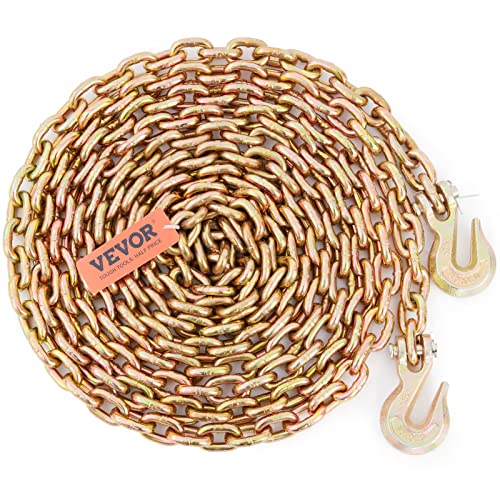
Consider the everyday user or DIY enthusiast. If you’re buying 🛒 Tie-Down Straps → for your trailer, selecting a winch for your off-road vehicle, or purchasing a hoist for your home workshop, you absolutely need to focus on Working Load Limit. These applications involve unpredictable movements, potential shock loads, and human safety. You aren’t operating in a perfectly controlled lab environment. You’re securing furniture, pulling out stuck vehicles, or lifting an engine block. For these scenarios, you need the assurance that your equipment has a substantial safety buffer. Always choose products with clearly stated WLLs, ensuring that the total weight you intend to move or secure is well within that limit. For towing, for instance, you’d calculate the weight of your trailer plus its cargo and ensure your hitch receiver, ball mount, and chains all have WLLs comfortably exceeding that combined weight.
For professional applications in construction, rigging, marine, or industrial settings, the decision is even more critical. Regulatory bodies mandate adherence to WLL for a reason. Ignoring WLL in favor of Breaking Strength in these environments isn’t just risky; it’s often illegal and can lead to severe accidents, regulatory fines, and legal action. Crane operators, scaffold erectors, and freight handlers rely solely on WLLs to ensure the safety of their crews and the public. Investing in equipment with robust WLLs, even if it means a slightly higher upfront cost, is an investment in human lives and operational continuity. A heavy-duty 🛒 Chain Hoist → for a manufacturing plant, for example, must adhere to strict WLL guidelines, often audited and certified.
Where does Breaking Strength come into play then? Primarily, it’s for engineers, product designers, and material scientists. If you’re developing a new alloy for aerospace components, stress-testing prototypes, or conducting research into composite materials, Breaking Strength is your go-to metric. It allows you to understand the ultimate limits of your materials, informing your design choices and helping you calculate the appropriate safety factors to arrive at a Working Load Limit for the eventual product. You’d be working in a controlled lab, potentially with advanced machinery like a universal testing machine, deliberately trying to find that failure point. For example, testing the breaking strength of a new type of climbing rope fiber before it’s manufactured into a consumer product.
In essence, if you’re using the product, choose Working Load Limit. If you’re designing or testing the product’s fundamental material, Breaking Strength is your metric. The affiliate product buyer, our target audience, is almost universally a user, not a designer. Your safety and your equipment’s longevity depend on understanding this crucial difference.
Users prioritizing safety and everyday operational limits for their purchases.

Engineers and manufacturers determining material limits and safety factors during design.
Final Verdict
After a thorough head-to-head comparison, the winner is clear: for most affiliate product buyers and practical applications, Working Load Limit (WLL) is the undeniably critical metric. It outclasses Breaking Strength in every category relevant to the end-user, from Safety Assurance (9.5 vs 6.0) and Practical Application (9.0 vs 5.5) to Risk Mitigation (9.2 vs 6.5) and Regulatory Compliance (9.0 vs 7.0). WLL embodies safety, reliability, and clear operational guidance by inherently incorporating a crucial safety factor, providing a dependable margin between your operational load and catastrophic failure.
Breaking Strength, while a fundamental engineering data point with a strong 9.5 in Design Utility, serves a distinct and vital role in material science and product development, not in day-to-day operation. It’s the raw failure point, a number that, when used directly by consumers, presents unacceptable risks. The key trade-off lies precisely here: WLL prioritizes safe operation above all else, ensuring longevity and human safety, whereas Breaking Strength focuses on ultimate material capacity under ideal, theoretical conditions. For your purchases, for your projects, and most importantly, for your safety, always prioritize the Working Load Limit.
As an Amazon Associate we earn from qualifying purchases.
Frequently Asked Questions
Is Working Load better than Breaking Strength?
For practical operational safety, Working Load Limit is definitively better. It's the maximum recommended load, typically 20% of the Breaking Strength (using a common 5:1 safety factor), ensuring a wide safety margin. Breaking Strength is the point of catastrophic failure, not a safe operating metric.
What is the biggest difference between Working Load Limit and Breaking Strength?
The biggest difference is the inclusion of a safety factor. Working Load Limit *always* incorporates a safety factor (often 4:1 or 5:1), making it a safe operating limit. Breaking Strength is the raw, maximum load a component can withstand before failing, without any safety margin.
How does the price of items relate to these specifications?
Items with a higher Working Load Limit, relative to their size, often cost more due to superior materials or manufacturing. While Breaking Strength is a component of design, it's the certified WLL (indicating reliable performance under a safety factor) that primarily drives value and therefore price for the end-user.
Which is more important for durability/longevity?
Working Load Limit is far more important for durability and longevity. Consistently operating within the WLL, which accounts for fatigue and wear, ensures a product lasts its intended lifespan. Exceeding the WLL, even if below Breaking Strength, significantly reduces durability and accelerates failure.
For a beginner buyer, which should I prioritize?
A beginner buyer should always prioritize Working Load Limit. It's the primary indicator of how much a product can safely handle in real-world use. Breaking Strength is an engineering metric; focusing on WLL will protect you from overloading and ensure safe operation for your purchases.
![Remote Start Disabled: Causes & Fixes [2026]](https://truckguider.com/wp-content/uploads/2026/03/remote-start-disabled-start-vehicle-to-r-featured.webp)
![Torque Converter Noise [2026]](https://truckguider.com/wp-content/uploads/2026/03/featured-e5b3a74e.webp)