EVAP System Incorrect Purge Flow (P0441): The Complete Guide 2026

The internal combustion engine operates as a complex thermal machine, converting chemical potential energy into kinetic work. However, the management of this chemical energy—specifically the volatile liquid hydrocarbons known as gasoline—extends far beyond the combustion chamber. The automotive Evaporative Emission Control (EVAP) system represents a critical, often underappreciated, subsystem designed to manage the phase transition of fuel from liquid to vapor.
In the modern automotive landscape, governed by stringent EPA regulations and SAE standards, the containment of volatile organic compounds (VOCs) is as critical as tailpipe emissions management.


Among the myriad diagnostic trouble codes (DTCs) that safeguard this containment strategy, P0441: Evaporative Emission Control System Incorrect Purge Flow stands as a ubiquitous yet technically nuanced indicator of system degradation. Unlike simple circuit faults that indicate a broken wire, P0441 is a performance logic code. It signifies a discrepancy between the Engine Control Module’s (ECM) commanded state and the physical reality of fluid dynamics within the system.
The ECM commands the purge valve to open, expecting to see a specific change in fuel tank pressure or oxygen sensor feedback, and when that physiological response is absent—or present when uncommanded—the code is set.
This report provides an exhaustive technical analysis of the P0441 condition, specifically tailored to the unique architectures of the Ford F-150, Chevrolet Silverado, and Ram 1500 platforms. By synthesizing data from technical service bulletins (TSBs), SAE standards, and field diagnostic procedures, we will explore the thermodynamics of fuel vaporization, the distinct monitoring strategies employed by different manufacturers (such as the Ram ESIM vs. Ford’s vacuum transducers), and the economic implications of repair strategies ranging from OEM replacement to aftermarket solutions.
EVAP System Incorrect Purge Flow
A raw fuel smell. A rough idle. A stubborn Check Engine Light. “Incorrect Purge Flow” means your vehicle’s emissions system is failing to manage fuel vapors correctly. This comprehensive guide breaks down the data, diagnostics, and repairs.
Quick Analysis
Deconstruct: How the EVAP System Works
The Evaporative Emission Control (EVAP) system is your car’s way of recycling fuel vapors. Gasoline evaporates inside the fuel tank. In older cars, these vapors vented into the atmosphere, causing smog. In modern vehicles, the system traps these vapors in a charcoal canister and then “purges” them into the engine to be burned.
“Incorrect Purge Flow” (P0441) generally implies a logical conflict detected by the Powertrain Control Module (PCM). The PCM commanded the purge valve to open (or close), but the pressure sensor or oxygen sensors did not detect the expected change in vacuum or air/fuel ratio.
The Cycle of Vapors
- Storage: Fuel evaporates in the tank. Pressure builds.
- Capture: Vapors travel to the Charcoal Canister.
- Purge: When the engine is warm and cruising, the PCM opens the Purge Valve.
- Combustion: Engine vacuum pulls vapors from the canister into the intake manifold to be burned.
System Architecture
(Stores Vapor)
Failure Point
(Engine Vacuum)
Statistical Probability of Failure
Based on data aggregated from mechanic logs and OBD-II reports, the P0441 code is rarely a catastrophic engine failure. It is almost exclusively a component failure within the vacuum loop.
Root Cause Distribution
The Purge Valve is a mechanical solenoid that cycles thousands of times. It is the overwhelming point of failure.
Why the Purge Valve Fails
-
✖Stuck Open:
Debris from the charcoal canister enters the valve, preventing it from sealing. This creates a permanent vacuum leak.
-
✖Stuck Closed:
The solenoid coil burns out electrically, or the plunger seizes. Vapors cannot be purged, saturating the canister.
-
⚠The “Gas Cap” Myth:
While a loose gas cap triggers P0455 (Large Leak), it rarely triggers P0441 (Incorrect Flow) on its own, though the codes often appear together.
Engine Telemetry: The STFT Spike
Does a P0441 affect performance? Yes. The best way to visualize this is through Short Term Fuel Trim (STFT).
If a purge valve is stuck OPEN, unmetered fuel vapors are constantly sucked into the engine. The engine runs “Rich”. The computer reacts by subtracting fuel (Negative Fuel Trim).
Mechanic’s Tip
If you see STFT dropping to -15% or -20% at idle, pinch the purge hose. If trims return to 0%, the valve is stuck open.
Figure: Simulated STFT response during a “Stuck Open” purge event.
The Economics of Repair
The EVAP system is one of the most accessible systems for DIY mechanics. The purge valve is typically located right on top of the engine intake manifold. Paying a shop often incurs a high “diagnostic fee” relative to the cost of parts.
| Component | Part Cost (OEM) | Labor Time | Total Shop Cost | DIY Potential |
|---|---|---|---|---|
| Purge Valve Solenoid | $30 – $80 | 0.5 Hrs | $150 – $250 | High (Easy) |
| Charcoal Canister | $150 – $350 | 1.5 Hrs | $350 – $600 | Medium |
| Vent Valve | $40 – $100 | 1.0 Hrs | $200 – $300 | Medium |
| Wiring/PCM | $10 – $1000 | 2.0+ Hrs | $300 – $1500 | Low (Hard) |
Failure Correlation: Vehicle Age
EVAP components are plastic and rubber. They degrade with heat cycles and vibration. We analyzed failure reports to find the “Danger Zone” for P0441 codes.


The “7-Year Itch”
Data suggests a sharp rise in EVAP failures starting at the 7-year or 80,000-mile mark. This correlates with the typical lifespan of the solenoid plunger spring and the rubber seals within the vacuum lines.
Preventative Maintenance?
Unlike oil filters, EVAP parts are not “maintenance items.” You generally drive them until they fail. However, avoiding “topping off” your gas tank prevents liquid fuel from ruining the charcoal canister.
© 2026 TruckGuider Infographics
Theoretical Framework: The Physics of Evaporative Purge Flow
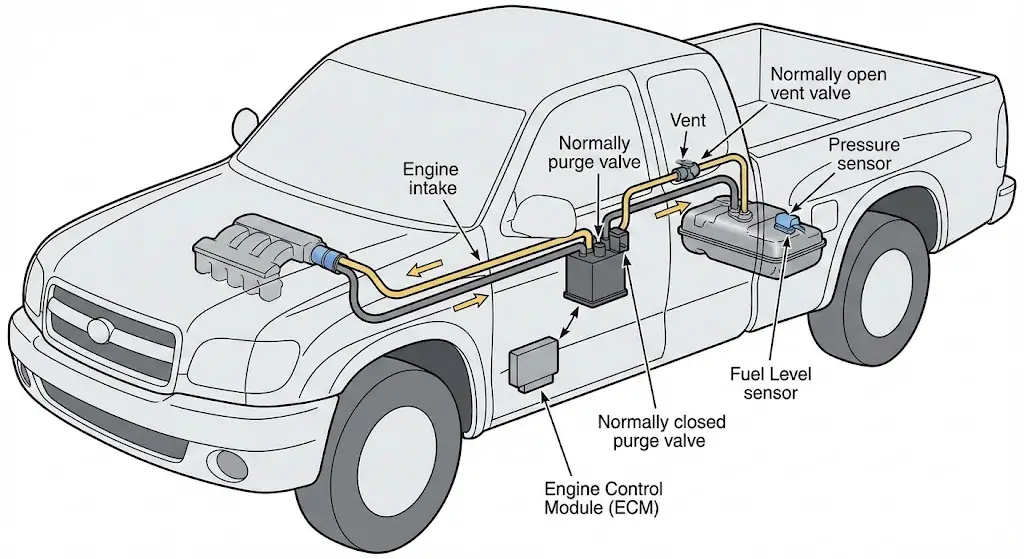
To diagnose a flow fault, one must first understand the physics of the flow itself. Gasoline is highly volatile; its vapor pressure fluctuates significantly with temperature and agitation. In a sealed fuel tank, this creates positive pressure during the heat of the day (diurnal cycle) and negative pressure (vacuum) as the tank cools or as fuel is consumed. The EVAP system acts as the respiratory system of the fuel tank, allowing it to “breathe” without releasing hydrocarbons into the atmosphere.
The Cycle of Adsorption and Desorption
The heart of the EVAP system is the charcoal canister, a vessel filled with activated carbon pellets designed to adsorb hydrocarbon molecules. During the engine-off phase, rising tank pressure pushes vapor through a vent line into the canister, where the carbon traps the fuel molecules, allowing scrubbed air to exit through the vent valve. This is the Adsorption Phase.
The Purge Phase, where P0441 failures manifest, occurs when the engine is running. The ECM identifies conditions favorable for combustion—typically a warm engine operating in closed-loop fuel control—and energizes the Purge Valve. This solenoid, located in the engine bay, connects the charcoal canister to the intake manifold. When opened, engine vacuum draws fresh air through the canister’s vent valve, across the carbon bed (desorbing the fuel), and into the engine to be burned. This process clears the canister, regenerating its storage capacity for the next parking cycle.
The Logic of P0441: Defining “Incorrect Flow”
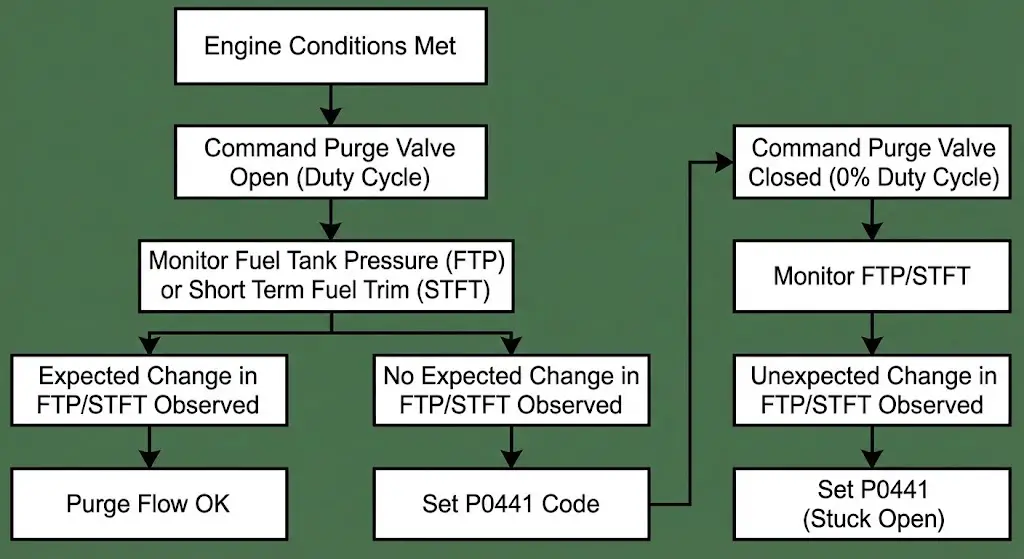
The P0441 code is distinct from leak codes like P0442 (small leak) or P0455 (gross leak). It is strictly a functional test of the purge line’s ability to transport vapor. The ECM uses a non-intrusive testing method typically involving the following logic gates:
- Vacuum Decay Verification: In systems equipped with a Fuel Tank Pressure (FTP) sensor (common in Ford and GM), the ECM may close the vent valve to seal the system and then pulse the purge valve open. The ECM monitors the FTP sensor for a rapid decrease in pressure (increase in vacuum). If the pressure does not drop, the ECM infers that vacuum is not being applied to the tank, indicating a blocked line, a dead solenoid, or a disconnected hose—triggering P0441.
- Oxygen Sensor Correlation: Alternatively, the ECM monitors the Short Term Fuel Trims (STFT). When the purge valve opens, the influx of fuel-laden vapor should cause a momentary rich condition, prompting the ECM to reduce fuel injector pulse width (negative fuel trim). If the purge valve is commanded to 100% duty cycle but fuel trims remain unchanged, the ECM concludes that no flow is entering the intake.
- Uncommanded Flow: The logic works in reverse as well. If the purge valve is commanded closed (0% duty cycle) but the FTP sensor shows vacuum building in the tank, or fuel trims indicate a rich condition at idle, the ECM determines that the valve is physically stuck open, allowing uncommanded flow. This creates a vacuum leak or a “rich” leak, depending on the saturation of the canister.
SAE J2644 and Diagnostic Standards
The engineering behind these systems is governed by standards such as SAE J2644, which outlines requirements for built-in service ports and diagnostic accessibility. These standards ensure that technicians have non-destructive access to the EVAP system for testing system integrity via smoke machines or pressure gauges. The rigorous application of these standards means that modern EVAP systems are tightly integrated into the vehicle’s On-Board Diagnostics (OBD-II) architecture, making the P0441 code a highly reliable indicator of a physical malfunction rather than a software glitch.
Universal Diagnostic Protocols: From Multimeters to Smoke Machines
Before addressing vehicle-specific idiosyncrasies, a robust diagnostic workflow applicable to all truck platforms is essential. The “parts cannon” approach—replacing components based on guesses—is economically inefficient and technically unsound.
The “Blow Test”: Mechanical Integrity Verification
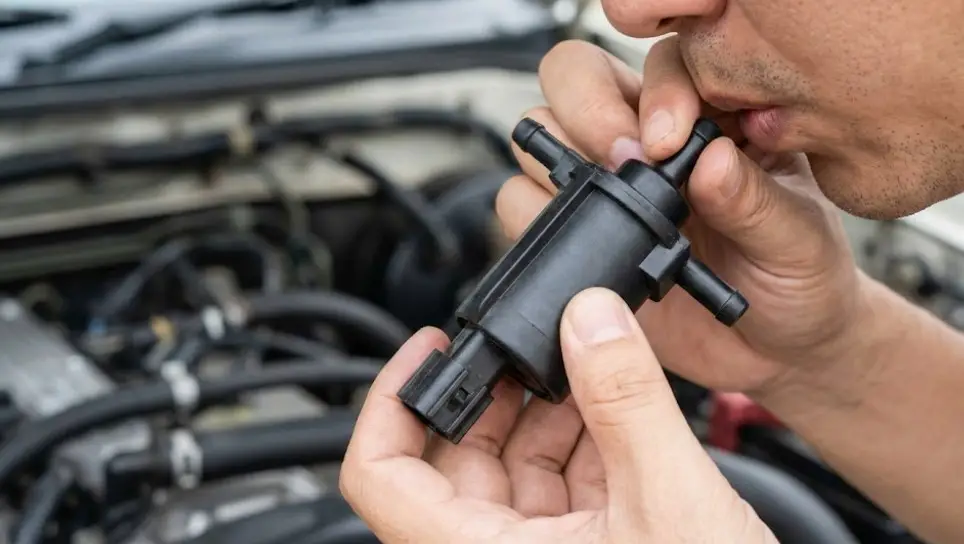
The most prevalent cause of P0441 is a purge valve that is mechanically stuck open due to debris or internal spring failure. A simple, tool-free test can confirm this condition in minutes. The purge valve is a “Normally Closed” (NC) solenoid, meaning it should block airflow when not energized.
To perform this test, the technician or vehicle owner disconnects the electrical connector from the valve and removes the vacuum line running to the fuel tank/canister, leaving the line to the intake manifold connected (or removing the valve entirely). With the valve unplugged, one should attempt to blow air through the port. If air passes freely through the valve while it is electrically disconnected, the internal pintle is stuck unseated. This confirms a mechanical failure requiring part replacement. Conversely, if the valve is sealed tight, the fault may be electrical or related to a blockage elsewhere in the line.
Electrical Circuit Analysis: The Voltage Drop Method
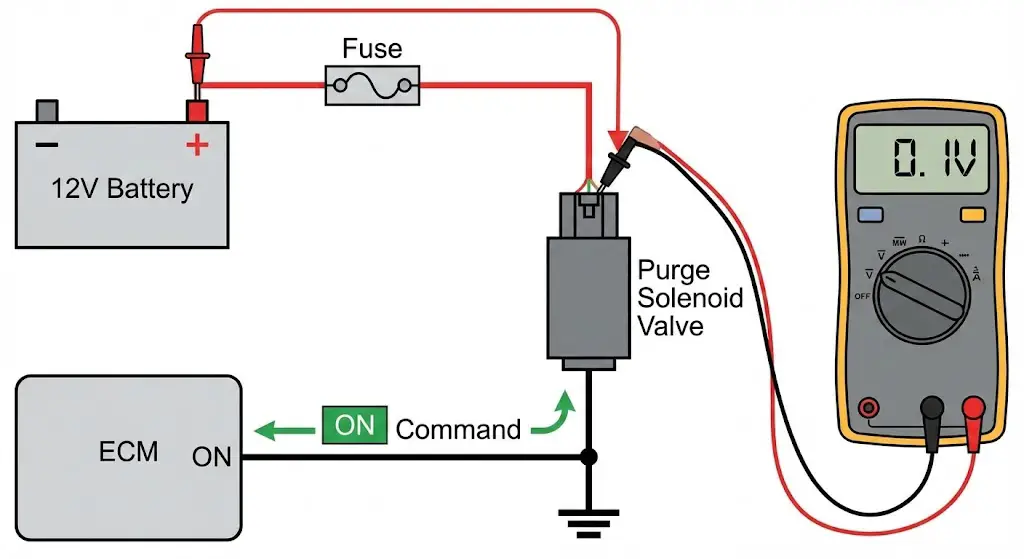
A purge valve that passes the blow test (seals correctly) may still fail to open when commanded due to electrical resistance. Testing for continuity alone is insufficient, as a single strand of copper wire can show continuity but fail to carry the current load required to actuate the solenoid coil.
The definitive test is the Voltage Drop Test. This dynamic test measures the resistance of the circuit while it is working.
- Setup: A multimeter is set to DC Volts. The circuit must be loaded (the valve commanded “ON” via a bidirectional scan tool or jumper wires).
- Execution: The positive lead of the meter is placed on the battery positive post, and the negative lead is back-probed to the power supply side of the valve connector.
- Analysis: A reading near 0.0V indicates a healthy wire (no voltage lost). A reading of 0.5V or higher indicates that voltage is being “consumed” by corrosion or a bad connection before it reaches the valve. This method identifies compromised wiring harnesses that often plague trucks exposed to harsh environments.
Smoke Testing: Visualizing the Invisible
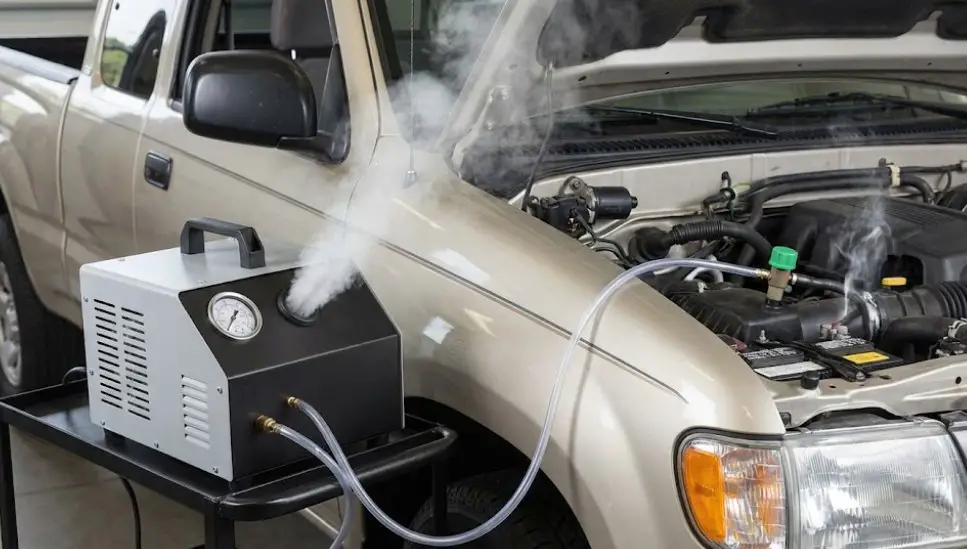
When mechanical and electrical tests of the valve pass, the P0441 code likely points to a restriction (clogged line) or a disconnection. The smoke machine is the industry standard for locating these faults. By injecting a thick, non-toxic mineral oil smoke into the EVAP service port, a technician can visualize the flow path. For a P0441 diagnosis, the focus is not just on leaks escaping the system, but on flow through the system. If smoke is injected at the test port but fails to appear at the disconnected purge line near the engine, a blockage exists within the chassis lines—perhaps a kinked hose or a collapsed tube.
Platform Analysis: The Ford F-150 (EcoBoost and Coyote)
The Ford F-150, particularly the 13th generation (2015-2020), presents a unique set of behaviors regarding P0441, largely driven by the complexities of the EcoBoost forced-induction architecture.


The EcoBoost Vacuum Challenge
Unlike the naturally aspirated 5.0L Coyote V8, which generates consistent intake vacuum, the 2.7L and 3.5L EcoBoost engines spend significant time in “boost,” where the intake manifold is pressurized. You cannot purge fuel vapors into a pressurized manifold; the boost would force air into the gas tank, potentially rupturing it. To solve this, Ford utilizes a complex system of check valves and vacuum ejectors (venturi devices) that generate vacuum using boost pressure to drive the purge flow.
A P0441 code on an EcoBoost F-150 can therefore be caused by a failure of these check valves or ejectors, not just the purge solenoid itself. If the check valve fails, boost pressure prevents purge flow, triggering the code. Diagnostics must include verifying that the one-way check valves in the purge assembly allow flow in the direction of the engine only.
Symptom Profile: The “Hard Start After Refuel”
A pathognomonic symptom of a stuck-open purge valve on the F-150 is difficulty starting the engine immediately after filling the gas tank. When the fuel nozzle fills the tank, it displaces a massive volume of fuel vapor. If the purge valve is stuck open, this vapor is forced directly down the purge line and into the intake manifold, bypassing the charcoal containment. When the driver attempts to start the truck, the cylinders are flooded with an excessively rich mixture (air + injected fuel + raw vapor), causing the engine to crank extensively, stumble, or stall until the excess vapor is cleared. This symptom is practically a diagnostic confirmation of a P0441/Purge Valve fault on this platform.
Technical Service Bulletins: 19-2384 and 19-2171
Ford has issued several TSBs that overlap with EVAP symptoms. TSB 19-2384, covering 2016-2017 2.7L EcoBoost engines, addresses rough idle and oil consumption but notes that an illuminated MIL is a common accompaniment. While the primary fix for 19-2384 involves cylinder head replacement for valve guide issues, the symptom of “rough idle” can often lead technicians down a P0441 rabbit hole. It is vital to distinguish between a rough idle caused by a vacuum leak (P0441/Purge Valve) and one caused by internal engine mechanics.
Additionally, TSB 19-2171 highlights issues with “loose or partially connected evaporative emissions vapor lines” on similar Ford architectures (Escape/MKC), suggesting that the quick-connect fittings used by Ford can sometimes latch mechanically without sealing pneumatically. A “click” does not always guarantee a seal, leading to intermittent P0441 codes.
Component Data and Economics
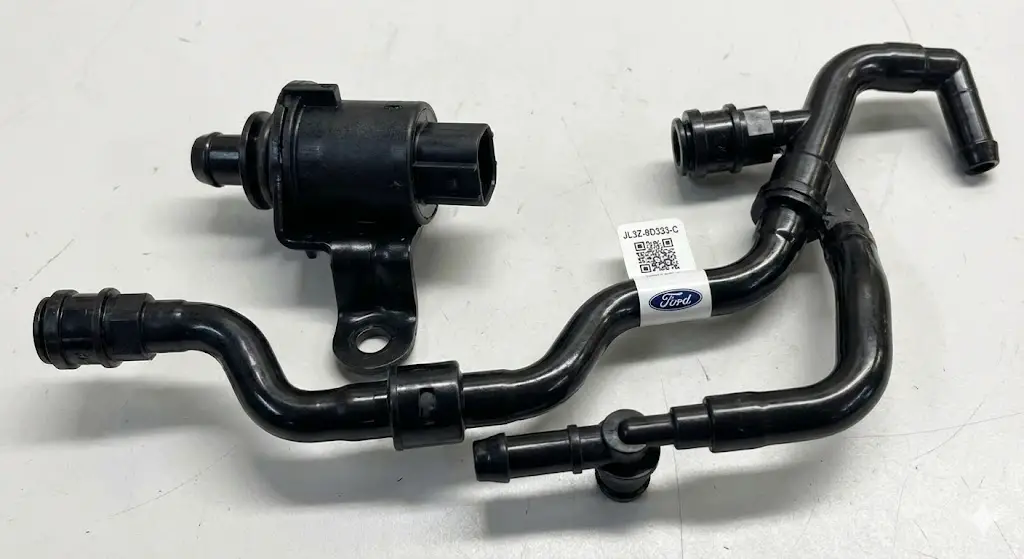
The purge valve on the F-150 is typically sold as an assembly including the solenoid, a mounting bracket, and a section of hard plastic tubing.
Table 1: Ford F-150 Purge Valve Component Data
| Model Year | Engine | OEM Part Number | Approx. MSRP | Market Price | Notes |
| 2015-2017 | 3.5L EcoBoost | 9U5Z-9F945-C | $72.73 | ~$46.00 | Solenoid only style |
| 2018-2020 | 5.0L V8 | JL3Z-9B325-B | $121.67 | ~$83.00 | Includes tube assembly |
| 2018-2020 | 3.5L EcoBoost | JL3Z-9D333-C | $376.36 | ~$233.00 | Complex assembly w/ sensors |
Platform Analysis: The Chevrolet Silverado 1500
The General Motors approach to EVAP on the Silverado and Sierra (GMT K2XX and T1XX platforms) introduces distinct failure modes, most notably the catastrophic failure of the charcoal canister which can masquerade as a simple valve fault.
The Purge Solenoid vs. Vent Valve Distinction
A common diagnostic error on the Silverado platform is conflating the Purge Solenoid with the Vent Valve.
- Purge Solenoid: Located on the intake manifold (top of the engine). It controls flow to the engine. Failure here causes P0441 (Incorrect Flow) and P0496 (Flow During Non-Purge).
- Vent Valve: Located near the fuel tank or above the rear differential. It controls fresh air into the canister. Failure here typically causes P0442, P0446, or P0455 (Leak or Vent Control codes).
For P0441, the focus must remain on the engine bay solenoid. The GM purge valve (Part #12610560 or updated #12666845) is a compact, two-port solenoid that is notoriously prone to sticking due to carbon buildup.
The “Charcoal Shower” Catastrophe
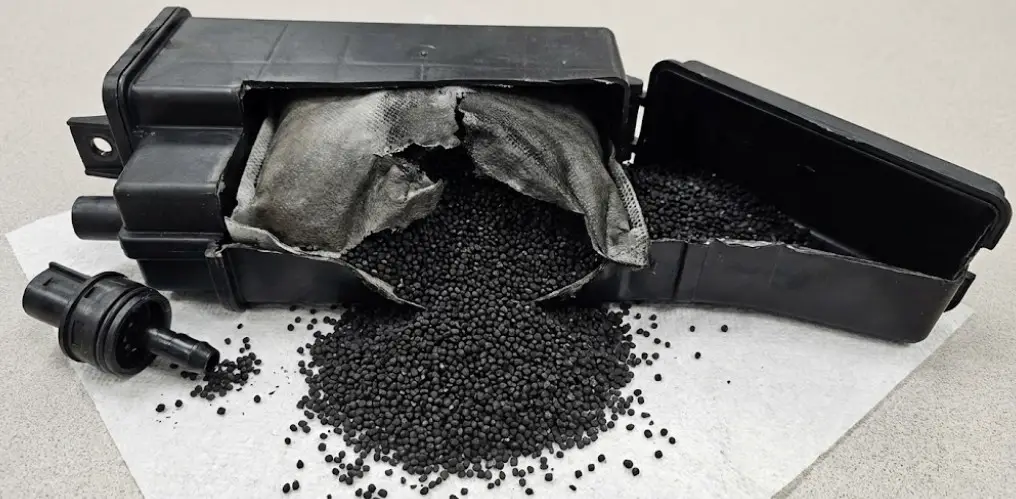
The most insidious failure mode on the Silverado involves the charcoal canister itself. Over time, vibration and saturation can cause the internal filter bags of the canister to rupture. When this happens, millions of tiny activated charcoal pellets are sucked through the purge line toward the engine.
- The Diagnosis: When removing a faulty purge valve on a Silverado, it is imperative to tap the valve intake on a white paper towel. If black specks or pellets fall out, the rear canister has failed.
- The Implication: Replacing the valve alone in this scenario is futile. The new valve will jam with debris within miles. The entire EVAP system—canister, lines, and valve—must be flushed or replaced, escalating a $30 repair to a $500+ overhaul.
Diagnostic Workflow for GM P0441
- Visual Inspection: GM purge lines are hard plastic and become brittle near the heat of the exhaust manifolds. Technicians should inspect for physical cracks.
- Audible Check: The GM purge solenoid operates on a high-frequency duty cycle, creating a distinct rhythmic “ticking” sound when active. A silent valve during a command cycle suggests a circuit fault or a seized coil.
- Vacuum Decay: GM systems seal the system and monitor the fuel tank pressure sensor. P0441 sets if the vacuum decay rate during purge does not match the modeled prediction.
Table 2: Chevrolet Silverado Purge Valve Component Data
| Component | OEM Part Number | Approx. MSRP | Market Price | Notes |
| Purge Valve (Legacy) | 12610560 | $51.92 | ~$27.00 | High failure rate |
| Purge Valve (Updated) | 12666845 | $32.38 | ~$20.00 | Revised internal seal |
| Vapor Canister | 85592652 | $180.71 | ~$110.00 | Must replace if pellets found |
Platform Analysis: The Ram 1500 (DS/DT)
The Ram 1500 utilizes a fundamentally different monitoring strategy known as the Evaporative System Integrity Monitor (ESIM). This device changes the diagnostic landscape entirely for P0441 and related codes like P0456/P0457.
The ESIM: A Mechanical Monitor
Unlike Ford and GM, which typically rely on electronic pressure transducers to verify system integrity, the Ram 1500 employs the ESIM, a mechanical switch assembly located on the charcoal canister near the fuel tank. The ESIM contains two weighted check valves and a diaphragm switch.


- Operation: The ESIM detects leaks by monitoring the natural vacuum created when the fuel tank cools down after driving. If the tank cools but no vacuum forms, the switch remains open, signaling a leak.
- The P0441 Connection: While P0441 technically refers to purge flow, on Ram trucks, a faulty ESIM selector switch can send erroneous data to the PCM regarding the state of the system vacuum. If the PCM commands purge but the ESIM does not register the expected pressure change due to a stuck internal weight, the PCM sets P0441.
The “3 O’Clock” Installation Requirement
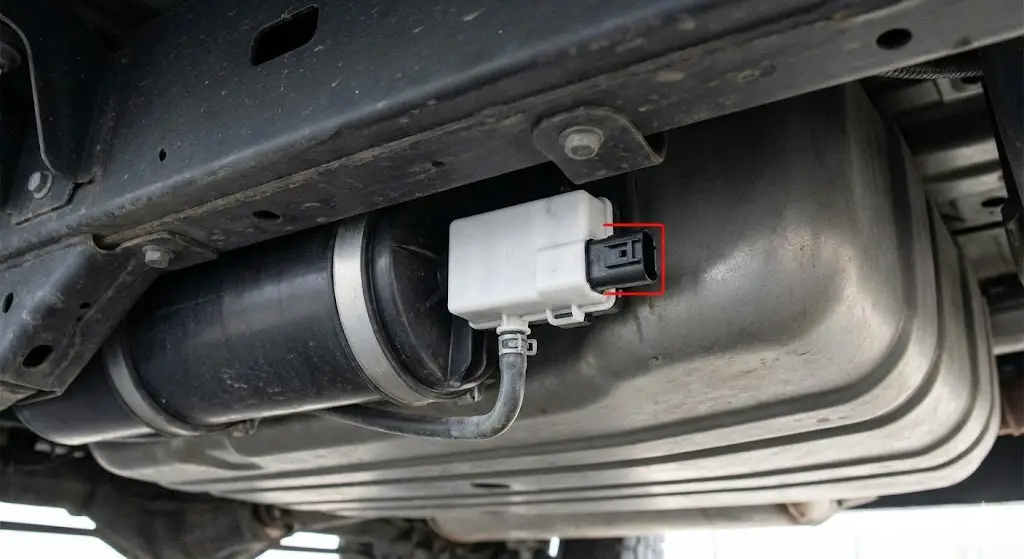
A critical insight for Ram repairs involves the physical installation of the ESIM. Because the device uses internal weights to calibrate its vacuum and pressure relief thresholds, it is gravity-dependent.
- The Rule: The electrical connector on the ESIM must be oriented at the 3 o’clock position (parallel to the ground).
- The Consequence: If installed vertically or at an angle, the internal weights will not seat the diaphragm correctly. This results in false P0440/P0441/P0456 codes immediately after repair. This is a common “comeback” cause for mechanics who treat it like a generic sensor rather than a calibrated instrument.
The “Gas Cap” Indicator vs. Check Engine Light
Ram trucks frequently display a “Gas Cap” warning message on the dashboard separate from the Check Engine Light. This is often the first stage of an ESIM or Purge Valve failure. If tightening the cap does not resolve the message after several drive cycles, the ESIM seal is likely compromised.
Table 3: Ram 1500 EVAP Component Data
| Component | OEM Part Number | Approx. MSRP | Market Price | Notes |
| ESIM Detector | 4861962AB | $101.00 | ~$67.00 | Critical “3 O’Clock” install |
| Purge Solenoid | 4627694AA | $67.05 | ~$49.00 | Located in engine bay |
Economic Analysis: Repair Costs and Part Quality
The economic landscape of repairing a P0441 code varies significantly based on whether the owner chooses a Do-It-Yourself (DIY) approach or professional service, and whether they opt for OEM or aftermarket parts.
The Aftermarket vs. OEM Debate
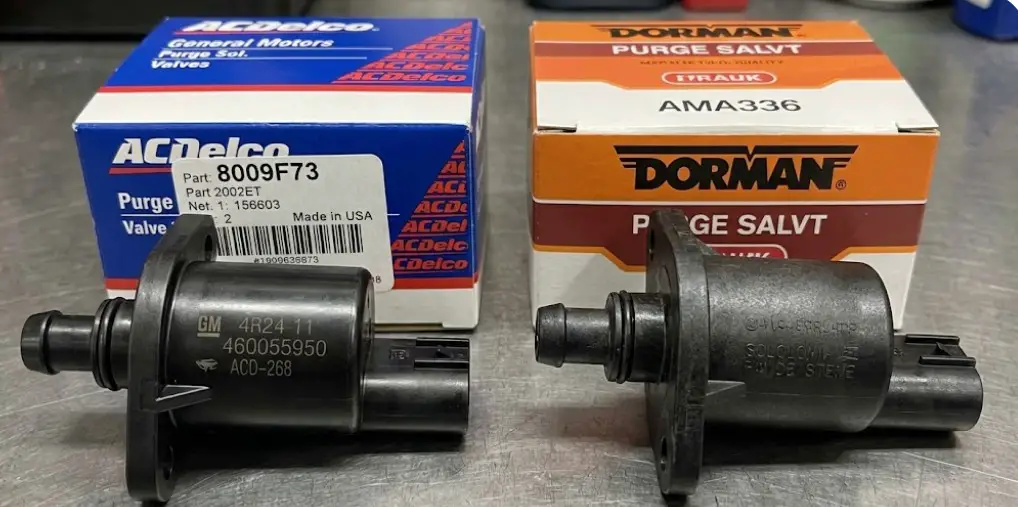
The consensus in the professional automotive community heavily favors OEM (Original Equipment Manufacturer) parts for EVAP components, particularly for the purge valve and ESIM.
- The Dorman Issue: Aftermarket suppliers like Dorman offer cheaper alternatives, but user reports and technician feedback highlight a high incidence of quality control issues. Specifically, aftermarket purge valves for the Ram 1500 have been noted to “rattle like a baby toy” or produce excessive ticking noise immediately upon installation.
- Cost-Benefit Analysis: Given that an OEM GM purge valve costs approximately $25-$30 and a Ram ESIM is around $65 , the savings offered by aftermarket parts (often only $10-$15) are negligible compared to the risk of repeat labor and diagnostic confusion caused by a defective new part.
Labor and Total Repair Costs
Professional repair costs are driven largely by diagnostic time rather than part installation time.
- Ford F-150: Shop estimates range from $216 to $259, with parts costing $155-$168 (marking up the OEM price significantly) and labor accounting for $60-$90.
- Chevy Silverado: Professional replacement often falls between $150 and $300. The labor is minimal (0.2-0.5 hours), but the diagnostic fee (usually 1 hour minimum) drives the price.
- Ram 1500: Due to the location of the ESIM (under the truck, often requiring lifting) and the complexity of the diagnosis, costs can exceed $250. However, DIY replacement of the engine-bay purge valve is a <$70 operation.
Conclusion: A Systemic Approach to Containment
The P0441 diagnostic trouble code serves as a critical alert within the modern vehicle’s environmental defense system. While often dismissed by drivers as a nuisance—since the vehicle continues to operate—it represents a fundamental breach in the management of volatile hydrocarbons. The implications extend beyond the environmental impact; they include tangible driveability issues such as the hard-start condition in Ford EcoBoost engines, the potential for fuel tank deformation, and the masking of more severe engine faults behind a perpetually illuminated malfunction indicator lamp.
For the automotive technician and the informed owner, the resolution of P0441 requires a departure from the “replace and hope” methodology. It demands a physics-based diagnostic approach: verifying mechanical sealing with the blow test, ensuring electrical integrity with voltage drop testing, and understanding the platform-specific architectures like the Ram ESIM or the GM charcoal canister. By respecting the engineering standards of SAE J2644 and utilizing high-quality OEM components, the integrity of the EVAP system can be restored, ensuring compliance, performance, and longevity.
![2003 Dodge Ram Dashboard Replacement: Causes & Fixes [2026]](https://truckguider.com/wp-content/uploads/2026/03/2003-dodge-ram-dashboard-replacement-featured.webp)