Can You Paint Chrome Bumpers Without It Peeling Later – Full [2026]
Yes, you can paint chrome bumpers — but whether the paint lasts two weeks or two years comes down to two things: the type of chrome you’re working with and the condition of the surface before you touch a can of primer.
Most DIY paint jobs on chrome fail not because of bad paint, but because of wrong prep. Standard automotive primer won’t bond to bare chrome. Ignore that, and you’ll be peeling strips of paint off your bumper before the season changes.


This guide maps out every variable that changes the process — chrome type, surface condition, finish goal — so you follow the right path for your specific bumper instead of the generic steps that get most people in trouble.
Why Chrome Is Harder to Paint Than Steel or Plastic
Standard automotive primer will not bond to a bare chrome surface. That’s not a maybe — it’s a material fact.
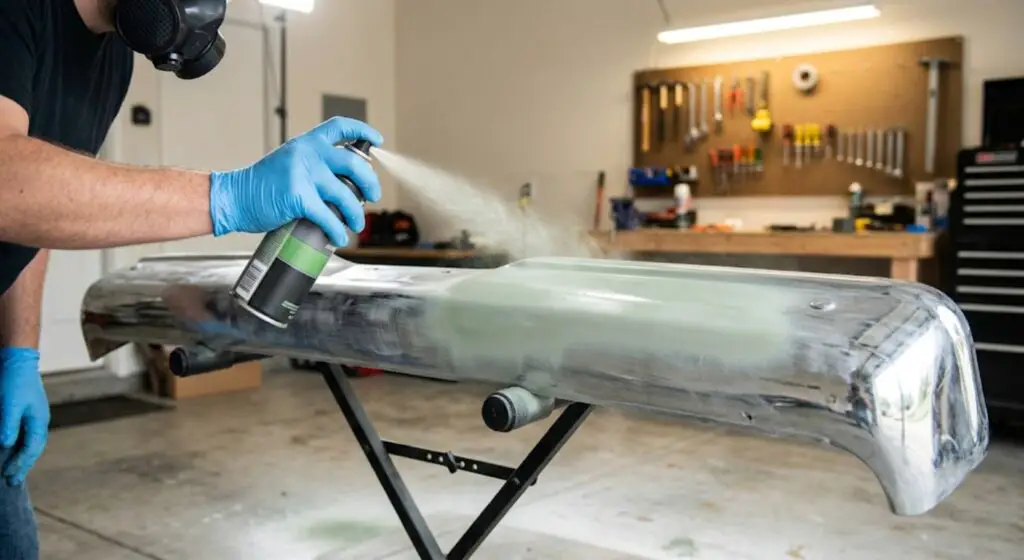
Chrome plating is applied in thin layers over a steel base: first a copper leveling coat, then nickel for corrosion resistance, then a thin top layer of chromium. That final chromium surface is nearly glass-smooth and non-porous. Paint needs microscopic “tooth” — surface texture — to grip and cure. Chrome gives it nothing to hold onto.
The result is one of two failure modes. Use a standard primer without surface prep and the paint peels in sheets within weeks. Prep the surface but choose the wrong primer type and the paint holds initially, then flakes off in chunks within a few months as moisture works underneath.
Plastic chrome — the type found on most post-2000 truck trim and grilles — fails differently again. It’s an ABS plastic substrate with a vacuum-deposited metallic coating. Sand it like real chrome and you cut straight through the thin metallic layer into bare plastic.
3 Conditions That Change How You Paint a Chrome Bumper
Before you buy any primer, you need to know where you stand on these three variables. Each one changes what you do next.
Condition 1: Chrome type — real chrome steel or plastic chrome
If the magnet sticks firmly to your bumper, you have real chrome over a steel base. If it doesn’t stick at all or barely pulls, you’re dealing with plastic chrome (ABS with a metallic coating) or aluminum-backed chrome. This single test determines which primer you need. The wrong primer on the wrong substrate will peel. No exceptions.
Magnet test card showing real chrome vs plastic chrome identification and
correct primer for each
Magnet test — hold a strong magnet against the bumper surface
classic and heavy-duty truck bumpers.
post-2000 truck trim pieces, grilles, and end caps.
Test your magnet on a known steel surface first (a door hinge works) to
establish what a firm pull feels like before testing the bumper.
Condition 2: Surface condition — smooth and intact, or pitted and peeling
Sound chrome with no rust, bubbling, or lifted plating follows the standard process. Pitted, flaking, or corroded chrome needs a different prep sequence before any primer goes on. If you skip the extra steps on damaged chrome, the damaged areas will show through and fail first.
Condition 3: Finish goal — flat/satin black, or color-match gloss
Matte and satin finishes are far more forgiving of minor surface imperfections and can be achieved with rattle cans. Color-matching to your truck’s existing paint requires a spray gun and professional-grade base coat and clear coat — rattle cans will not produce a factory-accurate finish.


How to Paint a Chrome Bumper in Good Condition
If the chrome is smooth, intact, free of rust or pitting, and the magnet confirms it’s real chrome over steel — this is your path.
Prep Steps
- Remove the bumper from the truck if possible. Painting on the vehicle means overspray on everything around it.
- Wash the bumper thoroughly with dish soap and water. Remove all wax, grease, and road grime.
- Wipe down the entire surface with a wax-and-grease remover (pre-paint prep solvent). Let it dry fully.
- Wet sand the entire chrome surface using 400-grit wet/dry sandpaper. The goal is to scuff the mirror shine off completely — you want a dull, uniform haze across the whole surface. No shiny spots remaining.
- Wipe again with the prep solvent. Use a tack cloth to pull any remaining dust. Do not touch the surface with bare hands after this step — skin oils contaminate the prep.
Five-step prep process for painting a chrome bumper in good condition
Primer Selection
Self-etching primer is the only correct primer for real chrome. It contains a mild acid that chemically bonds to the metal surface rather than relying on mechanical grip alone. Reliable brands that work on chrome include Rust-Oleum Self Etching Primer, Krylon Automotive Self Etching Primer, and Eastwood Self-Etch Primer. For the most durable result — especially if you’re doing a color-match gloss finish — a two-component (2K) epoxy primer applied with a spray gun is the professional standard.
Apply two even coats of self-etching primer. Allow 24 hours of cure time between primer and topcoat. If the primer has been sitting longer than 48 hours, scuff lightly with 400-grit before painting.
Paint Application
Apply your topcoat in multiple light coats — three thin coats beat one heavy coat every time. Allow 15–20 minutes of flash time between coats. For a gloss finish, apply two coats of clear coat after the color coat cures. Total cure time before handling: 24–48 hours depending on temperature and humidity.
If you plan to color-match to your truck’s factory paint, see the escalation section — rattle cans will not produce a match.
What to Do When the Chrome Is Pitted or Peeling
If the chrome is bubbling, the plating is lifting, or you can see rust-colored spots starting to show through — the standard process is not enough.
Assessing the Damage
First, decide if painting is worth doing at all. If pitting or plating failure covers more than roughly 40–50% of the bumper surface, or if you can see bare steel or significant corrosion underneath, painting becomes a patch job with a limited lifespan. At that point, replacement is the more honest answer — see the Edge Cases section.
If the damage is localized — a few pitted areas or a section of lifting plating — you can proceed with a modified prep process.
Repair Before Painting
Use a wire brush or 80-grit sandpaper to remove all loose, flaking chrome around the damaged areas. Feather the edges between good chrome and bare metal so there’s no sharp ridge. For pitted areas where metal is exposed, apply a thin coat of automotive body filler, let it cure, and sand smooth with 180-grit, then 320-grit.
The goal is a surface with no loose chrome, no sharp edges between damaged and intact areas, and no exposed pitting.
Modified Prep Process
After repair work is complete, wet sand the entire bumper with 180-grit to knock down the repaired areas and scuff all the remaining chrome. Follow with 320-grit to smooth, then 400-grit for final scuffing. Wipe with prep solvent and tack cloth.
Apply a coat of self-etching primer first. Let it cure. Then apply a urethane sealer or epoxy primer over the top, which bridges the transition between repaired areas and intact chrome. Without the sealer coat, the repaired sections will show as a different texture under the topcoat.
Painting Plastic Chrome vs Real Chrome Bumpers
Most truck bumpers made after 2000 use some combination of real and plastic chrome. The front face of the bumper may be real chrome steel while the end caps and trim pieces are plastic. The magnet test tells you which is which — do it on every section before you start.
How to Tell Which Type You Have
Hold a strong magnet against the bumper surface.
- Magnet sticks firmly → real chrome over steel. Use self-etching primer.
- Magnet doesn’t stick → plastic chrome (ABS base) or aluminum. Use adhesion promoter + flexible primer.
If you’re unsure about the strength of your magnet, test it on a known steel surface first — a door hinge works — to establish what a firm pull feels like.


Primer Difference
Plastic chrome cannot be sanded with 180-grit or 400-grit the way real chrome can. The metallic coating on plastic chrome is extremely thin — aggressive sanding cuts straight through it to bare plastic. The prep for plastic chrome is a light scuff with a gray scotch-brite pad or 600-grit, just enough to break the gloss, followed by a dedicated adhesion promoter (such as SEM Adhesion Promoter or Bulldog Adhesion Promoter) before primer.
After the adhesion promoter, apply a flexible primer formulated for plastic substrates. Standard self-etching primer alone on plastic chrome has poor long-term adhesion because it’s formulated for metal.
Process Difference
Plastic chrome is also heat-sensitive. If you’re painting in a hot garage or direct sun, the substrate can flex and warp under heat from a heat gun used to speed curing. Cure at room temperature. Also add a flex additive to your topcoat if the bumper is subject to flex — plastic bumpers that absorb minor impacts will crack rigid paint without it.
When Chrome Cannot Be Painted and Must Be Replaced
Three situations make painting a temporary fix at best — not a real solution.
Mirror-bright show chrome. This is the dense, glass-perfect plating found on restored classics and aftermarket show bumpers. The surface is so smooth and dense that even correct prep produces marginal adhesion. Paint applied over show chrome will last months, not years.
Chrome with more than 50% surface failure. When pitting, rust, and lifting plating covers the majority of the bumper, there’s not enough sound chrome to anchor the paint film. The failing areas will continue to lift under the paint regardless of prep. This bumper needs to be replaced or rechromed.
Chrome with structural damage. Dents, cracks, or bends in the bumper substrate are a paint problem that paint cannot fix. Paint covers the damage visually but does nothing to stop further corrosion at stress points. Address the structural damage first, or consider replacement as the next step instead.
If any of these apply, move to the decision matrix below to confirm your path.
Chrome bumper paint decision matrix showing recommended path by chrome type
and surface condition
| Chrome type | Surface condition | Recommended path | Expected durability |
|---|---|---|---|
| Real chromeMagnet sticks firmly | Smooth, intact, no pitting | Main path400-grit + self-etching primer | 3–5 years DIY |
| Real chromeMagnet sticks firmly | Pitted, peeling, or localized rust | Branch 1Repair + sealer + self-etching primer | 2–3 years DIY |
| Plastic chromeMagnet doesn’t stick | Any condition | Branch 2Adhesion promoter + flexible primer | 2–4 years DIY |
| Any type— | 50%+ failure, show chrome, structural damage | Do not paintReplace or rechrome | N/A |
Chrome Bumper Paint Decision Matrix
Use this table to find your exact situation and the section that covers it.
| Chrome Type | Surface Condition | Recommended Path | Expected Durability |
|---|---|---|---|
| Real chrome (magnet sticks) | Smooth, intact, no pitting | Main Path — Section above | 3–5 years DIY with correct prep |
| Real chrome (magnet sticks) | Pitted, peeling, or localized corrosion | Branch 1 — Pitted/Peeling section | 2–3 years with repair + correct prep |
| Plastic chrome (magnet doesn’t stick) | Any condition | Branch 2 — Plastic Chrome section | 2–4 years with flex primer + adhesion promoter |
| Any type | 50%+ surface failure, show chrome, structural damage | Do not paint — replace or rechrome | N/A |
When to Take Your Chrome Bumper to a Body Shop
DIY works well for most chrome bumper paint jobs — but three situations call for a professional.
You need a factory color match. Matching your truck’s OEM paint color with a rattle can is not realistic. Base coat/clear coat color matching requires a spray gun, a paint mixing system, and blending skill. A professional shop can match and blend to adjacent panels so the bumper looks like it was always that color.
The bumper has structural damage. Dents, cracks, or deformed sections require bodywork before paint — not just filler. A shop has the tools and expertise to reshape metal and achieve a flat, uniform surface that holds paint correctly.
You’re not set up to spray. If you don’t have a spray gun, proper ventilation, or a space where overspray and fumes can be safely managed, the quality of a rattle-can job on chrome is limited — especially for gloss finishes.
A full chrome bumper respray at a professional body shop runs $250–$700 for a standard single-color finish. Color-match work with blending into adjacent panels typically falls in the $400–$1,200 range. For most truck owners, that cost is worth it if the finish needs to match or the bumper has structural issues that go beyond paint prep.
If the cost of a professional respray approaches what a new bumper costs, a full replacement option is worth comparing.

Frequently Asked Questions
Does paint stick to chrome bumpers?
Paint will stick to chrome, but only with the right prep and primer. Standard automotive primer applied directly to bare chrome will peel. You need to scuff the surface with 400-grit and apply a self-etching primer first. Skip either step and the paint won’t last.
What primer do you use on chrome?
For real chrome over steel, use a self-etching primer — Rust-Oleum, Krylon Automotive, and Eastwood all make reliable spray-can versions. For the best durability on a color-match finish, a 2K epoxy primer applied with a spray gun is the professional standard. Plastic chrome needs an adhesion promoter plus a flexible primer, not self-etching primer alone.
How long does paint last on a chrome bumper?
With correct prep and the right primer, DIY paint on a chrome bumper typically lasts 3–5 years on sound chrome, or 2–3 years on repaired pitted chrome. Skipping the self-etching primer or the surface scuffing step drops that to weeks or a few months before peeling starts.
Can you spray paint a chrome bumper black?
Yes — flat, satin, and gloss black are the most popular DIY finishes for chrome bumpers and the most forgiving to apply. Satin black covers minor surface imperfections better than gloss and hides clear coat application errors. Use a self-etching primer base and a topcoat rated for automotive exterior use.
How do you tell if a bumper is real chrome or plastic chrome?
Hold a strong magnet against the bumper. If it sticks firmly, you have real chrome plated over a steel base. If it doesn’t stick, the bumper is plastic chrome (ABS with a metallic coating) or aluminum-backed chrome. Test your magnet on a known steel surface first — a door hinge or bolt — so you know what a firm pull feels like before testing the bumper.
Conclusion
You can paint chrome bumpers and get a finish that lasts — but only if the process matches your specific bumper type and condition. Real chrome needs scuffing and self-etching primer. Plastic chrome needs an adhesion promoter and flexible primer. Pitted chrome needs repair work before any primer goes on.
Use the decision matrix above to confirm which path applies to your bumper, then gather your materials before you start. The prep work takes longer than the painting — and that’s exactly where the durability comes from.
![15 Creative Flatbed Side Rail Ideas: Styles & Materials [2026]](https://truckguider.com/wp-content/uploads/2026/03/flatbed-side-rail-ideas-featured-768x403.webp)