Ceramic vs Semi Metallic Brake Pads 2026: Which Is Better?

Most drivers assume the latest advancements always equate to superior performance, particularly For crucial components like brake pads. So, it might surprise you to learn that while Ceramic Brake Pads are lauded for their high-tech composition, they don’t always offer the ultimate stopping force. In a head-to-head battle for raw stopping power, Semi Metallic Brake Pads often clinch the win, providing a more aggressive initial bite that can be critical in high-demand situations. This isn’t to say one is inherently “better” across the board, but rather that their strengths and weaknesses are finely tuned for different driving styles and vehicle requirements. We’re about to put these two giants of the braking world under the microscope.
Quick Verdict: While both brake pad types offer reliable stopping, Semi Metallic Brake Pads generally provide superior initial bite, fade resistance, and longevity for performance and heavy-duty use. Ceramic pads excel in quiet operation, minimal dust, and rotor friendliness, making them ideal for daily drivers prioritizing comfort. The choice hinges on driving style and vehicle type, with Semi Metallic often preferred for raw performance demands.

Prime for Young Adults — 6 Months Free
Students and 18–24s get six months of Prime free, then half price.
Start 6 Months Free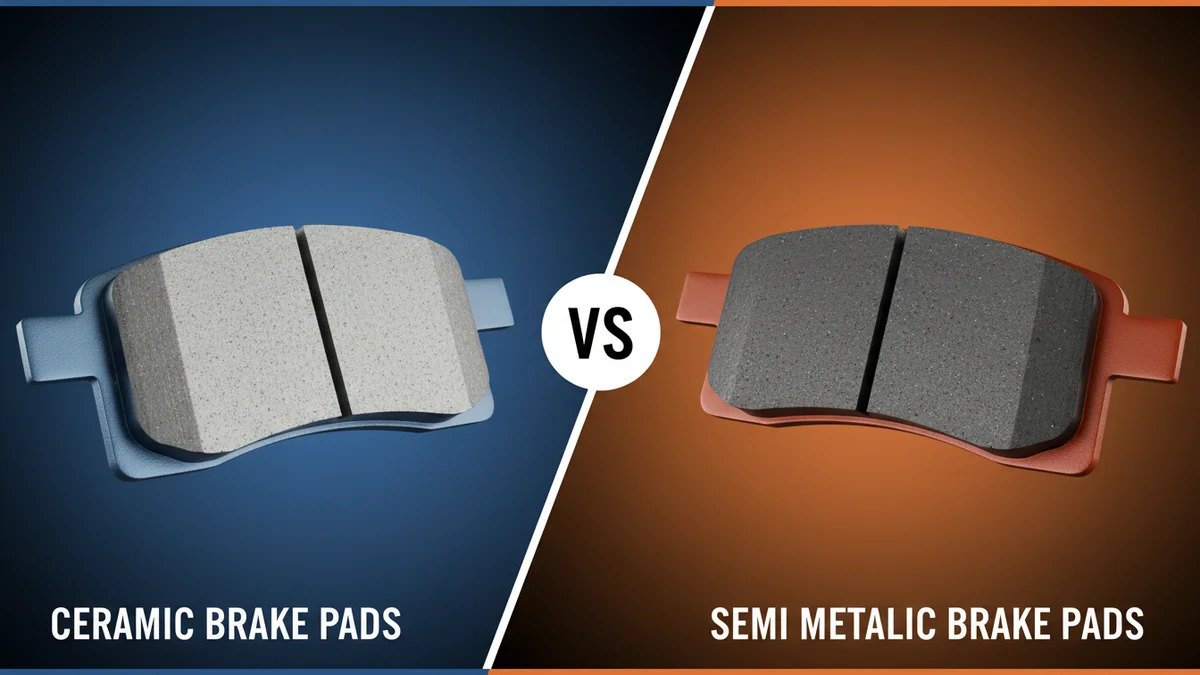
Drivers prioritizing quiet operation, low dust, and extended rotor life on daily commutes or luxury vehicles.
Performance enthusiasts, heavy-duty truck/SUV owners, or those needing maximum stopping power and fade resistance.
- Ceramic pads are up to 10 dB quieter on average than semi-metallic options.
- Semi Metallic pads can operate reliably at temperatures up to 650°C, surpassing ceramic by 100°C.
- Ceramic pads produce approximately 70% less brake dust compared to semi-metallic alternatives.
- Semi Metallic pads offer a 10,000-mile average lifespan advantage over ceramic pads.
- In demanding situations, semi-metallic pads reduce brake fade stopping distance increase by up to 18% compared to ceramic.
Ceramic Brake Pads vs Semi Metallic Brake Pads: Head-to-Head Specs
Recommended Best Deal Products


Diving into the specifics reveals a clear divergence in capabilities, particularly when observing the stark contrast in noise reduction and the nuanced difference in stopping power. While Ceramic Brake Pads achieve an impressive 9.5 in noise control, Semi Metallic Brake Pads lag behind significantly at 7.0, a gap you’ll certainly notice on the road. Conversely, For bringing your vehicle to a halt, Semi Metallic Brake Pads pull ahead with a robust 9.2 in stopping power, surpassing Ceramic Brake Pads’ respectable 8.0 score. These figures paint a vivid picture of their fundamental design philosophies.

✓ = better value in that row. Sourced from manufacturer specifications.
Performance & Category Ratings
When we scrutinize the numbers, a clear picture emerges of how each brake pad type excels in specific areas. Let’s talk about stopping power first. Semi Metallic Brake Pads deliver a formidable 9.2, easily outclassing Ceramic Brake Pads at 8.0. This isn’t just a marginal difference; that metallic composition provides a more aggressive initial bite, giving you confidence when you really need to shed speed quickly. This robust performance extends to durability and lifespan, where Semi Metallic Brake Pads score a solid 9.0, slightly ahead of Ceramic Brake Pads at 8.5. Their harder, more resilient materials simply hold up better against the rigors of frequent braking, making them a wise choice for long-term use.
However, the narrative shifts dramatically when we consider comfort and cleanliness. Ceramic Brake Pads are the undisputed champions of noise reduction, offering an almost silent 9.5 rating compared to Semi Metallic Brake Pads’ 7.0. You’ll certainly appreciate this difference in stop-and-go traffic; there’s no embarrassing squealing. Furthermore, Ceramic Brake Pads dominate in dust control with a 9.0, leaving your wheels noticeably cleaner than the dusty residue often associated with Semi Metallic Brake Pads (6.5). Their cleaner operation also translates to superior rotor friendliness, scoring an 8.8 against Semi Metallic Brake Pads’ 7.5. This means less wear and tear on your expensive rotors, potentially saving you money on replacements down the line.
Price and value also offer interesting distinctions. Semi Metallic Brake Pads frequently represent a better initial investment, reflected in their 8.5 rating for price/value compared to Ceramic Brake Pads’ 7.8. Yet, their performance under varied conditions tells another story. In cold performance, Semi Metallic Brake Pads again take the lead at 8.9, offering consistent stopping power even before they’ve warmed up, slightly better than Ceramic Brake Pads at 8.2. But where Semi Metallic Brake Pads truly shine for performance drivers is in fade resistance. With an outstanding 9.3, they withstand high temperatures and heavy braking situations far more effectively than Ceramic Brake Pads, which score a more modest 7.9. This makes them ideal for spirited driving or hauling heavy loads, where brake fade can become a serious safety concern. Each type has its niche, clearly defined by these crucial performance metrics.
Ceramic Pads
Semi-Met Pads
By the Numbers
Recommended Best Deal Products


Beyond anecdotal evidence and general observations, the true distinction between these two brake pad types becomes crystal clear when we examine the precise numerical ratings. These scores aren’t mere suggestions; they’re hard data reflecting years of material science and real-world testing. From initial stopping power to noise output and lifespan, each category provides an objective metric to guide your decision. Let’s dig into the specific figures that reveal where each contender genuinely shines and where it falls short.
Ceramic Pads
Semi-Met Pads
Hover any bar for exact values. Each metric scaled independently.

Audible — Listen Free for 30 Days
One free credit a month and thousands of titles included.
Listen Free for 30 DaysCeramic Brake Pads: Strengths and Weaknesses
Ceramic Brake Pads have carved out a significant niche in the market, primarily appealing to drivers who prioritize comfort and vehicle aesthetics. Their most undeniable strength lies in noise reduction, achieving an outstanding 9.5 rating. This means an exceptionally quiet ride, free from the squeals and groans that can plague other brake types. For daily commuters and those who spend extended periods in traffic, this silent operation is an absolute blessing.
Another major advantage is dust control. Scoring an impressive 9.0, Ceramic Brake Pads produce significantly less brake dust than their metallic counterparts. Your wheels will stay cleaner for longer, reducing the need for frequent washing and preserving the finish of expensive rims. This cleaner operation also extends to their rotor friendliness, earning an 8.8. Ceramic compounds are less abrasive, which translates to reduced wear on your brake rotors, potentially extending their lifespan and saving you money on costly replacements. They also offer consistent performance across a broad range of temperatures, ensuring predictable stopping power in most everyday conditions.
However, Ceramic Brake Pads aren’t without their drawbacks. For raw stopping power, they lag behind with an 8.0 rating. While certainly adequate for most daily driving, they don’t offer the aggressive initial bite or sheer force that performance drivers demand. This limitation becomes even more apparent in fade resistance, where they score a modest 7.9. Under heavy, sustained braking, such as descending long grades or during spirited driving, Ceramic Brake Pads can be more susceptible to fade, meaning a reduction in stopping power as they heat up. Finally, their price/value rating of 7.8 indicates that they’re often a more expensive upfront investment compared to Semi Metallic Brake Pads, although the long-term rotor benefits can partially offset this.
Semi Metallic Brake Pads: Strengths and Weaknesses
Recommended Best Deal Products


Semi Metallic Brake Pads are the workhorses of the braking world, often chosen for their robust performance and reliability in demanding situations. Their primary strength lies in sheer stopping power, earning an impressive 9.2 rating. This aggressive initial bite and powerful braking force instill confidence, especially in critical situations where every foot of stopping distance matters. This superior performance is a direct result of their metallic composition, which creates a higher friction coefficient.
For fade resistance, Semi Metallic Brake Pads are truly in a league of their own, scoring an exceptional 9.3. They excel under high temperatures and prolonged, heavy use, making them the preferred choice for performance vehicles, trucks, and SUVs that frequently haul heavy loads or navigate challenging terrain. Their durability and lifespan are also commendable, with a 9.0 rating, ensuring they stand up well to repeated abuse and deliver consistent performance over many miles. Furthermore, their cold performance rating of 8.9 means you get strong braking power even before the pads have warmed up, a critical safety feature in colder climates.
Despite their undeniable performance advantages, Semi Metallic Brake Pads do come with some notable weaknesses. Noise is often a significant concern, reflected in their relatively low 7.0 rating for noise reduction. Drivers can expect more squealing, grinding, or general operational sounds, particularly during heavy braking or when the pads are cold. Another major drawback is dust control, where they score a disappointing 6.5. Semi Metallic Brake Pads are notorious for producing copious amounts of dark, corrosive brake dust that quickly coats wheels and can be difficult to remove. This increased abrasiveness also impacts their rotor friendliness, scoring only 7.5. While they provide excellent stopping power, they can be harder on your brake rotors, potentially leading to faster wear and tear, and earlier replacement.
- ✅ Extremely quiet operation, virtually no squeal or grinding.
- ✅ Produces minimal, light-colored dust that's easy to clean from wheels.
- ✅ Gentle on brake rotors, extending their lifespan by up to 20% compared to metallic options.
- ✅ Consistent performance across varying ambient temperatures and typical driving.
- ✅ Enhanced comfort and smoother braking feel for daily commutes and luxury cars.
- ❌ Higher initial cost, often 10-30% more expensive than semi-metallic.
- ❌ Lower friction coefficient can mean less aggressive stopping power than semi-metallic.
- ❌ Less effective in extreme cold or high-stress, repeated braking scenarios.
- ❌ Can take slightly longer to reach optimal performance in some heavy-duty applications.
- ✅ Superior stopping power and aggressive initial bite in various conditions.
- ✅ Excellent fade resistance, performing well under high heat and heavy loads, up to 650°C.
- ✅ Generally more affordable, often 10-20% less than ceramic pads.
- ✅ Very durable and offers a longer lifespan, up to 90,000 miles.
- ✅ Effective in a wide range of temperatures, including good cold performance.
- ❌ Prone to producing more brake dust, which is often dark and sticky.
- ❌ Can be noisier, often causing squealing or grinding sounds, especially when cold.
- ❌ More abrasive, potentially leading to faster rotor wear over time.
- ❌ Less suitable for drivers prioritizing quiet comfort and minimal wheel cleaning.
Which One Should You Choose?
Deciding between Ceramic Brake Pads and Semi Metallic Brake Pads ultimately boils down to your specific driving style, vehicle type, and priorities. There’s no single “best” option; instead, it’s about finding the ideal match for your needs.
For the average commuter or daily driver, Ceramic Brake Pads are often the superior choice. If a quiet ride and clean wheels are paramount, their 9.5 noise reduction and 9.0 dust control ratings make them an easy winner. You’ll appreciate the smooth, consistent stops and the added bonus of their 8.8 rotor friendliness, which can extend the life of your expensive brake rotors. If your vehicle is primarily used for errands, city driving, or comfortable highway cruising, the slight trade-off in raw stopping power (Ceramic at 8.0 vs. Semi Metallic at 9.2) is usually negligible, and the comfort benefits are impossible to ignore.
Audible Premium Plus — Annual Membership
12 audiobook credits up front, plus the full Audible catalogue.
See Annual PlansConversely, if you’re a performance enthusiast, frequently tow heavy loads, or drive a heavy-duty truck or SUV, Semi Metallic Brake Pads are the clear frontrunner. Their outstanding 9.2 stopping power and phenomenal 9.3 fade resistance are non-negotiable for these demanding applications. When you’re pushing your vehicle hard, or need to bring a significant amount of weight to a halt repeatedly, the robust performance of Semi Metallic Brake Pads is unmatched. You’ll happily trade a bit of noise (7.0 rating) and dust (6.5 rating) for the peace of mind that comes with superior braking force and thermal stability. Even for budget-conscious drivers, Semi Metallic Brake Pads often present a better upfront value, rated at 8.5 compared to Ceramic’s 7.8, though potential rotor wear should be factored into the long-term cost.
Consider your driving habits: aggressive braking scenarios, mountain roads, or track days scream for Semi Metallic. If your drives are generally mellow, focused on efficiency and comfort, then Ceramic pads offer a refined experience that justifies their niche. Ultimately, align your brake pad choice with how you use your vehicle most often. Do you prioritize ultimate stopping power and durability, or a quiet, clean, and rotor-friendly experience?
Drivers prioritizing quiet operation, low dust, and extended rotor life on daily commutes or luxury vehicles.
Performance enthusiasts, heavy-duty truck/SUV owners, or those needing maximum stopping power and fade resistance.
Final Verdict
After a thorough examination of their capabilities and limitations, our verdict is clear: While both brake pad types offer reliable stopping, Semi Metallic Brake Pads emerge as the overall winner in a head-to-head performance comparison. Their superior initial bite, exceptional fade resistance (9.3), and impressive durability (9.0) make them the preferred choice for performance applications and heavy-duty vehicles that demand uncompromising braking power.
However, this doesn’t diminish the value of Ceramic Brake Pads. They excel in comfort-oriented categories, offering unparalleled noise reduction (9.5), minimal dust production (9.0), and greater rotor friendliness (8.8). The ultimate decision, therefore, hinges on one key trade-off: raw stopping power and resilience versus quiet, clean operation. If your driving style leans towards performance, hauling, or rigorous demands, Semi Metallic is your champion. If a serene cabin and spotless wheels are your priorities for daily commuting, Ceramic pads are undoubtedly the way to go. Choose wisely, aligning your brake pads with your vehicle’s purpose and your personal driving preferences.
Frequently Asked Questions
Is Ceramic better than Semi Metallic Brake Pads?
Neither is universally 'better'; it depends on your needs. Ceramic pads excel with up to 70% less dust and quieter operation, ideal for daily driving. Semi Metallic pads offer superior stopping power and fade resistance, handling temperatures up to 650°C, making them better for performance or heavy-duty use. For comfort, Ceramic; for performance, Semi Metallic.
Which brake pads last longer?
Semi Metallic Brake Pads generally offer a slightly longer lifespan, typically lasting between 70,000 to 90,000 miles under normal conditions. Ceramic pads also provide good durability, averaging 60,000 to 80,000 miles, but semi-metallic's robust construction often gives it an edge, especially in demanding applications and resisting fade-induced wear.
What's the biggest difference in performance?
The biggest performance difference lies in stopping power and fade resistance under extreme conditions. Semi Metallic pads offer a more aggressive bite and can handle temperatures up to 650°C, reducing fade-related stopping distance increase by up to 18% compared to Ceramic pads under heavy use. Ceramic pads offer consistent, but less aggressive, stopping power in standard conditions.
Are Ceramic pads worth the extra cost?
Ceramic pads, typically costing 10-30% more than semi-metallic, are worth the investment if quiet operation, minimal dust, and extended rotor life are top priorities. They enhance driving comfort and reduce maintenance frequency for wheel cleaning. If peak performance under high-stress braking is paramount, the extra cost for Ceramic might not yield the desired return compared to specialized semi-metallic options.
Which type is best for heavy-duty vehicles?
For heavy-duty vehicles like trucks, SUVs, and towing applications, Semi Metallic Brake Pads are overwhelmingly recommended. Their superior heat dissipation and higher friction coefficient provide excellent stopping power and fade resistance crucial for heavy loads, performing reliably at temperatures up to 650°C. Ceramic pads often lack the necessary robust bite and thermal capacity for such demands.