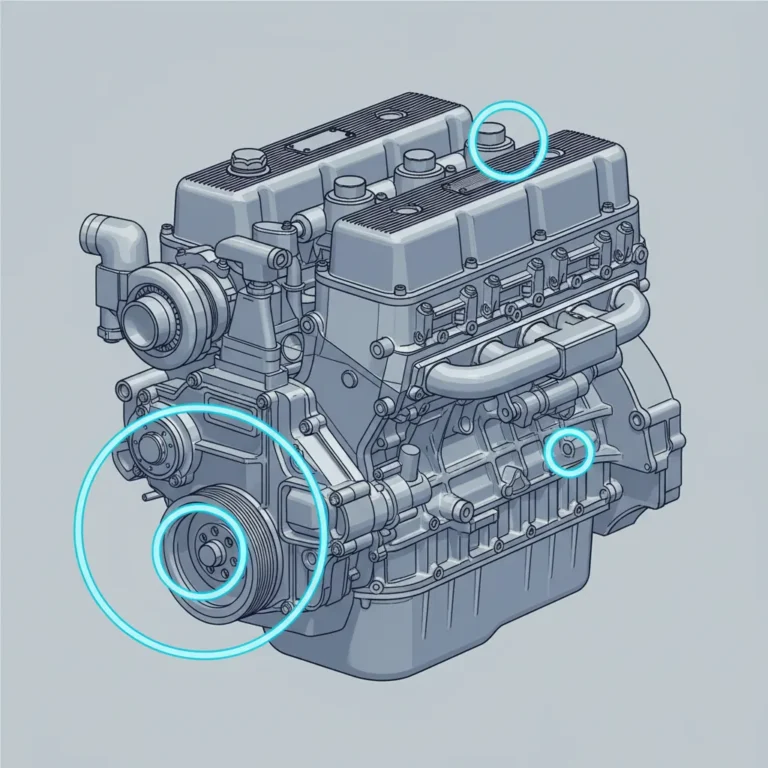
Cummins N14 Data Plate Pics Diagram: Component Breakdown (2026)

The Cummins N14 data plate is mounted directly on top of the rocker lever housing cover on the fuel pump side. It provides critical system layout details, including the eight-digit Engine Serial Number (ESN), Control Parts List (CPL), valve lash clearances (0.014-inch intake, 0.027-inch exhaust), and factory horsepower ratings.
📌 Key Takeaways
- The 8-digit Engine Serial Number (ESN) and CPL number are mandatory for sourcing correct internal parts.
- Data plates specify critical cold valve lash settings: 0.014 inch for intake and 0.027 inch for exhaust.
- Primary location is the front rocker housing cover, with a secondary backup ESN stamped on the rear engine block.
- Common failure involves oil, road grime, or heat degrading painted or aluminum foil plates over high operating miles.
- If the data plate is missing or unreadable, retrieve the stamped block number to query Cummins QuickServe before ordering parts.
Identifying the precise build specification of a Cummins N14 engine requires more than visual familiarity with the red or black rocker covers. Produced from 1990 through 2002 across mechanical, Celect, and Celect Plus platforms, the 14-liter (855 cubic inch) platform underwent numerous revisions in fueling hardware, cam profiling, and piston crown architecture.

Prime for Young Adults — 6 Months Free
Students and 18–24s get six months of Prime free, then half price.
Start 6 Months FreeWhen referencing Cummins N14 data plate pics from field tear-downs or equipment acquisitions, technicians must decode stamped alphanumeric fields that dictate everything from injector flow rates to electronic control module (ECM) calibration parameters. The primary metal serial tag serves as the operational blueprint for your engine, verifying that parts ordered through Cummins QuickServe Online (QSOL) match internal tolerances.
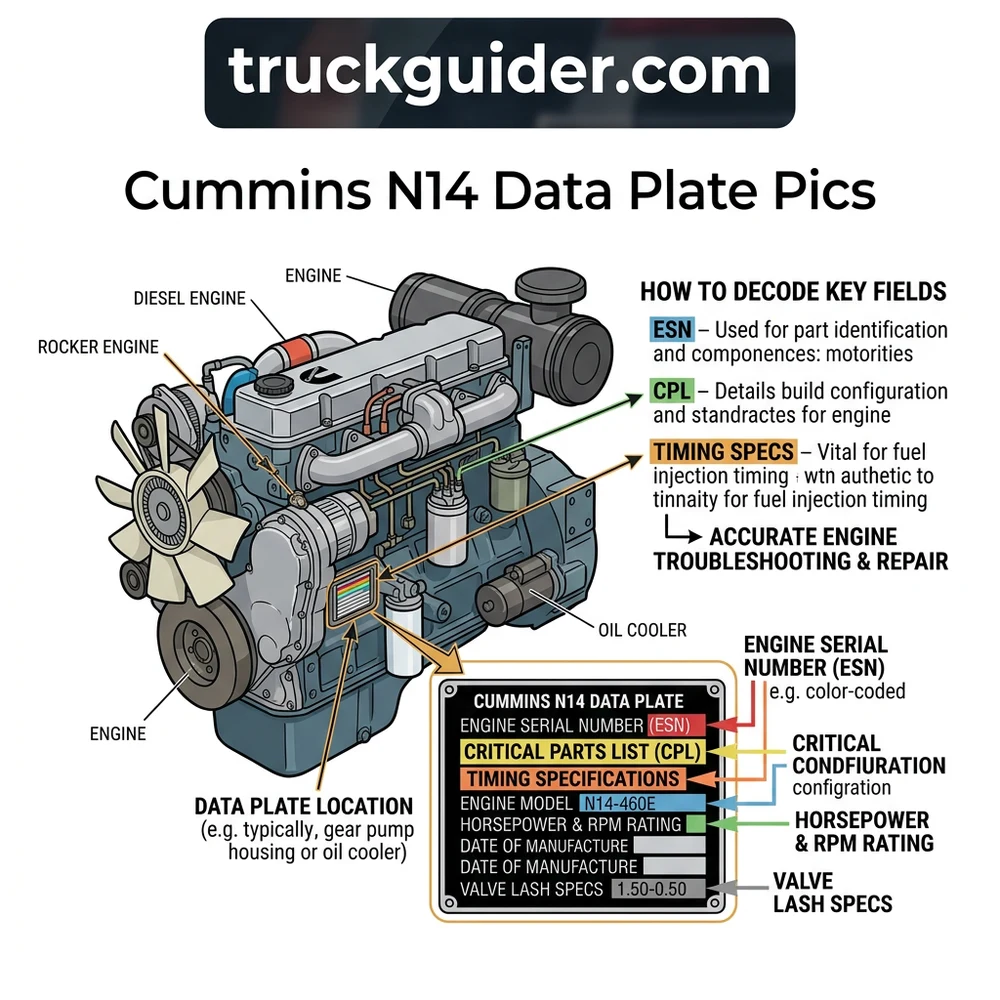
Cummins N14 Data Plate Pics and Factory Mounting Layout
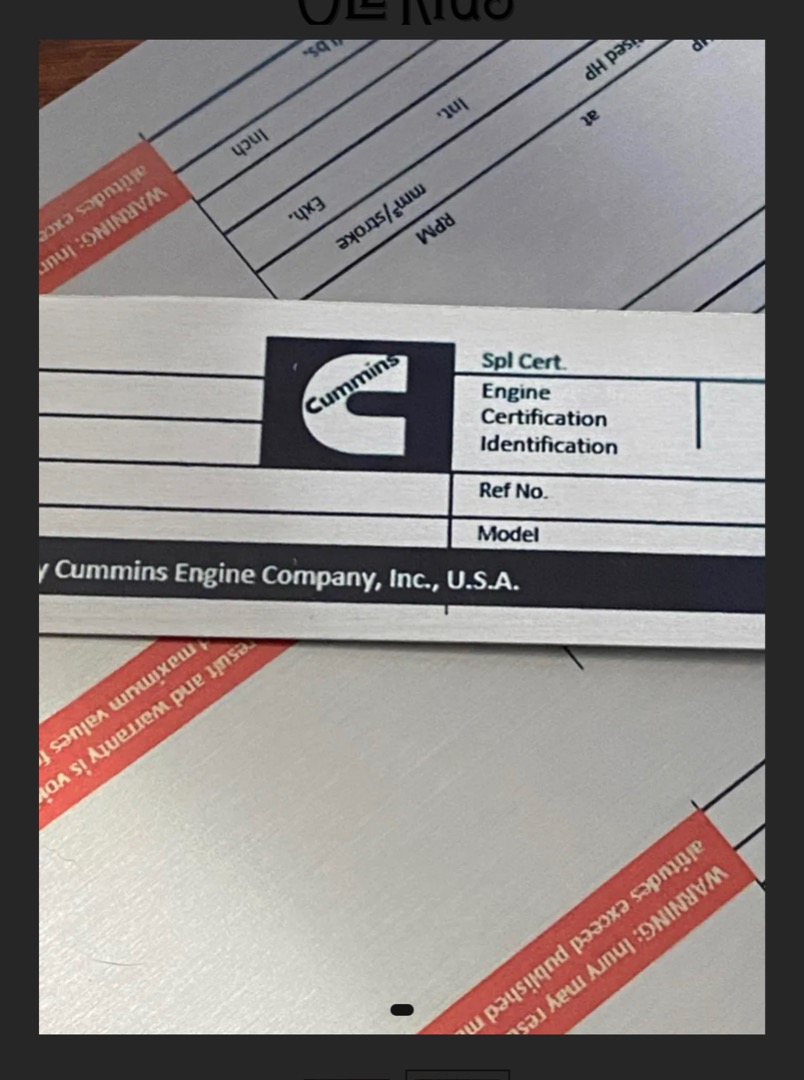
The factory data plate on a Cummins N14 engine is an anodized, stamped aluminum nameplate riveted to the structural aluminum casting of the valvetrain assembly. Locating, lighting, and securing clear Cummins N14 data plate pics requires an understanding of how Cummins laid out this engine platform across both industrial and heavy-duty on-highway chassis (such as Freightliner, Kenworth, and Peterbilt configurations).
On all production variants—including the base N14, N14 Celect, and N14 Celect Plus—the primary metal identification plate is riveted to the top-facing surface or outward-canted edge of the front rocker housing (cylinder head #1 position). The N14 utilizes three individual cylinder heads covering two cylinders each, with individual lower rocker housings and upper covers. The aluminum tag measures approximately 3 inches by 4 inches (76 mm by 102 mm) and is held in place by two mechanical drive rivets driven directly into the housing casting.
Because the rocker housings on an N14 are interchangeable between cylinder positions and across different 855-series engine blocks, a visual data plate on the rocker housing can be swapped inadvertently during head gasket replacement or valve servicing. Always cross-check the housing tag against the permanent block stamping.
When the front rocker housing tag is corroded, covered in blowby oil, or lost due to past component swaps, technicians must locate the secondary identification point: the permanent engine block serial stamping. The N14 cast-iron cylinder block features an unpainted, flat-machined rectangular boss. This stamping boss is located on the right-hand (exhaust/turbocharger) side of the engine block, near the top of the oil cooler housing casting toward the rear gear train, or directly adjacent to the cylinder head deck surface above the lubricating oil filter mounting head.
The secondary serial stamp contains the 8-digit Engine Serial Number (ESN) stamped directly into the cast iron using a heavy pin-stamp machine. While this stamping does not contain full operating parameters—such as the Control Parts List (CPL), timing specs, or valve clearance values—the stamped numeric string provides the baseline identity needed to retrieve the factory configuration electronically through OEM lookup platforms.
Cummins N14 Data Plate Component Breakdown and Visual Blueprint
The information stamped into the N14 metal data plate uses a standardized rectangular grid layout. Each stamped field contains production-run parameters necessary for mechanical overhaul, ECM programming, and troubleshooting the front gear train timing. The following technical reference blueprint details each field found on original Cummins factory tags.
| Data Plate Field | Format / Typical Value | Engineering Function & System Significance |
|---|---|---|
| Engine Serial Number (ESN) | 8-Digit Numeric (e.g., 11842391) | Unique identifier tied to the factory manufacturing database. Determines production date, plant assembly records, and exact internal parts genealogy. |
| Control Parts List (CPL) | 3 to 4 Digits (e.g., CPL 1807, 1844, 2025, 2390) | Defines critical emissions and mechanical build components: piston crown bowl geometry, compression ratio (16.2:1 vs 16.8:1), injector part number, camshaft profile, and turbocharger trim specs. |
| Model Designation | N14-430E / N14-460E / N14-525E | Indicates base engine family (N14), brake horsepower rating (e.g., 460 HP), and electronic architecture (“E” designating Celect or Celect Plus platform). |
| Advertised Horsepower & RPM | e.g., 460 HP @ 1800 RPM | The continuous-duty or peak operational brake horsepower rating rated at a specific crankshaft rotation speed under standard SAE ambient test conditions. |
| Peak Torque & RPM | 1650 LB-FT @ 1200 RPM | Specifies the maximum mechanical torsional force generated by the rotating assembly, which governs driveline component rating and transmission torque limits. |
| Valve Lash Cold (In / Ex) | IN: 0.014 in (0.36 mm) EX: 0.027 in (0.69 mm) | Mechanical clearance between rocker lever pad and valve crosshead tips measured below 140°F (60°C). Mandatory set points during overhead top-stop lash calibration. |
| Fuel Rate at Rated HP | e.g., 185.0 mm³/stroke or lb/hr | Specifies the volume of diesel delivered per cylinder event at peak advertised load, critical for validating dyno output and troubleshooting rail pressure drops. |
| Firing Order | 1-5-3-6-2-4 | Universal clockwise crankshaft sequence starting at front vibration damper, matching overhead valve/injector adjustment sequence (Outer Base Circle method). |
| Idle RPM | 600–750 RPM Range | Factory base-programmed low-idle speed maintained by ECM governor fueling loops under no-load operating conditions. |
Factory N14 CPL values are strictly linked to piston bowl configurations. For example, CPL 1844 utilizes an articulated two-piece piston with a forged steel crown and aluminum skirt running a 16.8:1 compression ratio, while earlier CPL 1573 configurations utilize single-piece cast aluminum pistons requiring specific injector protrusion depths.
When studying genuine Cummins N14 data plate pics, notice that earlier engines (pre-1996) contain references to mechanical PT pump rail pressures or initial static injection timing codes stamped in the lower quadrants. On later Celect Plus models, these fields were replaced with emissions certification text, EPA family codes (e.g., WCEXH0855FAA), and ECM calibrated voltage ranges.

Audible — Listen Free for 30 Days
One free credit a month and thousands of titles included.
Listen Free for 30 DaysHow to Locate and Read Cummins N14 Data Plate Pics Step-by-Step
Field mechanics and equipment inspectors frequently encounter tags covered in hardened grease, degraded paint, or mechanical scouring. Follow this standardized procedure to safely locate, clean, read, and cross-reference your Cummins N14 identification tag on heavy commercial trucks, generator sets, or off-highway equipment.
1. Access and Degrease the Rocker Housing Tag
Locate the front rocker cover on the left-hand intake side or forward-facing corner of the #1 cylinder rocker housing assembly. Use an aerosol citrus-based solvent or non-chlorinated brake parts cleaner paired with a soft nylon detail brush to break down built-up crankcase oil and road grime. Avoid brass or steel wire brushes, which scour the soft aluminum plate face and erase the raised black silkscreen lettering surrounding the stamped indentations.
2. Capture High-Resolution Raking-Light Photos
Because these plates use physical impact stampings, reading faded characters requires raking light. Position an LED work light at an oblique, shallow 15-to-30-degree angle relative to the plate face rather than head-on. The oblique light casts small shadows inside the stamped recesses of the numbers, making them legible in digital photographs even if the original factory paint is gone. Capture both a wide-angle reference shot showing tag position and a high-resolution macro shot of the stamped fields.
3. Isolate the ESN and CPL Alphanumerics
Locate the upper-right or mid-upper sector of the plate to record the 8-digit ESN string. For N14 engines, this number commonly begins with digits 11 or 12 (e.g., 11985422). Shift downward to identify the 3- or 4-digit CPL number. If you are preparing to perform a mechanical overhead tune-up, locate the bottom left quadrant to record the specified cold valve lash for intake (typically 0.014 in) and exhaust (typically 0.027 in), along with the injector pushrod adjustment method (torque vs. dial indicator travel setting).
4. Confirm Physical Block Stamping Consistency
Do not order internal rebuild kits based solely on the rocker housing tag. Crawl under the right-side exhaust manifold or access the frame rail gap near the rear gear housing and wipe down the machined ledge on the cylinder block. Compare the stamped 8-digit numeral directly punched into the cast iron with the ESN stamped on the aluminum rocker housing plate. If the digits match, the rocker housing is original to the block.
If your engine features dual-box ECM electronics or has undergone an injector upgrade, compare the CPL against the ECM internal calibration. Read our guide on Celect plus injector calibration to verify if the physical nozzle delivery code matches the ECM software profile.
5. Audit the Build on Cummins QuickServe Online
Log in to Cummins QuickServe Online (free access is standard for single-engine owners via registration) and enter the 8-digit ESN in the serial search bar. QSOL will populate the exact manufacturing record, including:
- Original equipment ship date and build plant (e.g., Jamestown Engine Plant – JEP).
- Factory-installed CPL variant and full bill of materials down to the piston pin retainer rings.
- Compatible ECM calibration software part numbers (e.g., calibration phase V304/V308).
- Superceded injector, turbocharger, and water pump part numbers.
Troubleshooting Damaged, Missing, or Mismatched Identification Tags
Operating legacy 14-liter equipment presents significant identification challenges. Decades of heavy fleet maintenance, commercial overhauls, salvage-yard repairs, and frame-up restorations frequently result in conflicting identity data. Resolving these discrepancies requires systematic mechanical forensics.
Audible Premium Plus — Annual Membership
12 audiobook credits up front, plus the full Audible catalogue.
See Annual PlansScenario A: Swapped Rocker Housings
Because the three N14 lower rocker boxes share an identical footprint across cylinders 1-2, 3-4, and 5-6, mechanics performing overhead valvetrain rebuilding often unbolt the housings without marking their positions. An N14 engine may carry the data plate on cylinder #5 because the front housing was shifted to the rear during an in-frame overhaul. Search all three rocker box forward edges before assuming the plate is lost.
If the plate is entirely missing, or if the rocker box was replaced with a generic junkyard casting from a mechanical Big Cam or an N14 with a different horsepower rating, verify the permanent block stamping on the right-side machined block boss. The cast-iron block stamping represents the definitive legal identity of the engine assembly as it left the assembly line.
Scenario B: ECM Readout Disagrees with Data Plate
Connecting diagnostic tools—such as Cummins INSITE or an electronic hand-held scanner—to the J1939/J1708 9-pin Deutsch data port may reveal an ESN or CPL parameter that does not match the physical data plate pics captured in the field. This discrepancy occurs when:
- ECM Replacement: The original Celect or Celect Plus ECM failed and was replaced by a salvage-yard ECM without reflashing the original vehicle calibration or manual entry of the engine’s original ESN.
- Horsepower Uprating: The engine was legally or aftermarket re-rated from an N14-370E to an N14-435E or N14-460E, requiring an ECM software flash upgrade that superseded original data plate fuel curve calibrations.
When tuning or ordering parts, match mechanical hard components (pistons, camshaft, valve springs) to the physical CPL derived from the block’s permanent ESN. Match sensors, injector solenoids, and electronic actuators to the current ECM configuration to avoid timing faults and active diagnostic fault codes.
Scenario C: Corroded or Scrubbed Block Stampings
On salt-belt road trucks or marine-converted industrial engines, heavy rust pitting can make block stampings unreadable. Use 400-grit wet sandpaper wrapped tightly around an aluminum sanding block to lightly dress the raised stamped boss. Sanding exclusively flat polishes the elevated cast iron while leaving rust or dark carbon within the stamped recesses, producing a high-contrast numeric outline. Do not grind with power discs, which permanently erases remaining metal indentations.
Comparing Cummins N14 Tag Configuration with Big Cam and ISX Plates
When searching through archival engine bay images or sorting through used equipment, identifying the generation of a Cummins 855-derived or successor heavy-duty engine is simplified by comparing plate design, stamping conventions, and structural tag composition across generations.
| Plate Feature | Cummins 855 / Big Cam | Cummins N14 (Celect / Celect Plus) | Cummins ISX / Signature 600 |
|---|---|---|---|
| Primary Physical Location | Rocker housing or top of front gear cover / fuel pump gear pocket. | Top front edge of forward cylinder rocker housing casting. | Left-hand side of structural polymer valve cover (or front geartrain cover). |
| Plate Construction | Heavy brass or thick anodized aluminum, mechanically stamped. | Flexible stamped sheet aluminum secured by two blind drive rivets. | Metallic metallic-film adhesive decal or laser-etched metal label. |
| Key Technical Fields | CPL, High Idle, Base Timing Code (Pushrod travel), Rail Pressure. | CPL, ESN, Valve Lash Cold, Rated HP/RPM, Peak Torque, Idle. | ESN, CPL, Family Code, Valve Lash, Dual Overhead Cam timing index. |
| Fuel System Mentioned | PT (Pressure-Time) mechanical pump metrics. See our PT pump diagnostics guide. | PT / Celect electronic unit injector calibration families. | HPI-TP (High Pressure Injection) or common rail parameters. |
Commercial rebuilder tags (such as those from Cummins ReCon, Jasper, or independent diesel machine shops) may be riveted directly alongside or placed over the original N14 plate. A Cummins ReCon plate typically features a gold-anodized or bright yellow finish and displays a ReCon Serial Number along with the original ESN and converted CPL, denoting that the unit may carry upgraded internal components differing from its original factory assembly specification.
Frequently Asked Questions About Cummins N14 Data Plate Pics
Where is the backup engine serial number stamped if the data plate is missing?
If the front rocker housing data plate is absent or illegible, locate the backup 8-digit ESN permanently pin-stamped directly into the cast-iron cylinder block. The machined flat boss is positioned on the right-hand (exhaust/turbo) side of the block casting, directly above the rear oil cooler housing mount and below the cylinder head split line. Sanding the flat boss lightly with a fine-grit abrasive block exposes the stamped numerals.
Can you tell an N14 Celect from a Celect Plus solely from the data plate?
Yes. The plate provides two immediate markers. The Model field will typically designate “N14-E Plus” on later electronic platforms, whereas original Celect models display “N14-E” or standard ratings like “N14-460E”. Additionally, examine the manufacture date and EPA engine family code: engines built from late 1990 through late 1995 represent early mechanical and original Celect architectures, while plates stamped from early 1996 through 2002 indicate Celect Plus configurations running the upgraded ECM architecture with dual high-density connector interfaces.
What does the CPL number tell you on an N14 engine plate?
The Control Parts List (CPL) is the master mechanical component index established by Cummins engineering. On the N14 platform, the CPL dictates precise internal parts selection: it dictates whether your block requires low- or high-compression pistons, articulated steel crowns or monolithic aluminum pistons, wide or narrow camshaft journals, matched injector flow codes, and specified turbocharger exhaust turbine A/R ratios. Ordering engine rebuild kits using only the horsepower rating without the CPL frequently leads to catastrophic valvetrain or piston-to-valve interference issues.
Why do diagnostic scanner readouts conflict with the N14 data plate?
Discrepancies between the physical metal tag and the electronic readout in Cummins INSITE occur when an ECM has been replaced with a used unit without programming the truck’s original ESN, or when an engine has received a field horsepower uprate. Authorized uprating requires changing the ECM calibration code and updating the electronic parameters to modify fueling duration. In this scenario, the ECM reflects the actual current fueling profile, while the stamped metal tag displays the build specs the engine possessed when it left the assembly line.
How are cold valve lash specifications formatted on the N14 tag?
The data plate lists valve lash specs under the designated valve clearance box measured in thousandths of an inch (and occasionally parenthetically in millimeters) under “COLD” conditions (below 140°F / 60°C). For standard production N14 engines, the tag specifies an intake valve clearance of 0.014 inches (0.36 mm) and an exhaust clearance of 0.027 inches (0.69 mm). The plate also specifies the injector travel setting or outer base circle mechanical setting method required to correctly load the camshaft injector lobes during an overhead tune-up.
![Cummins Grid Heater Bolt: Specs & Fitment Guide [2026]](https://truckguider.com/wp-content/uploads/2026/03/cummins-grid-heater-bolt-featured.webp)