Dodge Paint Codes: How to Find Yours & Full Color List [2026]

To find your Dodge paint code, look for the silver or white VIN sticker located on the driver’s side door jamb or under the hood. These three-character alphanumeric codes (e.g., PX8 or PDM) are essential for ensuring an exact color match for repairs or touch-ups.
🎯 Key Takeaways
- Locate the Manufacturer’s Identification Label on the driver-side door jamb or pillar.
- Dodge codes are typically three characters, often preceded by ‘PNT:‘ or ‘Paint’.
- Common codes include PX8 (Pitch Black) and PDM (Billet Silver).
- Verify your code via VIN at a dealership if the sticker is missing.
- Use the specific code rather than the color name to ensure accuracy.
To find your Dodge paint code, you need to locate the Manufacturer’s Service High-Level Information label, which is most commonly found on the driver’s side door jamb. Look for a three-character alphanumeric sequence—such as PX8 or PR3—usually preceded by the abbreviation “PNT.” This code is the only foolproof way to ensure you get an exact match for touch-up work or panel replacement, as Dodge often produces multiple variations of the same color family in a single year.



Identifying this code matters because “Red” or “Black” isn’t enough information for a paint supplier. For example, Dodge has utilized dozens of different blacks over the last decade, ranging from flat matte finishes to deep metallic pearls like “Brilliant Black Crystal.” Using the wrong variant will result in a visible patch that ruins the vehicle’s aesthetic. By the end of this guide, you will know exactly where to look on your specific model and how to read the data plate like a professional technician.
Common Locations for the Dodge Paint ID Sticker
While most manufacturers have standardized their label placement, Dodge has shifted locations depending on the model year and body style. Finding the sticker is the hardest part of the process, but it is typically located in one of three primary zones. You are looking for a white or silver sticker that contains the Vehicle Identification Number (VIN) and various manufacturing barcodes.
The Driver’s Side Door Jamb (The Primary Spot)
On modern Dodge vehicles like the Charger, Challenger, and Durango, the paint code is almost always on the driver’s side door pillar. Open the door and look at the frame where the door latches when closed. You will see a “Safety Standard Certification Label.” Scan the bottom of this sticker. Look for the letters “PNT” or “Paint” followed by a three-digit code. On newer models, this is frequently positioned in the bottom left corner. If you don’t see it on the pillar, check the edge of the door itself, near the latch mechanism.
Model-Specific Variations: Ram Trucks and SUVs
If you drive a Ram 1500, 2500, or 3500, the door jamb is still the most likely location. However, on certain older generations or specific trim levels, Dodge placed the “Service Parts Identification” sticker inside the glove box. Empty your glove compartment and look for a small white sticker adhered to the back wall or the inside of the door. This sticker lists every option code your truck was built with, including the exterior paint. For some Dodge Grand Caravans or older Journey models, check the underside of the hood or the radiator support bar near the front of the engine bay. These locations use a metal plate riveted to the frame rather than a sticker. To match a code to a Ram color name, use our Dodge Ram paint code chart.
- Charger/Challenger: Driver’s side door jamb or door edge.
- Ram Trucks: Door jamb or inside the glove box.
- Durango/Journey: Driver’s side door jamb or under the hood.
- Grand Caravan: Door jamb or radiator support beam.
- Viper: Often located in the rear trunk area or engine compartment.
Anatomy of a Dodge Paint Code: Characters and Formats
Dodge paint codes follow a specific logic that has remained relatively consistent since the 1990s. Once you find the sticker, you might be overwhelmed by the wall of text and numbers. Knowing exactly what the characters represent will prevent you from accidentally ordering an interior trim color instead of exterior paint.
Understanding the 3-Character Format
Standard Dodge paint codes are three characters long. They usually start with a letter, followed by a number and another letter, or two letters and a number. For example, “PDM” is the code for Tungsten Metallic, and “PLC” is the code for Hemi Orange. It is critical to note that the first letter often identifies the “color family,” but it isn’t a universal rule. If you see a code like “TRM,” ignore it—that refers to your interior trim and fabric color, which will not match your exterior body panels.
The “P” vs “Q” Prefix Distinction
One common point of confusion for Dodge owners is the presence of a “P” or a “Q” at the beginning of a code listed in a database. In the Chrysler/Dodge system, the “P” stands for “Primary” paint. This is the code used during the assembly line process. The “Q” prefix is often used for secondary colors, such as two-tone accents on a Ram truck or the color of a Challenger’s shaker hood. When you are looking at your door jamb sticker, the code will usually be listed as PNT:XXX. If your sticker says “PNT: PX8,” and a website lists it as “QX8,” they are the same color. The “X8” is the core identifier for Pitch Black.
Common Dodge Code Examples
To help you recognize the format, here are some of the most frequently searched Dodge paint codes you might encounter on your vehicle’s ID plate:
- PX8: Pitch Black / Black Crystal
- PR3: TorRed (A classic Dodge High-Impact color)
- PW7: Bright White
- PAE: Jazz Blue Pearl
- PLB: Copperhead Pearl
- PGO: Mango Tango
If your code appears to have four digits, ensure you aren’t reading the “MDH” (Month Day Hour) code, which indicates the exact time your car was finished on the assembly line. The paint code will always be distinct and usually sits right next to the “TRM” code. If the label is scratched or missing, your next best step is to provide your VIN to a local Dodge dealership parts department; they can run a build sheet that lists the factory paint code specifically for your chassis.
Comprehensive Database of Popular Dodge Paint Codes
Dodge has a long history of bold, high-energy colors that define the personality of their vehicles. Whether you are driving a vintage Charger or a modern Durango, the brand’s palette ranges from aggressive high-impact hues to sophisticated, sleek metallics. Knowing these popular codes can help you verify that you are looking at the right shade before you order any supplies.
Iconic High-Impact and Muscle Car Colors
If you own a Challenger or a Charger, you are likely dealing with one of Dodge’s “High Impact” legacy colors. These shades are designed to stand out and often have catchy, marketing-heavy names. Many of these codes have remained consistent across several model years, making them staples for enthusiasts.
- Plum Crazy (PHG/XFC): Perhaps the most famous Dodge purple, this metallic shade has been a fan favorite since the 1970s.
- Go Mango (PVP): A deep, vibrant orange that screams performance and is frequently seen on modern SRT trims.
- TorRed (PR6): A classic, bright race-red that is a staple for nearly every sporty model in the lineup.
- Sublime Green (PFB): This electric neon green is impossible to miss and is a hallmark of the Mopar heritage.
- Indigo Blue (PBM): A rich, dark metallic blue that offers a more refined look while still maintaining an aggressive edge.
Modern Neutrals and Sleek Metallic Tones
Not every Dodge is meant to be neon. In recent years, “flat” and “cement” style grays have become incredibly popular across the RAM and SUV lineups. These colors often rely on specific clear coats to achieve their signature look, making the exact paint code essential for a match.
- Destroyer Grey (PDN): A solid, non-metallic gray that has defined the “stealth” look for modern Dodge vehicles.
- Pitch Black (PX8): The standard deep black used on millions of vehicles; it is one of the most common codes in the Dodge database.
- Billet Silver (PSC): A bright, flake-heavy metallic silver that is popular for its ability to hide road grime and small scratches.
- White Knuckle (PW7): A crisp, clean bright white that provides a sharp contrast against black wheels and trim packages.
- Granite Crystal (PAU): A dark, charcoal metallic that looks different depending on the lighting, requiring a precise mix to replicate.
Comparing Professional Resprays and DIY Touch-Up Kits
Once you have located your paint code, the next decision is how to handle the repair. The size of the damage and your budget are the two biggest factors here. There is a significant difference between filling a small rock chip in your driveway and refinishing a bumper at a professional body shop.
When to Opt for Professional Paint Services
For larger areas, such as a deep door ding that has reached the metal or a scuffed bumper, professional help is usually the best route. Professionals have access to high-grade spray booths and computerized mixing systems that can account for “paint fade.” Since older paint often lightens due to UV exposure, a pro can “blend” the new paint into the old panels so the repair is invisible.
- Seamless Blending: Pros can feather the paint across adjacent panels to ensure there is no visible line between old and new.
- Durable Clear Coats: Commercial-grade clear coats are much harder and more UV-resistant than standard aerosol cans.
- Resale Value: A high-quality professional repair maintains the car’s value, whereas a messy DIY job can actually decrease it.
The Convenience of DIY Touch-Up Kits
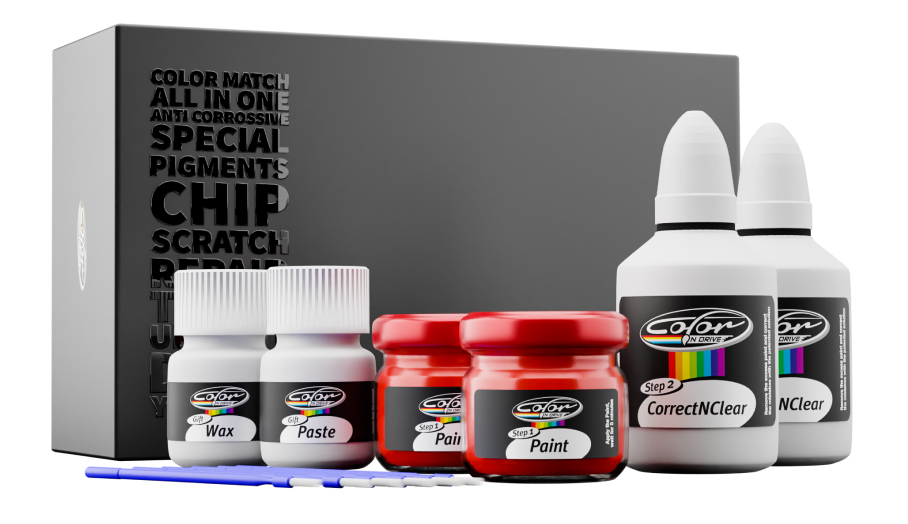
If you are dealing with minor “road rash” or a small chip from a grocery cart, a DIY touch-up kit is a cost-effective solution. These kits come in several formats, including pens, bottles with brushes, and pressurized spray cans. The key to success with these kits is using your exact Dodge paint code rather than a “close match” from a generic shelf at a big-box store.
- Touch-Up Pens: Best for tiny nicks and stone chips; they offer great precision for very small dots.
- Brush-in-Cap Bottles: Ideal for longer, thin scratches that require a steady hand to fill the groove.
- Aerosol Kits: Useful for mirror caps or small trim pieces, though they require significant masking of the surrounding area.
- Affordability: Most kits cost under $30, making them a fraction of the price of a body shop visit.
Conclusion
Finding the correct paint code for your Dodge is the most important step in maintaining its iconic look. Whether you find the sticker on the driver’s side door jamb or use your VIN to look it up, having that three-digit code ensures that your repairs will look intentional rather than like an eyesore. From the legendary Plum Crazy to the modern Destroyer Grey, getting the right match is what keeps a Mopar looking its best.
Before you start any repair, double-check your code one last time against your vehicle’s paperwork and test your touch-up paint on a small, hidden area first. Take the time to choose the right repair method for your needs, and you will have your Dodge looking showroom-ready in no time. Grab your paint code today and get started on restoring your car’s finish!
❓ Frequently Asked Questions
Why does my Dodge have two different paint codes listed?
If your vehicle has a two-tone paint scheme, the sticker will list a primary (lower) and secondary (upper) paint code. Ensure you match the specific area you are repairing to the correct code.
Are Dodge paint names like ‘TorRed’ and ‘Hemi Orange’ the same as the code?
Marketing names can change between models and years, but the 3-digit code remains the constant identifier for the chemical paint formula. Always rely on the code over the name.
Where do I look for the paint code on an older Dodge model?
For vintage Dodges, the code is often stamped on a metal ‘fender tag’ located under the hood on the driver’s side inner fender or the firewall.
Do Dodge paint codes specify if the paint is pearlescent or metallic?
The code itself points to a specific formula that includes those properties, but the sticker typically won’t describe the finish in plain text; you must look up the code to confirm.
Can I use a Jeep paint code on my Dodge if they look similar?
While Chrysler/Stellantis brands often share colors (like Granite Crystal), you should always verify the 3-digit code matches exactly, as slight variations exist between brands.
What should I do if the PNT field on my sticker is blank?
In rare cases of damage or error, use your VIN to request a ‘Build Sheet’ from Dodge customer service or a local dealer to identify the factory color.