Dodge Ram Wheel Offset Chart: All Years and Trims

Wheel offset is the single biggest reason a new set of wheels rubs the fender, hits a control arm, or throws off your Ram’s turning radius. It is the distance from the wheel’s hub mounting surface to its true centerline, measured in millimeters, and it decides whether your tires tuck under the truck or poke past the fenders.
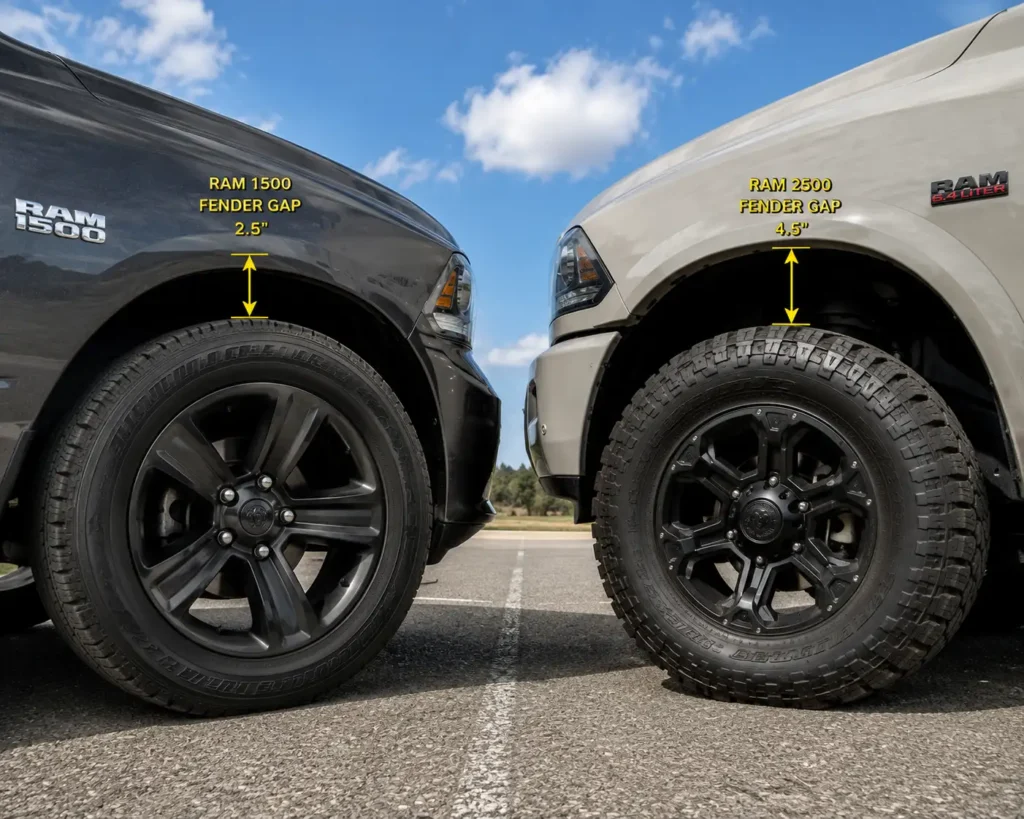
The number is not the same across a Ram lineup. A Ram 1500 and a Ram 2500 do not share a bolt pattern, a 2018 truck and a 2020 truck do not share a lug count, and even trucks from the same model year can carry different factory offsets depending on trim and wheel size. This chart breaks the real OEM numbers down by generation so you are matching wheels to your actual truck, not a generic “Ram” spec sheet.
Dodge Ram Wheel Offset Quick Reference
Bolt patterns, hub bores, and factory offset by generation
Understanding Offset Direction
Ram 1500 Factory Offset by Generation
| Years | Pattern | Factory Offset |
|---|---|---|
| 1994 to 2008 | 5×139.7mm | +15mm to +25mm (8") |
| 2009 to 2018 | 5×139.7mm | +15mm to +25mm (8"), +18mm (9") |
| Classic 2019 to 2024 | 5×139.7mm | +15mm to +25mm |
| DT 2019 to present | 6×139.7mm | Approx +18mm to +20mm |
Ram 2500 and 3500 Factory Offset by Generation
| Years | Hub Bore | Factory Offset |
|---|---|---|
| 2003 to 2008 | 120.9mm | +43mm (17×8"), +45mm (17×7.5") |
| 2009 to 2012 | 120.9mm | Nearly identical to 2003 to 2008 |
| 2013 to 2018 | 66.5mm | 54.65mm (20×8") |
| 2019 to 2025 | 121.3mm | 54.6mm (20×8") |
What Wheel Offset Means on a Dodge Ram
Recommended Best Deal Products


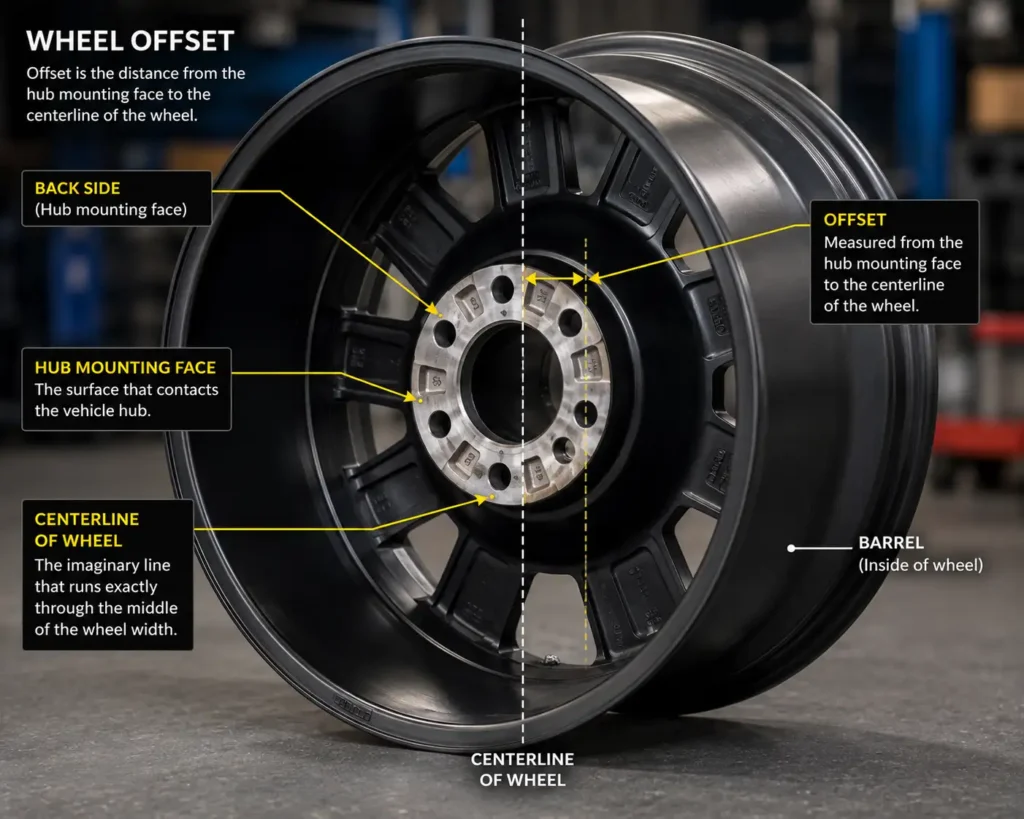
Offset comes in three flavors. Positive offset means the wheel’s mounting face sits closer to the outside edge of the wheel, which pulls the tire in toward the truck. Negative offset means the mounting face sits closer to the inside edge, which pushes the tire out past the fender. Zero offset means the mounting face lines up with the wheel’s true center.
Backspacing measures something related but distinct: the distance from the mounting face to the back edge of the wheel. Two wheels with the same offset can have different backspacing if their overall widths differ, so shops quote both numbers for a reason.
On a Ram specifically, going more positive keeps the tire tucked under the fender with less risk of rubbing the fender liner. Going more negative pushes the tire outward, which can look aggressive but risks contact with the front sway bar, tie rods, or radius arms depending on your suspension setup.
Dodge Ram 1500 Wheel Offset Chart by Generation
The Ram 1500 split into two completely different bolt patterns in 2019, and that split matters more than the offset numbers themselves.
Trucks from 1994 through 2018, plus the Ram 1500 Classic that Ram continued selling through 2024 alongside the redesigned truck, use a 5-lug 5×139.7mm bolt pattern with a 77.8mm hub bore.
The redesigned DT-body truck, sold from 2019 to today including the TRX and RHO, switched to a 6-lug 6×139.7mm pattern on the same 77.8mm hub bore. Wheels from one generation will not physically bolt onto the other. If you are shopping for a used set of take-offs, count the lug holes before you buy, and check our breakdown of which Dodge Ram wheel years are interchangeable if you are mixing parts across generations.
| Generation | Years | Bolt Pattern | Hub Bore | Factory Offset Range |
|---|---|---|---|---|
| 2nd and 3rd Gen | 1994 to 2008 | 5×139.7mm | 77.8mm | +15mm to +25mm (8″ wheels) |
| 4th Gen | 2009 to 2018 | 5×139.7mm | 77.8mm | +15mm to +25mm (8″ wheels), +18mm (9″ wheels) |
| Ram 1500 Classic | 2019 to 2024 | 5×139.7mm | 77.8mm | +15mm to +25mm, same as 4th Gen platform |
| 5th Gen DT | 2019 to present | 6×139.7mm | 77.8mm | Roughly +18mm to +20mm across most trims |
On the 4th generation and Classic trucks, an 8-inch-wide wheel between +15mm and +25mm offset, or a 9-inch wheel at +18mm, replicates the factory tucked-under stance. Owners chasing a flush look on a 9-inch wheel typically land on 0mm to +1mm offset instead.
The 5th generation DT truck runs a tighter factory range. Owners running stock-diameter 20×9 wheels commonly report a factory offset around +19mm, and independent fitment data puts the full trim spread between roughly +18mm and +25mm depending on wheel width and package. needs manual check: exact per-trim offset for Tradesman, Big Horn, Laramie, Rebel, and TRX on the current DT platform against the Mopar parts catalog, since third-party sources give ranges rather than confirmed per-trim figures.
Ram 2500 and 3500 Wheel Offset Chart by Generation
Recommended Best Deal Products


Heavy-duty Rams run an 8-lug pattern that has stayed close to 8×165.1mm across generations, but the offset has climbed noticeably as factory wheels grew from 17 inches to 20 inches.
| Generation | Years | Bolt Pattern | Hub Bore | Factory Offset |
|---|---|---|---|---|
| 3rd Gen | 2003 to 2008 | 8×165.1mm | 120.9mm | +43mm (17×8.0″), +45mm (17×7.5″) |
| 4th Gen (early) | 2009 to 2012 | 8×165.1mm | 120.9mm | Nearly identical to 2003 to 2008 fitment |
| 4th Gen (late) | 2013 to 2018 | 8×165.1mm | 66.5mm | 54.65mm (20×8″) |
| 5th Gen | 2019 to 2025 | 8×165.1mm | 121.3mm | 54.6mm (20×8″) |
The 2010 to 2012 trucks share nearly the same frame and suspension as the 2003 to 2009 third generation, so their wheel and tire fitment carries over almost exactly. If your 2500 or 3500 is a dually, the rear axle uses an entirely different 8x200mm bolt pattern with a 142mm center bore starting in 2019, which is not interchangeable with single-rear-wheel trucks. RIFIED, needs manual check: exact dually rear bolt pattern and offset for pre-2019 3500 trucks, since sourced data here confirms only the 2019-and-newer 8x200mm spec.
For exact torque figures on any of these hubs, check our Ram 2500 wheel torque specs before you mount anything, since over-torquing an 8-lug hub is a common and avoidable mistake.
Bolt pattern alone does not confirm interchangeability. Confirm hub bore and offset are also correct before assuming an 8×165.1mm wheel from one generation drops on cleanly with the Dodge 8-lug bolt pattern reference for your exact truck.
How Factory Offset Affects Tire and Fender Fit on a Stock Ram
A more positive offset pulls the tire and wheel assembly inward, toward the engine bay and suspension components. On a stock-height half-ton, this usually means good fender clearance but a higher risk of rubbing the front sway bar or tie rod ends if you also step up tire width.
A more negative offset pushes the wheel outward. On a stock-height 1500 or 2500, dropping to a 0mm or negative offset can put the tire flush with or slightly past the fender lip, which increases the odds of rubbing the fender liner at full steering lock, especially on trucks without a leveling kit.
Owners running larger tires on stock suspension consistently report the same pattern: wheels close to the factory offset clear cleanly, while wheels pushed 15mm to 20mm more negative than stock start rubbing the plastic fender liner or the front arms under full compression, even before adding a bigger tire.
Changing Your Ram’s Offset with Wheel Spacers or New Wheels
Recommended Best Deal Products


Wheel spacers shift your effective offset without buying new wheels. A 1.5-inch spacer, for example, pushes the wheel roughly 38mm further from the hub, which moves a stock +19mm offset wheel to something closer to a -19mm effective offset once you account for the spacer’s thickness.
Spacers work well for small, controlled changes, particularly hub-centric spacers that keep the wheel properly centered on the hub rather than relying on lug nuts alone for alignment. Our review of the 6×5.5 wheel spacers for a 2020 Ram 1500 covers fitment on the older 5-lug platform specifically, so confirm your generation’s bolt pattern before ordering.
New wheels make more sense when you need a larger offset change, want to run a wider wheel overall, or want to avoid adding a second mating surface between the hub and the wheel. Whichever route you choose, re-torque the lug nuts after the first 50 to 100 miles, since a new spacer or wheel needs a settling period before the final torque holds.
Why OEM Offset Data Sometimes Conflicts
Owners run into this constantly: one source says a stock wheel is +20mm, a dealership parts department says +12mm for the same year and trim, and neither side backs down. This happened with a 2018 Ram 3500 Tradesman owner, where a third-party spec database listed the factory 18-inch wheel at 20mm offset and 8 inches wide, while the dealership insisted it was 12mm offset on a 9-inch-wide wheel.
Part of the confusion comes from mid-year running changes, where Ram swaps a supplier’s wheel for a functionally similar one without updating every database. Part of it comes from trim packages that share a wheel diameter but not a width or offset.
The most reliable fix is to check the stamp on the back of the wheel itself, behind the spokes or near the hub mounting pad. You will typically see a size marking like 20×8.5J and an offset marking like ET20, and that stamped number overrides anything printed online. If you cannot access the stamp, call the dealership parts counter directly with your VIN rather than your model year and trim, since the VIN pulls the exact build sheet.
FAQ
What offset are stock Ram 1500 wheels?
Pre-2019 and Ram 1500 Classic trucks run roughly +15mm to +25mm on 8-inch wheels. The redesigned 2019-and-later DT truck runs closer to +18mm to +20mm on most factory wheel setups.
Is Ram 2500 the same bolt pattern as Ram 1500?
No. The Ram 2500 and 3500 use an 8×165.1mm 8-lug pattern, while the Ram 1500 uses either a 5×139.7mm or 6×139.7mm 5-lug or 6-lug pattern depending on the year.
Can I put 2500 wheels on a 1500?
Not without adapters. The bolt patterns, lug counts, and load ratings are different, and mismatched load ratings are a safety issue, not just a fitment one.
What offset do I need for 35s with no rubbing on a stock height truck?
Most owners land between 0mm and +12mm on an 8 to 9-inch-wide wheel for minimal trimming on a stock-height half-ton, though exact clearance depends on tire brand, sidewall design, and whether the truck has a leveling kit.
Dodge Ram wheel offset is not one number. It changes by generation, by 1500 versus 2500 or 3500, and sometimes by trim within the same model year. Match your bolt pattern first, confirm hub bore second, and use the offset ranges above as a starting point before checking the stamp on your own wheel.
![4.7 Dodge Engine Problems [2026]](https://truckguider.com/wp-content/uploads/2026/03/featured-47220cb4-768x403.webp)

![Dodge Dtc P0128: Diagnosis & Repair [2026]](https://truckguider.com/wp-content/uploads/2026/03/featured-324bfd94-768x768.webp)