Electronic Throttle Control Light Meanings, Causes, [2026]

Seeing a flashing lightning bolt symbol on your dashboard can be an alarming experience, especially when your vehicle suddenly loses the ability to accelerate or feels disconnected from your foot’s input. This warning, known as the Electronic Throttle Control (ETC) light, signifies a critical failure in the drive-by-wire system, often leaving drivers stranded or in a hazardous ‘limp mode’ with severely limited engine power. Because this system manages the very air your engine breathes, any malfunction is treated as a primary safety concern by the vehicle’s computer. In this comprehensive guide, you will learn the exact meaning of the ETC light, the common mechanical and electrical causes behind its activation, and the professional diagnostic steps required to restore your vehicle’s performance and safety.
Understanding the Electronic Throttle Control System and Drive-by-Wire Technology
To solve ETC issues, one must first understand the complete shift in automotive engineering that occurred over the last two decades. For nearly a century, vehicles utilized a physical braided steel cable connecting the accelerator pedal directly to the throttle plate. This 1:1 physical connection meant that if you pushed the pedal halfway, the plate opened halfway—instantaneously and mechanically. Modern vehicles, particularly those from manufacturers like Chrysler, Dodge, and Jeep, have replaced this with Drive-by-Wire (DBW) technology.
In a quality ETC system, there is no mechanical link. Instead, the Accelerator Pedal Position Sensor (APPS) measures the exact angle of your foot’s input and sends a low-voltage electrical signal to the Engine Control Unit (ECU). The ECU acts as the system’s brain, processing this data alongside other variables like engine temperature and gear selection. It then sends a command to a high-torque electric motor located on the throttle body to move the butterfly valve.
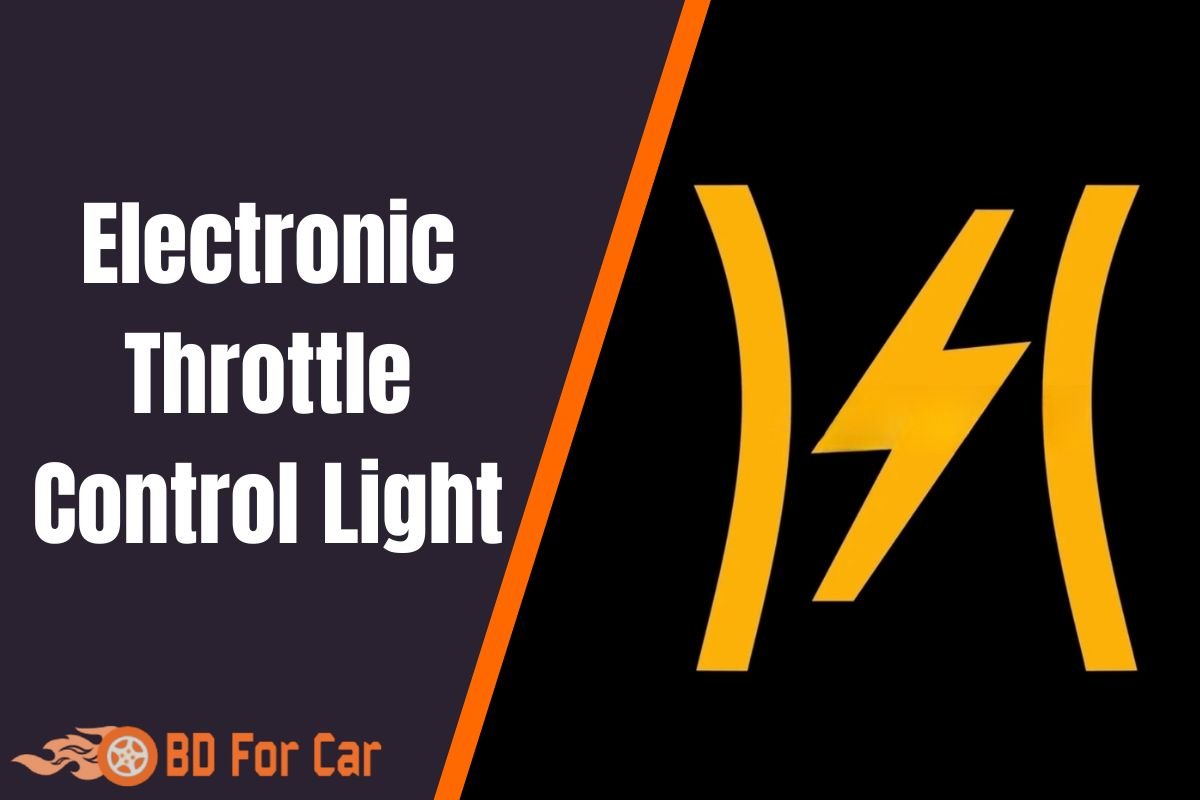
This loop is closed by the Throttle Position Sensor (TPS), which reports the actual plate angle back to the ECU. This allows the computer to adjust the throttle plate hundreds of times per second, far exceeding the mechanical capability of a human foot. This precision is what enables modern features like adaptive cruise control, electronic stability control, and sophisticated fuel efficiency algorithms. When you see that lightning bolt icon—usually appearing between two brackets—it means the ECU has detected a discrepancy in this millisecond-latency communication loop and has likely disabled the system for your safety.

Common Symptoms When the Electronic Throttle Control Light Is Flashing
As an industry expert, I have observed that the symptoms of an ETC failure are rarely subtle. Because the system is integral to the vehicle’s operation, the ECU will often take drastic measures to protect the engine and the driver from unintended acceleration. Identifying these symptoms early is key to a reliable diagnosis.
Limp Home Mode
The most common symptom where the ECU restricts engine RPM (usually under 2,500) to allow you to move the vehicle safely off the road.
Erratic Idling
Fluctuating RPMs between 500 and 1,500 while stationary, indicating the throttle plate is struggling to find its home position.
The most jarring symptom is a complete lack of response from the accelerator pedal. Imagine attempting to merge onto a high-speed highway, only for your vehicle to cap its speed at 30 MPH while the engine refuses to rev higher. In this scenario, the ECU has entered a forced-limited-power state because it can no longer trust the data coming from the throttle sensors. It defaults to a “safe” air intake level that prevents the car from accelerating uncontrollably but also leaves you without the power needed for standard driving maneuvers.
Furthermore, you may experience intermittent stalling. This typically happens during low-speed maneuvers or when coming to a halt. In these moments, the throttle plate must maintain a tiny, precise gap to allow just enough air for the engine to idle. If the electronic motor is weak or the plate is gummed up with debris, it may snap shut entirely, starving the engine of oxygen and causing a stall. This erratic behavior not only compromises safety but also leads to significantly reduced fuel economy as the ECU struggles to maintain a consistent air-fuel mixture.
In many vehicles, Limp Mode disables higher gears in automatic transmissions and restricts RPMs to prevent drivetrain damage. Never attempt to drive long distances in this state, as you lack the power necessary to avoid road hazards.
Primary Causes of Electronic Throttle Control Failure
Through years of professional hands-on experience, I have found that ETC failures usually fall into three categories: mechanical obstruction, sensor degradation, or electrical interference. Understanding these helps prioritize the diagnostic process.
1. Carbon Buildup and Heavy Soot Deposits
The most frequent culprit is surprisingly simple: dirt. Modern Positive Crankcase Ventilation (PCV) systems vent oil vapors back into the intake to be burned. Over time, these vapors leave a sticky residue on the throttle butterfly valve. This residue attracts dust and hardens into carbon deposits. Eventually, the buildup becomes thick enough to physically prevent the plate from closing or opening to the angle commanded by the ECU. When the motor tries to move the plate and meets resistance, the ECU detects the lag and triggers the ETC light.
2. Accelerator Pedal Position Sensor (APPS) Failure
The APPS is a potentiometer—a variable resistor that changes voltage based on pedal travel. These sensors have internal “tracks” that can wear out after thousands of cycles. If a “dead spot” develops on these resistive tracks, the signal sent to the ECU will suddenly drop to zero or jump sporadically. This mismatch in signal voltage is an immediate red flag for the ECU, which will then disable throttle response to prevent a “runaway” engine scenario.
3. Internal Motor or Gear Failure
Inside the throttle body assembly is a DC motor and a series of plastic or metal gears. High heat cycles in the engine bay can cause these plastic gears to become brittle and strip. Alternatively, the electrical windings in the motor can short out. If the ECU commands the motor to move but the TPS reports no movement, the system will immediately enter a failsafe mode.
By The Numbers: ETC Failure Data
Cases caused by carbon buildup
Sensor or Wiring Faults
Software/ECU Glitches
Professional Diagnostic Procedures and OBD-II Code Interpretation
When the ETC light illuminates, the vehicle stores a Diagnostic Trouble Code (DTC). Guessing which part to replace is expensive and ineffective. A comprehensive diagnostic approach is the only way to ensure a permanent fix.
📋
Step-by-Step Diagnostic Guide
Use a professional OBD-II scanner. Look for codes in the P0120 to P0124 range or P2135 (Voltage Correlation). These tell you which sensor is reporting bad data.
Using a multimeter, check for a steady 5.0V reference signal at the sensor connector. A drop of even 0.5V can trigger false ETC warnings.
Monitor the TPS voltage while slowly opening the throttle. The voltage should rise smoothly (e.g., 0.5V to 4.5V) without any “dead spots” or signal dropouts.
One common pitfall in diagnosis is ignoring the battery. Because the ETC motor requires a high-quality electrical supply to overcome the return spring tension, a weak battery or failing alternator can cause the voltage to sag just enough to throw the system out of calibration. Always verify that your battery is holding a charge of at least 12.6V (engine off) and that the charging system is operating at roughly 14V before replacing expensive electronic components.
Before buying parts, remove the intake boot and look at the throttle bore. If there is a black ring of gunk where the plate meets the housing, a $10 can of throttle body cleaner might be the only “repair” you need.
Trusted Repair Solutions and Maintenance Costs
Once you have identified the cause, the repair must be performed with expert precision. The throttle system is not an area where you should cut corners with low-grade aftermarket parts, as a failure here can result in a dangerous loss of power in traffic.
Option A: Professional Cleaning Service
If the diagnostic points to carbon buildup, a professional cleaning is the most cost-effective solution. This involves using specialized, sensor-safe solvents to dissolve the gum and varnish without damaging the delicate electronic components or the molybdenum coating often found on the throttle plate. Average Cost: $100 – $150.
Option B: Complete Throttle Body Replacement
When the internal motor or sensors have failed, the entire assembly must be replaced. I strongly recommend using Original Equipment Manufacturer (OEM) parts for this repair. Aftermarket units often suffer from poor calibration and may trigger the light again within weeks. Average Cost: $250 – $600 depending on vehicle make and model.
✅ Pros of OEM Replacement
- Perfect signal calibration
- Guaranteed fitment
- Higher heat resistance
- Longer service life
❌ Cons of Poor Maintenance
- Sudden stalling risk
- Unpredictable Limp Mode
- Decreased engine longevity
- High towing costs
Crucially, any physical repair to the throttle body requires an Idle Relearn Procedure. Because the ECU has “learned” to compensate for the old, dirty, or failing part, it must be taught the new airflow characteristics. A trusted technician will use a bi-directional scan tool to perform a “Throttle Body Adaptation,” which resets the learned values and ensures the engine idles perfectly from the first start.
Final Thoughts on Electronic Throttle Health
The Electronic Throttle Control system is a sophisticated electronic link between your foot and the engine that requires precise calibration and a clean environment to function properly. Common causes for the ETC light include carbon buildup, sensor failure, or wiring issues that trigger safety failsafes like Limp Mode. Accurate diagnosis through OBD-II scanning and voltage testing is the only reliable way to ensure a permanent repair that keeps your vehicle safe and efficient.
If your electronic throttle control light remains illuminated or flashes intermittently, do not ignore it. Consult with a trusted automotive professional immediately to perform a diagnostic scan and ensure your vehicle remains safe for the road. Addressing a minor carbon buildup today can prevent a major component failure and an expensive tow bill tomorrow.
Frequently Asked Questions
Can I drive my car with the electronic throttle control light on?
Driving with the ETC light on is not recommended. While the vehicle may still move in ‘Limp Mode,’ it will have severely limited power and may stall unexpectedly. This creates a safety risk, especially in traffic or on highways. It is best to have the vehicle inspected by a professional immediately to prevent further engine or transmission damage.
How do I reset my electronic throttle control light?
The light can often be reset by clearing the codes with an OBD-II scanner after the underlying issue is fixed. For some vehicles, a manual ‘relearn’ procedure involves cycling the ignition and pressing the pedal in a specific sequence. However, simply clearing the light without addressing the root cause, such as a dirty throttle body, will result in the light returning quickly.
What does a flashing lightning bolt on the dashboard mean?
The flashing lightning bolt is the specific symbol for the Electronic Throttle Control system. When it flashes, it indicates a serious fault that the ECU cannot compensate for, often resulting in an immediate loss of throttle response. This is a higher priority warning than a steady light and requires an expert diagnostic check to ensure the drive-by-wire system is functioning safely.
Will a bad battery cause the ETC light to come on?
Yes, a failing battery or alternator can cause the ETC light to illuminate. The throttle sensors and the ECU rely on a steady, clean 5-volt reference signal. If the vehicle’s system voltage drops too low, it can cause the sensors to send erratic data, leading the ECU to believe there is a hardware failure in the throttle system when the real issue is electrical supply.
Does cleaning the throttle body fix the ETC light?
Cleaning the throttle body is one of the most effective and professional ways to resolve an ETC light, especially if the cause is carbon buildup. If the butterfly valve is sticking due to soot, a thorough cleaning with specialized solvent can restore proper movement. However, if the internal electronic motor or the TPS has failed, a full replacement of the unit will be necessary.
![P0871 Ram 2500: Diagnose & Fix [2026]](https://truckguider.com/wp-content/uploads/2026/03/featured-63f6e509-768x768.webp)
![Truck Bed Liner Repair Guide: Complete Fix Guide [2026]](https://truckguider.com/wp-content/uploads/2026/03/truck-bed-liner-repair-featured.webp)