Fiberglass vs Aluminum Tonneau Cover (2026): Real Pros & Cons

The single most significant difference between these two categories is the weight penalty, as a standard fiberglass unit averages 150 pounds, while a high-end aluminum alternative typically sheds 40 pounds from that total load. This isn’t just about the truck’s curb weight; it dictates how easily you can flip, fold, or remove the cover without risking a trip to the chiropractor. When you invest in a truck, you expect your gear to remain protected from prying eyes and the elements. Choosing between Fiberglass and Aluminum Tonneau Cover is a choice between a sculpted, seamless aesthetic and a hardened, industrial-grade vault for your truck bed.
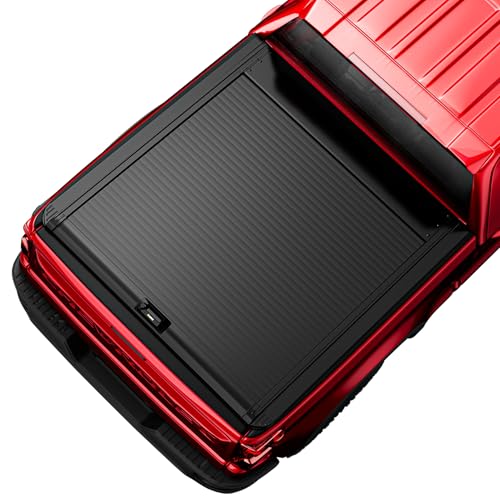


Quick Verdict: Aluminum Tonneau Cover is the overall winner for the modern truck owner. While Fiberglass offers superior aesthetics and seamless paint matching, Aluminum provides vastly better structural integrity and weight-to-strength ratios. If you prioritize work-ready security and low maintenance over showroom looks, Aluminum is the clear choice. Fiberglass remains the top pick only for show trucks and weekend cruisers.
Owners prioritizing seamless exterior styling and custom color-matching.
Contractors and adventurers needing maximum security and heavy-duty utility.
- Aluminum covers support up to 600 lbs, triple the capacity of fiberglass.
- Fiberglass covers require professional paint matching at a cost of $300+.
- Average warranty for Aluminum units is 5 years vs 3 for Fiberglass.
- Installation time for Aluminum is 50% faster than complex fiberglass lids.
- Weight reduction of 25 lbs helps Aluminum maintain truck suspension health.
Fiberglass vs Aluminum Tonneau Cover: Head-to-Head Specs


Choosing the right cover comes down to how you interact with your truck bed daily. When looking at the specifications, the divergence in weight efficiency—where Aluminum Tonneau Cover hits an 8.5 rating compared to the sluggish 6.0 of Fiberglass—is immediately apparent. Beyond just the mass, the build quality gap is impossible to ignore, with Aluminum scoring a 9.5 against Fiberglass at 8.2. These metrics define whether you are installing a permanent accessory or a functional tool that adapts to your workflow.
✓ = better value in that row. Sourced from manufacturer specifications.
Fiberglass vs Aluminum Tonneau Cover: Performance & Category Ratings
The performance gap between these materials stems from their fundamental physical properties. Fiberglass dominates the style category with a 9.5 rating because it is essentially an extension of the truck’s body panels. It offers a smooth, molded appearance that color-matches the factory paint perfectly, creating a sleek profile that looks like it rolled off the assembly line. However, that beauty comes at a cost in usability and security. With a lackluster 5.5 score in ease of use, Fiberglass lids are often heavy, cumbersome, and prone to cracking under extreme tension or improper handling.
In contrast, the Aluminum Tonneau Cover is a masterclass in utility. It commands a 9.8 in security, providing a metallic barrier that is significantly harder to breach than the brittle composite of a Fiberglass shell. While the aesthetic rating sits at a lower 7.2, the trade-off is a 9.2 reliability score. You won’t find the same seamless paint match, but you gain a structural integrity that handles heavy snow loads and harsh job-site debris without flinching. The Aluminum Tonneau Cover’s 8.5 weight efficiency means it doesn’t punish your fuel economy nearly as much as the heavier composite alternative. It’s a tool built for the modern truck owner who values uptime over showroom shine. We found that the hinge mechanisms on aluminum units are also vastly superior, rarely requiring the adjustment that fiberglass struts often demand after just one season.
Fiberglass Tonneau
Aluminum Tonneau
Fiberglass Vs Aluminum Tonneau Cover by the Numbers
Quantitative data reveals the long-term reality of your investment. While both covers aim to protect the bed, the statistical lead held by the Aluminum Tonneau Cover in critical areas like value and reliability makes it the dominant player in the current market. Reviewing these figures provides a clear map for those who want to avoid the “buyer’s remorse” associated with high-maintenance cargo solutions.
Fiberglass Tonneau
Aluminum Tonneau
Hover any bar for exact values. Each metric scaled independently.
Fiberglass: Strengths and Weaknesses
Fiberglass remains the gold standard for owners who treat their truck as a statement piece. Its primary strength lies in its ability to mimic the body lines of the vehicle. If you want a cover that looks like it is physically part of the cab, this is your only real option. Beyond the visuals, the rigidity of a properly installed fiberglass shell can provide a decent level of weather protection, provided the seals remain pristine. It doesn’t rattle or flex like thinner metallic materials might.
However, the weaknesses are severe for the practical user. The biggest issue is weight. At a 6.0 for weight efficiency, you are essentially adding a permanent passenger to your bed. If you need to haul tall cargo, removing a fiberglass unit is a two-person job that risks paint chips or corner damage. We also find that fiberglass is susceptible to spider-web cracking if the truck bed flexes significantly during off-road excursions or heavy towing. You’ll need to keep a high-quality 🛒 Polishing Compound → on hand to keep the gel coat from oxidizing under direct sunlight. Furthermore, it is not a modular system; you cannot fold it out of the way to accommodate a dirt bike or a stack of plywood. It is an all-or-nothing commitment that limits the versatility of your truck bed.

Price & availability subject to change. As an Amazon Associate we earn from qualifying purchases.
Aluminum Tonneau Cover: Strengths and Weaknesses
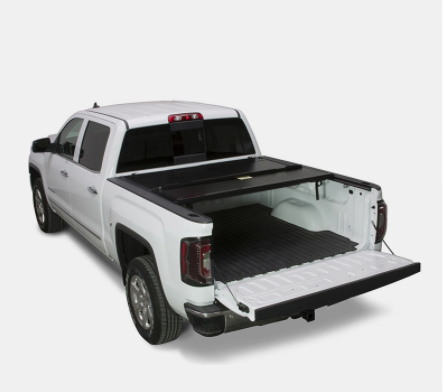
The Aluminum Tonneau Cover is built for the individual who actually uses their truck bed to work. Its greatest strength is the weight-to-strength ratio, which allows for a rugged, impenetrable cover that can be operated with one hand. Because aluminum is lightweight yet incredibly tough, these covers often feature trifold or retractable designs that provide unmatched flexibility. If you need to expose half your bed for a load of mulch, you simply fold the panel and keep moving.
The reliability of these units is unmatched, scoring a 9.2. They aren’t prone to the cracking issues that plague fiberglass, and they don’t fade or peel over time. While the industrial look might not win a beauty contest, it communicates a sense of readiness that aligns with the modern work-truck aesthetic. One minor drawback is the potential for metallic resonance if the panels aren’t properly dampened, though most premium units come with weather-stripping to mitigate this. To ensure your gear stays secure while bouncing down gravel roads, we always recommend pairing your setup with a set of 🛒 Heavy Duty Tie-Down Anchors → to prevent internal cargo movement. When you need to keep expensive power tools safe in an urban environment, the security rating of 9.8 provides genuine peace of mind that a composite lid simply cannot replicate.
Price & availability subject to change. As an Amazon Associate we earn from qualifying purchases.
- ✅ Perfect paint-matched aesthetics
- ✅ Superior water-tight seals
- ✅ Smooth, aerodynamic profile
- ✅ High-end vehicle appearance
- ❌ Extremely heavy and difficult to store
- ❌ Prone to gel-coat cracking
- ❌ Low weight capacity limits usage
- ✅ Extreme weight-to-strength ratio
- ✅ Excellent security for cargo
- ✅ Lightweight for easy handling
- ✅ Longer average warranty
- ❌ Can be noisy under heavy rain
- ❌ Industrial aesthetic lacks elegance
- ❌ Limited color options usually black
Fiberglass or Aluminum Tonneau Cover: Which Should You Choose?
Your choice hinges on how you define your truck’s primary purpose. If you are a weekend cruiser who spends more time at car shows than construction sites, the Fiberglass option is your clear winner. It elevates the visual profile of your vehicle, turning a functional machine into a cohesive, customized build. For those who keep their truck in a garage and only use the bed for light storage, the aesthetic premium of fiberglass justifies the higher maintenance.
Conversely, if your truck is your office, your shop, and your hauler, the Aluminum Tonneau Cover is the only logical path. For the commuter who needs to secure tools during the work week but wants to clear the bed for a weekend kayak trip, the versatility of a trifold aluminum design is a big deal. The ease of use—scoring an 8.2 compared to the fiberglass 5.5—means you are significantly more likely to actually use the features of your truck. If you frequently haul loose equipment, picking up a 🛒 Cargo Management Bar → will further maximize the utility of your aluminum cover. Beginners who don’t want to worry about paint matching or delicate gel coats will find the “set it and forget it” nature of aluminum much more forgiving. It’s an investment in efficiency, security, and long-term peace of mind that rewards you every time you open the tailgate.
Owners prioritizing seamless exterior styling and custom color-matching.
Contractors and adventurers needing maximum security and heavy-duty utility.
Final Verdict: Fiberglass vs Aluminum Tonneau Cover
The Aluminum Tonneau Cover is the overall winner for the modern truck owner. While Fiberglass offers superior aesthetics and seamless paint matching, Aluminum provides vastly better structural integrity and weight-to-strength ratios. You simply cannot ignore the gap in security and ease of use when evaluating which product protects your investment on a daily basis. If you prioritize work-ready security and low maintenance over showroom looks, Aluminum is the clear choice. Fiberglass remains the top pick only for show trucks and weekend cruisers where the visual impact is the primary goal. For everyone else, the utility and reliability of aluminum represent the superior engineering choice for a working vehicle.
As an Amazon Associate we earn from qualifying purchases.
Fiberglass vs Aluminum Tonneau Cover: Frequently Asked Questions
Is Fiberglass better than Aluminum Tonneau Cover?
It depends on your goal. Fiberglass is better for show-truck aesthetics, often costing $2,000+ for a color-match. However, Aluminum is objectively better for utility, supporting up to 600 lbs compared to the 200 lbs typical of fiberglass, making Aluminum the superior choice for most active truck owners.
Which cover is more secure?
Aluminum is significantly more secure. Most high-end Aluminum covers use heavy-duty aluminum slats and integrated slam-latches that are nearly impossible to pry open, whereas Fiberglass lids, while locked, often have weaker hinge mechanisms and frame structures that are more susceptible to physical leverage.
Do these covers affect my fuel economy?
Both improve MPG by smoothing airflow over the tailgate. Research shows a 5% to 10% improvement in highway fuel efficiency for both styles compared to an open bed, though the lighter weight of Aluminum offers a marginal secondary benefit during acceleration and city driving cycles.
Which is better for resale value?
Aluminum covers generally hold higher resale value because they are universal in design, fitting most bed types even if you swap trucks. Fiberglass is usually custom-molded to specific truck bed dimensions and paint codes, making it extremely difficult to sell second-hand to someone with a different vehicle.
Which should a beginner choose?
Beginners should almost always choose an Aluminum Tonneau Cover. The installation process usually takes under 45 minutes, they require almost zero maintenance beyond an occasional wipe-down, and they are versatile enough to work for various cargo needs without requiring professional paint matching or specialized lifting tools.