
Flowmaster Super 10 Sound [2026]

For the performance enthusiast, the acoustic signature of a vehicle is just as vital as its horsepower rating. Selecting an exhaust system that delivers a raw, race-inspired tone without compromising engine efficiency is a recurring challenge for custom builders and daily drivers alike. While many mufflers offer a muffled growl, few achieve the visceral intensity required for a true “street-to-strip” profile. This comprehensive analysis provides an expert-level breakdown of the Flowmaster Super 10 sound, covering its technical engineering, decibel metrics, and real-world performance impact to guide your next professional-grade build.
The Engineering Philosophy Behind the Flowmaster Super 10 Sound Profile

📤 Share Image
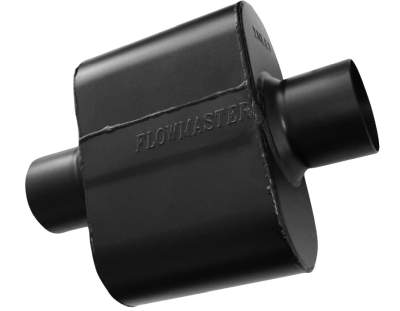
The Super 10 series is not a traditional muffler in the sense of sound suppression; rather, it is an acoustic resonator designed to shape and amplify specific frequencies. At the heart of this design is Flowmaster’s patented Delta Flow technology. Unlike multi-chamber mufflers like the Super 44 or the 50 Series, which utilize three or more chambers to bounce sound waves and cancel resonance, the Super 10 features a streamlined single-chamber configuration. This design minimizes the distance the exhaust gases must travel, resulting in a sound profile that is exceptionally close to an open-pipe header system but with the refined “thump” characteristic of a chambered design.
Metallurgy and Structural Integrity
Material choice plays a pivotal role in the Super 10’s unique vibrational resonance. These units are constructed from 16-gauge 409S stainless steel. This professional-grade material provides the necessary density to prevent the “tinny” echo found in cheaper aluminized alternatives. The fully welded outer shell ensures that the internal baffles remain stationary even under extreme exhaust pressures, maintaining a consistent tonal quality over the life of the vehicle. This rigid construction is essential for handling the high-decibel exterior sound output produced by its compact 6.5-inch casing.
Delta Flow Technology
Uses internal “V” shaped baffles to pull exhaust gases through more efficiently while splitting sound waves for a deeper tone.
Compact Footprint
The 6.5-inch short-body design creates less internal volume, allowing sound waves to exit with higher intensity and less attenuation.
When compared to the Super 44 series, the Super 10 places its internal baffles closer to the inlet. In a Super 44, the two-chamber system allows for more “scrubbing” of the sound, which rounds off the sharp edges of the exhaust note. The Super 10, by contrast, preserves the high-frequency metallic rasp that racers prefer, offering a raw acoustic experience that smaller displacement engines often lack and larger V8s amplify to a thunderous degree.
Acoustic Characteristics and Decibel Metrics of the Super 10 Series
The Super 10 is classified as “Aggressive” on the Flowmaster five-point scale, representing the most extreme option available for street use. For a complete guide to the auditory profile, one must look at the decibel (dB) metrics. In controlled testing, vehicles equipped with Super 10 mufflers often exceed 95-100 decibels at wide-open throttle (WOT). This level of volume is significantly louder than stock systems, which typically hover around 75-80 dB under load.
The Sound of Displacement: V6 vs. V8
Engine displacement fundamentally shifts the frequency of the Super 10’s output. On a 5.0L Coyote engine, the Super 10 produces a high-pitched, mechanical scream at high RPMs, reminiscent of modern GT racing cars. Conversely, a 5.7L HEMI or a traditional 350 Small Block Chevy will exhibit a much deeper, more percussive “chug” at idle. The Super 10 excels at capturing the “cold start” volume spike—a sharp, bark-like explosion of sound when the engine first fires—which is a primary reason for its popularity among enthusiasts who prioritize a strong presence.
Because the Super 10 can easily exceed 100 dB under load, it may violate local noise ordinances in residential areas. Professional installers recommend checking specific decibel limits in your jurisdiction before installation. Use a calibrated SPL meter to measure sound levels at 50 feet to ensure you remain within legal “street” operating parameters.

Evaluating Interior Resonance and Cabin Drone Mitigation Strategies
The most significant trade-off for the Super 10’s legendary exterior sound is interior resonance, commonly referred to as “drone.” Drone occurs when the sound waves emitted by the exhaust vibrate at the same frequency as the vehicle’s cabin, creating a low-frequency hum that can be physically uncomfortable during sustained driving. For most V8 applications, this peak resonance occurs between 2,000 and 3,000 RPM—exactly where most vehicles sit during highway cruising.
Reliable Strategies for Managing Drone
In a professional setup, managing this resonance is key to a daily-driveable vehicle. For example, a long-bed pickup truck often experiences higher interior resonance because the larger cabin area acts as a sounding board. To mitigate this, expert builders focus on exhaust tip placement. A rear-exit setup, where the tips extend past the bumper, will significantly reduce cabin noise compared to a “turndown” setup or a side-exit that dumps exhaust gases directly under the bed.
✅ Drone Reduction Pros
- Installing 1/2-inch rubber isolators on hangers
- Using resonated exhaust tips (4″+ diameter)
- Applying butyl-based sound deadener to floor pans
- Ensuring a full tailpipe run to the rear bumper
❌ Resonance Risks
- Muffler-only installs with factory narrow piping
- Loose or worn-out factory rubber hangers
- Dumping exhaust directly before the rear axle
- High-ratio gears keeping RPMs in the ‘drone zone’
Data indicates that interior decibel levels can increase by 15-20% compared to factory setups when moving to a Super 10. For a trusted result, we recommend the use of specialized insulation, such as mass-loaded vinyl, in the trunk and rear floor area. This prevents the high-intensity sound waves from penetrating the chassis while allowing the full exterior profile to remain loud and clear.
Performance Gains and Flow Efficiency Metrics for High-Output Engines
Beyond the acoustic allure, the Super 10 is an expert tool for improving engine efficiency. The core benefit of a single-chamber design is the drastic reduction in backpressure. In a restrictive factory muffler, exhaust gases are forced through a series of baffles and packing material, which creates a bottleneck. The Super 10’s high-flow geometry allows for a more rapid expulsion of gases, which directly correlates to horsepower and torque gains.
The Scavenging Effect
The Delta Flow baffles within the Super 10 are angled to create a low-pressure zone. This facilitates a “scavenging” effect, where the exiting exhaust pulse creates a vacuum that helps pull the next pulse out of the combustion chamber. This is particularly noticeable in high-compression engines, where you might experience a 2% to 5% increase in peak horsepower. On a modified Chevrolet Silverado 1500, dyno tests often show the torque curve shifting lower in the RPM range, providing better off-the-line throttle response.
By The Numbers
Max Operating Temp
Flow Rating (3.0″)
Steel Thickness
Another hallmark of the Super 10 is the characteristic “pop” or “crackle” on deceleration. This is a result of high exhaust velocity combined with the lack of sound-absorbing packing. In performance applications, this acoustic feedback provides the driver with a reliable gauge of engine deceleration and fuel cutoff behavior, common in manual transmission vehicles and modern sport-tuned automatics.
Professional Installation Guidelines and System Compatibility
Integrating a Super 10 into a vehicle requires more than just a few clamps. To ensure quality and longevity, professional-grade MIG or TIG welding is the industry standard. While universal-fit mufflers are available with clamp-on ends, the vibration levels of the Super 10 can eventually cause clamps to loosen or leak, which degrades the sound quality and introduces dangerous CO2 into the cabin area.
📋
Professional Installation Sequence
Identify whether your vehicle requires a Center-In/Center-Out or Offset configuration to maintain proper clearance from the driveshaft and fuel tank.
Maintain factory catalytic converter positions. The Super 10 is designed to work with high-flow cats to avoid triggering “Check Engine” lights related to O2 sensor readings.
MIG weld all joints. Given the 6-inch by 12-inch body size, the Super 10 offers great high-clearance flexibility, but it requires solid welds to handle thermal expansion.
If you live in the “salt belt” or near the coast, always opt for the 409S stainless steel version over aluminized steel. While the sound profile is nearly identical, the stainless variant will resist internal and external corrosion for decades, whereas aluminized units can develop “rot” in the weld seams within 3-5 years.
Whether you are performing a custom dual-exhaust conversion on a classic muscle car frame or a simple muffler swap on a modern truck, the comprehensive performance of the Flowmaster Super 10 rests on the installer’s ability to manage the system’s thermal and vibrational energy. With a compact 6×12 inch body, these mufflers fit where larger 40 or 50 series units cannot, making them the professional’s choice for lowered performance vehicles or off-road rigs where ground clearance is at a premium.
The Super 10 offers the most aggressive sound profile in the Flowmaster catalog due to its single-chamber Delta Flow design. Significant exterior volume is coupled with high flow efficiency, though users must account for substantial interior resonance. Professional installation and material selection are critical for maintaining the longevity and tonal quality of the system. Consult with a trusted exhaust specialist to determine the ideal configuration for your specific engine and performance goals.
Frequently Asked Questions
How loud is the Flowmaster Super 10 compared to the Super 44?
The Super 10 is significantly louder and more aggressive than the Super 44. While the Super 44 uses a two-chamber design to dampen certain frequencies for a deep, streetable tone, the Super 10 uses a single chamber, resulting in higher decibel levels and a more pronounced ‘race’ sound that is less muffled across the entire RPM range.
Will the Flowmaster Super 10 cause a significant drone inside the cabin?
Yes, due to its compact, single-chamber design, the Super 10 is known for producing substantial interior resonance or ‘drone.’ This is most noticeable at highway speeds or under load. To mitigate this, experts recommend using high-quality resonators, adding sound-deadening material to the vehicle floor, or ensuring the exhaust tips extend past the rear bumper.
Is the Flowmaster Super 10 street legal in all states?
Legality varies by jurisdiction. While the muffler itself is a high-quality aftermarket component, many states have strict noise ordinances limiting decibel levels (often to 95dB or lower). Because the Super 10 is Flowmaster’s loudest series, it may exceed local noise limits in restrictive areas. Always check your local Department of Transportation regulations before installation.
Does the Super 10 muffler improve fuel economy?
While the primary goal of the Super 10 is sound and flow efficiency, reducing backpressure can theoretically improve engine efficiency. However, most users find that the aggressive sound encourages more spirited driving, which often leads to a decrease in actual fuel economy. In a controlled environment, a minor increase in MPG is possible due to improved exhaust scavenging.
What is the lifespan of a stainless steel Flowmaster Super 10?
The 409S stainless steel version of the Super 10 is designed for long-term reliability and is backed by a limited lifetime warranty. In most climates, it can last the lifetime of the vehicle. However, in regions where road salt is frequently used, regular cleaning is recommended to prevent surface oxidation, though the structural integrity of the stainless steel remains highly durable.
![2016 Ram 2500 Rear Bumper: In-Depth Review [2026]](https://truckguider.com/wp-content/uploads/2026/03/featured-rear-bumper-assembly-replacement-for-20092018-dodg-768x403.webp)
![Revmax Transmission Cooler Thermostatic Bypass: Full How-To Guide [2026]](https://truckguider.com/wp-content/uploads/2026/04/featured-revmax-transmission-cooler-thermostatic-bypass-upg-768x403.webp)
![Ram 1500 Resonator Delete: Sound, Drone & MDS Impacts [2026]](https://truckguider.com/wp-content/uploads/2026/03/ram-1500-resonator-delete-featured.webp)