Ford F-150 Years to Avoid in 2026: Used-Buying Guide

The F-150 years that deserve the closest used-buy inspection depend on engine and transmission: 2004–2006 5.4L 3-valve trucks, certain 2011–2013 6R80 trucks, 2015–2016 recall applications and 2018 10R80/3.5L EcoBoost examples. No model year is guaranteed to fail; inspect the exact VIN and service history.
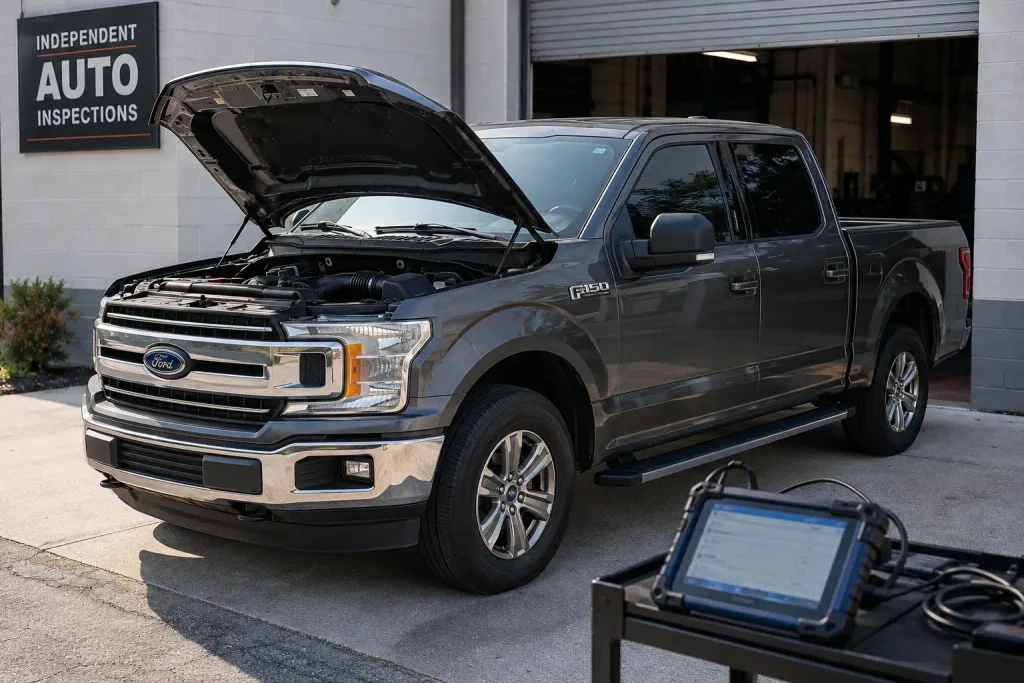
The 2011 to 2013 and 2015 to 2016 model years also deserve closer inspection, but their problems are more configuration-specific. A properly repaired truck with completed recalls and good service history can be a better purchase than a neglected example from a supposedly reliable year.

Prime for Young Adults — 6 Months Free
Students and 18–24s get six months of Prime free, then half price.
Start 6 Months FreeThis guide separates the F-150 into higher-risk, inspect-carefully, and better-buy groups so you can judge the actual truck in front of you.
Ford F150 Used-Buy Reliability Decision Matrix
Use model year as a screening tool, then verify the exact engine, transmission, recall history, maintenance records, and current condition.
5.4L 3-Valve Triton V8
Spark plug removal problems, age-related engine concerns, and maintenance history make neglected trucks risky.
10R80 and 3.5L EcoBoost
Harsh or delayed shifting, early 10R80 concerns, and cam-phaser-related startup noise require close inspection.
6R80 and Early 3.5L EcoBoost
Certain trucks were affected by an unintended downshift recall. Engine and transmission configuration changes the risk.
Brake and Door Latch Recalls

Audible — Listen Free for 30 Days
One free credit a month and thousands of titles included.
Listen Free for 30 DaysSome trucks were affected by brake master-cylinder and door-latch campaigns. These are VIN-specific concerns.
10R80 Evaluation Required
Transmission behavior and documented repair history matter more than the year label alone.
First 14th-Generation Year
New-generation complexity and active recall history justify additional VIN and service-record checks.
Budget Older-Truck Candidate
Model-year complaint comparisons are screening tools, not proof that a specific year is reliable. Check the engine, transmission, VIN recalls, service records and inspection results on the truck you are considering.
Late 12th-Generation Choice
Audible Premium Plus — Annual Membership
12 audiobook credits up front, plus the full Audible catalogue.
See Annual PlansModel-year complaint comparisons are screening tools, not proof that a specific year is reliable. Check the engine, transmission, VIN recalls, service records and inspection results on the truck you are considering.
Late 13th-Generation Choice
Model-year complaint comparisons are screening tools, not proof that a specific year is reliable. Check the engine, transmission, VIN recalls, service records and inspection results on the truck you are considering.
A documented, well-maintained higher-risk year can be a better purchase than a neglected truck from a better-rated year. Always verify VIN recalls, cold-start behavior, transmission operation, service history, and a pre-purchase inspection.
Which Ford F150 Years Should You Avoid
Recommended Best Deal Products


Primary recall records: 2011–2013 6R80 downshift recall; 2021–2026 trailer-module recall. Check open campaigns by VIN before purchase.
Here is the practical starting point for used F-150 shopping.
| Model Year | Risk Level | Main Concern | Buying Advice |
|---|---|---|---|
| 2004 to 2006 | Higher Risk | 5.4L Triton spark plug service and age-related engine concerns | Avoid neglected 5.4L trucks |
| 2011 to 2013 | Inspect Carefully | 6R80 unintended downshift recall on affected trucks | Verify VIN and recall completion |
| 2014 | Better Starting Point | Fewer complaint signals than nearby years | Good older candidate after inspection |
| 2015 to 2016 | Inspect Carefully | Brake master cylinder and door latch recalls on affected trucks | Check VIN and repair history |
| 2017 | Inspect Carefully | Early 10R80 and 3.5L EcoBoost cam phaser concerns | Test drivetrain carefully |
| 2018 | Higher Risk | 10R80 shifting issues and 3.5L EcoBoost cam phasers | Strong pre-purchase inspection required |
| 2019 | Moderate Risk | 10R80 issues remain possible | Buy based on condition and repairs |
| 2020 | Better Starting Point | Better complaint trend, but not problem-free | Strong late 13th-generation option |
| 2021 | Inspect Carefully | First 14th-generation year and numerous recalls | Run VIN before purchase |
| 2022 to 2026 | Too New to Rank Long Term | Limited aging data and active recall activity | Judge by VIN, history, and condition |
A recent normalized analysis covering equal first-60-month ownership windows found no 2010 to 2021 F-150 model year severe enough for its strongest warning category. It identified 2015 and 2016 as weaker years, while 2010, 2014, 2019, and 2020 performed better within that methodology.
That is why a useful F-150 reliability guide needs more detail than a simple list of “bad years.”
Why 2004 to 2006 F150 Trucks Need Extra Caution
The 2004 to 2006 F-150 deserves extra scrutiny mainly when equipped with the 5.4L 3-valve Triton V8.
Ford itself issued TSB 08-7-6 covering certain 2004 to 2008 F-150s with the 5.4L 3-valve engine. Ford documented that spark plugs could become difficult to remove and could break, leaving part of the plug inside the cylinder head.
5.4L Triton Spark Plug Problems
This is not the same problem as a spark plug simply working loose.
The 3-valve 5.4L design used on this generation could develop carbon around the extended spark plug shell. Ford created a specific removal procedure because improper service could break the plug during removal.
Ford’s bulletin applies to 5.4L 3-valve engines built before October 9, 2007, so the concern extends beyond 2006. However, the earliest 2004 to 2006 trucks now combine this design issue with more than two decades of age.
If you are considering one, ask for documentation showing when the plugs were changed and whether the job was completed without cylinder-head damage.
Engine Noise and Timing Concerns
A cold start is especially useful on an older 5.4L truck.
Listen for pronounced knocking, rattling, or abnormal valvetrain noise. Do not diagnose a cam phaser or timing-chain failure from sound alone, but unexplained noise should trigger a professional inspection before purchase.
If timing repair becomes part of your decision, our guide to Ford F150 timing chain replacement cost explains the repair context in more detail.
When a 2004 to 2006 F150 Can Still Make Sense
Do not reject every truck solely because of the model year.
A well-maintained 5.4L F-150 with documented plug service, clean oil history, stable oil pressure, and no abnormal engine noise may still be usable at the right price.
A neglected truck with missing maintenance records is the one we would pass on.
When 2011 to 2013 F150 Trucks Become Risky Buys
Recommended Best Deal Products


The 2011 to 2013 F-150 is more configuration-dependent than the 2004 generation.
These years introduced important powertrain changes, including wider use of the 6R80 6-speed automatic and the first-generation 3.5L EcoBoost V6.
6R80 Unintended Downshift Recall
Ford recalled certain 2011 to 2013 F-150s equipped with the 6-speed automatic transmission under NHTSA campaign 19V075000.
The defect involved the possibility of the transmission unexpectedly downshifting into first gear regardless of road speed. Ford’s remedy involved reprogramming the Powertrain Control Module on affected trucks.
This is a VIN-specific recall.
If you are shopping for a 2011 to 2013 truck, identify the transmission first. Truck Guider’s Ford transmission identification numbers guide can help when the transmission history is unclear.
Then check the VIN for completed recall work before you make an offer.
First Generation 3.5L EcoBoost V6
The 3.5L EcoBoost V6 arrived in the F-150 for 2011 and added turbochargers, direct injection, intercooling, and more complex engine management compared with Ford’s naturally aspirated engines.
Complexity alone does not make these trucks unreliable. It does make maintenance records more important.
During a pre-purchase inspection, check cold-start behavior, boost response, ignition performance, coolant level, oil leaks, and stored diagnostic trouble codes.
Should You Avoid 2011 to 2013 Completely
No.
If the 6R80 recall has been completed, the transmission operates correctly, and the engine has strong maintenance records, these trucks can still be reasonable used buys.
If recall history cannot be confirmed or the transmission makes an aggressive unexpected downshift during testing, walk away until the cause is diagnosed.
Why 2015 and 2016 F150 Models Need Inspection
The 2015 F-150 started the aluminum-body 13th generation. The aluminum body itself is not a reason to avoid these trucks.
The stronger reasons to inspect 2015 and 2016 carefully involve specific safety campaigns and early-generation issues.
3.5L EcoBoost Brake Master Cylinder Recall
Ford expanded a brake master-cylinder safety recall to certain 2014 to 2017 F-150s equipped with the 3.5L EcoBoost engine.
Ford’s recall chronology says brake fluid could leak from the master cylinder into the brake booster. The condition could lead to loss of fluid in the front brake circuit and reduced front-wheel braking.
This matters when shopping for 2015 and 2016 trucks, but it does not apply to every F-150 from those years.
Check the VIN instead of assuming the truck is either affected or safe.
Door Latch Recall
Ford also recalled affected F-150s for door latches that could freeze or actuator cables that could become bent or kinked.
NHTSA recall 17V652 states an affected door might fail to open, fail to close, or potentially open while driving.
Test every door during an inspection, particularly on trucks that have spent their lives in cold climates.
Are 2015 and 2016 Bad F150 Years
They are better described as inspect-carefully years.
A truck with completed recall work, strong maintenance history, proper collision repairs, and a clean drivetrain inspection should not be rejected simply because it is a 2015 or 2016.
The individual truck matters more than the online reputation of the model year.
Why the 2018 Ford F150 Is a Higher Risk Buy
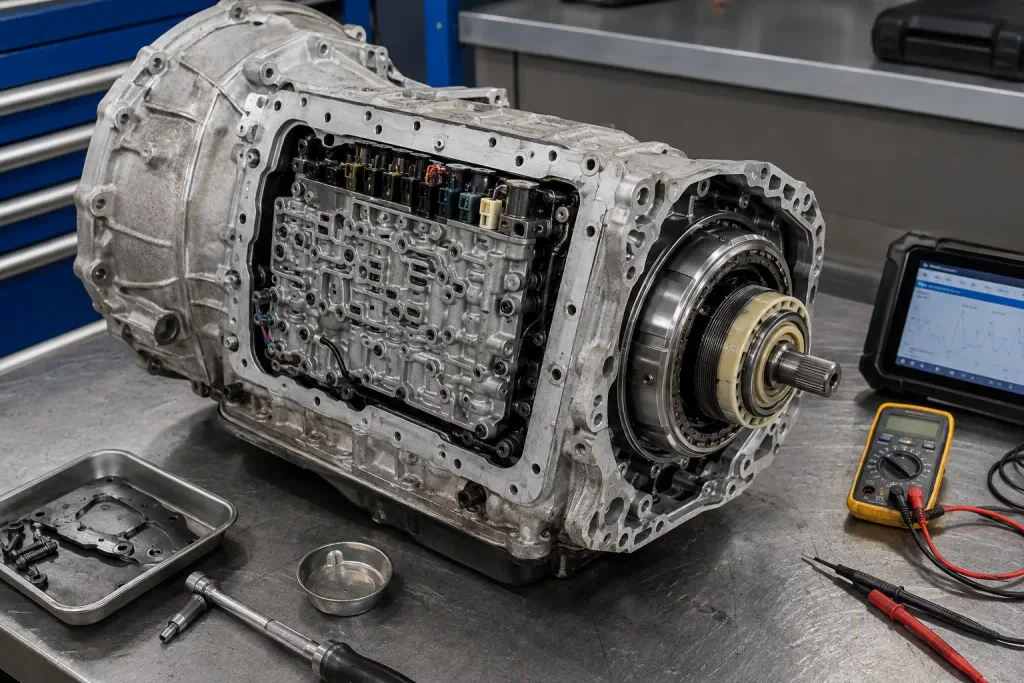
The 2018 F-150 is the modern model year we would inspect most aggressively.
Two areas deserve particular attention: the 10R80 10-speed automatic transmission and the second-generation 3.5L EcoBoost V6.
10R80 Harsh and Delayed Shifting
Ford has issued repeated technical service information for 10R80-equipped trucks.
The latest Ford service guidance covers certain 2017 to 2020 F-150s that may experience harsh or delayed engagement and harsh or delayed shifts. Ford identifies possible causes including transmission control strategy, sticking main-control valve-body components, and axial movement of the CDF clutch-cylinder sleeve.
During the road test, check for:
- Delayed Drive or Reverse engagement
- Hard shifts after a cold start
- Abrupt upshifts or downshifts
- Flare between gears
- Repeated gear hunting
- Transmission warning lights
- Stored transmission-related diagnostic codes
Do not accept “they all shift like that” as a diagnosis.
10R80 CDF Cylinder Concerns
Ford’s later 10R80 service guidance specifically identifies possible axial movement of the CDF clutch-cylinder sleeve among the causes technicians should investigate.
That distinction matters because adaptive-learning or software-related behavior is not the same repair as a valve-body or internal transmission problem.
Ask what repair was actually performed if the seller says the transmission has already been “fixed.”
3.5L EcoBoost Cam Phaser Rattle
Ford also issued programs and service guidance for certain 2017 to 2020 F-150s equipped with the 3.5L EcoBoost V6.
Ford documented an undesirable cam-phaser noise that could appear as a startup rattle after the truck sat for an extended period or as a knock at warm idle.
Start a 3.5L EcoBoost truck completely cold whenever possible.
If you hear the characteristic startup rattle, factor diagnosis and repair into the purchase price. Truck Guider’s 3.5 EcoBoost cam phaser replacement cost guide covers that repair separately.
Are 2019 and 2020 F150 Trucks Better Choices
The 2019 and 2020 F-150s are generally better starting points than blindly choosing a 2018, but neither year is automatically problem-free.
Ford’s 10R80 service guidance still includes 2017 to 2020 F-150s, so transmission behavior must remain part of your inspection.
Why 2019 Still Needs Transmission Checks
A 2019 F-150 can have the same basic 10R80 symptom pattern discussed above.
Drive it cold and fully warmed up. Test normal acceleration, light-throttle shifts, highway operation, kickdown, Reverse engagement, and stop-and-go driving.
A clean test drive does not guarantee future reliability, but a truck already displaying severe shifting problems is a poor candidate without a documented diagnosis.
Why 2020 Is a Better Starting Point
Model-year complaint comparisons are screening tools, not proof that a specific year is reliable. Check the engine, transmission, VIN recalls, service records and inspection results on the truck you are considering.
That makes 2020 a useful starting year, not a blanket reliability guarantee.
The 2020 3.5L EcoBoost remains within Ford’s cam-phaser service population, and the 10R80 still deserves careful testing.
Should You Avoid 2021 to 2026 Ford F150 Models
Do not rank 2022 to 2026 F-150s as the “most reliable” years yet.
They simply have not spent enough years in service to make a fair long-term durability comparison against a 2010, 2014, or 2018 truck.
Why the 2021 F150 Needs Extra Checking
The 2021 F-150 launched the 14th generation and currently carries numerous NHTSA safety campaigns.
Certain 2021 F-150s are included in a 2026 transmission park-system recall. Check the VIN in the official recall lookup for applicability and remedy status rather than assuming every 2021 truck is affected.
That does not mean every 2021 F-150 is defective. It means a VIN recall check is mandatory.
Current Recall Activity Matters on Newer Trucks
Ford also issued NHTSA campaign 26V104000 covering certain 2021 to 2026 F-150s.
The campaign addresses integrated trailer-module communication that may affect trailer brake or lighting functionality on affected trucks.
For a truck used regularly for towing, an open recall like this deserves immediate attention.
If towing capacity is part of your purchase decision, use our Ford F-150 towing capacity chart for configuration-specific research on supported model years.
Why 2022 to 2026 Cannot Be Ranked Fairly Yet
Complaint data accumulates with time.
A 2025 F-150 has had far fewer years to develop high-mileage engine, transmission, electrical, suspension, or corrosion problems than a 2015 truck.
Current normalized reliability datasets therefore treat newer model years with incomplete ownership windows as provisional rather than declaring them long-term winners.
How to Check a Used F150 Before You Buy
The model year tells you where to look. The individual truck determines whether you should buy.
Follow these six checks before committing to a used F-150.
1. Run the VIN for Open Recalls
Check the VIN through NHTSA and Ford.
Do not rely on a seller saying “all recalls were done.” Recall campaigns can be issued years after the truck was sold.
2. Identify the Engine and Transmission
Confirm exactly what drivetrain you are buying.
This matters because a 2016 5.0L F-150 and a 2016 3.5L EcoBoost F-150 do not share every reliability concern.
3. Demand a Cold Start
Ask the seller not to warm the truck before you arrive.
Listen for prolonged timing, cam-phaser, valvetrain, bearing, or accessory-drive noise. Check exhaust smoke and idle quality.
4. Road Test the Transmission Thoroughly
Test the truck cold and warm.
Watch for harsh engagement, delayed shifts, slipping, flaring, gear hunting, unwanted downshifts, vibration, and warning lights.
5. Review Maintenance and Repair Records
A stack of records can be more valuable than a low odometer reading.
Look for regular engine-oil changes, transmission work, cooling-system repairs, spark-plug service, recall completion, differential servicing, and major engine repairs.
6. Get a Pre Purchase Inspection
Have an independent shop scan every available module and inspect the drivetrain, brakes, steering, suspension, frame, cooling system, four-wheel-drive hardware, and leaks.
A professional inspection is especially valuable on a modified truck or one with an unclear history.
Which Ford F150 Years Are the Best Used Buys
There is no single best F-150 year for every buyer.
Model-year complaint comparisons are screening tools, not proof that a specific year is reliable. Check the engine, transmission, VIN recalls, service records and inspection results on the truck you are considering.
| Buyer Type | Starting Year | Why |
|---|---|---|
| Budget older F-150 buyer | 2010 | Stronger normalized complaint result |
| Wants later steel-body truck | 2014 | Strong complaint score before 13th-generation redesign |
| Wants aluminum-body F-150 | 2019 | Better normalized result than several nearby years |
| Wants late 13th generation | 2020 | Strong normalized result and newer features |
| Wants 14th generation | 2022 or newer | Shop by VIN and condition, not long-term ranking |
2014 Ford F150
The 2014 F-150 is one of the more attractive older starting points.
Model-year complaint comparisons are screening tools, not proof that a specific year is reliable. Check the engine, transmission, VIN recalls, service records and inspection results on the truck you are considering.
2020 Ford F150
For buyers wanting a late 13th-generation truck, we would inspect 2020 examples before starting with 2018.
You still need to check the 10R80 and, on the 3.5L EcoBoost V6, cam-phaser history.
No model year removes the need for a proper inspection.
What Is the Safest Ford F150 Buying Strategy
The safest strategy is to use Ford F150 years to avoid as a filter, not as the final buying decision.
Treat 2004 to 2006 5.4L Triton trucks and 2018 F-150s as higher-scrutiny purchases. Inspect 2011 to 2013, 2015 to 2017, and other early 10R80 trucks according to their exact drivetrain and recall history.
For a used F-150, a clean cold start, smooth transmission operation, completed VIN recalls, detailed service records, and an independent inspection carry more weight than a model-year reputation alone.
A well-maintained higher-risk year can still beat a neglected “best year” truck.
5 Common Ford F150 Reliability Questions
What Are the Worst Ford F150 Years to Avoid
The strongest caution goes to 2004 to 2006 trucks with the 5.4L 3-valve Triton V8 and 2018 trucks showing 10R80 or 3.5L EcoBoost problems. The 2011 to 2013 and 2015 to 2016 periods require more configuration-specific inspection rather than automatic rejection.
Is the 2018 Ford F150 a Bad Year
The 2018 F-150 is a higher-risk used purchase because Ford has documented harsh and delayed shifting concerns on 10R80-equipped trucks, while certain 3.5L EcoBoost engines also received cam-phaser service guidance. A properly repaired 2018 with strong records can still be worth considering.
Which Ford F150 Year Is Most Reliable
Model-year complaint comparisons are screening tools, not proof that a specific year is reliable. Check the engine, transmission, VIN recalls, service records and inspection results on the truck you are considering.
Should I Buy a Ford F150 With the 10R80 Transmission
Yes, but only after a thorough road test and service-history check. Ford’s own service information confirms that some 10R80-equipped F-150s can develop harsh or delayed engagement and shifting due to software, valve-body, solenoid-strategy, or CDF clutch-cylinder issues.
Are Newer Ford F150 Models More Reliable
It is too early to make a firm long-term reliability verdict for 2022 to 2026 trucks because they have not accumulated the same years and mileage as older F-150s. Newer trucks can also have active safety recalls, so check the VIN before buying rather than assuming newer automatically means more reliable.