Ford Ranger Alternator Compatibility Specification Chart By Year (1998–2026)

Quick Answer
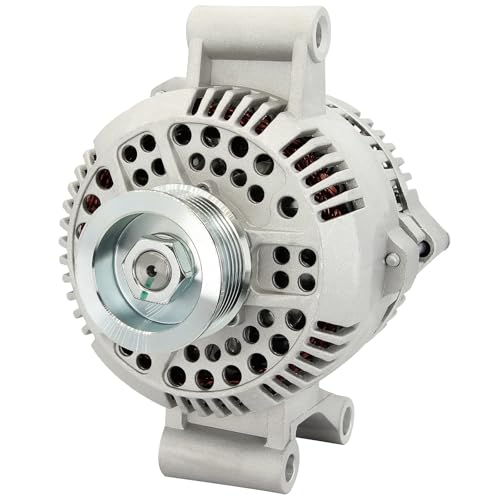
Ford Ranger alternator compatibility varies significantly by generation, engine displacement, and electrical load requirements. Standard ratings generally range from 95A to 220A. Because mounting brackets, pulley offsets, and internal voltage regulators are engine-specific, part interchangeability is limited. Always verify your specific VIN and trim level against the factory service manual or the door-jamb electrical load sticker before purchasing a replacement unit.
Finding the right Ford Ranger alternator isn’t just about matching a bolt pattern; it’s about ensuring your vehicle’s Powertrain Control Module (PCM) can communicate effectively with the voltage regulator under the hood. Many owners mistakenly purchase units that share the same mounting bracket but lack the correct internal circuitry or amperage required for their specific trim, leading to “check engine” lights or battery drainage. This guide provides the definitive compatibility data to help you select, verify, and install the perfect alternator for any Ford Ranger model year.


Ford Ranger Alternator Compatibility Chart: Yearly Specifications
📤 Share Image
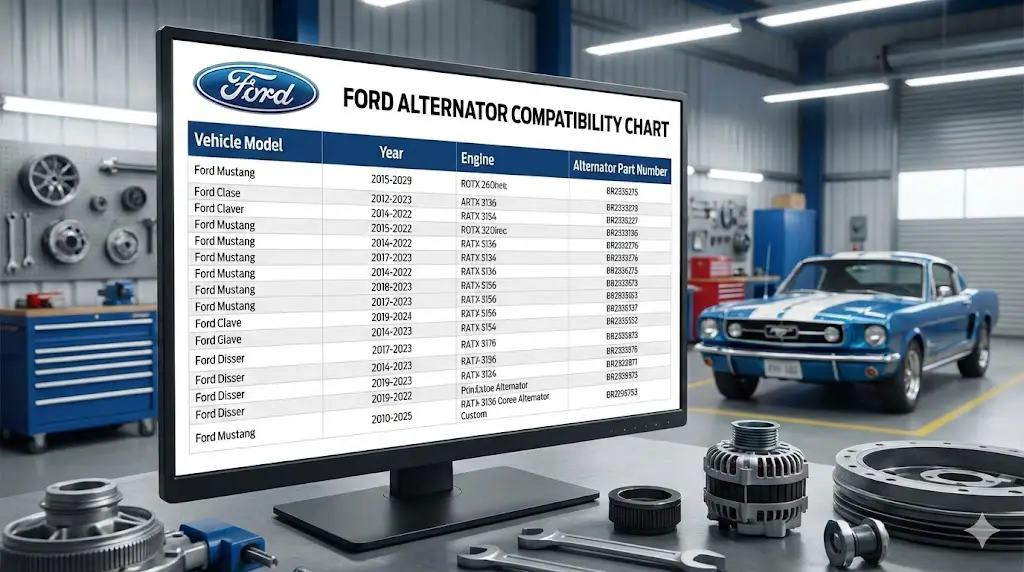
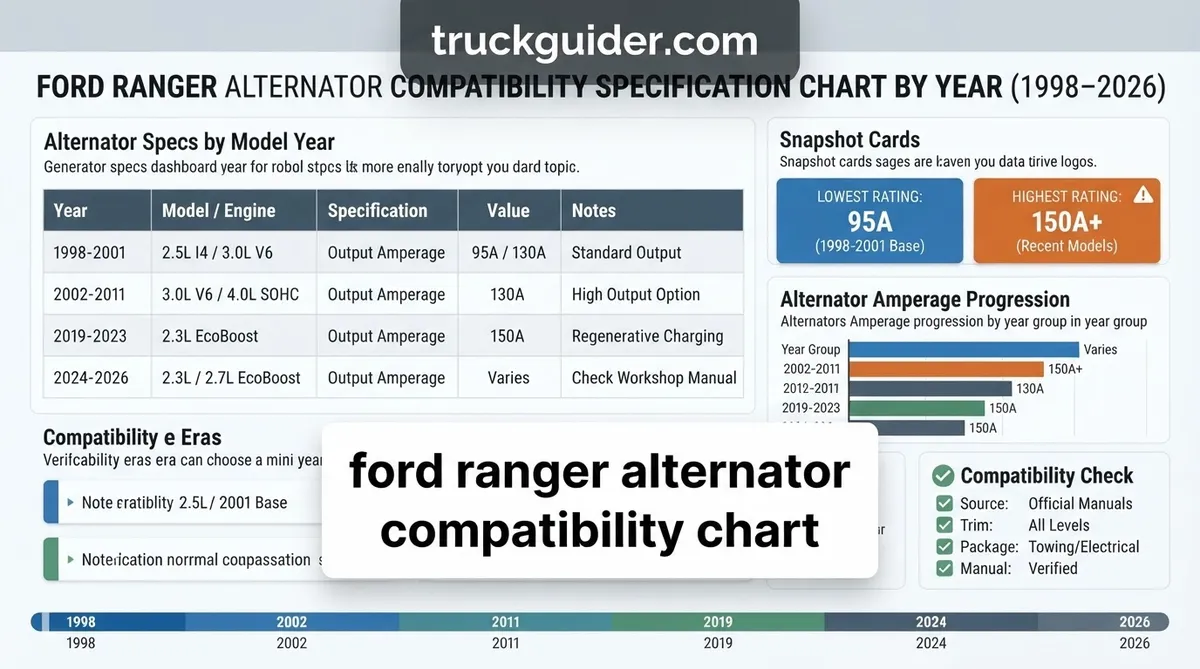
This chart covers Ford Ranger models from 1998 through 2026. Data is based on OEM service specifications. Values for amperage are typical factory ratings; aftermarket “High Output” units will vary. Always verify the connector pin count and mounting ear alignment using your specific VIN before purchase. Last reviewed: August 2026.
| Year Range | Engine | Amperage Range | Notes |
|---|---|---|---|
| 1998–2003 | 2.5L / 3.0L | 90A – 110A | Standard mechanical regulator |
| 1998–2011 | 4.0L V6 | 110A – 130A | Heavy duty options available |
| 2019–2026 | 150A – 200A | PCM-controlled smart charging |

Understanding Amperage Requirements by Engine Type
The amperage rating is fundamentally tied to the vehicle’s electrical load. A 2.3L 4-cylinder engine requires less starting current and fewer auxiliary electronics, often utilizing a 90-amp or 110-amp unit. Conversely, the 4.0L V6 engines found in earlier generations often came with towing packages that required 130-amp units to support higher lighting and trailer brake demands.
Verification Methods: From Door Stickers to PCM Codes
Never rely solely on visual inspection. Check the label on your current alternator for an OEM part number. If the label is illegible, use your VIN to query the specific “As-Built” data via an official Ford parts portal to see if your Ranger was factory-equipped with a heavy-duty cooling or towing electrical system, which dictates specific regulator compatibility.
Year-by-Year Changes in Ford Ranger Charging System Specs
The Evolution of Smart Charging Protocols
In the latest generation (2019–2026), the transition to “Smart Charging” is the most significant hurdle for owners. Unlike older units that regulated voltage based on internal feedback, modern Rangers utilize a LIN-bus connection to the PCM. If you install a generic aftermarket alternator that does not include the exact communication protocol for your specific PCM software version, the system will trigger a charging light or fail to charge the battery entirely.
Mechanical and Mounting Pattern Changes (1998–2026)
While the physical mounting bolts on many Ford modular engines remain consistent across decades, the pulley offset and the electrical connector plug shape have changed at least three times. A 1998 alternator may bolt onto a 2005 engine, but the serpentine belt alignment will likely be off by several millimeters, leading to premature belt failure or throwing the belt under high engine load.


How to Verify Your Ford Ranger Alternator Fitment and Specs
Count the wires entering your regulator plug. A mismatch (e.g., 2-pin vs 3-pin) is a hard incompatibility that cannot be bypassed.
Ensure your new unit’s pulley matches the existing one; a smaller pulley will cause the alternator to overspin, leading to premature diode failure.
Identifying Connector Type and Pulley Alignment
When performing the swap, physically compare the “ear” alignment. Ford used both dual-ear and offset-ear patterns on the 4.0L engines. A misaligned unit will cause massive stress on the accessory drive bracket. Furthermore, inspect the plug for corrosion; often, the failure is not the alternator but the harness-side connector, which can cause intermittent voltage signals.
Evaluating Load Demands: Stock vs. High-Output Needs
If you have added winches, high-intensity LED light bars, or aftermarket audio, your stock alternator may be chronically underperforming. When upgrading, you must also upgrade your main B+ cable from the alternator to the fuse box. A higher-output unit pumping 200A through a cable sized for 100A will melt the insulation and create a fire hazard.
Common Causes of Alternator Failure and Incompatibility
An alternator is rarely the only culprit. A degraded battery with high internal resistance will force an alternator to run at 100% duty cycle, eventually burning out the stator regardless of the quality of the alternator itself.



Why Battery Health Dictates Charging System Success
Before condemning your alternator, perform a load test on your battery. A weak battery creates a constant “load” on the charging system. This constant high-demand state causes the rectifier inside the alternator to heat up beyond its design limits. Many “faulty” replacement alternators are actually perfectly functional units that failed because they were installed into a system with a dead battery.
Symptoms of Incorrect Amperage Draw and Improper Grounding
If your interior lights flicker or the battery light stays illuminated even after a new alternator install, check your ground cables. The Ranger is notorious for engine-to-chassis ground straps corroding. If the ground path is poor, the alternator’s voltage regulator will receive an incorrect reference signal, causing it to output an inconsistent voltage that can damage sensitive electronics like the PCM.
By The Numbers: System Vitality
Healthy Output Range
Max Ground Resistance
Always verify your fitment by VIN rather than generic year groupings, as mid-year production changes are common. Check your battery health and ground cables first to ensure the issue isn’t misdiagnosed. If you decide to proceed with high-output upgrades, ensure your wiring gauge is upgraded accordingly to prevent potential electrical fires. Check the door pillar for your specific production date and confirm your engine configuration before ordering your next unit.
Ford Ranger Alternator Compatibility Chart: Frequently Asked Questions
Will a higher-amperage alternator damage my electrical system?
Generally, no. A higher-amperage alternator provides more capacity for auxiliary loads but only delivers the current requested by the system. However, if the alternator’s internal voltage regulator is not compatible with your vehicle’s PCM, it may cause charging errors or battery damage. Always ensure the new unit is compatible with your Ranger’s specific charging communication protocol (e.g., LIN or PWM).
How do I know if my mounting bracket matches the alternator?
Mounting compatibility is determined by the casting shape of the alternator housing and the bolt hole alignment relative to the pulley. You should visually compare your current unit’s mounting ears to the new part. If the holes do not align perfectly, forced installation can cause stress fractures in the bracket or misaligned belts, leading to premature failure of the serpentine system.
Do Ford Rangers from different years share the same alternator?
Some model years share commonalities, particularly within engine generations (e.g., 2004–2011 4.0L Cologne engines), but they are not universally interchangeable. Ford frequently updated the electrical regulators and communication interfaces within the same engine family. Never assume parts carry over between generations—such as moving from a 2011 classic Ranger to a 2019+ modern Ranger.


What is the standard amperage for a base model Ford Ranger?
Standard amperage varies, but most 1998–2011 Rangers were equipped with 95A to 115A alternators. Modern 2019+ Rangers typically feature units ranging from 150A to 220A to accommodate advanced infotainment and sensor suites. Always check your specific door-sticker electrical requirements or consult the manual for the factory-rated output.
Can I upgrade my alternator for a winch or off-road lights?
Yes, but you must ensure the upgrade is ‘plug-and-play’ regarding the electrical harness. If you install a high-output unit, you may also need to upgrade your battery cables to a larger gauge to prevent heat buildup and voltage drop. Confirm that the new alternator’s regulator is compatible with your engine computer, otherwise, you may trigger a charging system light.
![2015 Ram EcoDiesel Problems: Common Failures & Recalls [2026]](https://truckguider.com/wp-content/uploads/2026/03/2015-ram-ecodiesel-problems-featured.webp)