Jeep Gladiator Specification Chart By Year: Sizes & Fitment

Quick Answer
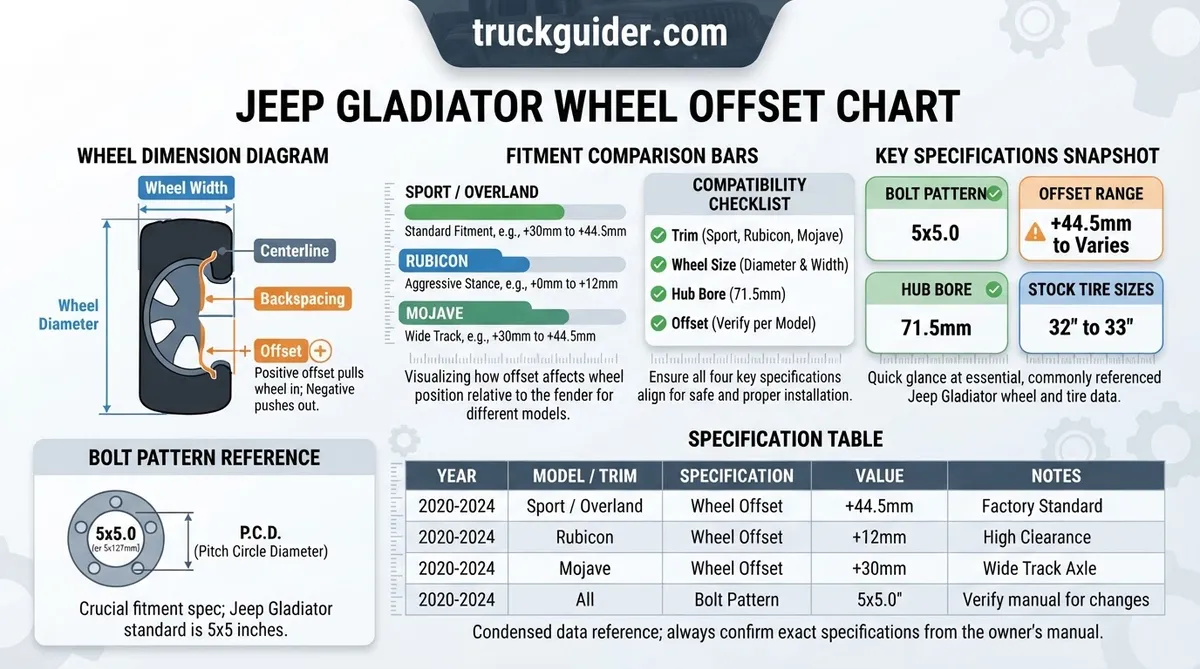
The Jeep Gladiator (JT) standard factory wheel offset typically ranges from +35mm to +44.45mm, depending on the trim level and wheel diameter. The primary caveat is that while the 5×5 bolt pattern is consistent across all model years, changing to aftermarket wheels with lower offsets may cause tire interference with the fenders or bumper, particularly when upgrading to larger diameter tires.
Upgrading the wheels on your Jeep Gladiator is the fastest way to change its look and off-road capability, but choosing the wrong offset can lead to significant tire rub, accelerated wear on wheel bearings, or suspension interference. Many owners mistakenly confuse wheel offset with backspacing or neglect the critical 5x127mm bolt pattern and hub-centric requirements. This guide provides the official factory specifications and the calculation framework you need to guarantee a perfect, rub-free fitment for your Jeep JT across all model years through 2026.


This reference covers all Jeep Gladiator (JT) model years (2020–2026). Specifications provided reflect factory-standard baseline configurations. Always verify your vehicle’s specific axle configuration and trim level via your VIN or the door jamb sticker before purchasing aftermarket wheels. Last reviewed: August 2026.
Jeep Gladiator Wheel Offset Chart and Factory Specifications
📤 Share Image
| Trim Level | Wheel Diameter | Factory Offset | Bolt Pattern | Notes |
|---|---|---|---|---|
| Sport / S | 17″ | +44.45mm | 5x127mm | Standard baseline |
| Willys / Overland | 17″ / 18″ | +35mm to +45mm | 5x127mm | Varies by rim style |
| Rubicon / Mojave | 17″ | +38mm | 5x127mm | Wide axle stance |
Model Year Fitment Breakdown
The Jeep Gladiator JT platform has remained consistent regarding hub geometry since its inception. While special editions (such as the High Altitude or limited releases) may feature unique wheel designs, the core hub-centric requirement of 71.5mm and the 5x127mm bolt pattern (5×5″) remain universal across all years and engine configurations (3.6L Pentastar and 3.0L EcoDiesel).
Trim-Specific Wheel Variations
The Rubicon and Mojave trims utilize wider axles compared to the Sport and Overland trims. Consequently, while the offset number may seem similar on paper, the effective “poke” or stance will differ when swapping wheels between trims. Always prioritize the center bore size—using a wheel with a smaller bore than 71.5mm will not mount, while a larger bore requires hub-centric rings to prevent high-speed vibrations.
Understanding Jeep Gladiator Wheel Offset vs Backspacing
Converting Offset to Backspacing
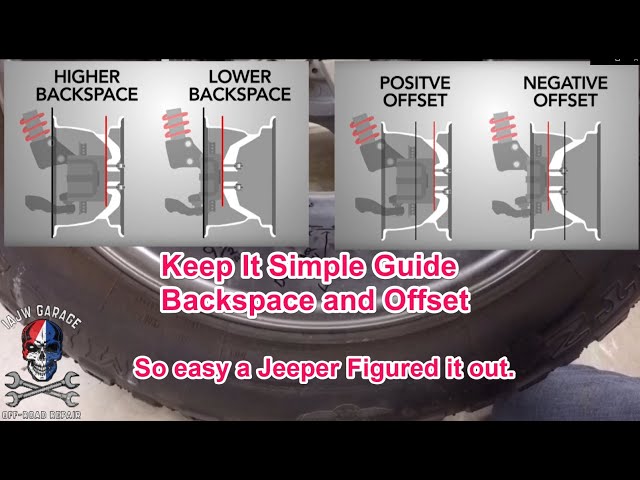
Offset is the measurement (in millimeters) from the wheel’s mounting face to its centerline. Positive offset means the mounting face is toward the outer side of the wheel. Backspacing is the distance (in inches) from the mounting face to the innermost edge of the wheel. To calculate backspacing: (Wheel Width + 1″) / 2 + (Offset / 25.4).


Why Backspacing Matters for Clearance
For the Gladiator, backspacing is often the more practical metric when clearing front steering knuckles and tie-rod ends. A common pitfall is purchasing a wheel based solely on offset; if the wheel is too wide with a high positive offset, the tire will rub against the sway bar or frame during full-lock turns.
5x127mm
71.5mm
How to Properly Calculate Jeep Gladiator Wheel Fitment
📋
Step-by-Step Fitment Calculation
If moving to 35-inch or 37-inch tires, you need to decrease offset (move toward 0mm or negative numbers) to prevent the tire from rubbing the frame.
Ensure your chosen wheel barrel diameter clears the Gladiator’s front brake calipers. A 17-inch wheel is standard, but some aftermarket designs have internal ribbing that interferes with the caliper.
Increasing negative offset significantly increases “scrub radius.” While this creates an aggressive wide stance, it also increases the leverage applied to your wheel bearings and ball joints, often leading to faster maintenance intervals for these components.
Using Spacers and Hub-Centric Rings for Gladiator Fitment
When aftermarket wheels are chosen for aesthetics over function, you may find yourself needing to adapt the fitment.


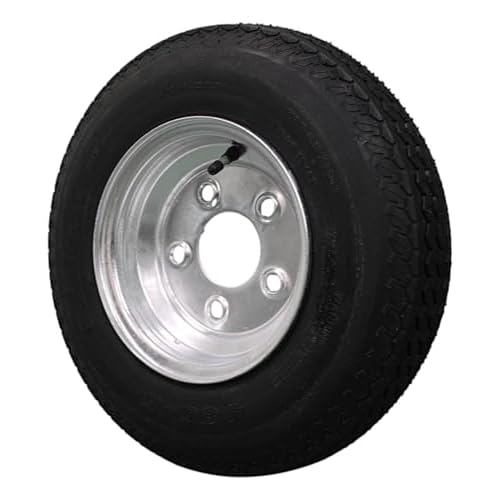
- Hub-Centric Rings: These are mandatory if your wheel bore exceeds 71.5mm. They transfer the load from the wheel studs to the vehicle hub, preventing dangerous vibrations.
- Wheel Spacers: Use these to “fix” an offset that is too positive. A 1.5-inch spacer is a common tool to gain enough clearance for wider tires while retaining stock wheels. Always use hub-centric, bolt-on spacers.
- Legality: Many regions prohibit tires from extending beyond the fender flare. Using highly negative offsets will push your tires outward, potentially requiring aftermarket fender flares to remain street-legal.
Always confirm 5x127mm; Jeep Wrangler (JL) wheels are often compatible, but verify the offset matches your needs.
The Gladiator hub is 71.5mm. Any wheel with a larger bore requires a high-quality hub-centric ring.
Avoid lug-centric wheel mounting. Always ensure that the weight of the vehicle is supported by the hub pilot, not just the lug nuts. Improperly seated wheels can lead to stud failure at highway speeds or under off-road stress.
Common Jeep Gladiator Wheel Offset Questions Answered
Yes, the Jeep Wrangler JL and Gladiator share the same 5x127mm bolt pattern and 71.5mm hub bore. Most JL wheels are a direct fit, though you should check the offset to ensure your specific tire size doesn’t rub.
While it doesn’t change your GCWR or tow rating, increasing the offset creates more stress on wheel bearings. If you frequently tow near maximum capacity, stick closer to the factory offset specification to preserve component longevity.


Always verify the 5x127mm bolt pattern before purchasing new wheels. Understand that lower offset numbers push the wheel outward, which may necessitate additional coverage like extended fender flares. Prioritize hub-centric wheels to maintain steering geometry and minimize vibrations. Before committing to a specific setup, check your local state laws regarding tire coverage, as aggressive negative offset wheels can sometimes exceed legal limits for tire projection.