What Does a Bad Wheel Bearing Look Like Expert Guide 2026

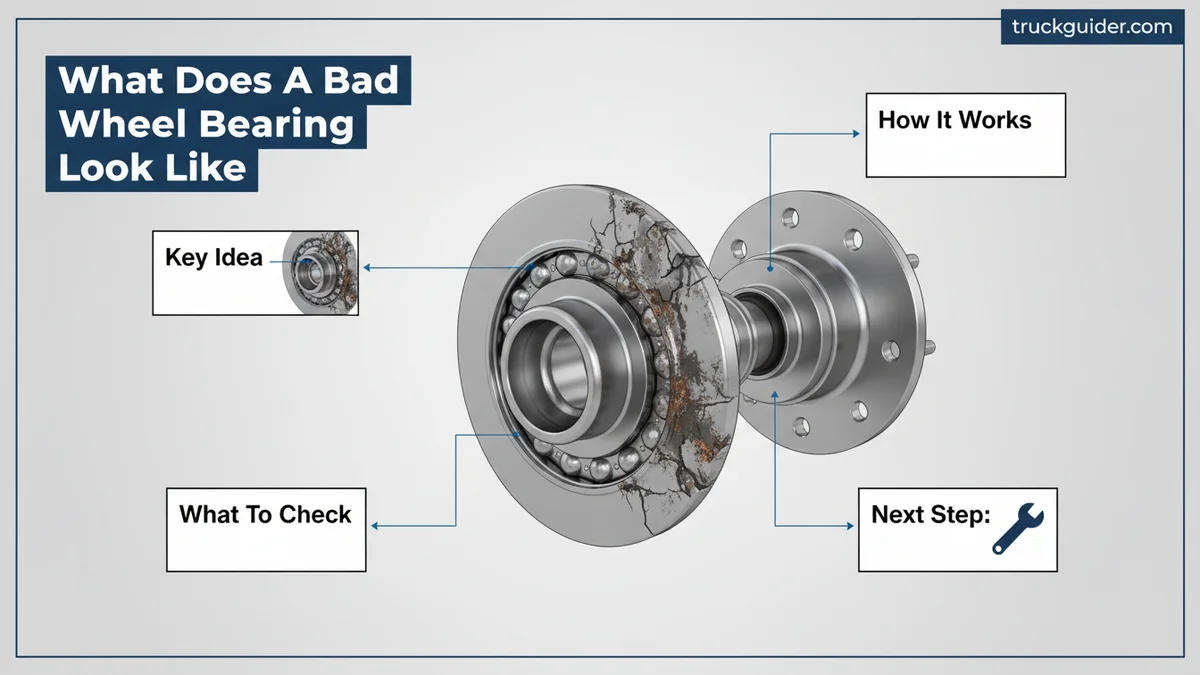
A failing wheel bearing rarely looks pristine and often exhibits clear visual indicators like dark grease leaks, heavy rust, and metal shavings around the hub assembly. Catching these physical signs early prevents complete wheel lockup and dangerous driving conditions.
A bad wheel bearing typically reveals itself through dark, burnt grease leaking from the hub assembly, heavy reddish-brown rust staining the wheel carrier, and noticeable physical play or wobbling when you manually push and pull the tire. Modern automotive engineering standards in 2026 demand reliable components, but severe potholes, road salt, and natural wear eventually compromise these critical parts.

Prime for Young Adults — 6 Months Free
Students and 18–24s get six months of Prime free, then half price.
Start 6 Months FreeIgnoring these physical warning signs can lead to catastrophic wheel lockups or separation at highway speeds. Inspecting your vehicle regularly helps you catch bearing degradation before it damages your steering knuckles, ABS sensors, or brake rotors, saving you from expensive roadside emergencies.
Key Takeaways
- Look for thick, dark grease leaking from behind the wheel hub assembly.
- Check for unusual rust streaks bleeding out from the center of the wheel.
- Perform a physical shake test by rocking the wheel at 12 and 6 o’clock.
- Distinguish bearing play from loose suspension components during your inspection.
- Listen for a grinding or humming noise that intensifies when turning.
What Causes Wheel Bearings to Fail and Wear Out
Recommended Best Deal Products


Contamination and Seal Failure
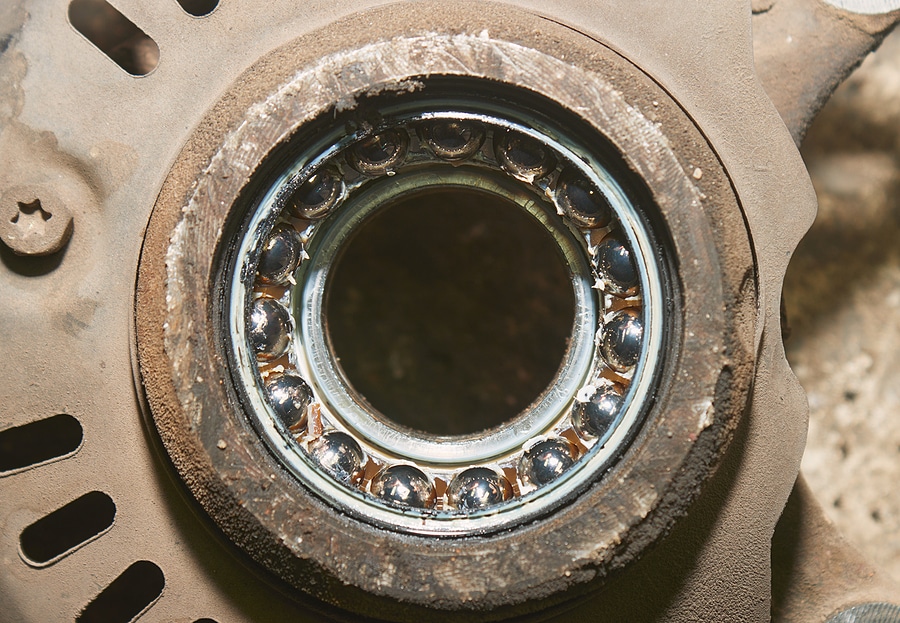
Wheel bearings rely on high-temperature waterproof grease sealed tightly inside a metal cage. Once rubber or polyurethane seals dry out, crack, or tear due to age and extreme heat, moisture and road debris easily infiltrate the assembly. Water mixing with bearing grease quickly washes away lubrication, causing metal-on-metal friction that grinds down the precision rollers.
- Cracked or brittle rubber dust seals
- Water intrusion from deep puddles or flood zones
- Abrasive brake dust mixing with exposed grease
Impact Damage and Extreme Stress
Hitting deep potholes, running over curbs, or driving aggressively on rough terrain creates massive shock loads. This sudden impact bruises the polished steel raceways inside the bearing, leaving tiny indentations known as brinelling. Once these microscopic dents form, every rotation of the wheel causes the rollers to slam against the damaged spot, accelerating rapid structural failure.
- Severe curb impacts or deep pothole strikes
- Overloaded vehicle weight exceeding gross axle limits
- Installing oversized aftermarket wheels with incorrect offsets
How to Visually Inspect a Wheel Bearing for Damage
Checking for Grease Leaks and Rust Stains
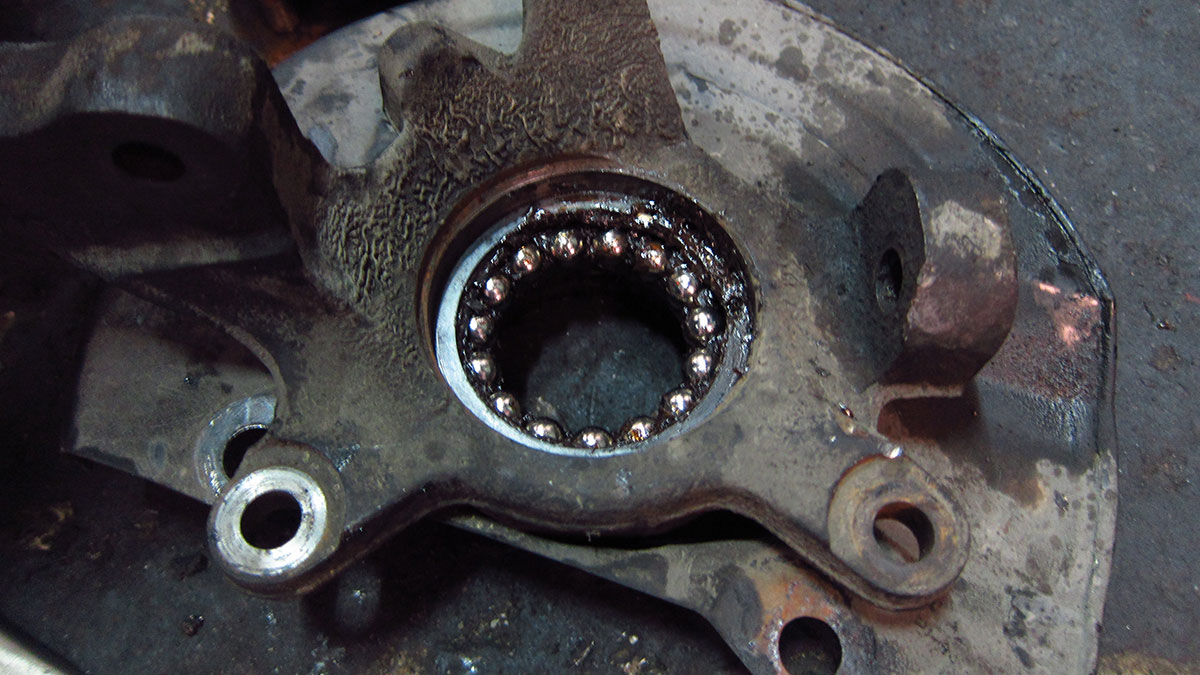
Start your inspection by removing the wheel cover or alloy wheel to expose the brake rotor and center hub assembly. Look closely at the back of the knuckle and around the axle nut for any signs of wet, dark brown, or black grease splatter. Fresh grease thrown outward by centrifugal force is a definitive sign that your internal seals have failed. Additionally, look for unusual streaks of rust bleeding out from behind the hub flange.
- Thick, oily residue coating the inside of the wheel rim
- Discolored or burnt grease baking onto the brake dust shield
- Corrosion trails indicating moisture trapped inside the housing
Performing the Physical Shake Test
Safely lift the vehicle using a hydraulic jack and secure it with sturdy jack stands so the wheel hangs freely in the air. Place your hands at the 12 o’clock and 6 o’clock positions on the tire and firmly rock it back and forth. If you feel any looseness, clicking, or structural play, your wheel bearing has excessive internal clearance. Repeat the test at the 3 o’clock and 9 o’clock positions to help differentiate between a loose bearing and worn steering components like tie rod ends.
- Noticeable clunking or wobbling during the push-pull test
- Grinding sensations felt through the tire while manually spinning it
- Uneven tire tread wear caused by a shifting wheel alignment
Step-by-Step Guide to Check for Wheel Bearing Play
Recommended Best Deal Products


Visual inspections and road tests reveal warning signs, but checking for physical play confirms a failing bearing. Industry data from automotive service associations shows that mechanical diagnostics require systematic physical checks before part replacement.
Preparation and Safety Setup
Gather a floor jack, heavy-duty jack stands, and wheel chocks. Safety experts mandate securing the vehicle on level ground with chocks against the opposite tires. Loosen the lug nuts slightly before lifting the car.
The Shake Test Procedure
Follow these precise steps to check for horizontal and vertical wheel play:
- Lift the target wheel completely off the ground using the designated frame pinch weld and secure the vehicle safely on a rated jack stand.
- Grasp the tire firmly at the 12 o’clock and 6 o’clock positions with both hands.
- Rock the tire back and forth firmly, pushing in with one hand while pulling out with the other.
- Repeat the rocking motion at the 9 o’clock and 3 o’clock positions.
- Observe whether the wheel shifts, clunks, or exhibits loose movement independent of the steering rack.
If the wheel rocks at the 12 and 6 positions, the wheel bearing is likely worn. If movement occurs primarily at the 3 and 9 positions, the issue usually stems from a failing tie rod or steering linkage rather than the bearing itself.

Audible — Listen Free for 30 Days
One free credit a month and thousands of titles included.
Listen Free for 30 DaysWhat If It Still Doesn’t Work?
Replacing a wheel bearing or tightening a loose axle nut does not always resolve persistent vehicle noises. Technicians in 2026 note that modern multi-link suspensions can mask or mimic bearing failure symptoms. Consider these fallback troubleshooting steps if the noise persists:
- Inspect the CV axles and drive shafts for torn boots, joint binding, or balance weight detachment which produces identical rotational hums.
- Check the brake calipers and rotor shields for binding, warping, or rubbing against the inner wheel rim during turns.
- Examine tire wear patterns for cupping, feathering, or flat spots caused by poor alignment or worn struts, which generate high-pitched road noise identical to a bad bearing.
- Consult a certified professional mechanic to perform a chassis ear acoustic test or a diagnostic lift run. Professional diagnostic labor typically costs between $100 and $150.
If professional replacement becomes necessary, total costs for parts and labor range from $250 to $650 per wheel assembly depending on vehicle make, model, and whether the hub unit is integrated with the ABS sensor.
Conclusion
Recommended Best Deal Products

Recognizing what a bad wheel bearing looks, sounds, and feels like prevents catastrophic wheel separation and costly secondary suspension damage. According to verified research and expert sources from leading automotive safety foundations, prompt bearing replacement eliminates safety hazards and restores proper vehicle handling. Take action today by performing a manual shake test on your vehicle’s wheels to catch early wear before it leads to a dangerous roadside failure.
❓ Frequently Asked Questions
What does a bad wheel bearing look like on the inside?
Inside the sealed unit, a failing bearing features pitted steel races, flattened or chipped ball bearings, and scorched metal caused by extreme friction and lack of lubrication.
How do grease leaks indicate a bad wheel bearing?
When the internal rubber seals degrade or crack, the high-temperature grease liquefies and escapes, leaving dark, sticky trails around the back of the spindle and wheel hub.
Why is rust a common sign of a bad wheel bearing?
Moisture breaches the compromised outer seal, causing the steel components and surrounding housing to rust and bleed reddish-brown streaks down the wheel assembly.
What is the difference between a bad bearing and a bad CV joint?
A bad CV joint usually displays a torn rubber boot spraying grease onto the inner suspension, whereas a wheel bearing leak comes directly from the center hub area.
How do you test for physical play in a wheel bearing?
Lift the vehicle safely, grab the tire firmly at the 12 and 6 o’clock positions, and rock it back and forth to check for looseness or clunking.
Audible Premium Plus — Annual Membership
12 audiobook credits up front, plus the full Audible catalogue.
See Annual PlansIs it safe to drive with a visibly damaged wheel bearing?
No, driving on a severely damaged bearing risks catastrophic wheel separation, sudden lockup, or total loss of vehicle control.
![Ram Extended Warranty Price [2026]](https://truckguider.com/wp-content/uploads/2026/03/featured-c324498f.webp)