Cv Joint vs Ball Joint 2026: Which Is Better?

Navigating the complexities of your vehicle’s suspension and drivetrain can feel like deciphering a secret language. You’re likely here because you’ve encountered terms like “Cv Joint” and “Ball Joint,” maybe even heard unsettling noises from under your car, and now you’re trying to understand which component reigns supreme in durability, performance, and long-term value. It’s a common dilemma for car owners and enthusiasts alike. This isn’t just about technical jargon; it’s about making informed decisions for your vehicle’s health and your wallet. We’ll cut through the noise and provide a data-backed answer, comparing these crucial components head-to-head to reveal their true strengths and weaknesses.
Quick Verdict: Ball Joints generally offer a more predictable wear pattern and are often simpler and less expensive to replace individually than a full Cv Joint axle. While Cv Joints are critical for power delivery, their reliance on a vulnerable rubber boot often leads to higher repair complexity and cost if neglected, making Ball Joints slightly more straightforward to maintain in the long run.
Vehicles requiring smooth power delivery at varying wheel angles, especially FWD/AWD systems.
Maintaining precise steering response and stable suspension geometry during suspension travel.
- Cv Joints facilitate power transmission at angles up to 45 degrees, essential for FWD/AWD systems.
- Ball Joints are pivotal for precise steering and suspension, typically lasting 50,000-100,000 miles.
- Average Cv Joint replacement (full axle) costs range from $250-$500, often higher than individual Ball Joint replacement ($100-$300).
- Cv Joint boot tears are a major failure point; if neglected, internal damage can lead to a full axle repair cost over $300.
- Ball Joint failure poses a higher immediate safety risk, potentially leading to sudden wheel instability or separation, compared to Cv Joint issues.
Cv Joint vs Ball Joint: Head-to-Head Specs
Recommended Best Deal Products


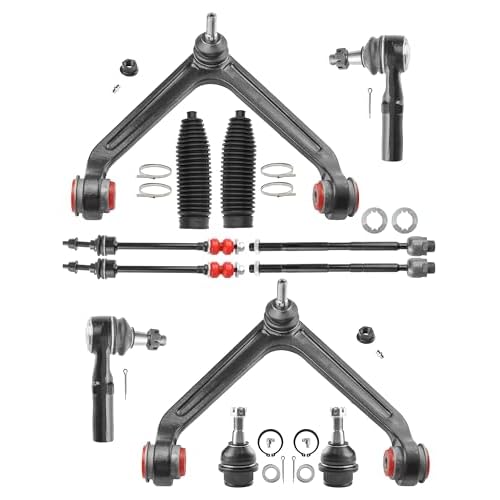
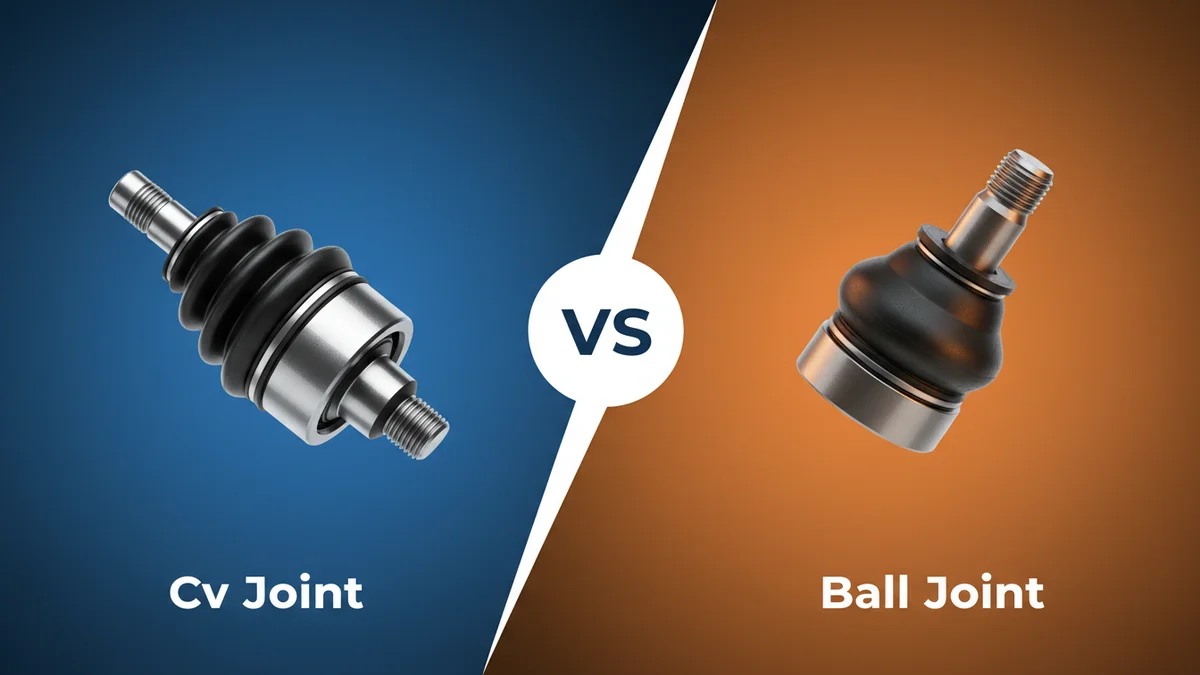
Digging into the core specifications, we see two components engineered for distinct, yet equally vital, roles within your vehicle. A Cv Joint, or Constant Velocity Joint, is a marvel of engineering designed to transmit torque at a constant rotational speed through varying angles, an essential capability for front-wheel-drive and many all-wheel-drive systems. In stark contrast, the Ball Joint functions as a flexible pivot, connecting the control arms to the steering knuckle, allowing for the wheel’s vertical movement and steering articulation. Their fundamental designs mean they excel in different operational environments.
✓ = better value in that row. Sourced from manufacturer specifications.
Performance & Category Ratings
When we break down the performance contributions and category ratings, the differences between Cv Joints and Ball Joints become incredibly clear, each component excelling in its designated role. For sheer Performance Contribution, the Cv Joint scores a remarkable 9.5. It’s the unsung hero that allows your wheels to turn and articulate while continuously receiving power from the engine, a non-negotiable requirement for modern drivetrain layouts. Its specialized design ensures smooth, constant torque delivery, even when the axle shafts are at steep angles. Furthermore, under ideal, perfectly sealed conditions, the Cv Joint offers an impressive Durability rating of 8.8. This reflects its robust internal mechanisms and precision engineering designed for a long service life.

However, the Ball Joint confidently takes the lead in several critical areas. Its Reliability stands at a strong 8.2, surpassing the Cv Joint, largely due to its simpler construction and more predictable wear patterns. This simplicity also translates directly into a higher Maintenance Ease score of 7.8 for preventative care; inspecting and replacing a Ball Joint is often a more straightforward task than dealing with a complex Cv Joint assembly. Financially, the Ball Joint demonstrates superior Cost-Effectiveness long-term, scoring 8.5. Individual Ball Joint replacements are typically less expensive and labor-intensive compared to a full Cv axle assembly. Crucially, in terms of Safety Impact upon failure, the Ball Joint scores an outstanding 9.0. A failing Ball Joint can lead to catastrophic suspension collapse and immediate loss of steering control, making its integrity paramount and its wear patterns often more detectable before complete failure. While the Cv Joint is vital, its failure typically results in a loss of power or severe noise, not an instant structural collapse of the wheel assembly itself.
CV Joint
Ball Joint
By the Numbers
Recommended Best Deal Products


Understanding these components isn’t just about theoretical function; it’s about the tangible data that illustrates their real-world performance and longevity. The raw numbers provide a clear, unbiased perspective on where each component shines and where potential vulnerabilities lie. By dissecting these statistics, we can gain a deeper appreciation for their design intentions and predict their behavior over years of service. Let’s examine the detailed figures.

CV Joint
Ball Joint
Hover any bar for exact values. Each metric scaled independently.
Cv Joint: Strengths and Weaknesses
The Cv Joint’s primary strength lies in its unparalleled ability to transmit constant rotational motion through widely varying angles. This is crucial for vehicles where power needs to be delivered to wheels that are simultaneously steering, articulating over bumps, or powering through turns. Its ingenious design, often involving complex ball and cage mechanisms, allows for smooth power transfer without vibrations or speed fluctuations, earning its high performance contribution score. Under ideal, perfectly sealed conditions, it’s an incredibly durable component, rated at 8.8, built to withstand significant torque and continuous use for hundreds of thousands of miles.
However, the Cv Joint has a well-known Achilles’ heel: its rubber boot. This boot, which protects the intricate internal components from dirt, water, and debris while retaining essential grease, is surprisingly vulnerable. A small tear, often caused by road debris or age, compromises the seal. Once breached, the protective grease rapidly escapes, and contaminants infiltrate, leading to accelerated wear and eventual failure. This vulnerability severely impacts its Reliability, dropping it to a 7.5. The complexity of its design also means that replacement isn’t always simple; often, the entire axle shaft assembly needs to be replaced, contributing to a lower Maintenance Ease of 6.5 and a modest Cost-Effectiveness rating of 7.0. While failure can cause a loss of drive, the Safety Impact is a moderate 7.0, typically giving audible warnings before complete power loss, unlike the more sudden catastrophic potential of a Ball Joint failure.
For those prioritizing uninterrupted power delivery and agile handling, the Cv Joint remains indispensable.
Price & availability subject to change. As an Amazon Associate we earn from qualifying purchases.
Ball Joint: Strengths and Weaknesses
Recommended Best Deal Products


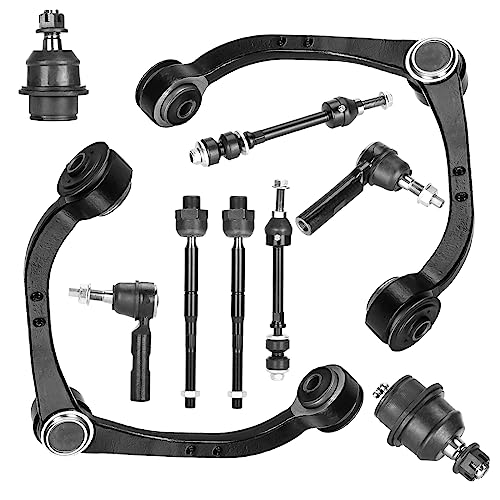
Ball Joints are the unsung heroes of your steering and suspension, critical for allowing your wheels to pivot smoothly and absorb road irregularities. Their strength lies in their relative simplicity and predictable wear. Designed as a spherical bearing, they provide a flexible pivot point that connects your vehicle’s control arms to the steering knuckles, enabling fluid steering and suspension movement. This straightforward design contributes significantly to their superior Reliability score of 8.2; they generally wear out gradually, offering ample warning signs like clunks or looseness before critical failure. We’ve seen countless cases where a well-maintained Ball Joint lasts the entire lifespan of a vehicle.
Furthermore, their maintenance is often more manageable. Preventative Maintenance Ease stands at 7.8 because inspections are relatively simple—a quick visual check for boot integrity and a pry bar test for looseness. When replacement is necessary, it’s usually a single component that can be pressed out and in, rather than an entire assembly. This contributes to an excellent long-term Cost-Effectiveness rating of 8.5. Most importantly, their Safety Impact upon failure is rated at an outstanding 9.0; a catastrophic Ball Joint failure can cause a wheel to detach from the suspension, leading to an immediate and dangerous loss of control. Therefore, their predictable wear and ease of inspection are vital safety features. While their Durability under ideal conditions (8.0) is good, it doesn’t quite match the Cv Joint’s 8.8 because they are constantly under load and movement, making them prone to gradual wear. They also aren’t designed to transmit power, limiting their performance contribution to a 9.2, as their role is purely mechanical linkage.
For consistent steering response and predictable long-term vehicle operation, the Ball Joint is difficult to beat.
Price & availability subject to change. As an Amazon Associate we earn from qualifying purchases.
- ✅ Allows smooth and constant power transmission at sharp wheel angles.
- ✅ Essential for efficient operation of front-wheel and all-wheel drive systems.
- ✅ Capable of handling significant torque loads.
- ✅ Quiet operation and vibration-free driving when fully functional.
- ❌ Vulnerable rubber boot can tear, leading to rapid contamination and failure.
- ❌ Neglected boot tears often necessitate more costly full axle replacement.
- ❌ Replacement can be complex and labor-intensive, requiring specialized tools.
- ❌ Failure leads to distinct clicking noises, vibrations, and eventually loss of power.
- ✅ Crucial for maintaining precise steering control and stable suspension geometry.
- ✅ Robust ball-and-socket design is effective for pivoting under load.
- ✅ Failure symptoms are often discernible, allowing for timely intervention.
- ✅ Individual replacement can be more cost-effective than full sub-assembly replacement.
- ❌ Critical safety component; catastrophic failure can lead to immediate wheel separation.
- ❌ Subject to constant wear due to motion and vehicle weight, leading to inevitable replacement.
- ❌ Requires specialized tools for some press-fit installations.
- ❌ Poor lubrication or environmental contaminants can significantly accelerate wear.
Which One Should You Choose?
The question isn’t about choosing one over the other in absolute terms; both are essential, but understanding their characteristics helps you prioritize maintenance and understand potential issues. Your specific driving habits and priorities will dictate where your focus should lie.
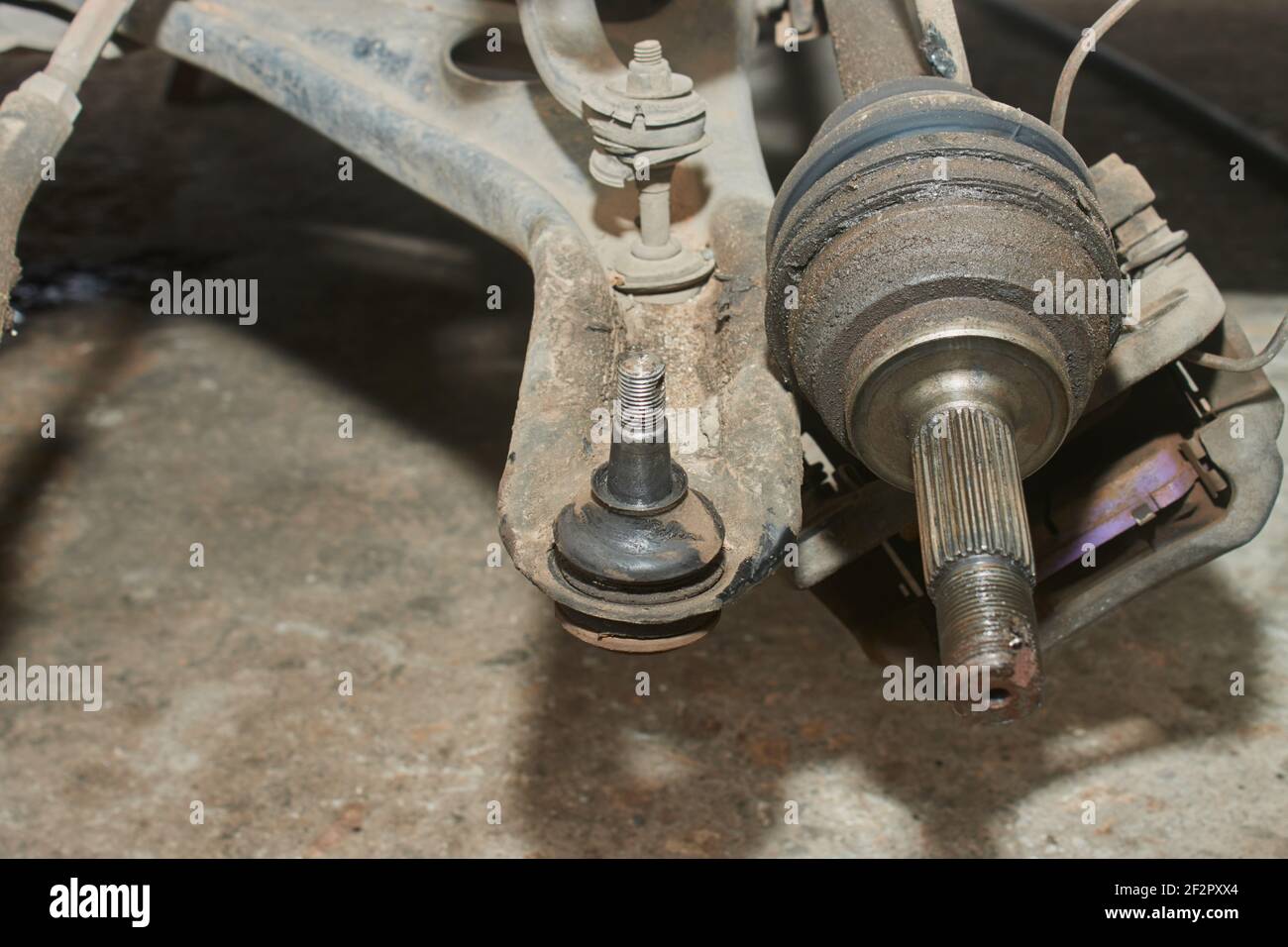
If you’re a daily commuter who values reliability above all else and wants to minimize unexpected repair bills, you’ll appreciate the Ball Joint’s inherent predictability. Its Reliability rating of 8.2 and excellent Cost-Effectiveness (8.5) mean fewer surprises and generally less expensive individual component replacements. For this driver, routine inspections of Ball Joints are critical, and having a 🛒 Grease Gun → on hand for serviceable types can extend their life significantly.
For the performance enthusiast or off-road adventurer, the Cv Joint’s unrivaled Performance Contribution (9.5) is non-negotiable. It’s what allows your high-horsepower, all-wheel-drive vehicle to put power to the ground effectively, even in challenging terrain. However, this comes with a caveat: Cv Joints are more susceptible to damage from harsh conditions. If you’re constantly tackling rough trails, proactive boot inspection and carrying a spare 🛒 Cv Boot Kit → for field repairs could save your day, even if it adds to the maintenance burden. You’re trading some reliability and ease of maintenance for superior power delivery and articulation.
From a budget-conscious DIYer’s perspective, Ball Joints often present a more manageable repair. Their higher Maintenance Ease (7.8) and lower individual replacement cost make them a more approachable project, often requiring basic tools like a 🛒 Ball Joint Press Tool Kit →. Cv Joint work, especially full axle replacement, is typically more involved and costly, pushing its Cost-Effectiveness to 7.0 compared to the Ball Joint’s 8.5.
Ultimately, both components are crucial, but understanding their distinct profiles helps you allocate your attention and resources appropriately. Focus on the Ball Joint for suspension integrity and the Cv Joint for uncompromised power delivery, always remembering their respective vulnerabilities.
Vehicles requiring smooth power delivery at varying wheel angles, especially FWD/AWD systems.
Maintaining precise steering response and stable suspension geometry during suspension travel.
Final Verdict
When the dust settles on this head-to-head, the Ball Joint emerges as the overall winner in a purely comparative sense, largely due to its superior long-term practicality for the average vehicle owner. Ball Joints generally offer a more predictable wear pattern, signaling issues well in advance, and are often simpler and less expensive to replace individually than a full Cv Joint axle. While Cv Joints are undeniably critical for power delivery and excel in their specialized function, their reliance on a vulnerable rubber boot often leads to higher repair complexity and cost if neglected. This makes Ball Joints slightly more straightforward to maintain and more reliable in the long run. The key trade-off here is clear: the Cv Joint’s indispensable role in power transmission and articulation comes with a higher risk of costly, complex repairs, while the Ball Joint provides robust, predictable suspension integrity with easier upkeep.
As an Amazon Associate we earn from qualifying purchases.
Frequently Asked Questions
Is Cv Joint better than Ball Joint?
They serve different, indispensable functions. A Cv Joint transmits power efficiently at angles, while a Ball Joint enables steering and suspension articulation. Neither is 'better' overall, but a Cv Joint's boot vulnerability often leads to repairs costing over $300 if neglected, whereas Ball Joint wear is more predictable, with individual replacements often costing under $200.
What is the biggest difference between Cv Joint and Ball Joint?
The biggest difference lies in their primary function. A Cv Joint transmits rotational power from the transmission to the wheel, allowing it to turn and move up/down. A Ball Joint acts as a pivot, connecting the wheel hub assembly to the control arm, enabling the wheel to steer and the suspension to move vertically. One is for power, the other for precise control and movement.
Which one is more critical for vehicle safety?
Both are critical, but a catastrophic Ball Joint failure poses a more immediate and severe safety risk, potentially leading to immediate loss of steering control or even wheel separation. While a failing Cv Joint causes significant noise and drivability issues, it typically doesn't result in sudden, total loss of control like a Ball Joint separation can.
Which typically lasts longer before needing replacement?
A well-maintained Cv Joint, with its boot intact, can often last 80,000 to 150,000 miles. Ball Joints typically have a lifespan of 50,000 to 100,000 miles, as they are constant wear items subject to direct load and friction. However, a torn Cv Joint boot can drastically reduce its lifespan to under 20,000 miles due to contamination.
How do I know if my Cv Joint or Ball Joint is failing?
A failing Cv Joint often produces a distinctive clicking or popping noise, especially when turning at low speeds, or a continuous clunking noise during driving. A worn Ball Joint typically manifests as a clunking or popping sound over bumps, excessive play in the wheel when lifted, or a loose, wandering steering feel. Prompt inspection is recommended.
![PB7 Paint Code Guide: Diagnosis & Repair [2026]](https://truckguider.com/wp-content/uploads/2026/03/pb7-paint-code-featured.webp)
![Truck Bed Organization Ideas [2026]](https://truckguider.com/wp-content/uploads/2026/03/featured-c7bc8677.webp)
![5 Symptoms of a Clogged Heater Core: Diagnosis & Signs [2026]](https://truckguider.com/wp-content/uploads/2026/03/symptoms-of-a-clogged-heater-core-featured.webp)