
How Many Wheels on a 18 Wheeler Real Guide for 2026

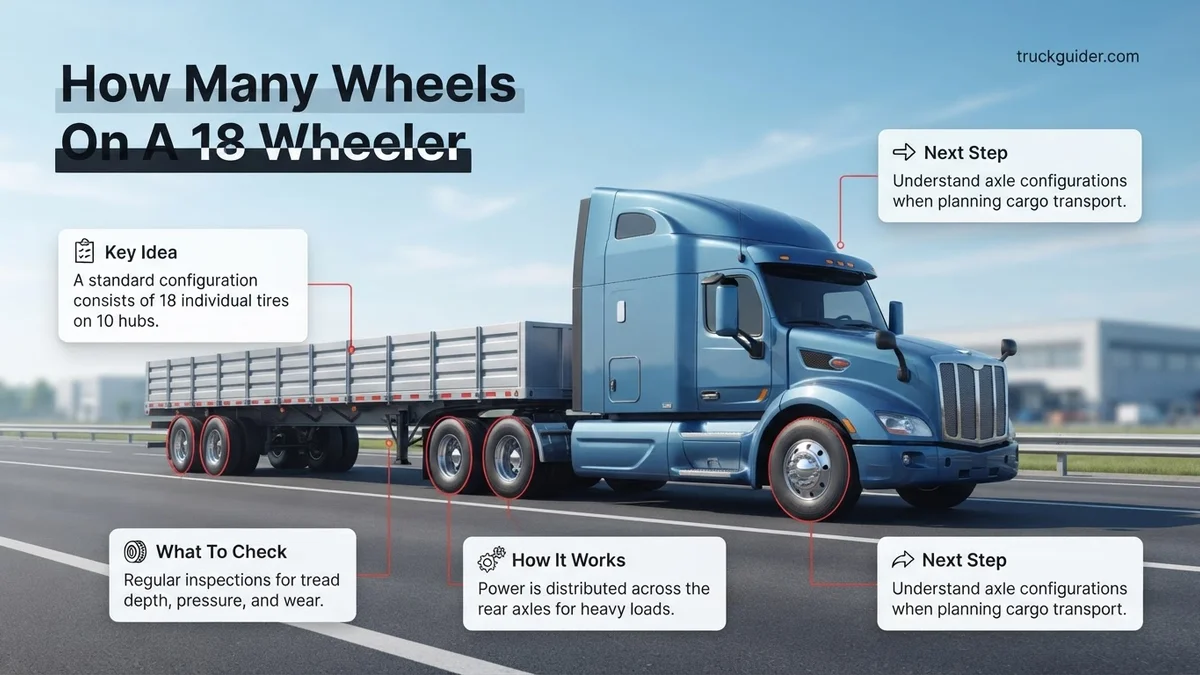
An 18-wheeler truck has exactly 18 wheels distributed across its tractor and trailer units. This count comes from a specific combination of single steering tires and dual rear tires mounted on multiple axles.
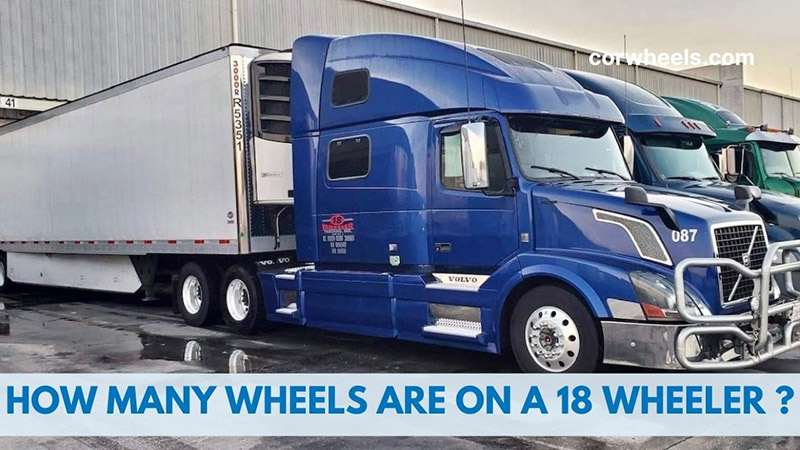
An 18-wheeler actually has 18 wheels, exactly as its name suggests, though counting them can trick the eye if you do not know where to look. This standard semi-truck configuration relies on a precise setup of single and paired tires distributed across three main axles to distribute heavy cargo loads safely across the highway.

Prime for Young Adults — 6 Months Free
Students and 18–24s get six months of Prime free, then half price.
Start 6 Months FreeUnderstanding this wheel and tire layout matters practically when you work in logistics, drive alongside these massive commercial rigs on the road in 2026, or need to inspect commercial vehicle equipment. Knowing how these tires are arranged helps you spot mechanical issues, understand weight limits, and appreciate the engineering behind modern freight transport.
Key Takeaways
- An 18-wheeler always features exactly 18 individual wheels in its standard configuration.
- The front steering axle holds 2 single wheels, one on each side.
- The tractor drive axles use 8 wheels arranged in dual sets.
- The semi-trailer uses another 8 wheels, also arranged in dual sets.
- Some modern rigs utilize ‘super single’ tires, though the axle layout remains similar.
What Causes the 18-Wheeler Wheel Count Configuration
Recommended Best Deal Products


Truck manufacturers do not pick an 18-wheel layout by accident. Physics, state highway weight limits, and engineering standards dictate why a standard semi-truck uses exactly 18 wheels.
Axle Load Distribution Rules
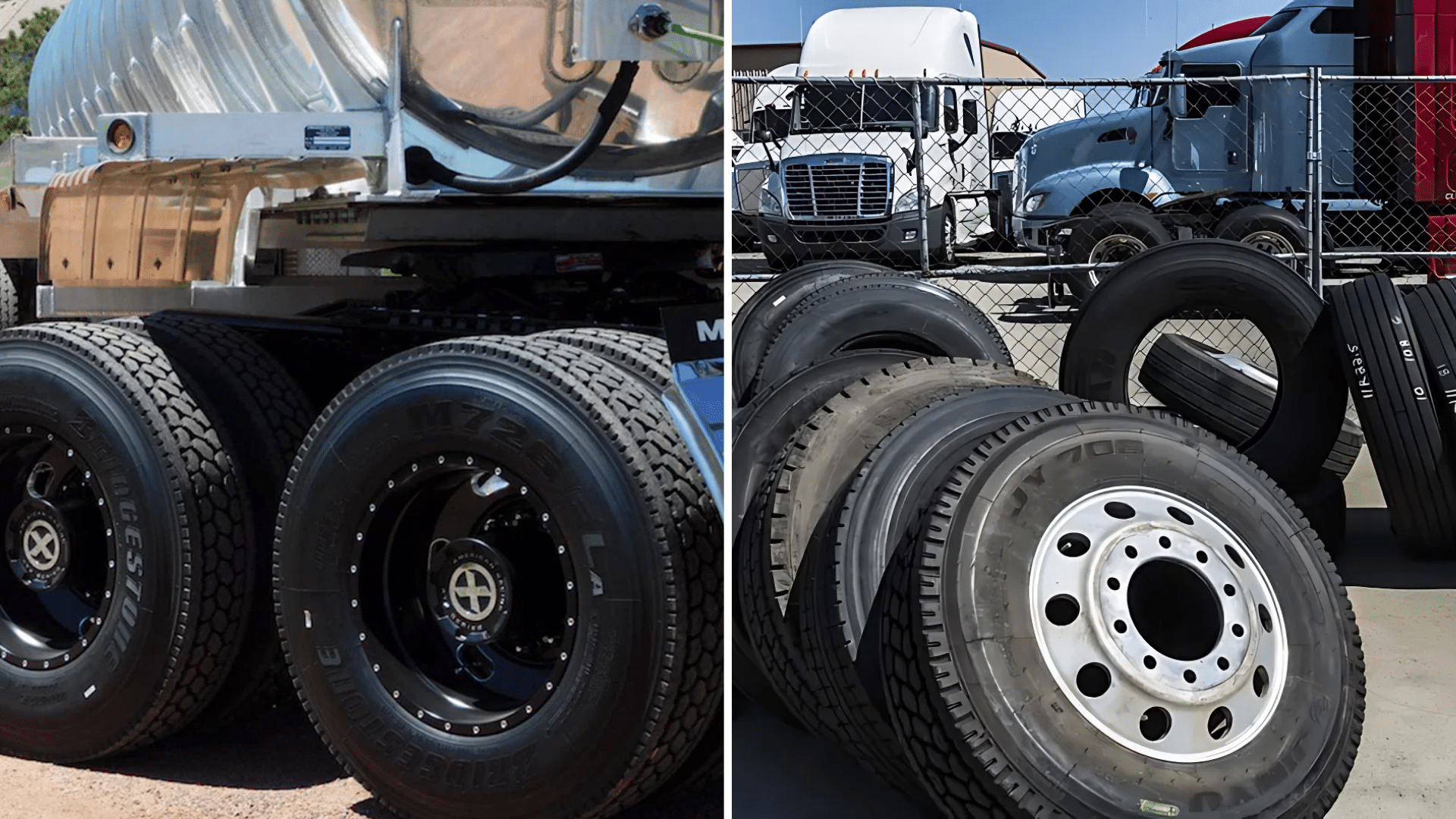
Federal and state transportation departments enforce strict weight limits on every single axle of a commercial truck. Distributing 80,000 pounds of total gross weight across multiple axles prevents roads and bridges from breaking down prematurely. Putting all that weight on just four or six tires would instantly destroy the asphalt and make the truck impossible to steer safely.
The Role of Traction and Turning
The 18-wheel setup balances maximum traction with smooth steering capability. The front wheels need to pivot freely without rubbing against the truck body, while the rear wheels need massive grip to push heavy loads through rain, snow, and steep inclines.
- Steering axle requires single tires for precise turning angles.
- Drive axles require multiple contact patches to transfer engine power to the pavement.
- Trailer axles need stability to prevent swaying at highway speeds.
How to Fix and Verify the Axle and Tire Breakdown Step-by-Step
Counting the wheels on a semi-truck becomes simple once you break the vehicle down by its individual axles. A standard combination semi-truck features three primary axle groups from front to back.
The Steering Axle Setup
The very front of the tractor holds the steering axle. This axle features just two wheels, one on the driver side and one on the passenger side. These front tires are wider single tires designed to handle the heavy steering loads and guide the entire rig.
- Front steering axle: 2 single wheels.
- Positioned directly beneath the engine compartment.
- Responsible for all directional control of the tractor.
The Drive and Trailer Axles
The remaining 16 wheels sit on the rear axles of the tractor and the trailer. Instead of single wheels, these positions use dual wheels, commonly called duals. Two wheels and tires mount side-by-side on each end of the axle.
- Tractor drive axles: Two rear axles on the truck unit, each holding 4 wheels (2 duals per side), totaling 8 wheels.
- Trailer axles: Two rear axles on the towed trailer, each holding 4 wheels (2 duals per side), totaling 8 wheels.
- Total calculation: 2 front wheels plus 8 drive wheels plus 8 trailer wheels equals exactly 18 wheels.
What If It Still Doesn’t Match Standard 18-Wheeler Counts
Recommended Best Deal Products


When encountering a heavy-duty commercial truck that completely breaks the standard four-axle mold, counting wheels requires a systematic approach. Unique cargo demands and heavy-haul logistics often create configurations that baffle casual observers. According to the Federal Highway Administration (FHWA), specialized freight configurations represent a growing segment of commercial transit heading into 2026.
Step-by-Step Verification for Non-Standard Rigs
- Isolate the steering axle: Start at the very front. Even heavy multi-axle steering assemblies generally feature dual wheels on each side, though some specialized off-road or heavy-recovery units use single wide-base super singles.
- Count the drive axle pods: Look between the fifth wheel and the back of the cab. Standard tandem drives use eight tires total, but tridem (three-axle) configurations will add another full set of four wheels.
- Examine the trailer configuration: Standard dry vans use tandem axles (eight tires). If you are looking at a specialized step-deck, lowboy, or multi-axle heavy-haul trailer, count each individual axle line carefully from front to rear.
- Check for lift axles (tag or pusher axles): Many modern 2026 freight haulers utilize retractable axles that lift off the pavement when empty. A truck might display 18 wheels when loaded, but only 14 when running empty.
If precise wheel and axle counts remain unclear due to complex custom configurations, consult heavy transport engineering manuals or regional Department of Transportation (DOT) permit offices. Professional commercial vehicle inspectors estimate that complex heavy-haul permits cost between $150 and $500 depending on the state and route, requiring exact axle-load and tire-count verification.

Audible — Listen Free for 30 Days
One free credit a month and thousands of titles included.
Listen Free for 30 DaysConclusion
Determining how many wheels are on an 18-wheeler ultimately comes down to analyzing axle grouping and tire placement. While the classic semi-truck uses two front steering wheels and sixteen drive and trailer wheels distributed across four axles, variations like super singles and multi-axle heavy haulers frequently alter this math. According to verified research and commercial transport sources, understanding these configurations ensures accurate vehicle classification and compliance.
Next actionable step: The next time you encounter a commercial truck on the highway, pause to count the axle pods and tire sets to test your identification skills against standard freight models.
❓ Frequently Asked Questions
Recommended Best Deal Products


How are the 18 wheels distributed across the truck?
The wheels are spread across five distinct axles. The front steering axle has 2 single wheels, the two rear tractor drive axles have 8 wheels total in dual pairs, and the two trailer axles also feature 8 wheels in dual pairs.
What are dual wheels and why do semi-trucks use them?
Dual wheels consist of two tires mounted next to each other on each side of an axle. They help distribute the heavy loads carried by commercial trucks, reducing wear and tear on individual tires and the road surface.
Can an 18-wheeler ever have a different number of wheels?
Yes, variations exist. Some trucks use wide-base single tires, known as ‘super singles,’ which can reduce the physical wheel count on certain axles while performing the same load-bearing function.
Do the spare tires count toward the 18-wheeler total?
No, spare tires carried on the truck or trailer are not included in the standard 18-wheel count, which only refers to tires actively mounted and touching the ground during operation.
How much weight does each tire on an 18-wheeler typically support?
Weight distribution varies, but commercial truck tires are engineered to support thousands of pounds each, regulated by federal axle weight limits to prevent road damage.
Does a bobtail truck (without a trailer) still have 18 wheels?
No, when the trailer is detached, the remaining tractor typically only has 10 wheels (2 on the front steering axle and 8 on the two rear drive axles).
Audible Premium Plus — Annual Membership
12 audiobook credits up front, plus the full Audible catalogue.
See Annual Plans

![2007 Dodge Ram Headlights [2026]](https://truckguider.com/wp-content/uploads/2026/03/2007-dodge-ram-headlights-featured.webp)