
P0087 Dodge Ram 1500: Code Causes Symptoms and Fixes Guide 2026

P0087 on a Dodge Ram 1500 means the Powertrain Control Module has detected fuel pressure below the expected range. On Ram trucks, the correct fix depends heavily on engine, fuel type, and model year.
A 5.7L Hemi V8 gas truck usually points toward fuel pump supply, wiring, or pressure sensor validation. A 3.0L EcoDiesel V6 needs a more cautious path because high-pressure fuel pump failure and fuel contamination can become expensive fast.


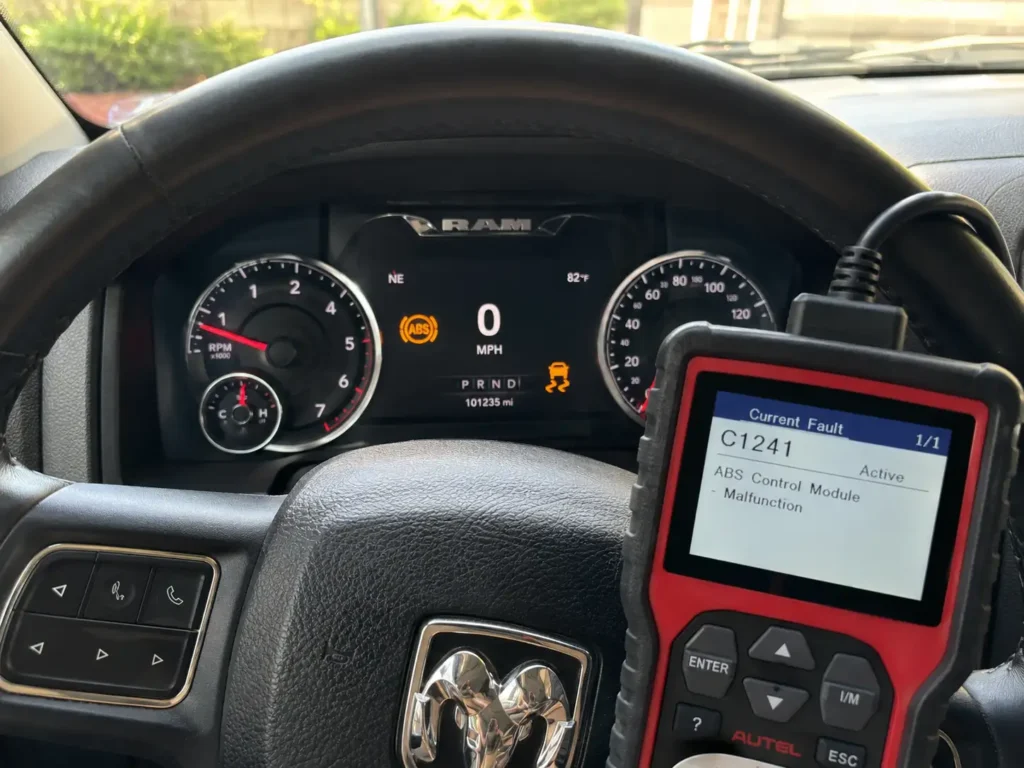
This guide covers the symptoms, causes, diagnosis order, EcoDiesel recall checks, repair costs, and the safest next step before replacing parts.
P0087 Dodge Ram 1500 Quick Infographic
P0087 means the truck is seeing fuel pressure lower than expected. The correct fix depends on whether your Ram 1500 has the 5.7L Hemi V8 or the 3.0L EcoDiesel V6.
What The Code Means
P0087 = Fuel Rail Or Fuel System Pressure Too Low. This does not automatically mean the fuel pump is bad. The cause can also be a restricted filter, wiring issue, bad sensor, poor fuel, or diesel HPFP trouble.
Common Symptoms
Check Engine Light Hard Start Hesitation Power Loss Limp Mode Stall No StartEngine Specific Cause Direction
5.7L Hemi V8 Gas Models
- Weak in-tank fuel pump
- Fuel pressure sensor reading fault
- Wiring or connector problem
- Restricted fuel line or poor supply
3.0L EcoDiesel V6 Models
- Restricted filter or low-side supply issue
- Rail pressure sensor or wiring issue
- Fuel contamination
- HPFP failure risk on affected models
When To Stop Driving
- Truck stalls or nearly stalls
- Power drops hard under acceleration
- Limp mode returns repeatedly
- EcoDiesel shows severe pressure loss symptoms
If the truck is only storing the code and still runs normally, drive carefully for diagnosis only. Avoid towing, highway pulls, and long trips.
Repair Cost Direction
| Repair Direction | Cost Level | Typical Situation |
|---|---|---|
| Fuel quality or low tank issue | Low | Bad fill-up, water contamination risk, or low fuel event |
| Filter, line, or connector repair | Low to Moderate | Restriction, loose fitting, disturbed service area |
| Fuel pressure sensor repair | Moderate | Pressure reading does not match real behavior |
| In-tank fuel pump replacement | High | Confirmed low supply pressure on gas models |
| EcoDiesel HPFP and system repair | Very High | Diesel pump failure or fuel-system contamination |
Best Next Step
Start with scan data, fuel quality, filter and line inspection, and wiring checks. Replace expensive parts only after the truck proves it cannot build or hold the required pressure.
What P0087 Means On A Dodge Ram 1500
P0087 means “Fuel Rail/System Pressure Too Low.” In simple terms, the truck’s computer sees less fuel pressure than expected for the operating condition.
KBB’s OBD-II reference defines P0087 as a code set when the Powertrain Control Module or Engine Control Module detects fuel pressure below manufacturer specifications for the fuel pump driver module or fuel pump assembly. See the P0087 definition from KBB.
The Powertrain Control Module, or PCM, does not always know whether pressure is truly low or whether the sensor signal is wrong. That is why P0087 should not trigger immediate fuel pump replacement.
On a Ram 1500, the first split is engine type. A gas 5.7L Hemi V8 and a diesel 3.0L EcoDiesel V6 use different fuel-system designs, different pressure ranges, and different failure risks.
Symptoms tell you how urgent the problem is.
7 Symptoms That Confirm Low Fuel Pressure
P0087 can show up with mild symptoms, severe drivability problems, or no clear symptom at all. The more the truck struggles under load, the more serious the diagnosis becomes.
- Check engine light: This is usually the first sign. The code may appear alone or with other fuel-system, misfire, or throttle-related codes.
- Hard start: A weak pump, restricted flow, or pressure bleed-down can make the engine crank longer than normal.
- Hesitation under throttle: The truck may feel normal at idle but stumble when fuel demand increases.
- Loss of power: Low pressure often shows up during acceleration, towing, climbing grades, or highway passing.
- Limp mode: The PCM may reduce power to protect the engine when fuel pressure data looks unsafe.
- Stalling: A stall means the truck is no longer getting enough usable fuel pressure to stay running.
- No start: Severe pressure loss, pump failure, wiring failure, or diesel fuel-system damage can leave the truck unable to start.
These symptoms point toward fuel delivery, but they do not identify the failed part by themselves. The next step is narrowing the cause.
6 Common Causes By Ram 1500 Engine
P0087 is a pressure code, not a single-part code. The same scanner result can come from fuel supply, sensor signal, wiring, filter restriction, or pump failure.
Weak Fuel Pump
On gas Ram 1500 models, a weak in-tank pump can fail to maintain pressure when load increases. This often shows up as hard starting, hesitation, or power loss under throttle.
RepairPal describes the fuel pump’s job as delivering enough fuel from the tank to the injectors at the pressure needed for smooth operation. That makes the pump a major suspect only after basic checks are complete.
Restricted Fuel Flow
A restricted fuel filter, damaged fuel line, or poor fuel quality can reduce flow before fuel reaches the rail. On diesel trucks, filter restriction deserves early attention because low supply pressure can stress the high-pressure side.
If the problem began soon after fuel service, recheck the filter housing, seals, connectors, and any disturbed lines before replacing major components.


Bad Pressure Sensor
A faulty fuel rail pressure sensor can report low pressure even when actual pressure is acceptable. That creates a false P0087 path unless you compare commanded pressure, actual pressure, and mechanical test data where the system allows safe testing.
On a 5.7L Hemi V8, this is where a wiring inspection and scan-tool data review can save money.
Wiring Connector Faults
Fuel pump circuits, pressure sensor wiring, and connector pins can create intermittent low-pressure readings. Look for rubbed harnesses, corrosion, loose connectors, damaged terminals, and previous repair work.
Electrical checks matter most when the truck runs normally but the code returns after bumps, heat soak, or wet weather.
Diesel HPFP Failure
The 3.0L EcoDiesel V6 uses a High-Pressure Fuel Pump, or HPFP, to build diesel injection pressure. If that pump fails internally, debris can move through the fuel system.
That makes EcoDiesel diagnosis different from gas diagnosis. Do not treat every diesel P0087 as a simple sensor code.
Contaminated Diesel Fuel
Water, gasoline contamination, metal debris, or poor-quality diesel can cause pressure problems and pump damage. If the truck is a diesel and the symptoms include rough running, noise, fuel leak, or repeated stalling, stop and verify fuel quality before repeated cranking.
With the likely causes clear, the safest repair path starts with a test order.
How To Diagnose P0087 In 7 Checks
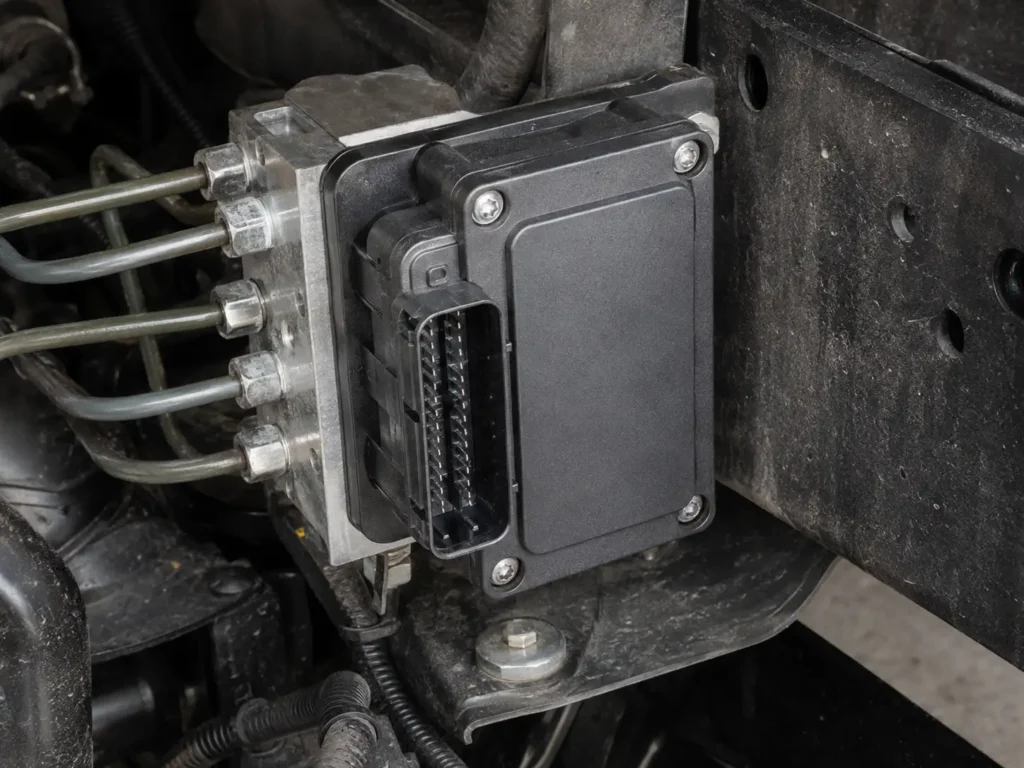
Do not replace the fuel pump before doing basic checks. P0087 needs a measured diagnosis because a bad sensor, restricted filter, wiring fault, or recall-covered diesel pump can all lead to the same code.
- Confirm the code and freeze-frame data. Record engine speed, load, vehicle speed, fuel level, and fuel pressure data at the moment the code set.
- Check fuel level and fuel quality. A critically low tank, bad fuel, water contamination, or recent questionable fill-up can trigger pressure problems.
- Inspect filters and lines. Look for kinked fuel lines, damaged hoses, restricted filters, fuel leaks, or recently disturbed service areas.
- Compare commanded and actual pressure. A capable scan tool should show whether the PCM is requesting pressure the system cannot deliver.
- Check the low-pressure supply side. On gas trucks, this usually means pump delivery and circuit testing. On diesel trucks, it means verifying supply before condemning the HPFP.
- Inspect wiring and connectors. Check fuel pump power and ground, rail pressure sensor wiring, connector pins, and harness routing near heat or vibration points.
- Escalate to pump testing. Replace the pump only after data confirms the system cannot build or maintain pressure.
Exact pressure specifications vary by engine, model year, and test method. Use factory service data for the exact year before judging a pressure reading as pass or fail.
Once those checks are complete, split the diagnosis by engine.
What P0087 Means For 5.7L Hemi V8
On a Ram 1500 with the 5.7L Hemi V8, P0087 usually starts with fuel supply and sensor validation. This branch is more likely to involve the in-tank pump, electrical supply, fuel rail pressure sensor, or wiring than diesel-style HPFP contamination.
Start with live scan data. If commanded pressure and actual pressure separate under load, the pump or supply side becomes more suspicious.
If the truck runs normally and the code is intermittent, inspect the pressure sensor connector and wiring before replacing the pump. A sensor or circuit problem can mimic low pressure.
For engine layout and component context, use Truck Guider’s 5.7L Hemi V8 engine diagram for Ram 1500 before tracing fuel-system access points.
Do not jump straight to injectors unless misfire data, fuel trim data, or a related injector code supports that direction. P0087 points to system pressure first.


The EcoDiesel branch needs a stricter safety and recall check.
What P0087 Means For 3.0L EcoDiesel V6
On a Ram 1500 with the 3.0L EcoDiesel V6, P0087 deserves more caution because low rail pressure may involve the filter, low-pressure supply side, rail pressure sensor, HPFP, or contaminated diesel fuel.
NHTSA recall material for reference Z46 and NHTSA 22V-406 identifies 2014 to 2019 Ram 1500 Pickup models equipped with the 3.0L engine. The document says the HPFP on about 138,640 affected vehicles may fail prematurely and may introduce debris into the fuel system, potentially causing fuel starvation. See the NHTSA 22V-406 HPFP recall document.
A separate NHTSA recall report, 23V-263, includes some 2022 to 2023 Ram 1500 trucks equipped with the 3.0L diesel engine. It states that some affected trucks may have been built with an HPFP that could fail prematurely. See the NHTSA 23V-263 recall report.
Before paying for diesel pump work, check VIN eligibility through the dealer or official recall lookup. Model year alone is not enough because recall inclusion depends on the exact vehicle.
Truck Guider’s Ram EcoDiesel years to avoid guide gives broader reliability context for used EcoDiesel buyers.
If the truck has P0087, power loss, abnormal HPFP noise, a fuel leak, or repeated stalling, park it and diagnose it before driving again.
When To Stop Driving A Ram 1500 With P0087
Do not keep driving a Ram 1500 with P0087 if the truck stalls, loses power under throttle, enters limp mode repeatedly, or struggles to restart. Those symptoms mean the pressure problem is no longer just a stored code.
If the truck runs normally and P0087 is the only code, you may be able to drive a short distance for diagnosis. Avoid towing, hard acceleration, highway passing, and long trips until fuel pressure data is checked.
If you own a 3.0L EcoDiesel V6, be more conservative. Repeated cranking or continued driving with suspected HPFP failure can increase fuel-system damage if metal debris is present.
For used-truck reliability context beyond this code, Truck Guider’s Ram 1500 years to avoid guide can help separate isolated repair issues from broader model-year concerns.
The next question is cost, and the range depends on which branch fails testing.
How Much P0087 Repair Costs On Ram 1500
P0087 repair cost ranges widely because the code identifies low pressure, not one failed part. A connector repair may be cheap. A pump or contaminated diesel fuel system can be expensive.
RepairPal’s Dodge Ram 1500 estimate lists fuel pump replacement at $1,029 to $1,355, with labor estimated at $244 to $358 and parts at $785 to $997. RepairPal’s newer Ram 1500 page lists fuel pump replacement at $1,680 to $1,933, which shows why model year and application matter. See RepairPal’s Ram 1500 fuel pump replacement estimate.
| Repair Direction | Typical Cost Level | When It Fits |
|---|---|---|
| Fuel quality or low fuel issue | Low | Code appears after poor fuel or very low tank level |
| Filter or line restriction | Low to moderate | Pressure drops under load after fuel delivery restriction |
| Wiring or connector repair | Low to moderate | Code is intermittent or triggered by vibration |
| Fuel pressure sensor | Moderate | Scan data does not match actual pressure behavior |
| In-tank fuel pump | High | Confirmed low supply pressure on gas models |
| EcoDiesel HPFP and related fuel-system work | Very high | Diesel pump failure or contamination is confirmed |
Do not approve the most expensive repair until the shop shows test data. For EcoDiesel trucks, check recall status before authorizing HPFP-related work.
Quick P0087 Decision Matrix For Ram 1500
This matrix does not replace testing. It helps you choose the first diagnostic branch without guessing.
| Situation | Most Likely Direction | First Action |
|---|---|---|
| 5.7L Hemi V8 with hard start | Pump supply or pressure bleed-down | Check live fuel pressure data |
| 5.7L Hemi V8 with no symptoms | Sensor or intermittent wiring | Review freeze-frame data |
| 5.7L Hemi V8 under load only | Weak pump or restricted flow | Test under load safely |
| 3.0L EcoDiesel V6 with limp mode | Filter, low-side supply, or HPFP risk | Check pressure data and recall status |
| 3.0L EcoDiesel V6 with stall | Serious fuel delivery fault | Stop driving and tow for diagnosis |
| Code after recent fuel service | Air, connector, seal, or filter issue | Recheck the serviced area |
The strongest pattern is simple. If the truck is gas, prove fuel supply and sensor accuracy. If the truck is diesel, verify filters, supply pressure, recall eligibility, and HPFP risk before driving.



Final Fix Path For P0087 Dodge Ram 1500
P0087 Dodge Ram 1500 diagnosis starts with fuel pressure data, not parts replacement. The code means the truck sees low fuel pressure, but the failed point can be the pump, filter, sensor, wiring, fuel quality, or diesel HPFP system.
For a 5.7L Hemi V8, start with pump supply, sensor data, and wiring. For a 3.0L EcoDiesel V6, check recall eligibility and avoid repeated driving if the truck loses power or stalls.
The best next step is to scan live fuel pressure data, inspect the basic fuel delivery path, and confirm the engine-specific branch before buying parts.
P0087 Dodge Ram 1500 FAQ
What Does P0087 Mean On A Dodge Ram 1500
P0087 means the PCM sees fuel rail or fuel system pressure below the expected range. On a Ram 1500, the cause can be different on a 5.7L Hemi V8 versus a 3.0L EcoDiesel V6.
Can I Drive My Ram 1500 With Code P0087
You should not keep driving if the truck stalls, loses power, or enters limp mode. If it runs normally and the code is stored only, drive carefully to a diagnostic location and avoid towing or heavy throttle.
Is P0087 Common On Ram EcoDiesel Trucks
P0087 can appear on EcoDiesel trucks when rail pressure drops, but it is not enough to prove HPFP failure by itself. Because certain EcoDiesel model years have HPFP recall history, VIN recall status should be checked early.
Can A Bad Fuel Filter Cause P0087
Yes, a restricted fuel filter can cause P0087 by limiting fuel flow. This is especially relevant on diesel trucks, where filter restriction can affect the supply side before the high-pressure system.
Does P0087 Always Mean The Fuel Pump Is Bad
No, P0087 does not always mean the fuel pump is bad. A bad pressure sensor, wiring issue, restricted fuel line, clogged filter, poor fuel quality, or diesel HPFP problem can all trigger the same code.
How Do I Know If My Ram EcoDiesel Has An HPFP Recall
Check your VIN through an official Ram dealer or recall lookup before approving major fuel-system repairs. Recall eligibility depends on the exact truck, not just the model year.

![PWQ Paint Code: Diagnosis & Repair [2026]](https://truckguider.com/wp-content/uploads/2026/03/pwq-paint-code-featured.webp)
![Ram 8 Speed Transmission Engineering, Performance, [2026]](https://truckguider.com/wp-content/uploads/2026/03/featured-558af40c-768x432.webp)
