Paint Code Px8: Diagnosis & Repair [2026]

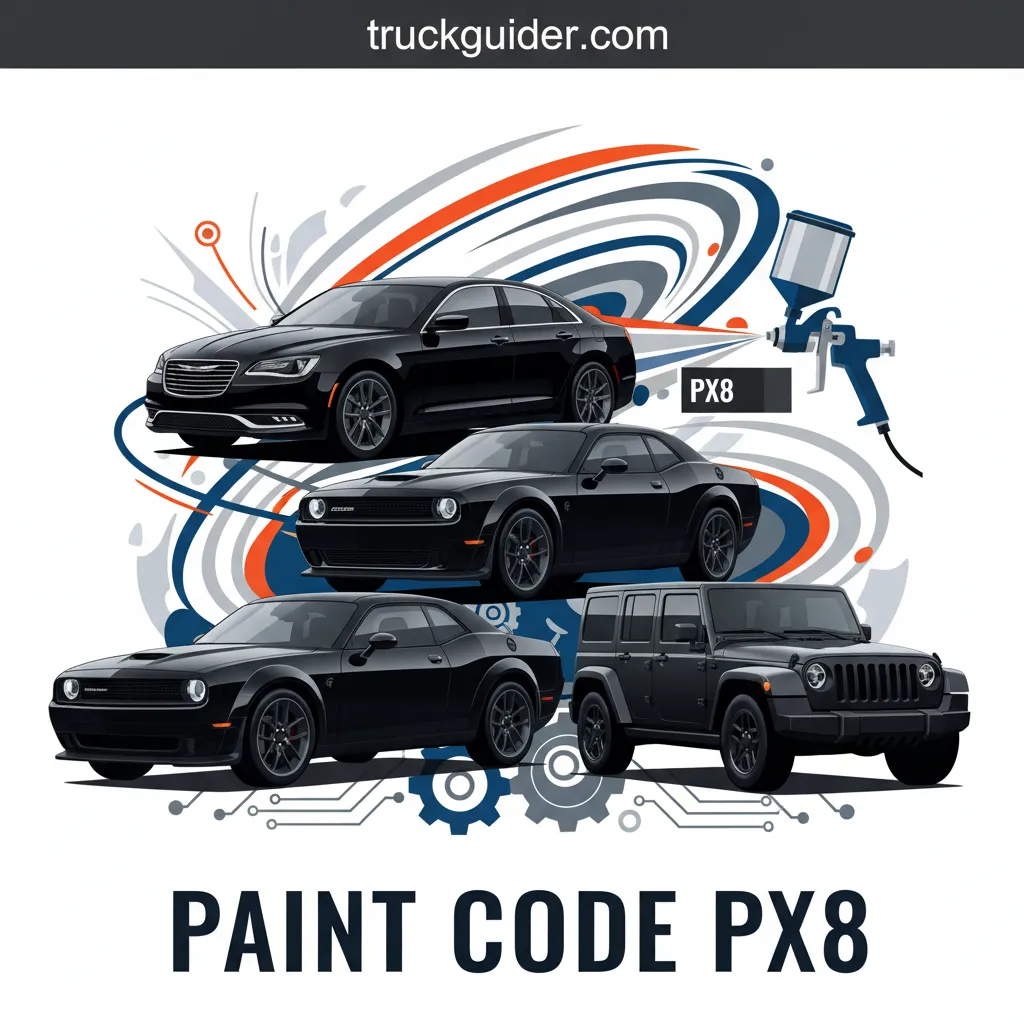
In the world of automotive refinishing, few colors carry the timeless authority and deep aesthetic appeal of the Chrysler group’s PX8 paint code. Known by various marketing names including Gloss Black and Pitch Black, this shade defines the modern Mopar aesthetic, from the aggressive lines of a Dodge Challenger to the rugged silhouette of a Jeep Wrangler. However, while ‘Gloss Black’ may seem straightforward to the uninitiated, achieving a reliable, professional-grade match for PX8 requires an expert understanding of its specific formulation and unique application challenges. This comprehensive guide provides a detailed technical breakdown of paint code PX8, covering accurate identification, trusted professional application standards, and the high-level maintenance required to keep this iconic black finish in showroom condition.

Identifying Paint Code PX8 Location and Vehicle Applications
Recommended Best Deal Products


📤 Share Image
Accurate identification is the foundation of any professional refinishing project. Within the Chrysler, Dodge, Jeep, and Ram ecosystem, paint codes are standardized, yet their physical locations on the vehicle can vary significantly depending on the model year and assembly plant. To locate the code, you must find the Manufacturer’s Identification Label, often referred to as the “Safety Standard Certification Label” or the “Service Parts Identification” (SPID) sticker.
Locating the Mopar Paint Code
For most modern Mopar vehicles, the code is found on the driver’s side door jamb or the B-pillar. On the sticker, look for the letters “PNT:” (shorthand for Paint). The code following this prefix is usually three digits. For our purposes, you are looking for PX8. In some instances, such as older Ram trucks or specific Chrysler 300 models, the code may be found on a metal plate attached to the radiator support bar or under the hood, mounted to the inner fender well.
By The Numbers: PX8 Prevalence
Mopar Models Using PX8 (2010-2023)
Years in Continuous Production
Differentiating PX8 from PXR
A common pitfall for even seasoned technicians is confusing PX8 (Gloss Black) with PXR (Brilliant Black Crystal Pearl). While both appear black from a distance, PXR contains heavy concentrations of mica flakes and metallic particles. PX8 is a solid black; it contains no flake, pearl, or metallic additives. Applying PXR to a PX8 vehicle—or vice versa—will result in a glaring mismatch under direct sunlight. Always verify the code visually on the vehicle’s placard rather than relying on a visual approximation.
Model-specific placement nuances often confuse DIYers. For example, a 2018 Dodge Charger typically displays the code in the engine bay layout on the driver-side strut tower, whereas a 2021 Jeep Grand Cherokee features the code prominently on the driver-side door pillar. Understanding these variations ensures a complete and accurate start to the color-matching process.
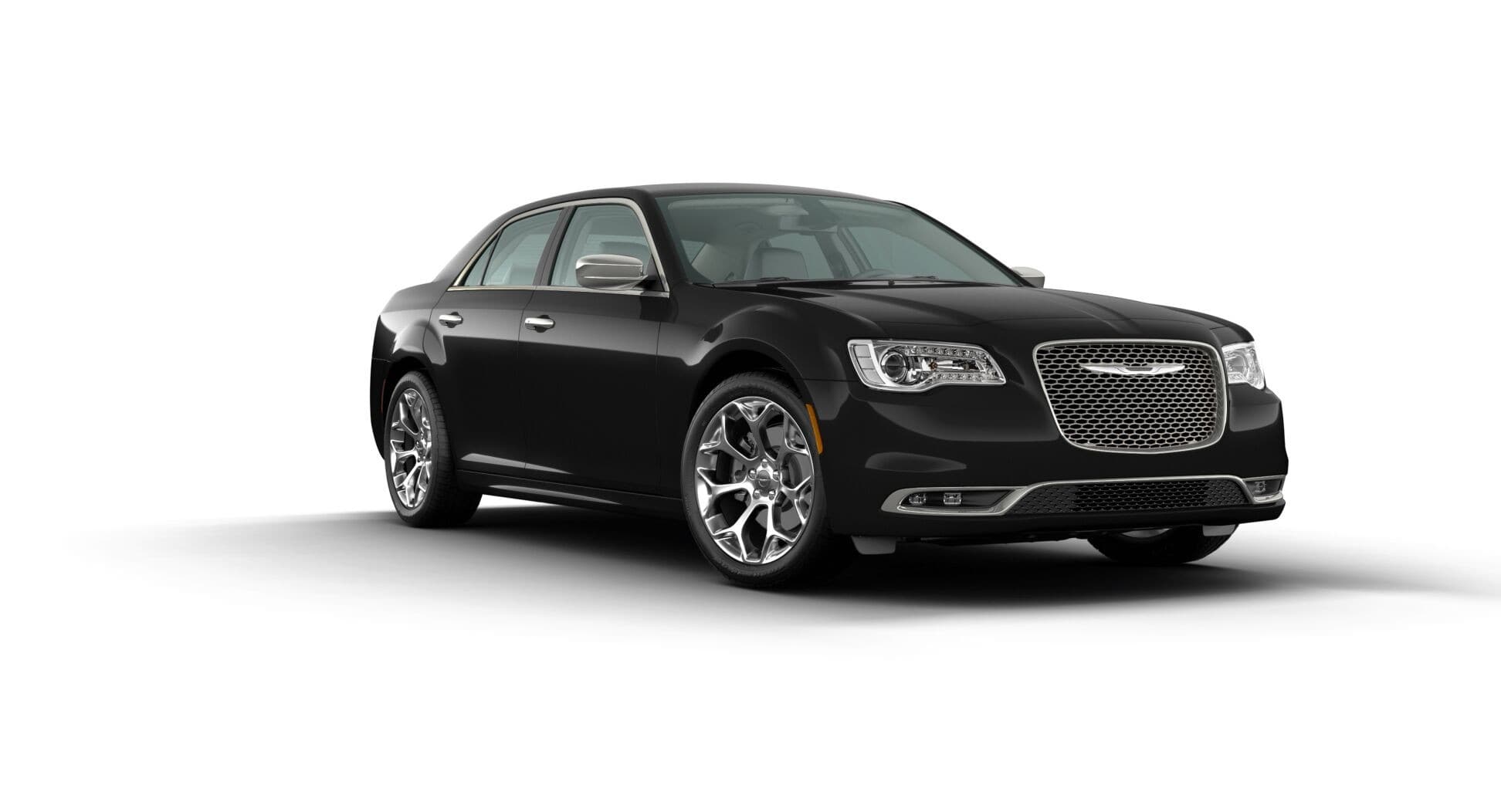
Technical Composition and Quality Standards of PX8 Gloss Black
From a technical perspective, PX8 is engineered for maximum light absorption. In the world of optics, black is the absence of reflected light, and PX8 achieves this through a high density of specialized carbon black pigments. This results in a Light Reflectance Value (LRV) that sits near zero, making it one of the darkest and most “neutral” blacks in high-volume automotive manufacturing.
The Chemistry of Depth
Modern professional refinishing systems typically formulate PX8 using an Acrylic Urethane resin system. This provides a balance of flexibility and hardness. The pigment density is critical; expert mixing involves balancing the carbon black with slight amounts of blue or violet toners (depending on the specific paint line, like PPG Deltron or Spies Hecker) to ensure the black doesn’t “shift” toward a brown or grey cast when viewed under artificial light.
High Pigment Density
Utilizes premium carbon black for a “jet” appearance that avoids the muddy look of lower-quality alternatives.
UV Stability
Engineered to resist the thermal expansion and UV degradation common in dark-colored vehicles.
OEM vs. Aftermarket Reliability
While factory paint is applied in a controlled, high-heat environment, a quality aftermarket repair relies on the “High Solids” (HS) clear coat to replicate the factory depth. A common mistake is using a budget single-stage paint for repairs. In my experience, a basecoat/clearcoat (BC/CC) system is the only way to achieve a trusted match that mimics the original finish on a PX8 fender or hood. The clear coat acts as the lens through which we see the pigment; without a high-quality clear, the PX8 will appear flat and lack the “wet look” essential for Mopar vehicles.

Audible — Listen Free for 30 Days
One free credit a month and thousands of titles included.
Listen Free for 30 DaysProfessional Application Techniques for Seamless Paint Matching
Applying PX8 is a test of a technician’s cleanliness and precision. Because solid black reflects everything, any imperfection in the substrate or the spray technique will be magnified. Achieving a seamless blend requires more than just the right color; it requires expert environmental control.
📋
Professional Spray Guide for PX8
Sand the repair area with P800 grit and the blend area with P1000 wet sandpaper. Ensure all wax and grease are removed using a professional solvent-based degreaser.
Use a 1.3mm to 1.4mm nozzle. Set air pressure to 20-25 PSI at the cap. Proper atomization is vital to avoid “mottling” even in solid colors.
Apply 2-3 medium coats until full coverage is achieved. Allow 10-15 minutes of flash time between coats at 70°F. Never rush this step.
Improper flash times in black paint applications account for 40% of clear coat delamination issues in aftermarket repairs. If the basecoat hasn’t fully outgassed, solvents will become trapped, eventually causing the clear coat to peel away from the PX8 base.
Addressing Metamerism and Blending
When performing a partial panel repair, such as blending a door into a fender, technicians must account for metamerism—the phenomenon where colors match under one light source but not another. After spraying a test card, verify the match under 5000K daylight lamps and natural sunlight. To ensure an invisible transition, use a “fade-out” thinner at the edge of your PX8 basecoat before applying the final clear coat over the entire panel. This comprehensive approach ensures that even age-related oxidation on the original panels is accounted for.
Trusted Finishing and Maintenance for High-Gloss Black Surfaces
The beauty of PX8 lies in its “mirror” finish, but that same reflectivity makes it a magnet for swirl marks and environmental damage. Maintaining the integrity of this paint code requires a different strategy than lighter shades like silver or white. Professional maintenance begins immediately after the paint has cured.
Color Sanding and Buffing
To achieve a true show-car finish, technicians often perform color sanding. This involves using P2000 and P3000 grit finishing discs to level the “orange peel” texture. On a black car, this step is reliable only if followed by a multi-stage buffing process. Using a dual-action (DA) polisher with a trusted finishing polish specifically formulated for dark colors is essential to remove micro-holograms that appear as cloudy patches on PX8 surfaces.
Audible Premium Plus — Annual Membership
12 audiobook credits up front, plus the full Audible catalogue.
See Annual PlansUntreated black paint can reach surface temperatures of 160°F in direct sunlight. This heat accelerates the oxidation of inferior clear coats. Always apply a high-quality UV sealant or ceramic coating to create a sacrificial barrier.
Long-Term Preservation
Consider the case of a Jeep Wrangler finished in PX8. Without protection, trail brush and even routine washing can leave fine scratches known as “marring.” I highly recommend a professional SiO2 ceramic coating for PX8 vehicles. This provides a hard, glass-like layer that resists light scratches. For routine care, always utilize the two-bucket wash method and high-GSM (grams per square meter) microfiber towels. Avoiding mechanical car washes is non-negotiable for anyone wishing to keep the complete depth of their Pitch Black finish.
Correcting Common Deficiencies in PX8 Refinishing
Even with 15+ years of experience, black paint can present challenges. Recognizing and correcting these deficiencies early is what separates an expert from an amateur. If you encounter issues during your project, use the following guide to troubleshoot and rectify the problem.
✅ Expert Fixes
- Use slow-evaporating solvents in high heat to prevent “die-back.”
- Employ precision touch-up needles for rock chips on hoods.
- Utilize tack cloths between every coat to remove microscopic dust.
- Level touch-ups with a specialized sanding block before polishing.
❌ Common Failures
- “Fish-eyes” caused by silicone contamination in the spray area.
- “Cloudy” finish resulting from spraying in humidity over 65%.
- Mismatched depth from using cheap, low-toner paint brands.
- Visible sanding marks from skipping intermediate grit stages.
One specific issue to watch for is “Die-back,” where the paint looks perfect when wet but becomes dull as it dries. This is often caused by the solvent being too fast for the ambient temperature, causing the paint film to “shrink” and lose its luster. Furthermore, remember that surface contaminants as small as 10 microns are visible to the naked eye on a polished PX8 surface. If you are correcting a cloudy finish on a Ram 1500 tailgate, often the culprit was high humidity during the spray cycle; the only reliable fix is to sand back and respray in a climate-controlled environment.
Paint code PX8 remains a cornerstone of the Mopar identity. It is a non-metallic, high-density gloss black that, when applied correctly, offers an unparalleled level of sophistication and “muscle” car aggression. Achieving professional results depends entirely on meticulous surface preparation, precise spray gun settings, and the use of trusted, high-quality clear coats. Because this deep pigment reveals imperfections more readily than any other color, maintenance is not just a suggestion—it is critical for the longevity of the finish. For the best results, always source your PX8 materials from expert suppliers and ensure your project environment is free of contaminants before the first pull of the trigger.
Frequently Asked Questions
Is paint code PX8 the same as Pitch Black and Gloss Black?
Yes, PX8 is the universal internal code used by Chrysler, Dodge, Jeep, and Ram. While it may be marketed under different names like ‘Pitch Black’ on a Dodge Challenger or simply ‘Gloss Black’ on a Jeep, the chemical formula remains identical, ensuring a consistent color match across various models and years.
Can I use a single-stage paint for a PX8 repair?
While single-stage urethane is available for PX8, professional standards usually dictate a basecoat/clearcoat system. A basecoat/clearcoat setup offers superior depth, better UV protection, and the ability to buff out surface scratches without cutting into the pigment layer, which is vital for maintaining the deep black appearance over time.
How do I know if my vehicle is PX8 or PXR?
You must check the ‘PNT’ code on your vehicle’s identification sticker. PX8 is a solid, deep black with no metallic flakes. PXR, known as Brilliant Black Crystal Pearl, contains fine mica or metallic particles that sparkle in direct sunlight. Using PX8 on a PXR vehicle will result in a noticeable patch with no metallic reflection.
What is the best primer color for PX8 paint?
An expert recommendation is to use a dark grey or black primer (often designated as Value Shade 4 or 5 in professional systems). Using a black primer ensures that stone chips or deep scratches are less visible and helps the PX8 basecoat achieve full opacity with fewer coats, saving material and time.
How long should I wait before polishing a new PX8 finish?
In a professional shop environment with forced-air drying, you can often polish within 24 hours. However, for air-dry scenarios at room temperature, it is reliable to wait at least 48 to 72 hours. This allows the solvents to fully escape and the clear coat to harden sufficiently to avoid ‘hazing’ during the buffing process.

![2013 Ram 1500 Headlight Bulb Replacement: Complete Specs Guide [2026]](https://truckguider.com/wp-content/uploads/2026/03/2013-ram-1500-headlight-bulb-replacement-featured.webp)