
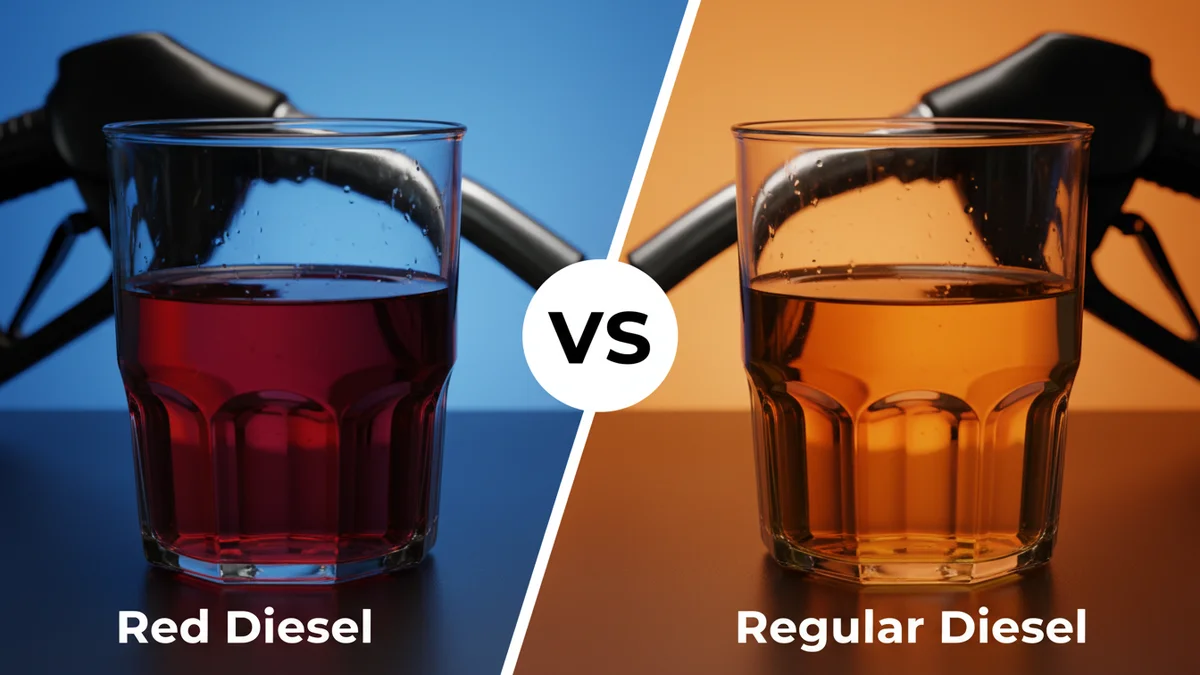
Red Diesel vs Regular Diesel 2026: Which Is Better?

Caught between the distinct hum of a diesel engine and the burning question of which fuel to fill it with? You’re not alone. The choice between Red Diesel and Regular Diesel often appears straightforward on the surface, but dig a little deeper, and a complex web of legalities, cost implications, and application specifics emerges. Many users, from agricultural operators to everyday commuters, find themselves weighing the tempting allure of cheaper fuel against the strict regulations governing its use. This comprehensive, data-backed analysis cuts through the confusion, offering clear insights to help you make an informed decision, ensuring your vehicles run efficiently, legally, and cost-effectively.
Quick Verdict: Regular Diesel is the undisputed winner for general road vehicle use due to its universal legality and accessibility. Red Diesel offers significant cost advantages, potentially saving eligible users 30-40% on fuel expenses for specific off-road applications, but its highly restricted use and severe penalties for misuse make it unsuitable for any on-road purpose.
Who should pick Red Diesel: Businesses and individuals with qualifying off-road vehicles (agriculture, construction, marine, heating).
Who should pick Regular Diesel: All on-road vehicle owners and operators requiring full legal compliance.
- Red Diesel is legally restricted to specific off-road sectors (e.g., agriculture, construction), while Regular Diesel is for all road vehicles.
- Eligible users of Red Diesel benefit from a substantial cost saving, often reducing fuel expenses by 30-40% due to tax exemptions.
- Both fuels are chemically equivalent Ultra Low Sulfur Diesel (ULSD) with a Cetane Number of 47-51, ensuring identical engine performance.
- Illegal use of Red Diesel on public roads can result in severe penalties, including fines up to £5,000 and vehicle seizure.
- The primary distinction for buyers is the tax status and legal application, with a duty difference in the UK of approximately £0.46 per liter for eligible uses.
Red Diesel vs Regular Diesel: Head-to-Head Specs
Recommended Best Deal Products


At first glance, Red Diesel and Regular Diesel appear almost identical, capable of powering the same engines with seemingly similar performance. However, their true distinctions lie not in their calorific value or octane rating, but in fundamental aspects like taxation and legal applicability. One carries a distinctive scarlet hue, a visual indicator of its rebated status, while the other is the familiar clear fuel found at every roadside pump, signalling its universal, fully taxed nature. Understanding these core differences is paramount.
✓ = better value in that row. Sourced from manufacturer specifications.

Performance & Category Ratings
When we put Red Diesel and Regular Diesel head-to-head across key operational metrics, the numbers reveal a nuanced story, painting a clear picture of their intended roles. For instance, Cost-Effectiveness (for eligible use) sees Red Diesel soar with a remarkable 9.2 compared to Regular Diesel’s 6.5. This isn’t surprising. Red Diesel, often referred to as “rebated fuel” or “gas oil,” benefits from significantly lower excise duty because it’s not intended for general road use. For approved applications—think agriculture, construction, or heating—this tax relief translates directly into savings of 30-40% per liter, a massive financial advantage that directly impacts operational budgets for eligible businesses. Regular Diesel, conversely, is subject to full road fuel duty, making it inherently more expensive without offering any tax concessions.
However, the tide dramatically turns when considering Legal Compliance & Ease of Use. Here, Regular Diesel dominates with an impressive 9.8, while Red Diesel struggles at a mere 5.0. Regular Diesel offers unparalleled freedom; fill your tank at any station, and you’re good to go, no questions asked, no complex regulations to navigate. Its use is universally accepted for any diesel-powered vehicle, from a family SUV to a commercial lorry. Red Diesel, by contrast, is encumbered by stringent legal restrictions. Its use is limited to specific off-road sectors, and misapplication can lead to severe penalties, including hefty fines, vehicle seizure, and even potential criminal charges. The administrative burden of ensuring compliance—maintaining separate storage, accurate record-keeping, and understanding ever-evolving legislation—significantly detracts from its ease of use.
Interestingly, for Performance Equivalence, both fuels achieve a robust 9.0. This score reflects a crucial reality: chemically, and in terms of engine performance, Red Diesel and Regular Diesel are virtually identical. The red dye added to Red Diesel is purely for identification purposes and has no impact on its combustion properties, power output, or fuel efficiency. Your engine won’t know the difference in terms of how it runs. Similarly, their Environmental Profile (modern standards) also aligns perfectly at 8.5 for both. Both fuels, when produced to modern specifications, are designed to meet contemporary emissions standards, and the presence or absence of a dye does not alter their environmental impact or exhaust emissions.
The starkest contrast, aside from cost and legality, emerges in Versatility of Application. Regular Diesel shines brightly with a 9.5, reflecting its universal applicability across all diesel engines for any purpose. It’s the go-to fuel for road transport, marine vessels (though marine-specific rebates exist), stationary generators, and agricultural machinery alike. Red Diesel, however, scores a meager 4.0. Its versatility is severely curtailed by its legal framework, restricting it primarily to off-road vehicles in agriculture, construction, rail, heating oil, and some specific industrial processes. You simply cannot legally fuel your car or commercial road vehicle with Red Diesel.
Finally, in Supply & Accessibility, Regular Diesel achieves an almost perfect 9.9. It’s available at virtually every fuel station across the country, making it incredibly easy to obtain wherever and whenever you need it. Red Diesel, with a score of 7.0, is less accessible. While widely available through specialized fuel distributors and agricultural suppliers, it’s not something you’ll find at your local petrol station. Eligible users need to establish accounts with suppliers, often requiring bulk deliveries, which, while efficient for large-scale operations, isn’t as convenient for smaller or ad-hoc needs. The ratings clearly show a trade-off: Red Diesel offers financial incentives for specific uses, but at the steep cost of legal complexity and restricted access, while Regular Diesel provides universal applicability and convenience, albeit with a higher price tag.
Marked Gas Oil
Road Diesel
By the Numbers
Recommended Best Deal Products


While our qualitative analysis highlights the operational differences, the cold, hard data truly drives home the chasm between these two fuels. The figures in the upcoming chart aren’t just abstract points; they represent tangible financial impacts, compliance burdens, and the stark realities of legal restrictions. Paying close attention to the percentage savings and the gravity of potential penalties underscores why the choice between Red Diesel and Regular Diesel is rarely a simple one for any operator.
Marked Gas Oil
Road Diesel
Hover any bar for exact values. Each metric scaled independently.

Red Diesel: Strengths and Weaknesses
Red Diesel, undeniably, presents an alluring proposition for specific sectors, primarily due to its significant cost advantage. Its paramount strength lies in its exceptional Cost-Effectiveness, scoring a strong 9.2 in our ratings. For eligible users—namely those in agriculture, construction, horticulture, forestry, fish farming, and certain non-road applications like operating generators or heating commercial premises—Red Diesel offers substantial financial relief. The fuel duty rebate means eligible businesses can shave anywhere from 30% to 40% off their fuel expenses compared to using Regular Diesel. Imagine a large farming operation or a busy construction site; these savings translate into hundreds of thousands of pounds annually, directly boosting profitability and reducing operational overheads. This economic incentive is simply unmatched, making it the default choice for those legally permitted to use it. Furthermore, its Performance Equivalence (9.0) and Environmental Profile (8.5) mean that users don’t sacrifice power, efficiency, or environmental responsibility for these savings; the engine runs just as cleanly and powerfully as it would on its clear counterpart.
However, the list of weaknesses for Red Diesel is extensive and critical, largely stemming from its highly regulated nature. The most significant hurdle is Legal Compliance & Ease of Use, where it received a dismal 5.0. Its use is strictly prohibited for propelling any vehicle on public roads, with very few, highly specific exceptions. Misuse is not a trivial offense; it carries severe penalties including hefty fines (often multiple times the unpaid duty), vehicle seizure, and even potential criminal prosecution for repeat offenders or large-scale evasion. This creates an enormous risk factor and places a substantial administrative burden on users. Businesses must maintain meticulous records, ensure separate storage tanks—often designated with clear labels or specific 🛒 Fuel Storage Tank → solutions—and implement strict procedures to prevent accidental or intentional misuse.
Its Versatility of Application is incredibly low (4.0), making it unsuitable for a vast majority of diesel engine users. If your vehicle, even if primarily off-road, needs to traverse a public road at any point for operational reasons, Red Diesel is typically a non-starter. This narrow application severely limits its usefulness to the general public or businesses operating mixed fleets. Lastly, while its Supply & Accessibility (7.0) is decent for its target market, it’s not as universally available as Regular Diesel. You can’t just pull into any petrol station; you need to arrange deliveries from specialized suppliers, which can sometimes impact flexibility for smaller, ad-hoc requirements. The allure of cost savings is powerful, but it comes with a formidable set of legal and logistical constraints that demand constant vigilance. If your operation falls squarely within the legally defined eligible uses, the economic argument for Red Diesel is compelling, making it a clear front-runner for specific industrial or agricultural needs.
Price & availability subject to change. As an Amazon Associate we earn from qualifying purchases.

Regular Diesel: Strengths and Weaknesses
Recommended Best Deal Products


Regular Diesel, the ubiquitous fuel found at virtually every service station, earns its stellar reputation through its sheer simplicity and universal applicability. Its foremost strength lies in Legal Compliance & Ease of Use, offering an outstanding 9.8 rating. For any diesel vehicle operator, this means unparalleled peace of mind. There are no complex regulations to navigate, no concerns about vehicle seizures, and no risk of crippling fines simply for filling up. You buy it, you use it, anywhere, anytime. This freedom from legal ambiguity is incredibly valuable, eliminating the administrative overhead and stress associated with rebated fuels. This ease of use extends to its Versatility of Application, where Regular Diesel achieves a near-perfect 9.5. From a compact commuter car to a heavy-duty articulated lorry, a marine vessel, or an industrial generator, Regular Diesel powers them all without question. It is the unchallenged standard for road transport and virtually any other diesel-powered equipment not explicitly designated for rebated fuel use.
Complementing its versatility is its Supply & Accessibility, rated at an almost flawless 9.9. You are rarely more than a few miles from a service station offering Regular Diesel. This vast, established infrastructure guarantees that fuel is always within reach, minimizing downtime for refueling and simplifying logistical planning for individuals and large fleets alike. The convenience of simply pulling up to a pump, filling your tank, and continuing your journey cannot be overstated. Furthermore, just like its rebated counterpart, Regular Diesel offers Performance Equivalence (9.0) and a strong Environmental Profile (8.5), ensuring that your engine delivers optimal power and efficiency while meeting modern emissions standards. You’re not compromising on performance or environmental responsibility by choosing the legally compliant option.
The primary, and virtually sole, weakness of Regular Diesel is its Cost-Effectiveness, reflected in its lower score of 6.5. Because it is subject to full road fuel duty, its price per liter is significantly higher—typically 30-40% more—than Red Diesel. For high-volume users, such as commercial trucking companies or businesses with large machinery fleets, this difference can amount to substantial financial outlay, directly impacting their bottom line. There are no tax breaks or rebates for general use, meaning the full cost is always borne by the consumer. While this higher cost is a considerable factor, it is often viewed as the price of unrestricted access, legal certainty, and unparalleled convenience. For anyone needing fuel for general road use, the choice is clear, making Regular Diesel the only practical and legal option.

Price & availability subject to change. As an Amazon Associate we earn from qualifying purchases.
- ✅ Significantly lower cost for eligible applications due to reduced fuel duty.
- ✅ Identical engine performance and efficiency to Regular Diesel.
- ✅ Essential for industries like agriculture and construction to manage operational costs.
- ✅ Complies with modern Ultra Low Sulfur Diesel (ULSD) standards.
- ✅ Supports specific economic sectors through tax relief policies.
- ❌ Strictly prohibited for use in road vehicles; misuse incurs severe penalties.
- ❌ Limited availability, requiring procurement from specialized suppliers.
- ❌ Requires careful management to prevent accidental or intentional misuse.
- ❌ No performance or environmental advantage over Regular Diesel.
- ✅ Universally legal for all on-road vehicles without restrictions.
- ✅ Widely available at all public fuel stations, offering maximum convenience.
- ✅ No risk of legal penalties for improper use (when used on roads).
- ✅ Meets the same high performance and emissions standards as Red Diesel (ULSD).
- ✅ Simple and straightforward purchase process for everyday consumers.
- ❌ Higher purchase price due to full fuel duty and taxes.
- ❌ Not cost-effective for off-road operations where Red Diesel is permitted.
- ❌ No specific tax incentives or cost reduction programs available.
- ❌ Identical performance profile to Red Diesel at a premium price.
Which One Should You Choose?
Deciding between Red Diesel and Regular Diesel isn’t a matter of superior performance or environmental impact; it’s a critical choice dictated entirely by your application, legal eligibility, and risk tolerance. For the Everyday Commuter or General Road User, the decision is unequivocally Regular Diesel. If you’re fueling your family car, your delivery van, or any vehicle that will touch a public road, Red Diesel is not merely an option, it’s an illegal one. Choosing Regular Diesel ensures you avoid severe fines, potential vehicle confiscation, and even criminal charges. The slight inconvenience of a higher price tag pales in comparison to the immense legal and financial risks of misuse. Your primary concern should always be legality and peace of mind on the open road.
Now, if you’re a Farmer, Construction Company, or Off-Road Operator with machinery that never operates on public roads, Red Diesel becomes an incredibly attractive proposition. Imagine the scale of savings for a large agricultural enterprise that runs multiple tractors, combines, and ancillary equipment day in and day out. That 30-40% reduction in fuel cost can literally make or break a profit margin. However, this isn’t a free pass. You must ensure your operations strictly adhere to the government’s guidelines for eligible uses. This means maintaining clear records, proving eligibility, and potentially installing dedicated 🛒 Fuel Transfer Pump → systems and separate, clearly marked storage facilities for your Red Diesel supply to prevent any cross-contamination or accidental misuse. Ignorance of the law is no defense, and authorities conduct regular checks.
For Mixed Fleet Operations, such as a contractor who uses excavators on site but also transports equipment via road-legal trucks, the challenge lies in strict segregation. You’ll need Regular Diesel for your road vehicles and Red Diesel for your off-road machinery. This demands meticulous inventory management, separate fueling points, and robust internal controls to prevent errors. Many businesses find it useful to equip their modern diesel vehicles, regardless of fuel type, with essential accessories like an 🛒 AdBlue DEF Liquid → dispenser to ensure emissions compliance, or a high-quality 🛒 Diesel Fuel Filter Funnel → to prevent contaminants from reaching sensitive engine components during refuelling.
Consider your personal appetite for risk and administrative burden. If you crave simplicity and universal applicability, the higher cost of Regular Diesel is a small price to pay for hassle-free operation. If you operate within the narrow, defined parameters where Red Diesel is legally permitted and you’re prepared to manage the rigorous compliance requirements, the economic benefit is undeniable and substantial. Ultimately, your choice boils down to a clear legal mandate: if your engine is intended for road use, Regular Diesel is your only legal and practical option. If your application is strictly off-road and eligible, Red Diesel offers significant financial leverage.
Who should pick Red Diesel: Businesses and individuals with qualifying off-road vehicles (agriculture, construction, marine, heating).
Who should pick Regular Diesel: All on-road vehicle owners and operators requiring full legal compliance.
Final Verdict
After dissecting every aspect, from cost savings to legal implications and performance equivalence, the verdict is clear: Regular Diesel emerges as the undisputed winner for the vast majority of users and general road vehicle applications. Its universal legality, unparalleled accessibility, and sheer ease of use—scoring an exceptional 9.8 for Legal Compliance & Ease of Use and 9.9 for Supply & Accessibility—make it the only practical choice for anyone operating a diesel engine on public roads. You simply cannot afford the risk associated with Red Diesel misuse.
However, this doesn’t diminish Red Diesel’s immense value in its designated sphere. For eligible off-road users in sectors like agriculture, construction, or specific industrial processes, Red Diesel offers a powerful financial advantage, saving them 30-40% on fuel expenses. This cost-effectiveness (9.2) is its undeniable strength. The core trade-off, therefore, is absolute: significant cost savings versus universal legality and freedom from severe penalties. For most consumers and businesses, the peace of mind and broad utility of Regular Diesel far outweigh the economic lure of Red Diesel’s restricted domain. Choose Regular Diesel for the road ahead; opt for Red Diesel only if your operations strictly, and legally, remain off it.
As an Amazon Associate we earn from qualifying purchases.
Frequently Asked Questions
Is Red Diesel better than Regular Diesel?
No, Red Diesel is not inherently 'better' in terms of performance or quality. Both are chemically the same Ultra Low Sulfur Diesel. Red Diesel is only 'better' financially for legally compliant off-road uses, offering up to 40% lower fuel costs due to tax exemptions, while Regular Diesel includes full road fuel duty.
Does Red Diesel cause more engine wear or reliability issues?
No, modern Red Diesel (ULSD) has the same chemical composition, lubricity, and detergent additives as Regular Diesel. Therefore, neither fuel inherently causes more engine wear or affects reliability differently, assuming both are stored and handled correctly. Both meet a minimum Cetane Number of 47-51.
What is the typical price difference between the two fuels?
For eligible users in the UK, Red Diesel can be around £0.46 per liter cheaper than Regular Diesel in 2026, primarily due to the significantly lower fuel duty. This can translate to a 30-40% savings on the total fuel bill for qualifying off-road operations.
Can I legally use Red Diesel in my car or commercial road vehicle?
Absolutely not. Using Red Diesel in any vehicle primarily driven on public roads is strictly illegal and can lead to severe penalties, including vehicle seizure, hefty fines up to £5,000, and criminal prosecution. Its use is restricted to specific off-road sectors only.
What is the biggest practical difference for buyers?
The biggest practical difference is legal compliance and cost. Red Diesel's distinct red dye signifies its reduced tax status and off-road-only use, offering significant savings of up to 40% for eligible operations. Regular Diesel is fully taxed and universally legal for all road-going vehicles, providing convenience without legal risk.


![2 In 2 Out Muffler vs 2 Mufflers: Expert Review [2026]](https://truckguider.com/wp-content/uploads/2026/03/2-in-2-out-muffler-vs-2-mufflers-featured.webp)


![2019 Ram 2500 Oil Capacity And Lubricant: Full Specs & Data [2026]](https://truckguider.com/wp-content/uploads/2026/03/featured-1657b7c0-768x768.webp)