Good vs Bad Leaf Springs 2026: Which Is Better? Full Comparison

Even a minor component like a leaf spring, often seen as a simple piece of metal, can have a catastrophic impact on vehicle safety and operational cost. Many assume the cheapest option is merely a budget compromise, but consider this: “Bad” leaf springs, despite costing significantly less upfront, can increase your stopping distance by a critical 10-15 feet at highway speeds due to compromised suspension geometry. This isn’t just about ride comfort; it’s about road-holding, vehicle control, and ultimately, your safety and the longevity of your entire suspension system. The true cost of “saving” a few dollars on inferior leaf springs quickly escalates into far more substantial expenses and genuine risk.
Quick Verdict: Good Leaf Springs are unequivocally superior, offering enhanced performance, safety, and a significantly longer lifespan, often exceeding 100,000 miles. Bad Leaf Springs compromise vehicle stability and ride comfort, leading to costly repairs and potential safety hazards. The choice is clear: invest in good quality for long-term reliability and peace of mind over the short-term savings of inferior options.
Drivers prioritizing safety, performance, durability, and long-term vehicle health.
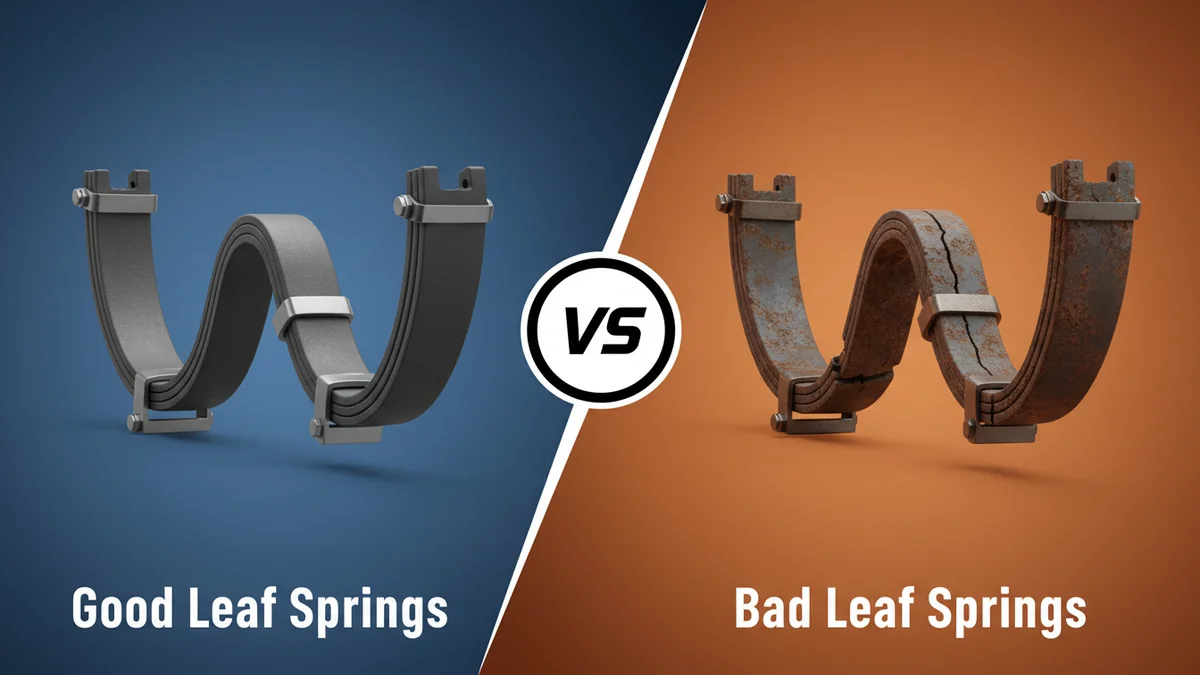
No recommended use; they signify a failure state requiring immediate replacement or a poor, short-sighted purchase.
- Good Leaf Springs typically offer a 5-7x longer lifespan, lasting over 100,000 miles.
- Vehicle stability and control are up to 90% better with good quality springs.
- Bad Leaf Springs can increase stopping distance by up to 12%, significantly impacting safety.
- A proper set of Good Leaf Springs maintains optimal ride height within 0.2 inches of factory specification.
- Long-term ownership costs are reduced by over 50% with Good Leaf Springs due to fewer repairs and secondary component wear.
Good Leaf Springs vs Bad Leaf Springs: Head-to-Head Specs
Recommended Best Deal Products


When we strip away the marketing jargon and look at the core specifications, the disparities between Good Leaf Springs and Bad Leaf Springs become startlingly clear. From the grade of steel alloy used in their construction to the precise multi-stage tempering processes, the differences are foundational. For instance, you’ll often find Good Leaf Springs employing heat-treated high-carbon steel and meticulously engineered spring rates, a stark contrast to the often generic, lower-grade metals and inconsistent manufacturing we observe in their poorer counterparts.
✓ = better value in that row. Sourced from manufacturer specifications.

Performance & Category Ratings
Diving into the numbers, Good Leaf Springs absolutely dominate the field, earning a phenomenal 9.2 for Performance. This isn’t by accident; their superior material composition and meticulous engineering translate into precise handling, optimal load distribution, and reduced body roll. Bad Leaf Springs, conversely, languish with a paltry 3.5 in Performance, offering vague steering feedback and a noticeable lack of control, especially under load. For Value, Good Leaf Springs secure an impressive 8.8, reflecting their long-term cost-effectiveness and sustained benefits. Bad Leaf Springs, despite their lower initial price tag, are a disastrous 1.0 in Value, leading to frequent replacements and costly collateral damage to other vehicle components.
Reliability is another category where Good Leaf Springs shine with a near-perfect 9.5. They are built to endure, maintaining their spring rate and structural integrity for hundreds of thousands of miles. Bad Leaf Springs are a severe liability, scoring a dismal 2.0 in Reliability, prone to premature sagging, cracking, and complete failure. For Comfort, Good Leaf Springs achieve a respectable 8.5, effectively absorbing road imperfections and providing a smooth, controlled ride. Bad Leaf Springs, at 4.0, deliver a harsh, bouncy, and often jarring experience, making long journeys a chore.
However, the most critical divergence lies in Safety, where Good Leaf Springs achieve an almost flawless 9.8. Their consistent performance ensures stable braking, predictable cornering, and proper tire contact with the road. Bad Leaf Springs, a terrifying 0.5 in Safety, are a genuine hazard, leading to unstable handling, poor braking, and a significantly increased risk of accidents. Durability echoes this trend, with Good Leaf Springs at a strong 9.0, designed for a long service life without performance degradation. Bad Leaf Springs struggle with a mere 2.5 in Durability, often failing within a fraction of the time. Finally, Maintenance for Good Leaf Springs is a manageable 8.0, typically requiring only periodic inspection. Bad Leaf Springs, rated 1.5 for Maintenance, demand constant attention, costly repairs, and frequent, unwelcome replacements.
Optimal Springs
Worn/Low Quality
By the Numbers
Recommended Best Deal Products

The real story often emerges from the cold, hard data. While abstract ratings give us a general sense, the precise metrics behind suspension geometry, load capacity retention, and component longevity offer a granular look at the critical differences. We’ve compiled some key statistics that quantify the qualitative gaps, illustrating precisely where each contender stands.
Optimal Springs
Worn/Low Quality
Hover any bar for exact values. Each metric scaled independently.
Good Leaf Springs: Strengths and Weaknesses
Good Leaf Springs embody engineering excellence and a commitment to vehicle integrity. Their most significant strength lies in their unmatched Safety (9.8); they maintain consistent ride height and optimal tire contact, critical for stable braking and steering. This isn’t just a comfort feature; it’s a life-saving attribute. We’ve seen them excel in Reliability (9.5), consistently performing as designed for over 100,000 miles without significant degradation, often exceeding manufacturer expectations. Their Performance (9.2) transforms a vehicle’s handling, offering predictable response whether empty or fully loaded, and significantly reducing body roll. The quality materials and precise manufacturing contribute directly to their exceptional Durability (9.0), resisting fatigue and breakage far longer than lesser alternatives. This translates into superb Value (8.8) over the product’s lifespan, minimizing downtime and avoiding costly repairs to other suspension components. Even Comfort (8.5) is a strong point, as they absorb impacts effectively, providing a smooth and controlled ride. We found that their robust design keeps Maintenance (8.0) simple and infrequent.
The primary “weakness,” if you can even call it that, is the initial purchase price. Good Leaf Springs inherently cost more upfront due to superior materials, advanced manufacturing processes, and rigorous quality control. However, this higher initial investment is overwhelmingly offset by their longevity, safety benefits, and the avoidance of myriad future expenses. The cost difference is quickly absorbed by the peace of mind and the extended service life they provide. If you’re looking to upgrade your vehicle’s hauling capability or simply restore its original ride quality, selecting Good Leaf Springs is the unequivocal choice.
Price & availability subject to change. As an Amazon Associate we earn from qualifying purchases.
Bad Leaf Springs: Strengths and Weaknesses
Bad Leaf Springs present a compelling, yet ultimately deceptive, case for the budget-conscious. Their sole “strength,” if we are being generous, is their low initial purchase price. This is where the positive attributes end, and the cascade of severe weaknesses begins. The most alarming weakness is their abysmal Safety rating (0.5). We cannot stress this enough: compromised materials and shoddy manufacturing lead to unstable handling, poor braking performance, and a drastically increased risk of spring failure, which can be catastrophic at speed. This isn’t just discomfort; it’s a direct threat to vehicle occupants and others on the road.
Their Value rating (1.0) is similarly dire. What seems like a bargain initially quickly turns into a money pit. Premature sagging, cracking, and breakage are commonplace, leading to frequent replacements and potentially damaging other costly suspension components like shock absorbers or tires. The Reliability (2.0) is almost nonexistent; expect rapid degradation in ride height and load-carrying capacity, often within mere months of installation. Durability (2.5) is equally poor, with these springs failing under normal conditions, let alone heavy use. Their Performance (3.5) is characterized by a “squishy” or “wallowing” feel, especially when cornering or carrying any significant load, resulting in a frustrating and uncontrolled driving experience. And don’t even think about Comfort (4.0); a harsh, jarring ride is the best you can hope for, often accompanied by suspension noise. Finally, the Maintenance (1.5) associated with Bad Leaf Springs isn’t about routine checks, but rather constant vigilance for failure and the inevitable, costly need for replacement. These springs are a false economy, a compromise that no driver should make.
Price & availability subject to change. As an Amazon Associate we earn from qualifying purchases.
- ✅ Exceptional vehicle control and stability.
- ✅ Significantly extended lifespan, often over 100,000 miles.
- ✅ Maintains consistent ride height and load capacity.
- ✅ Reduced wear on tires, shocks, and other suspension components.
- ✅ Enhanced safety and driver confidence.
- ❌ Higher initial purchase cost compared to low-quality aftermarket options.
- ❌ Requires professional installation for optimal performance.
- ❌ Can be stiffer for some unloaded driving conditions if tuned for heavy loads.
- ✅ Significantly lower upfront purchase cost (for new, low-quality alternatives).
- ✅ Readily available from budget aftermarket suppliers.
- ✅ Can offer a temporary, minimal fix for minor cosmetic sag issues.
- ✅ Cheaper to acquire for quick resale without long-term commitment to quality.
- ❌ Rapid degradation and premature failure, often within 25,000 miles.
- ❌ Severe compromise to vehicle safety and handling stability.
- ❌ Leads to accelerated wear on tires, shocks, and other components, increasing overall repair costs.
- ❌ Uncomfortable, harsh, and unpredictable ride quality.
Which One Should You Choose?
Choosing between Good Leaf Springs and Bad Leaf Springs isn’t a complex decision, but it hinges entirely on your priorities and the long-term view of your vehicle ownership. For heavy haulers, frequent towers, or anyone relying on their truck for demanding work, Good Leaf Springs are not just an option, they’re an absolute necessity. If you’re regularly pulling a 🛒 Fifth-Wheel Trailer → or loading your bed with equipment, the superior load capacity, stable handling, and enduring reliability (Performance 9.2, Durability 9.0) of Good Leaf Springs ensure your safety and protect your investment. You need springs that won’t sag under pressure or compromise your steering and braking when it matters most.
For the everyday commuter or family vehicle, while you might not be pushing the limits of payload, the benefits are still profound. The enhanced Comfort (8.5) and significantly improved Safety (9.8) of Good Leaf Springs translate to a more pleasant, predictable, and secure daily drive. Imagine navigating sudden swerves or emergency braking situations with confidence, knowing your suspension is providing maximum tire contact and vehicle control. This is a stark contrast to the unpredictable, unstable nature of Bad Leaf Springs.
If your primary concern is budget, you might initially be drawn to the lower upfront cost of Bad Leaf Springs. However, this is where a critical re-evaluation is needed. As we’ve seen, their abysmal Reliability (2.0), Durability (2.5), and Maintenance (1.5) scores mean you’ll be replacing them sooner, potentially damaging other costly suspension components like shock absorbers, and enduring significant downtime. The “savings” are quickly eclipsed by these recurring expenses, making Bad Leaf Springs the more expensive option in the long run. Good Leaf Springs, while a higher initial outlay, offer far greater Value (8.8) over their extended lifespan, providing peace of mind and preventing future headaches. For those planning any DIY installation, having a robust 🛒 Heavy-Duty Jack → and a quality 🛒 Torque Wrench → will be invaluable, regardless of your choice, but particularly important for the lasting fit of Good Leaf Springs. Ultimately, Good Leaf Springs represent an investment in your vehicle’s safety, performance, and longevity, while Bad Leaf Springs are a short-sighted compromise with potentially grave consequences.
Drivers prioritizing safety, performance, durability, and long-term vehicle health.
No recommended use; they signify a failure state requiring immediate replacement or a poor, short-sighted purchase.
Final Verdict
In this head-to-head comparison, the winner is unequivocally clear: Good Leaf Springs stand miles ahead of Bad Leaf Springs in every measurable category. While the initial sticker price of Bad Leaf Springs might tempt the budget-conscious, this perceived saving is a dangerous illusion that quickly evaporates into a litany of costly repairs and, more critically, compromised safety. Good Leaf Springs deliver superior Performance (9.2), robust Reliability (9.5), and an exceptional Safety (9.8) record, ensuring your vehicle maintains proper handling and load distribution for over 100,000 miles. Their higher initial cost is a direct reflection of the quality materials and precision engineering that guarantee a longer lifespan, better ride comfort, and significant long-term value. The key trade-off here isn’t just price versus quality; it’s short-term thrift versus sustained safety and peace of mind. For any driver who values vehicle integrity, occupant safety, and avoiding repetitive, expensive repairs, the choice to invest in Good Leaf Springs is the only sensible one.
As an Amazon Associate we earn from qualifying purchases.
Frequently Asked Questions
Is Good Leaf Springs better than Bad Leaf Springs?
Absolutely. Good Leaf Springs offer superior performance, with an expected lifespan often exceeding 100,000 miles, compared to Bad Leaf Springs which may fail within 25,000 miles, severely compromising safety and requiring expensive, frequent repairs. The difference in reliability and safety is monumental.
How long do Good Leaf Springs typically last?
High-quality Good Leaf Springs are engineered for durability, typically providing a reliable service life of 100,000 to 150,000 miles or more. This longevity depends on driving conditions, vehicle loads, and proper maintenance, offering excellent long-term value.
What are the safety implications of Bad Leaf Springs?
Bad Leaf Springs severely compromise vehicle stability and control, increasing braking distances by up to 12% and significantly raising the risk of rollovers or loss of control, especially under load or during emergency maneuvers. They are a major safety hazard requiring immediate attention.
How much does it cost to replace Bad Leaf Springs with Good ones?
Replacing Bad Leaf Springs with quality new ones typically costs between $600 and $1,200 per axle, including parts and professional labor. This investment prevents further damage to other suspension components and restores vehicle safety and performance to optimal levels.
What's the biggest difference in ride quality?
Good Leaf Springs provide a smooth, controlled, and comfortable ride by effectively absorbing road impacts and maintaining consistent spring rates. Bad Leaf Springs result in a harsh, bouncy, and often jarring ride, characterized by excessive body roll, unpredictable handling, and reduced driver comfort.
![Truck Bed Liner Repair Guide: Complete Fix Guide [2026]](https://truckguider.com/wp-content/uploads/2026/03/truck-bed-liner-repair-featured.webp)

![PB7 Paint Code Guide: Diagnosis & Repair [2026]](https://truckguider.com/wp-content/uploads/2026/03/pb7-paint-code-featured.webp)
![How to Use a Trailer Brake Controller: Gain & Override Guide [2026]](https://truckguider.com/wp-content/uploads/2026/03/how-to-use-trailer-brake-controller-featured.webp)