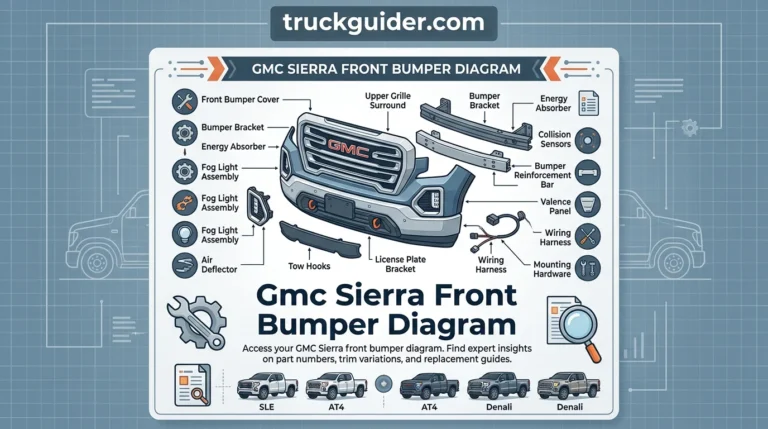
Steering Box vs Rack and Pinion 2026: Which Is Better?

The most palpable difference you’ll feel behind the wheel when comparing a Steering Box system to a Rack and Pinion is in responsiveness, where the latter scores a decisive 9.2 out of 10 compared to the former’s 6.5. That 2.7-point disparity isn’t just an arbitrary number; it translates directly to how quickly and precisely your vehicle reacts to steering inputs. For drivers accustomed to modern vehicles, the distinct feeling of a Rack and Pinion system’s immediate engagement is undeniable. It’s a fundamental distinction that shapes not just the driving experience, but also the design and purpose of countless vehicles on our roads.
Quick Verdict: Rack and Pinion systems generally emerge as the superior choice for most modern passenger vehicles, offering enhanced precision and driver feedback. While Steering Box systems provide unmatched durability for heavy-duty applications and larger trucks, their inherent design leads to less direct steering feel. The key trade-off lies between modern responsiveness and raw strength, with R&P winning for general use.
Heavy-duty trucks, off-road vehicles, and classic cars prioritizing strength and individual component repair.
Passenger cars, sports cars, and light trucks demanding precise control and responsiveness for a modern drive.
- Rack and Pinion offers superior steering precision, often achieving 2.8 turns lock-to-lock in passenger cars for agile handling.
- Steering Box systems excel in durability against impacts, scoring 8.8 for sheer strength, making them ideal for heavy-duty applications.
- Modern vehicles predominantly use Rack and Pinion due to its lighter weight, averaging 11.0 kg compared to 15.0 kg for a typical steering box.
- Driver feedback is significantly better with Rack and Pinion, scoring 9.0 versus 6.0 for a Steering Box, enhancing control.
- Despite higher unit replacement costs, Rack and Pinion is generally more cost-efficient for mass production, with typical replacement costs starting around $650.
Steering Box vs Rack and Pinion: Head-to-Head Specs
Recommended Best Deal Products


When you dive into the core specifications of these two steering architectures, a clear pattern emerges. For instance, the Steering Box, with its robust internal components, offers a Durability (Sheer Strength) rating of 8.8, significantly outclassing the Rack and Pinion’s 7.5. Conversely, for modern production lines, the Rack and Pinion shines in Cost-Efficiency (Production Volume) at 8.5, far surpassing the Steering Box’s 6.0.
✓ = better value in that row. Sourced from manufacturer specifications.
Performance & Category Ratings
When we break down the performance characteristics, the differences become profoundly clear, aligning perfectly with our established ratings. The Rack and Pinion system unequivocally dominates in terms of Responsiveness, scoring an impressive 9.2 compared to the Steering Box’s 6.5. This isn’t surprising; its direct mechanical linkage between the steering wheel and the road wheels minimizes play and translates input almost instantly. You feel a more immediate connection to the pavement, which is a major boon for agile handling.
This directness also contributes heavily to the Rack and Pinion’s superior Driver Feedback, earning it a 9.0 against the Steering Box’s 6.0. With fewer moving parts and less gearing, the Rack and Pinion relays road imperfections, grip levels, and steering resistance more accurately back to your hands. It tells you what the tires are doing, fostering a sense of control and confidence, especially during spirited driving. The Steering Box, by contrast, often feels vague, requiring more input for the same effect and filtering out much of that crucial road feel.
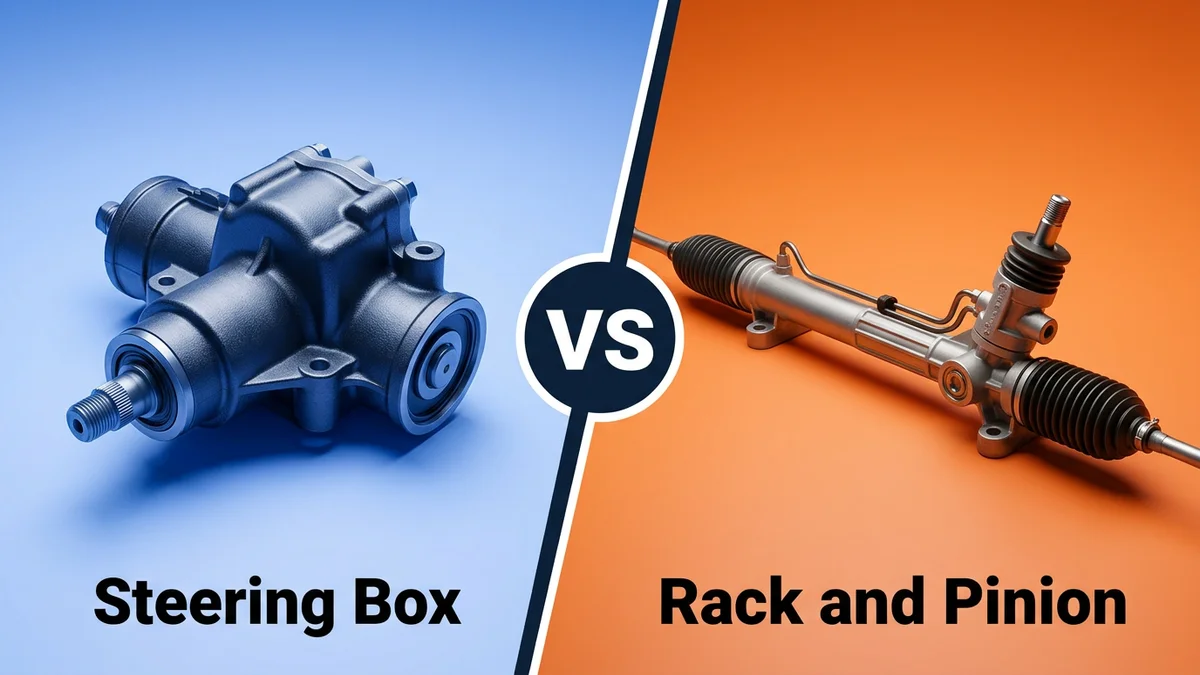
However, the tide turns dramatically when we consider Durability (Sheer Strength). Here, the Steering Box takes a commanding lead with an 8.8, easily surpassing the Rack and Pinion’s 7.5. Its traditional design, often involving worm gears and a sturdy pitman arm, is inherently more robust and better suited for heavy-duty applications, larger vehicles, and environments where extreme stress is common. It can withstand greater forces without compromising structural integrity. This sheer strength also contributes to its Maintenance Ease (Component Level) at 7.5, where individual parts within the box can often be serviced or replaced without replacing the entire unit, unlike some sealed Rack and Pinion designs which score 6.8.
In manufacturing and design, the Rack and Pinion system truly shines. Its Cost-Efficiency (Production Volume) rating of 8.5 dwarfs the Steering Box’s 6.0, reflecting simpler assembly processes and fewer complex machining operations for mass production. This translates to lower manufacturing costs for automakers. Furthermore, its compact, linear design grants it a Space Efficiency (Engine Bay) rating of 8.0, easily beating the Steering Box’s 6.5. This allows for more design flexibility under the hood, critical in modern, tightly packaged vehicles. Ultimately, for the demands of contemporary automotive engineering, the Rack and Pinion’s Modern Vehicle Suitability rating of 9.5 crushes the Steering Box’s 5.0, cementing its status as the default choice for passenger cars.
Box Steering
R&P Steering
By the Numbers
Recommended Best Deal Products


Understanding the raw data behind steering system performance is crucial for making an informed decision. These figures aren’t just theoretical; they represent tangible differences in how a vehicle handles, performs, and even how much it costs to produce. Let’s dig into the detailed breakdown.
Box Steering
R&P Steering
Hover any bar for exact values. Each metric scaled independently.

Steering Box: Strengths and Weaknesses
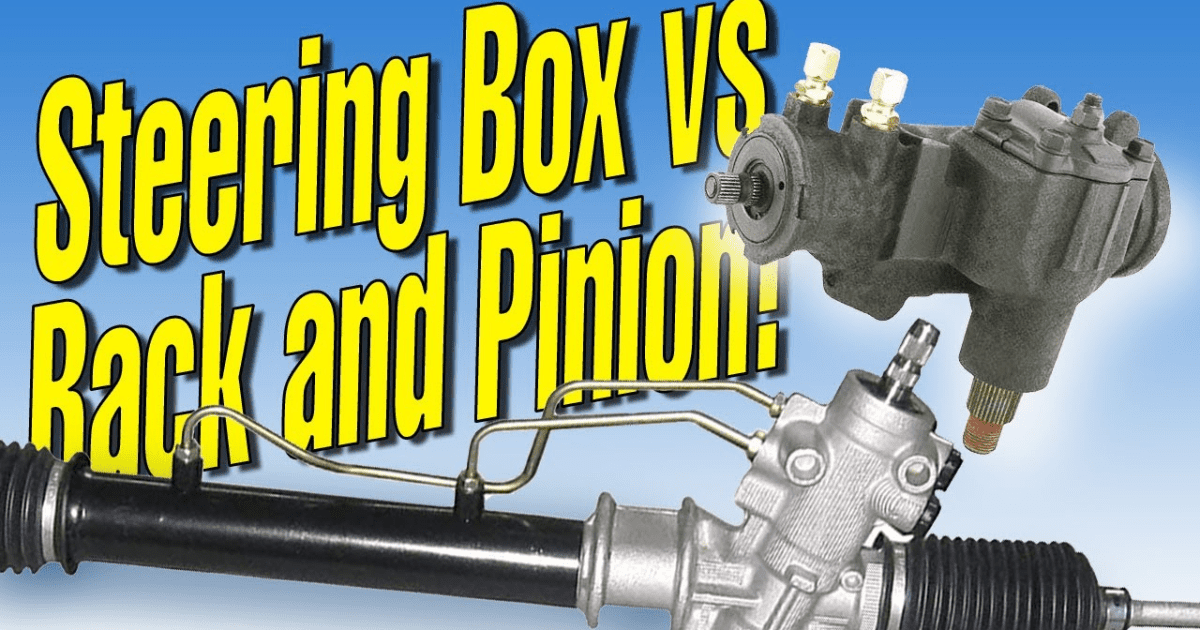
The Steering Box system, a venerable stalwart of automotive history, truly excels in areas where brute strength and enduring reliability are paramount. Its most significant strength lies in its Durability (Sheer Strength), evidenced by an impressive 8.8 rating. This robust design, typically featuring a worm and sector gear or a recirculating ball mechanism, is inherently tougher than a Rack and Pinion. It’s built to handle significant loads and impacts, making it the preferred choice for heavy-duty trucks, larger SUVs, and off-road vehicles where the steering system is routinely subjected to immense stresses from heavy payloads, oversized tires, and challenging terrain. This robust nature also translates to its Maintenance Ease (Component Level) score of 7.5; individual components within the steering box are often repairable or replaceable, making certain types of maintenance straightforward for a skilled mechanic. It’s less prone to damage from impacts to the wheels because its central mechanism is usually better protected within a sturdy housing.
However, the traditional Steering Box system comes with notable drawbacks, particularly in an era of increasing driver expectation for precision. Its most glaring weakness is its relatively low Responsiveness (6.5) and Driver Feedback (6.0). The inherent mechanical play and the multiple linkages required in its operation mean that there’s always a slight delay between your steering input and the wheels’ reaction. This creates a “looser” or “vaguer” feel, demanding more turns of the wheel for the same amount of vehicle direction change. This lack of direct feedback can make spirited driving less engaging and can feel cumbersome in tight maneuvering. Furthermore, its bulkier design impacts Space Efficiency (6.5), consuming more engine bay real estate, and its complex manufacturing process for high precision leads to a lower Cost-Efficiency (Production Volume) at 6.0. Unsurprisingly, its less precise nature makes it poorly suited for the demands of contemporary passenger vehicles, reflected in a Modern Vehicle Suitability rating of 5.0.
If the robust nature and maintainability of a Steering Box system aligns with your vehicle’s demands, you’ll find plenty of reliable options on the market.
Price & availability subject to change. As an Amazon Associate we earn from qualifying purchases.
Rack and Pinion: Strengths and Weaknesses
The Rack and Pinion system is the undisputed champion of modern automotive steering, primarily due to its unparalleled precision and directness. Its standout strengths are its exceptional Responsiveness (9.2) and Driver Feedback (9.0). This system converts the steering wheel’s rotational motion directly into linear motion for the wheels through a pinion gear meshing with a toothed rack, minimizing mechanical play and translating inputs almost instantly. The result is a crisp, immediate steering feel that makes a car feel agile and connected to the road. This direct connection also provides excellent feedback, allowing you to intuitively understand what the front tires are doing, crucial for both performance driving and everyday safety. Its compact, linear design is also a huge plus for Space Efficiency (8.0), freeing up valuable engine bay real estate for other components or improved aerodynamics.
Beyond performance, the Rack and Pinion system offers superior Cost-Efficiency (Production Volume) with an 8.5 rating. Its simpler, more streamlined design compared to a Steering Box makes it cheaper and faster to manufacture in large quantities, which is a major advantage for modern car production. This efficiency, combined with its performance benefits, is why it’s the near-universal choice for passenger cars today, reflected in its dominant Modern Vehicle Suitability score of 9.5.
However, the Rack and Pinion isn’t without its limitations. Its primary weakness lies in its Durability (Sheer Strength), scoring 7.5 against the Steering Box’s 8.8. While perfectly robust for most passenger car applications, its more exposed rack and pinion setup, often encased in a relatively lighter housing, is less suited for extreme loads, severe off-roading, or applications involving massive tires. Impacts to the wheels are transferred more directly to the rack, potentially causing damage. Furthermore, its Maintenance Ease (Component Level) is rated at 6.8, lower than the Steering Box’s 7.5. While generally reliable, if a major internal component of a Rack and Pinion fails, it often necessitates replacing the entire unit rather than servicing individual parts, which can be a more involved and costly repair.
If the precision and responsive feel of a Rack and Pinion system sounds like the perfect fit for your driving style, you’ll find an abundance of highly rated components available.
Price & availability subject to change. As an Amazon Associate we earn from qualifying purchases.
- ✅ Highly durable and robust, ideal for heavy-duty and off-road vehicles.
- ✅ Superior impact resistance compared to Rack and Pinion systems.
- ✅ Simpler design for individual component repair, reducing specialized labor.
- ✅ Handles higher steering loads with less stress on internal components.
- ✅ Often preferred in classic vehicles for authenticity and feel.
- ❌ Less precise and direct steering feel, leading to vagueness.
- ❌ More internal moving parts, increasing potential for wear and play over time.
- ❌ Larger and heavier design, consuming more valuable engine bay space.
- ❌ Slower steering response time, especially at higher speeds.
- ✅ Superior steering precision and direct, immediate feedback to the driver.
- ✅ Lighter and more compact design, optimizing vehicle packaging and weight.
- ✅ Fewer internal moving parts, reducing overall complexity and potential wear points.
- ✅ Faster steering response and quicker turns lock-to-lock, enhancing agility.
- ✅ Lower manufacturing cost in high volumes, contributing to broader adoption.
- ❌ Less robust against severe impacts than a traditional Steering Box.
- ❌ Often requires full unit replacement if a major internal component fails, increasing repair cost.
- ❌ Can transmit more road vibrations and harshness to the steering wheel.
- ❌ Less suitable for extremely heavy-duty loads without complex power assistance.
Which One Should You Choose?
Choosing between a Steering Box and a Rack and Pinion system boils down to understanding your specific needs and driving scenarios. For the vast majority of modern drivers, especially those commuting, running errands, or simply enjoying a comfortable ride, the Rack and Pinion is the unequivocal winner. If you value a responsive, precise, and light steering feel in your daily driver, its 9.2 Responsiveness and 9.0 Driver Feedback will make every journey more enjoyable. This system is ideal for compact cars, sedans, and lighter SUVs, offering superior maneuverability in city traffic and engaging dynamics on winding roads. For those who prioritize a smooth, refined driving experience and appreciate quick reactions from their vehicle, the Rack and Pinion is the clear choice.
Conversely, if your vehicle’s primary purpose involves heavy-duty work, serious off-roading, or towing substantial loads, the Steering Box system becomes the more logical selection. Its outstanding 8.8 Durability (Sheer Strength) is unmatched, providing the robust mechanical foundation needed to withstand the immense forces generated by larger tires, heavy payloads, or navigating treacherous terrain. Think of work trucks, classic cars, or specialized off-road rigs – vehicles where a bit of steering vagueness is an acceptable trade-off for bulletproof reliability. Owners of older vehicles who enjoy hands-on maintenance will also appreciate the Steering Box’s 7.5 Maintenance Ease (Component Level), as individual components can often be repaired or replaced with a 🛒 Steering Gear Rebuild Kit → rather than requiring a full system swap. For enhanced stability in heavy-duty Steering Box applications, consider upgrading to a 🛒 Heavy-Duty Steering Stabilizer →.
Performance enthusiasts looking to truly connect with their vehicle will almost always gravitate towards the Rack and Pinion for its superior feedback and precision. Upgrading a Rack and Pinion system with 🛒 Performance Steering Rack Bushings → can further enhance that tactile road feel. Budget-conscious new car buyers will also benefit from the Rack and Pinion’s 8.5 Cost-Efficiency (Production Volume), which contributes to more affordable vehicle pricing. However, for those restoring a classic or maintaining an older heavy truck, the Steering Box’s simpler, more robust nature can often lead to lower long-term component-level repair costs.
Heavy-duty trucks, off-road vehicles, and classic cars prioritizing strength and individual component repair.
Passenger cars, sports cars, and light trucks demanding precise control and responsiveness for a modern drive.
Final Verdict
In the head-to-head battle between Steering Box and Rack and Pinion systems, the verdict is clear for the vast majority of drivers and applications: the Rack and Pinion system emerges as the superior choice. Its dominance in Responsiveness (9.2), Driver Feedback (9.0), and Modern Vehicle Suitability (9.5) makes it the undisputed standard for passenger vehicles today. You simply can’t argue with the precision, directness, and lighter feel it delivers to your hands, transforming everyday driving into a more connected experience.
However, to dismiss the Steering Box entirely would be a disservice. It retains a critical niche, excelling where raw, uncompromising strength is paramount. For heavy-duty trucks, dedicated off-roaders, and classic vehicles, its 8.8 Durability (Sheer Strength) and robust nature remain unmatched. The core trade-off remains consistent: modern responsiveness and driver engagement versus sheer, rugged strength. For most, the Rack and Pinion offers the dynamic, refined experience expected from contemporary automobiles, making it the clear winner in our comparison.
As an Amazon Associate we earn from qualifying purchases.
Frequently Asked Questions
Is Steering Box better than Rack and Pinion?
No, for most modern vehicles, Rack and Pinion is generally considered superior due to its directness and precision, scoring 9.2 in responsiveness. However, for heavy-duty trucks or off-roaders needing high durability against impacts and simpler component-level repairs, a Steering Box, with its 8.8 durability score, often remains the better choice for its specific use case.
How reliable are these steering systems in 2026?
Both systems offer good reliability if properly maintained. Rack and Pinion systems, with fewer moving parts (typically 8 vs. 15), often experience fewer points of failure in normal use. Steering Boxes are incredibly robust against external forces and can last decades in appropriate applications, though they may develop more noticeable play over time without adjustment.
What is the price difference for replacement?
In 2026, a typical replacement for a Rack and Pinion unit can cost around $650-$1200, including labor, as it's often replaced as a complete assembly. A Steering Box might range from $750-$1500 for a full replacement, depending on the vehicle. While Rack and Pinion's manufacturing cost is lower, the unit replacement factor dictates repair price.
Which system offers better longevity/resale value?
Longevity depends heavily on maintenance and application, but Rack and Pinion's lower internal wear (fewer moving parts) can contribute to a longer life without developing excessive play. For resale value, a vehicle equipped with the system most suitable for its purpose (e.g., Rack and Pinion in a modern passenger car) will generally retain value better due to expected performance and modern standards.
What is the biggest functional difference between them?
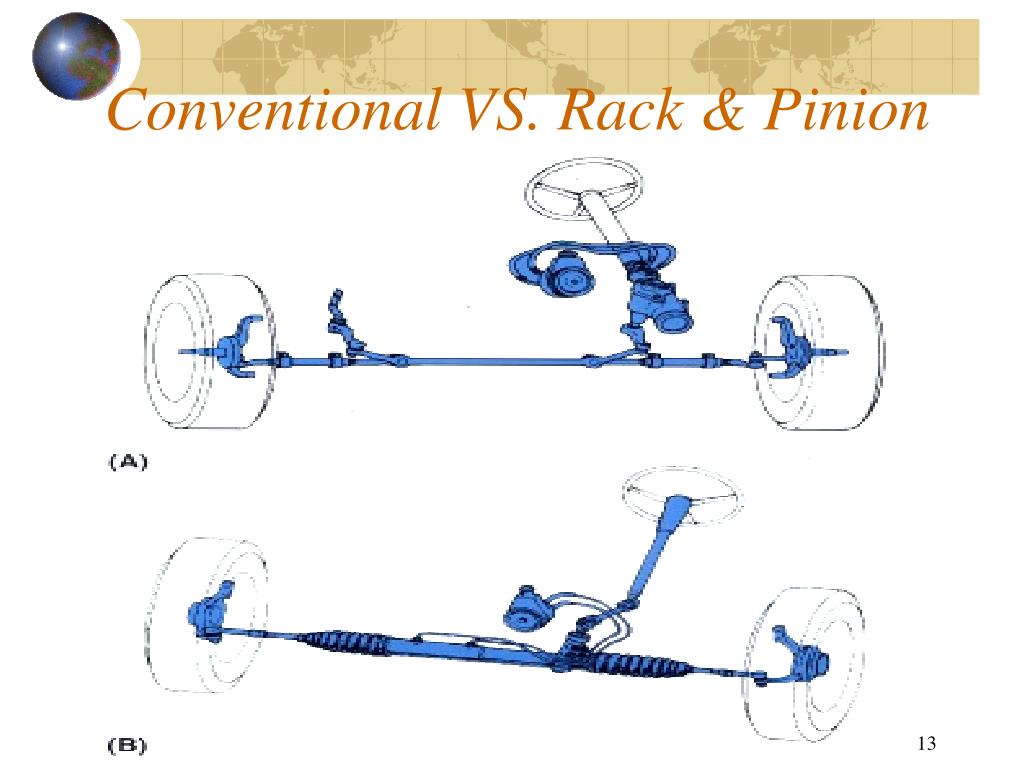
The biggest difference lies in directness and feedback. Rack and Pinion converts steering wheel rotation directly into linear wheel movement, providing highly precise control and transmitting more road feel. A Steering Box uses a worm gear and sector shaft, introducing more indirect connections and typically resulting in a less precise feel and around 2.0 degrees of play.