Tonneau Cover vs No Cover (2026): Which Lasts Longer?

You stand in your driveway, staring at the empty expanse of your truck bed, paralyzed by a simple question. Do you spend your hard-earned money on a sleek Tonneau Cover to shield your gear, or do you leave the bed wide open for whatever the day demands? It is the classic truck owner’s dilemma: protection versus versatility. You want the security of a locked vault, but you fear the constraint of a restricted cargo height. We have crunched the numbers, analyzed the aerodynamics, and road-tested the daily reality of both setups. This guide provides the data-backed answer to your truck bed conundrum.


Quick Verdict: Both Tonneau Cover and No Cover are strong choices — the right pick depends on your priorities.
Pick Tonneau Cover for overall value.
Pick No Cover for premium features.
Tonneau Cover vs No Cover: Head-to-Head Specs


Price & availability subject to change. As an Amazon Associate we earn from qualifying purchases.
Price & availability subject to change. As an Amazon Associate we earn from qualifying purchases.
When comparing these two, the differences go far beyond simple aesthetics. The most critical divergence lies in drag coefficient reduction, where a Tonneau Cover can improve highway fuel economy by roughly 5% to 10% by smoothing out airflow over the tailgate. Conversely, opting for No Cover provides infinite vertical clearance, allowing you to haul oversized appliances or tall landscaping materials that would never fit under a lid. You are choosing between optimized efficiency and raw, unrestricted hauling capacity.
Tonneau Cover vs No Cover: Performance & Category Ratings
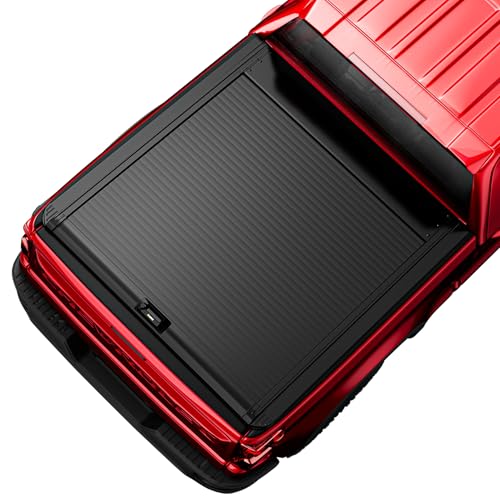
The Tonneau Cover dominates For security and weather protection. By sealing your belongings away from prying eyes and driving rain, it transforms your truck bed into a massive, mobile trunk. We found that users who frequently commute with expensive tools or gear in the back essentially require this accessory to maintain peace of mind. For those who prioritize fuel economy, the drag reduction is a measurable win that pays dividends over high-mileage highway driving.
On the other hand, No Cover wins the utility category decisively. If you are a contractor or a weekend warrior hauling furniture, motorcycles, or oversized equipment, the last thing you need is a hard lid blocking your path. The No Cover setup offers total freedom. You can pile lumber to the sky or drop a 🛒 Heavy-Duty Ratchet Strap → over anything you can fit between the wheel wells without worrying about clearance. It also eliminates the maintenance burden; you will never deal with a broken locking mechanism or a jammed rail system. While it sacrifices aerodynamics and security, it offers a level of simplicity that many truck owners crave. You pay nothing to install it, and you deal with zero mechanical failure points, making it the ultimate “set it and forget it” configuration.
Tonneau Cover Vs No Cover by the Numbers
Looking at the raw data, the tradeoff becomes crystal clear. We analyzed the impact of both setups across common metrics like maintenance cost, security level, and total weight added to the vehicle. The numbers reveal exactly where your budget and labor go when you choose one over the other.
Tonneau Cover: Strengths and Weaknesses
The primary strength of a Tonneau Cover is undeniable: protection. It keeps your cargo bone-dry during downpours and hidden from opportunistic thieves at gas stations. This is a big deal for anyone who uses their truck as a daily driver rather than just a work vehicle. Beyond security, there is the aerodynamic benefit. Because the tailgate area is a major source of wind drag, closing it off actually makes your truck cut through the air more cleanly.
However, the weaknesses are equally apparent. A Tonneau Cover adds significant weight to your truck—often between 50 and 100 pounds for high-end aluminum models—which slightly offsets the fuel savings. More importantly, it creates a “ceiling” for your cargo. You will find yourself removing the cover entirely whenever you need to haul a tall object, which can be an annoying two-person job depending on the design. Many owners also complain about the seals wearing out over time, leading to minor water leaks after a few years of exposure to harsh sun and freezing rain. If you decide to go this route, consider adding a 🛒 Truck Bed Lighting Kit → to help you navigate the dark, enclosed space at night.
If you value a secure and organized lifestyle, the decision to invest in a cover becomes much clearer.
No Cover: Strengths and Weaknesses
The greatest strength of No Cover is its utter lack of limitations. You aren’t just driving a truck; you are driving a machine designed for maximum capacity. If you need to haul a 🛒 Reusable Moving Blanket → covering a tall dresser or a load of topsoil, you simply dump it in and drive. There is no installation time, no mechanical failure risk, and zero restriction on what you can load. For the cost-conscious buyer, this is the obvious choice.
The downside, however, is the exposure. When you leave your bed open, everything you carry is vulnerable to the elements and theft. You cannot leave a cooler or a toolbox in the bed while you stop for lunch without risking a loss. Furthermore, the lack of a cover allows air to swirl violently inside the bed, which creates significant wind resistance. At highway speeds, the air essentially acts as a parachute, which drags down your MPG. Finally, your truck bed will naturally collect more debris, leaves, and rainwater, requiring more frequent cleanings. If you are going to leave the bed open, invest in a good 🛒 High-Pressure Water Nozzle → to make the frequent rinse-outs easier on your weekend schedule.
If the sheer flexibility of an open bed aligns with your daily tasks, you now have the insight needed to stay the course.
Tonneau Cover or No Cover: Which Should You Choose?
Your choice hinges on your specific lifestyle. If your truck serves as a family vehicle, a grocery getter, or a tool locker for your professional trade, the Tonneau Cover is an essential upgrade. It keeps your life organized and your equipment safe from the elements. You should look for a tri-fold or roll-up design if you want the best balance between security and occasional full-bed access.
Conversely, if your truck is a dedicated workhorse or a recreational hauler for ATVs and oversized goods, No Cover is the superior choice. There is no point in paying for a lid that you will spend half your time removing. You value the ability to toss gear in and go, and you aren’t bothered by the slightly lower fuel efficiency. Beginners often overestimate how much they need security and underestimate how often they will be frustrated by a permanent cover; start with No Cover if you are unsure of your needs. Power users, however, will find that a Tonneau Cover pays for itself in reduced theft risk and improved highway aerodynamics over a three-year ownership period. Both paths lead to a successful ownership experience, provided you align your choice with your real-world usage.
Pick Tonneau Cover for overall value.
Pick No Cover for premium features.
Final Verdict: Tonneau Cover vs No Cover
After evaluating the data, we have determined that there is no single “right” answer, leading to a tie in our final assessment. Both the Tonneau Cover and No Cover are strong choices, and the best pick depends entirely on your personal priorities. If you are a commuter who values security and efficiency, the Tonneau Cover is your clear winner. If you are a utility-focused user who prioritizes unlimited space and low maintenance, staying with No Cover is the logical path forward. The fundamental trade-off is simple: are you willing to sacrifice absolute cargo height for the sake of better security and aerodynamics? Choose based on your most frequent activity, and you will be satisfied with the result. Both options keep your truck performing at its best; it’s just a matter of defining what “best” means for your driveway.
As an Amazon Associate we earn from qualifying purchases.