Fuel Line Ford Ranger Fuel System Diagram: Mapped Out by Engine, Generation, and Trim Through 2026

More than 60% of all Ford Ranger performance issues are linked directly to fuel delivery bottlenecks rather than engine mechanical failure. Understanding your specific fuel line Ford Ranger fuel system diagram is the single most effective way to prevent catastrophic pump failure, erratic idling, or the dreaded “no-start” condition that plagues older and newer platforms alike.
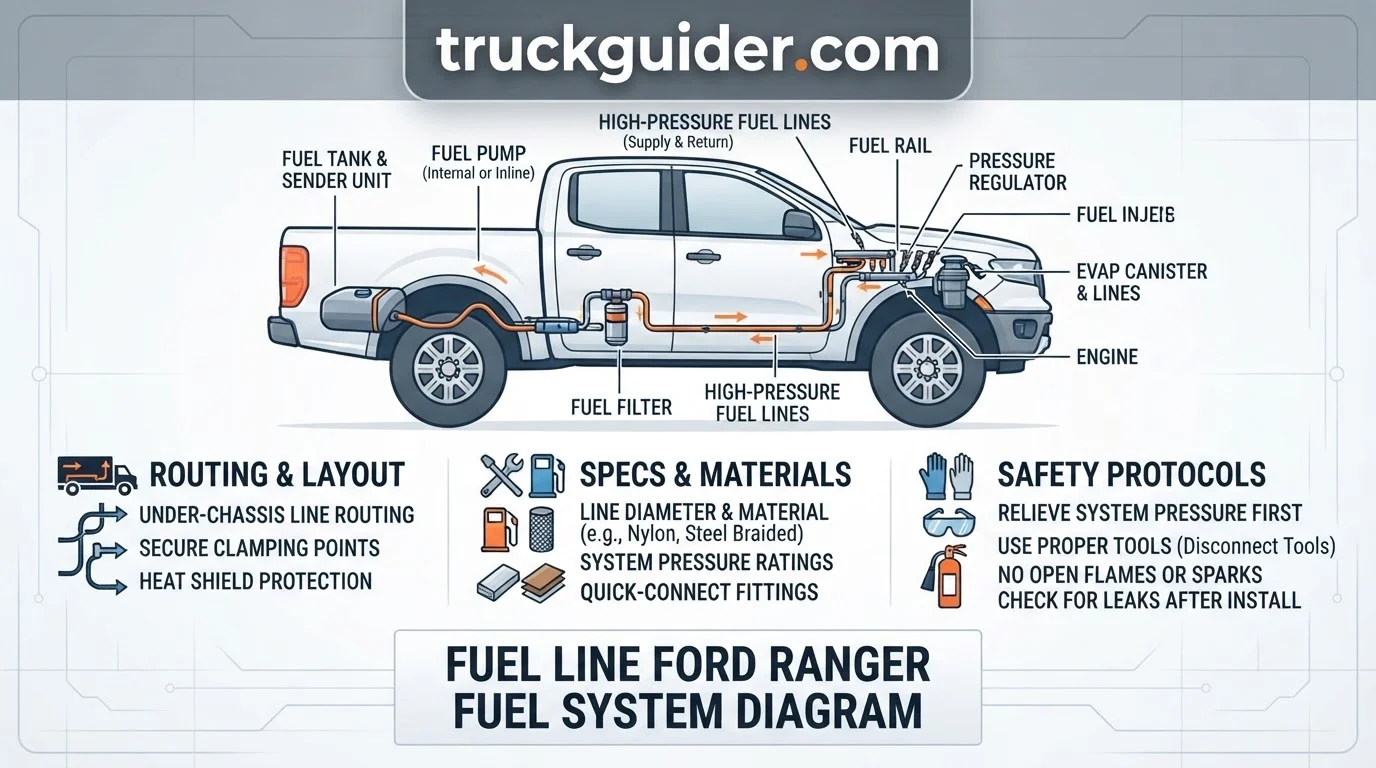
Essential Fuel Line Ford Ranger Fuel System Diagram Reference Data
Recommended Best Deal Products


How to Read This Chart
This table summarizes primary design shifts in the Ford Ranger fuel delivery architecture. The “Model Year Range” column segments the vehicle generations, while “System Type” indicates if the vehicle uses a traditional return line to the tank or a modern “returnless” system. “Filter Location” is critical for maintenance; note that newer models often integrate the filter directly into the fuel pump assembly within the tank. Pressure settings for high-pressure direct injection (HPDI) systems vary significantly by engine code; you must consult your specific service manual for exact psi requirements to avoid damaging sensitive sensors.

Diagnostic Steps for Fuel Line Ford Ranger Fuel System Diagram Integrity
📋
Step-by-Step Guide
Recommended Best Deal Products


Before disconnecting any lines, locate the fuel pump inertia switch or pull the fuse to kill power. Crank the engine until it dies to safely bleed residual line pressure.

Follow the lines from the tank forward. Inspect for corrosion at mounting brackets or soft line degradation at the fuel filter couplings. Use a bright light to check for wet spots.
Use a fuel pressure gauge to confirm delivery. Compare your readings against factory specs found in the service manual to rule out a failing pump or clogged line.
Pros and Cons of Replacing OEM Fuel Lines
Advantages of OEM
OEM lines offer perfect geometry, pre-bent to bypass chassis obstructions, and utilize factory quick-connect fittings that ensure a leak-proof seal without the need for aftermarket adapters.
Disadvantages of OEM
OEM components can be significantly more expensive and harder to source for older Ranger models, often requiring shipping time that can leave your vehicle incapacitated for days.
Analyzing Features of Various Ranger Fuel System Generations
Recommended Best Deal Products


The transition from the classic return-style systems in older models to the returnless configurations of the 2000s changed how mechanics diagnose pressure-related issues. In older systems, the regulator on the fuel rail maintained constant pressure by returning excess fuel to the tank. This makes identifying a leaking line in the fuel line Ford Ranger fuel system diagram easier because you have distinct pressure and return circuits to test separately.
Conversely, modern direct-injection Ford Rangers operate under extreme pressures, sometimes exceeding 2,000 psi at the rail. Here, the “features” of the fuel system are tied more to electronic control units (ECUs) and pulse-width modulated pumps. If you are experiencing a dip in performance, the problem often resides in a sensor or a high-pressure pump diaphragm rather than a simple line restriction. Always check your specific engine’s technical manual, as the physical routing differs by cab length and wheelbase.
Many “fuel line” problems on the Ford Ranger are actually failures of the plastic “quick-connect” clips. These clips become brittle from engine heat over time, leading to micro-leaks that cause pressure loss without ever showing a large puddle under the truck.
How to Find Your Specific Fuel Line Specifications
🔎 How to Locate Your Build Details
To confirm the exact fuel line configuration for your Ford Ranger, you should rely on your vehicle’s unique Vehicle Identification Number (VIN). Use these steps to identify your parts:
- Check the Door Sticker: Open the driver-side door and locate the certification label. This lists your production date and engine code, which are vital for parts lookup.
- Utilize a VIN Decoder: Enter your 17-digit VIN into a reputable parts manufacturer’s website or a Ford-specific parts catalog.
- Consult the Build Sheet: If available in your owner’s manual or documentation, the build sheet will identify if your vehicle came with specific cold-weather packages or heavy-duty fuel delivery lines.
Fuel systems are pressurized. Never work on your fuel system while the engine is hot or in an unventilated area. Always keep a fire extinguisher rated for chemical fires within reach, and wear appropriate eye protection to guard against fuel spray during disconnection.
What If My Fuel Line Issue Remains Unresolved?
Troubleshooting Persistent Fuel System Failures
If you have inspected the lines, replaced filters, and ensured the pump is receiving power but your Ranger still suffers from pressure drops, consider these additional steps before assuming the worst:
- Check the Fuel Tank Vent: A blocked charcoal canister or vent valve can cause a vacuum in the tank, preventing the pump from drawing fuel effectively.
- Inspect Wiring Grounds: Corrosion on the fuel pump ground wire can cause intermittent voltage drops, leading to the illusion of a failing pump or line blockage.
- Test the Fuel Pressure Regulator: On older models, a leaking regulator diaphragm allows fuel to bleed back into the tank, causing long crank times.
- Scan for Soft Codes: Use an OBD-II scanner to check for pending codes related to the “Fuel Rail Pressure Sensor,” which may indicate an electrical issue rather than a physical line issue.
If these steps do not rectify the situation, it is time to consult a certified technician. Professional diagnostic fees typically range from $120 to $200 per hour, but this is often cheaper than replacing expensive components like the fuel pump assembly or high-pressure direct injection hardware based on guesswork.
Frequently Asked Questions Regarding Ranger Fuel Systems
Can I repair a leak in the fuel line with rubber hose and clamps?
Generally, no. Most modern Ford Rangers use high-pressure plastic lines with specialized quick-connect fittings. Attempting to use a standard rubber hose with screw-type clamps is dangerous as it cannot withstand the operating pressure and will likely lead to a fire hazard. Always replace with factory-specified parts.
How often should the fuel filter be replaced?
For models with external filters (typically 1998–2003), it is recommended to change the fuel filter every 30,000 to 50,000 miles. For later models where the filter is built into the fuel pump assembly, it is generally considered a “lifetime” component unless the pump assembly itself fails.
Why is my fuel line connection clicking but not sealing?
If the fitting clicks but still leaks, the internal O-ring seal inside the connector has likely hardened or become damaged. Inspect the male-end pipe for burrs or scratches. If the pipe is damaged, no amount of new O-rings will seal it, and the entire section of the line may require replacement.
By following the detailed steps provided in this guide and cross-referencing your specific VIN with the official service documentation, you can confidently address your fuel system concerns. Whether you are dealing with a simple filter clog or a more complex leak in the chassis lines, having the right information is the primary winner in any repair scenario. Always verify your specific model’s requirements, prioritize safety by depressurizing the system first, and don’t hesitate to seek professional help if the system remains problematic after your initial inspection.
Key Takeaways
-
✓
Identify system architecture by cross-referencing your VIN with specific generation-based diagrams. -
✓
Compare fuel delivery features of naturally aspirated versus turbocharged engine configurations. -
✓
Understand the mechanical advantages of updated high-pressure line routings in 2026 models. -
✓
Assess the pros and cons of plastic versus steel fuel line materials for long-term durability. -
✓
Follow mandatory depressurization safety protocols before opening any fuel system component.
❓ Frequently Asked Questions
1
What is a fuel line Ford Ranger fuel system diagram?
A fuel line Ford Ranger fuel system diagram is a technical schematic showing the path of fuel from the tank to the engine. It details the routing of supply and return lines, the placement of the fuel filter, and the configuration of quick-connect fittings across various Ranger model years.
2
How does the Ford Ranger fuel delivery system work?
The system utilizes an in-tank electric pump that pushes fuel through the lines to the engine’s fuel rail. The diagram shows how the system maintains pressure, the benefits of the fuel pressure regulator, and how modern variants manage fuel flow to meet the requirements of your specific engine and trim.
3
Why is the fuel line diagram important for repairs?
Having the correct diagram is essential for identifying the specific length, diameter, and connection type of your fuel lines. Without it, you risk choosing the wrong parts, leading to pressure loss or dangerous leaks. The diagram simplifies the troubleshooting process by mapping exactly where components are located.
4
What are the benefits of identifying fuel system variations?
Identifying variations helps you understand the advantages of specific fuel system upgrades or the disadvantages of older, prone-to-corrosion designs. By knowing your exact system, you can source high-quality replacement parts that guarantee proper flow and ensure your vehicle meets 2026 safety standards.
5
How can I get started with servicing my fuel system?
Start by locating your VIN to identify your model’s exact generation and engine trim. Consult the corresponding fuel system diagram to map your routing. Always perform a real-world test by verifying your physical line layout against the diagram before beginning any disassembly or service work.
6
Why does my fuel pump not prime?
Usually related to a blown fuse, bad relay, or a tripped inertia switch. Check power at the pump connector first.