
Torque Converter Noise [2026]

A persistent, unexplained sound emanating from your drivetrain is more than an annoyance; it is a critical warning from your vehicle’s most complex hydraulic component. Drivers often struggle to differentiate between minor belt squeaks and the more ominous signs of torque converter noise, leading to delayed repairs and catastrophic transmission failure. As a professional in the automotive industry for over 15 years, I have seen how a “small noise” can rapidly escalate into a multi-thousand-dollar rebuild. This comprehensive guide provides a professional framework for diagnosing specific auditory symptoms, understanding the internal mechanical failures, and selecting the most reliable repair path to restore your vehicle’s performance with expert precision.
Section 1: Identifying Common Torque Converter Noise Patterns and Auditory Signatures
Recommended Best Deal Products


Accurate diagnosis begins with an expert ear. Because the torque converter resides between the engine and the transmission, its sounds are often misidentified as failing power steering pumps, alternators, or internal engine knocks. To provide a complete diagnostic picture, we must categorize these sounds by their mechanical triggers.
The High-Frequency Whine: Cavitation and Aeration
A sharp, pitch-shifting whine that follows engine RPM is frequently a sign of fluid starvation or air cavitation. When the transmission fluid level is low, or the intake filter is restricted, the pump assembly struggles to maintain a steady column of hydraulic pressure. This creates microscopic vacuum bubbles that implode against the converter’s impeller. These implosions generate a distinct whining sound. In my experience, a driver may hear a persistent whine that increases with engine RPM but disappears almost entirely when the vehicle is placed in neutral, as the load on the converter inlet decreases. Important: Cavitation can increase internal fluid temperatures by over 50 degrees Fahrenheit in minutes, leading to rapid component degradation.
The ‘Marbles in a Can’ Rattle
If you hear a metallic rattling while the vehicle is idling in gear, you are likely listening to broken or loose turbine fins or damaged needle bearings (Torrington bearings). As the fluid circulates within the converter, loose metal components are tossed around the housing. This “marbles in a can” sound is a reliable indicator that the structural integrity of the internal assembly has been compromised. If left unaddressed, these shards will eventually enter the transmission’s valve body, leading to total hydraulic failure.
To isolate whether the noise is coming from the torque converter or the planetary gear set, perform a ‘neutral-to-drive’ test. If the noise is present in Park and Neutral but changes significantly in Drive or Reverse, the issue is typically the torque converter or the front pump. Gear-specific noises that only occur when the vehicle is moving usually point toward the transmission’s internal gear train.
Clunking and Shuddering: Lock-Up Failures
The ‘shuddering’ sensation—often described as driving over rumble strips—is the hallmark of Torque Converter Clutch (TCC) slippage. This occurs when the clutch friction material cannot maintain a solid grip on the cover, causing a rapid cycle of engagement and disengagement. Furthermore, a heavy ‘clunk’ during the transition into lock-up mode suggests that the TCC damper springs have failed or that the TCC solenoid is applying line pressure too aggressively.
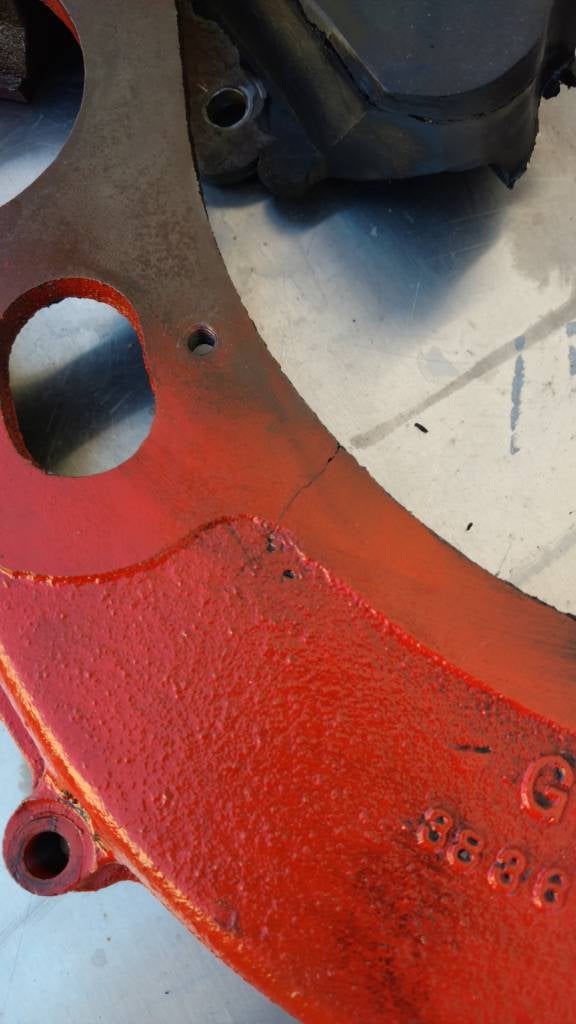
Section 2: Mechanical Root Causes of Internal Torque Converter Noise
Understanding why a converter makes noise requires a deep dive into its expert-level engineering. The torque converter is a fluid coupling that acts as a centrifugal pump. When it fails, it is usually due to the breakdown of one of four critical areas.
Torrington Bearing Degradation
Inside every quality torque converter are needle bearings, known as Torrington bearings, which separate the three main components: the pump (impeller), the turbine, and the stator. These bearings must withstand massive rotational speeds and heat. When these bearings wear down, the internal components can physically rub against each other, creating a high-pitched metallic grinding or a deep-seated drone. Once the hardening on these bearings is lost, the resulting metal-on-metal contact creates fine “glitter” that acts as an abrasive throughout the entire system.
Stator One-Way Clutch Failure
The stator is the “brain” of the converter, redirecting fluid from the turbine back to the pump to multiply torque. It sits on a one-way clutch (sprag). If this clutch fails to hold, the vehicle will suffer from extremely poor acceleration. If it fails to release, it causes a loud, roaring noise at highway speeds. I have often diagnosed metallic grinding sounds as the inner race of a failing sprag slips under the massive torque load of a heavy-duty truck engine.
Internal Dynamics By The Numbers
RPM Allowable TCC Slip
Temp Increase from Cavitation
Critical Particle Size
TCC Lining Delamination
Modern torque converters are designed to operate with a slip rate of only 20-50 RPM during lock-up. To achieve this, the TCC uses a friction disc similar to a manual clutch. If the fluid becomes oxidized or overheated, the adhesive holding the friction lining can fail, leading to delamination. Imagine a worn-out friction disc where the lining has completely detached; the bare metal piston then grinds directly against the converter cover. This produces a “groaning” or “scraping” sound whenever the Powertrain Control Module (PCM) commands lock-up, typically between 35 and 50 MPH.

Section 3: Advanced Diagnostic Techniques for Reliable Fault Verification
Before committing to an expensive replacement, you must use professional-grade diagnostic methods to verify the noise source. Guesswork has no place in a quality shop.
📋
Step-by-Step Diagnostic Guide
Connect a professional scan tool and monitor the ‘TCC Slip’ and ‘TCC Duty Cycle’ PIDs. If the noise coincides with a slip rate exceeding 50 RPM while the solenoid is at 100% duty cycle, the converter clutch is failing. You can even manually disable the TCC solenoid while driving; if the noise disappears immediately, the converter is the confirmed culprit.
Check the pan for ‘glitter.’ Metallic particulates larger than 10 microns found in the pan are a 90% indicator of internal mechanical failure rather than simple fluid wear. Expert tip: Use a magnet to see if the particles are ferrous (steel from bearings/gears) or non-ferrous (aluminum from the stator or housing).
Use an electronic stethoscope or ChassisEAR to place microphones on the bellhousing. This allows you to differentiate between a front-pump whine and a mid-case gear noise while the vehicle is on a lift or being driven.
The Stall Test: A Double-Edged Sword
A stall test involves holding the brakes and pressing the accelerator in gear to check for stator clutch slippage and noise under maximum load. Important Warning: This test generates immense heat and must be performed by an expert for no more than 5 seconds. If the RPM exceeds factory specifications without the vehicle moving, or if a loud metallic scream occurs, the stator or turbine has failed mechanically.
Section 4: Professional Solutions and Maintenance for Long-Term Quality
Once you have confirmed a torque converter failure, the path to a reliable repair requires more than just swapping the part. To ensure quality, you must address the ecosystem in which the converter operates.
Full System Flush
Never install a new converter without a full transmission flush and complete cooler line cleaning. Residual metal shavings from the old unit will act as “sandpaper” on your new components.
Synthetic ATF Upgrade
Utilizing high-quality synthetic ATF provides a consistent friction coefficient. This prevents the TCC “chatter” that often plagues standard petroleum-based fluids after a few heat cycles.
Choosing the Right Replacement
A standard remanufactured converter is often sufficient for daily drivers, but for towing or performance vehicles, a billet cover unit is a much more reliable choice. Billet covers do not flex under pressure, preventing the TCC from unevenly wearing. In one professional case study, a heavy-duty truck with a recurring whine was only fixed by upgrading to a unit with reinforced furnace-brazed fins and upgraded bearings.
Replacing a torque converter pre-emptively can save an average of $2,500 in total transmission overhaul costs. Once the converter “grenades” and sends debris into the valve body and clutch packs, a simple part swap is no longer an option.
The Role of Friction Modifiers
Products marketed as “shudder fix” or “friction modifiers” are useful for diagnosing TCC shudder. If the addition of a modifier stops the noise, you have confirmed a TCC engagement issue. However, these are temporary measures. They work by altering the fluid’s slip characteristics but cannot repair physically worn friction material or damaged bearings.
Conclusion
Mastering the nuances of torque converter noise is the difference between a simple maintenance task and a catastrophic mechanical failure. Recognizing specific auditory signatures like whining, rattling, or shuddering is the first step in expert diagnosis. Internal failures such as worn needle bearings or TCC delamination require immediate professional attention to prevent metal contamination from destroying the entire drivetrain. By utilizing trusted diagnostic tools like scan data and fluid analysis, you ensure a complete and accurate identification of the root cause. If you suspect internal transmission issues, consult a certified technician for a pressure test and fluid analysis immediately to safeguard your vehicle’s quality and longevity.
Frequently Asked Questions
Can I drive with torque converter noise?
While a vehicle may still move, driving with audible torque converter noise is highly discouraged. The noise often indicates mechanical erosion; continuing to operate the vehicle allows metallic debris to circulate through the entire transmission, potentially clogging the valve body and destroying the pump. Seeking a professional inspection immediately is the most reliable way to avoid a total transmission replacement.
Will a fluid change fix a noisy torque converter?
A fluid change can resolve noise if the issue is caused by fluid shear, oxidation, or incorrect levels. However, if the noise is metallic or rhythmic (like clicking or grinding), it indicates physical damage to bearings or fins. In these cases, fresh fluid will not provide a permanent fix, and an expert mechanical replacement of the unit is typically required.
What does a failing torque converter sound like at idle?
At idle, a failing converter typically produces a faint whining or whirring sound that may change in pitch when you shift from Park to Drive. If the needle bearings are severely worn, you may hear a light rattling sound that disappears as the engine RPM increases and the internal components stabilize under centrifugal force. Always check fluid levels first when these sounds occur.
How do I know if the noise is the pump or the converter?
Differentiating the two is a task for a professional. Generally, pump noise is constant and changes directly with engine RPM regardless of gear. Torque converter noise often changes specifically when the TCC (lock-up clutch) engages or when the vehicle is under load. A trusted technician will use a pressure gauge to see if line pressure fluctuations correlate with the noise.
What is the ‘rumble strip’ noise in a torque converter?
This is known as ‘TCC Shudder.’ It occurs when the internal lock-up clutch cannot maintain a solid grip and begins to slip and grab rapidly. This creates a vibration and noise that feels like driving over rumble strips. It is often caused by contaminated fluid or a worn clutch lining and requires high-quality diagnostic software to confirm the slip rate.

![Dodge Plastic Control Arms: Expert Review [2026]](https://truckguider.com/wp-content/uploads/2026/03/dodge-plastic-control-arms-featured.webp)
![P0463 Dodge Ram 1500: Fix & Reset Guide [2026]](https://truckguider.com/wp-content/uploads/2026/03/p0463-dodge-ram-1500-featured.webp)
![Truck Starts Then Dies [2026]](https://truckguider.com/wp-content/uploads/2026/03/featured-e853ce1b-1-768x576.webp)