
Transmission Not Engaging? Causes, Costs, and Fixes [2026]

Most cases of a transmission not engaging are caused by low fluid levels, a failed solenoid, or shift linkage issues. If your car won’t move in gear, stop driving immediately to prevent permanent internal damage to clutch packs or the torque converter.
🎯 Key Takeaways
- Check transmission fluid levels and color first for quick diagnosis.
- A burnt smell often indicates internal clutch pack failure or overheating.
- Faulty shift linkages can prevent the transmission from physically entering gear.
- Bad shift solenoids often cause delayed engagement or complete failure.
- Ignoring engagement issues leads to total transmission replacement costs.
When your car refuses to move after you shift into Drive or Reverse, you are likely facing one of three issues: a total loss of hydraulic pressure, a physical disconnect in the shifting mechanism, or a critical electronic failure. This problem ranges from a simple ten-minute fluid top-off to a complex internal mechanical failure requiring a professional rebuild. If the engine revs but the wheels don’t turn, your transmission is failing to “clutch” or engage the gears, meaning power isn’t reaching the drivetrain. Identifying whether this is a “simple fix” depends entirely on whether the fluid can still create the pressure needed to move internal components.
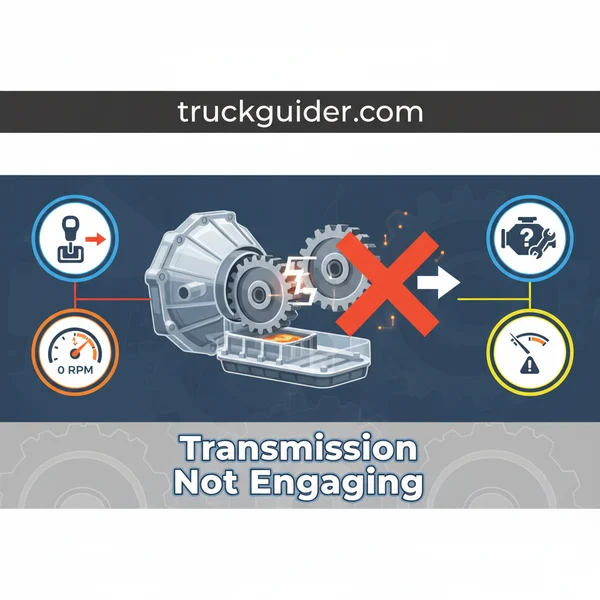
Practical diagnosis starts with the easiest variables first. Ignoring a delayed engagement or a total failure to move can lead to catastrophic heat damage within the transmission. Since the transmission relies on pressurized fluid to cool and lubricate moving parts, “forcing” it to engage by revving the engine can burn out clutch packs in seconds. You need to determine if the hardware is broken, the software is confused, or if the hydraulic “blood” of the system has simply leaked out. Understanding these triggers will save you from unnecessary towing fees and predatory repair quotes.
Common External Culprits of Engagement Failure
Before assuming your transmission is “blown,” you must check the external systems that tell the transmission what to do. Most engagement issues stem from fluid mismanagement or mechanical linkage failures that occur outside the main transmission case. These are generally the most affordable issues to repair and are often DIY-friendly for those with basic tools.

Fluid Levels, Leaks, and Contamination
Transmission fluid is the lifeblood of your vehicle’s shifting system. Unlike engine oil, which primarily lubricates, transmission fluid acts as a hydraulic fluid that physically pushes internal components into place. If the fluid level is low, the pump cannot generate enough pressure to engage the clutches or bands.
- The Dipstick Test: Check your fluid while the engine is running and the vehicle is on level ground. If the fluid doesn’t reach the “Cold” or “Hot” marks, your pump is sucking air instead of liquid.
- Fluid Color and Smell: Healthy fluid is bright red. If your fluid is dark brown or black and smells like burnt toast, the internal clutches have likely already failed due to overheating.
- The “Red Puddle” Check: Look under the vehicle for oily red spots. Common leak points include the transmission pan gasket, the cooler lines, or the output shaft seals. Even a small leak can eventually drop pressure below the engagement threshold.
Shift Linkage and Cable Issues
If you move the shifter inside the cabin but the car remains in Park or Neutral, the problem may be a broken shift cable or worn bushings. In many cases, the transmission itself is perfectly healthy, but the “message” to change gears isn’t reaching it. This is a common failure point in older vehicles where plastic bushings become brittle and snap.
You can often diagnose this by checking if the gear indicator on your dashboard matches the physical position of the shifter. If you move the lever to “Drive” but the dashboard still says “Neutral” or “Park,” the linkage is likely disconnected. Repairing a shift cable bushing typically costs under $50 in parts, making it one of the most relieved discoveries a car owner can make when their car won’t move.
Internal Mechanical and Electronic Component Breakdowns
If your fluid levels are perfect and your linkage is intact, the problem lies deeper within the transmission’s internal architecture. This usually involves the brain of the system (the TCM) or the heavy mechanical components that transfer torque from the engine to the wheels. These issues are more complex and typically require diagnostic scanners or dropping the transmission pan to inspect for metal debris.
Electronic Control and Solenoid Failure
Modern transmissions are controlled by electro-hydraulic solenoids. These act as “gates” that open and close to direct fluid flow to specific gear sets. If a shift solenoid fails or gets stuck due to debris, the fluid will never reach the clutches required to engage the gear. This often triggers a “Check Engine” light or puts the vehicle into Limp Mode, where it may only engage one specific gear (usually 3rd) to protect the hardware.
- Diagnostic Tip: Use an OBD-II scanner to look for “P” codes, specifically P0700 through P0770. These codes point directly to solenoid circuit malfunctions.
- The “Computer Reset” Myth: While disconnecting the battery might clear a code, it rarely fixes a stuck solenoid. If the engagement failure is intermittent, an electrical short in the wiring harness is a high-probability culprit.
Torque Converter and Pressure Pump Failures
The torque converter sits between the engine and the transmission. If the internal stator or turbine inside the converter fails, the engine’s rotational energy cannot be transferred to the transmission. This feels like the car is “slipping” or completely disconnected. Similarly, if the internal fluid pump (located at the front of the transmission) fails, no hydraulic pressure will be generated regardless of how much fluid is in the reservoir.
A tell-tale sign of pump failure is a whining or buzzing noise that increases in pitch with engine RPM. If the pump cannot move fluid, the transmission will never engage. Replacing a torque converter or a pump is a labor-intensive job, often costing between $800 and $1,500, as it requires separating the transmission from the engine block.
Diagnostic Indicators: Fluid Condition and Error Codes
When your transmission refuses to budge, it often leaves a trail of clues. You don’t need to be a master mechanic to interpret these signs; you just need to know where to look. Most engagement issues stem from either a hydraulic failure or an electronic miscommunication.
The “Dipstick Test”: Reading Your Fluid
The color and smell of your transmission fluid provide an immediate health report for your gearbox. Healthy fluid is typically bright pink or red and translucent. If you find that the fluid is dark brown, black, or carries a pungent “burnt toast” odor, it indicates that internal friction components (like clutch packs) are slipping and generating excessive heat. Furthermore, if you see shiny metallic flakes in the fluid, it’s a clear sign of internal hardware disintegration. In cases where the fluid looks like a strawberry milkshake, you likely have a coolant leak into the transmission system, which requires immediate professional intervention to prevent total failure.
Electronic Diagnostics and OBD-II Codes
Modern transmissions are heavily reliant on sensors. If the vehicle’s computer (PCM or TCM) detects a discrepancy between the engine speed and the output speed, it will often trigger a “Limp Mode” to protect the hardware, preventing engagement into higher gears. Using a diagnostic scanner can reveal specific error codes that point to the culprit. Common indicators include:
- P0700: A general transmission control system malfunction.
- P0750 – P0770: Specific shift solenoid circuit failures.
- P0720: Output speed sensor circuit malfunction.
- P0841: Transmission fluid pressure sensor/switch issues.
Cost Analysis and Repair vs. Replacement Considerations
The financial side of transmission repair is often the most stressful part for car owners. Costs can vary wildly depending on whether the issue is a simple external sensor or an internal mechanical disaster. Understanding these price brackets helps you make an informed decision about the future of your vehicle.
Price Brackets for Common Fixes
Minor repairs are surprisingly affordable if caught early. Replacing a transmission speed sensor or a shift solenoid typically ranges from $200 to $500 including labor. However, if the issue is deeper, like a failing torque converter, you might look at $600 to $1,200. The “big ticket” items are full rebuilds or replacements. A professional rebuild—where the transmission is taken apart and worn parts are replaced—usually costs between $2,500 and $4,500. A brand-new unit from the manufacturer can easily exceed $5,000, depending on the make and model of your vehicle.
The “Point of No Return”: When to Swap the Car
Deciding whether to fix or fold requires a bit of math. Use the 50% Rule: if the cost of the transmission repair exceeds 50% of the vehicle’s total market value, it is often more economical to trade the vehicle in or sell it for parts. Consider these factors before signing a repair order:
- Vehicle Age: Is the rest of the car reliable enough to last another 50,000 miles?
- Warranty Options: Does the repair come with a multi-year nationwide warranty?
- Future Needs: Will this vehicle still fit your lifestyle in two years?
Conclusion
A transmission that won’t engage is a major inconvenience, but it doesn’t always signal the end of your car’s life. From simple fluid top-offs and sensor replacements to more complex internal rebuilds, identifying the root cause early is the key to minimizing costs. Remember that transmission issues are progressive; ignoring a slight delay today can lead to a total breakdown tomorrow. If your vehicle is struggling to find its gears, start by checking your fluid levels and scanning for error codes to narrow down the problem.
Next Steps: Check your owner’s manual for the correct fluid type and schedule a diagnostic appointment with a trusted local transmission specialist. Taking action now could save you thousands in the long run. Don’t wait until you’re stranded—get your transmission inspected today!
❓ Frequently Asked Questions
Why won’t my car move when I put it in Drive or Reverse?
This is typically due to a severe loss of hydraulic pressure, often caused by extremely low fluid, a broken pump, or a disconnected shift cable. If the engine revs but the car stays still, the power isn’t reaching the wheels through the torque converter or clutches.
How do I know if the problem is the shift linkage or the transmission itself?
If the gear selector feels loose or doesn’t ‘click’ into place, the linkage or cable is likely the culprit. If the shifter moves correctly through the gates but the vehicle fails to respond, the issue is internal or fluid-related.
Can a bad car battery cause transmission engagement issues?
Modern electronic transmissions rely on sensors and solenoids that require steady voltage. A weak battery or failing alternator can cause the Transmission Control Module (TCM) to malfunction, leading to engagement failure or limp mode.
What are the signs of a failing torque converter?
Common signs include slipping, shuddering during acceleration, or the car stalling immediately when put into gear. If the converter’s internal fins or bearings fail, it cannot transfer power from the engine to the transmission gears.
Is it worth repairing an older transmission that won’t engage?
It depends on the diagnosis; a solenoid or sensor replacement is cost-effective, but a full rebuild on a high-mileage vehicle often exceeds the car’s value. Always compare the repair estimate against the cost of a remanufactured unit.
What role does the Transmission Control Module (TCM) play?
The TCM is the computer that tells the transmission when to shift and engage based on engine data. If it fails or loses communication with the ECU, the transmission may refuse to engage gears entirely to protect itself from damage.
![Fix P0138 Code Dodge Ram 1500: Causes & Fixes [2026]](https://truckguider.com/wp-content/uploads/2026/03/p0138-dodge-ram-1500-featured.webp)
![Signs Of A Clogged Heater Core [2026]](https://truckguider.com/wp-content/uploads/2026/03/featured-476319fd-768x512.webp)
![Ram 1500 Steering Wheel Cover Size: Specs & Fitment Guide [2026]](https://truckguider.com/wp-content/uploads/2026/03/ram-1500-steering-wheel-cover-size-featured-1.webp)
![U1110 Code Dodge: Meaning, Causes, and Expert Diagnostics [2026]](https://truckguider.com/wp-content/uploads/2026/03/u1110-code-dodge-featured-768x403.webp)
![RAM Big Horn vs. Laramie: Which Trim Level is Worth It? [2026]](https://truckguider.com/wp-content/uploads/2026/03/ram-big-horn-vs-laramie-featured.webp)
![P0740 Dodge Caravan: Complete Repair Guide [2026]](https://truckguider.com/wp-content/uploads/2026/03/featured-8988a183-768x768.webp)