What Is The Most Reliable Diesel Truck in 2026 Best Guide

Finding what is the most reliable diesel truck requires looking past marketing hype to examine decades of real-world engine performance and transmission durability. The consensus points to specific older generations—like the 5.9L Cummins and 6.6L LBZ Duramax—that reliably surpass 300,000 miles without catastrophic failures.
When you look across the heavy-duty market in 2026, the crown for the most reliable diesel truck consistently goes to specific historical pairings rather than brand-new factory releases. The absolute gold standard for long-term durability is the 2006-2007 Dodge Ram 2500/3500 equipped with the 5.9L Cummins engine and the G56 manual or heavily built 48RE automatic transmission. If you need a more modern machine with modern towing capabilities and lower emissions headaches, the 2015-2016 Ford F-250/F-350 with the 6.7L Power Stroke stands out as a heavily refined workhorse capable of pushing past 400,000 miles with basic maintenance.

Prime for Young Adults — 6 Months Free
Students and 18–24s get six months of Prime free, then half price.
Start 6 Months FreeChoosing the right diesel truck isn’t just about brand loyalty; it is about avoiding costly component failures that can easily cost upwards of $10,000 in repairs. Whether you are hauling heavy equipment for work or towing a fifth-wheel camper across the country, knowing which engine and transmission combinations hold their value and reliability over decades will save you thousands of dollars and countless headaches.
Key Takeaways
- The 2006-2007 LBZ Duramax is widely considered the most reliable modern diesel engine.
- Pre-2007 Dodge trucks with the 5.9L 12-valve or 24-valve Cummins offer legendary block durability.
- Modern emissions equipment (DPF, DEF) heavily impacts post-2007 diesel truck reliability.
- Maintenance history matters more than mileage when buying a used heavy-duty truck.
- Avoid heavily modified trucks that strain the transmission and turbo components.
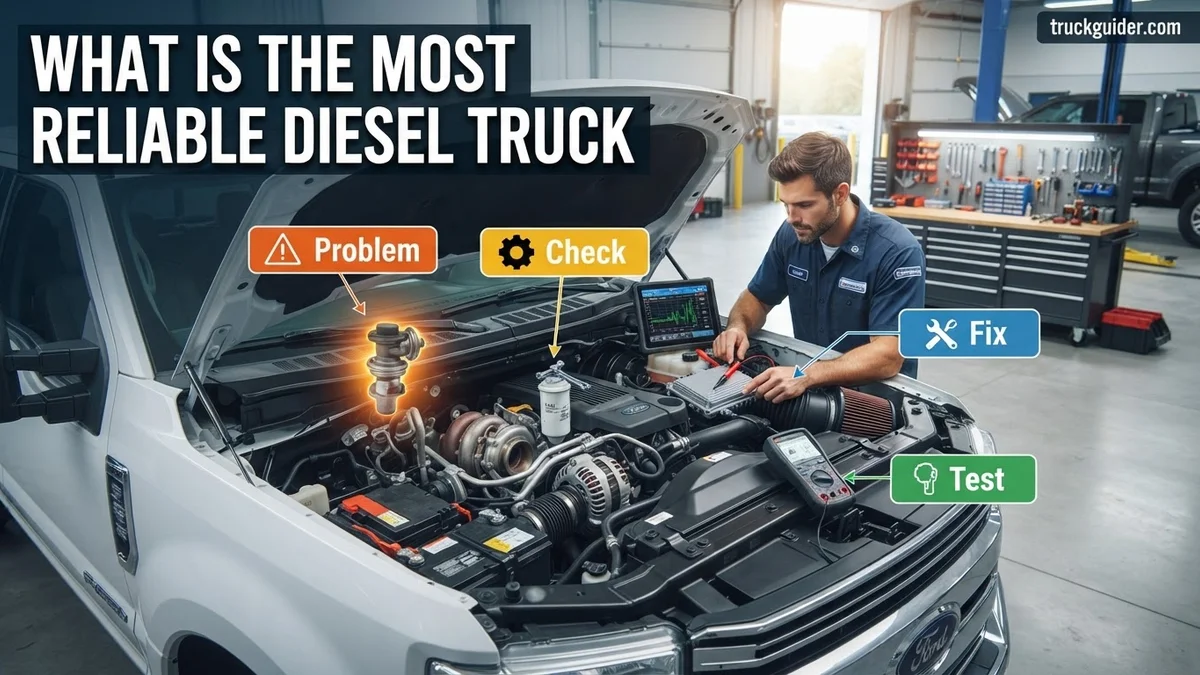
What Causes Reliability Issues in Modern Diesel Trucks
Recommended Best Deal Products


The Impact of Modern Emissions Systems
Modern diesel trucks are caught in a tug-of-war between strict environmental regulations and raw mechanical longevity. The single largest source of roadside failures and expensive repairs in trucks built after 2007 involves the emissions equipment. Systems like the Exhaust Gas Recirculation (EGR), Diesel Particulate Filter (DPF), and Selective Catalytic Reduction (SCR) frequently choke engines with soot, leading to catastrophic turbocharger failures and clogged intake manifolds.

- EGR Coolers: Prone to internal cracking, which leaks coolant directly into the engine cylinders and destroys the motor.
- DPF Restrictions: Short city commutes prevent active regeneration, leading to completely blocked filters and forced limp modes.
- DEF Pumps: Sensitive fluid heaters and crystal buildup often trigger check-engine lights and throttle restrictions.
Fuel Injection and Block Vulnerabilities
Beyond emissions equipment, the fuel delivery system dictates whether your truck stays on the road or sits in a mechanic’s bay. High-pressure common-rail injection systems require ultra-clean fuel to survive. If a high-pressure fuel pump (HPFP) fails—particularly in certain pre-2020 variants—it sends microscopic metal shavings through the entire fuel system, destroying injectors and rails instantly.
- Tolerances: Modern injectors operate under pressures exceeding 30,000 psi, leaving zero margin for water or contamination in the diesel fuel.
- Casting Flaws: Certain engine generations suffered from weak block designs, dropped valve seats, or head gasket failures when subjected to high towing loads without proper cooling upgrades.
Step-by-Step Guide to Evaluating and Buying a Reliable Used Diesel
Inspect the Engine Hours and Idle Time
When evaluating a used diesel truck on the lot in 2026, mileage alone tells you very little about the true wear and tear on the drivetrain. You must check the engine operating hours through the digital dash or an OBD2 scanner. High idle times from fleet use or oilfield work cause excessive cylinder wash, carbon buildup on the valves, and premature turbo wear, even if the odometer reads a relatively low number. If you are looking at a Ram 1500, see our Ram EcoDiesel reliability by year guide.
- Calculate the Average Speed: Divide total miles by total engine hours. An average below 30 mph indicates heavy idling.
- Blow-by Test: Remove the oil fill cap while the engine is warm and running to check for excessive crankcase pressure, which signals worn piston rings.
Verify Maintenance Records and Fluid Quality
Diesel engines live and die by their maintenance intervals, making a documented service history your best indicator of future reliability. You need to verify that fuel filters were changed every 15,000 miles and that the coolant was tested regularly for chemical breakdown to prevent cavitation in wet-sleeve engine blocks. Always inspect the transmission fluid color and smell it for any burnt odor, as heavy towing fries automatic gearboxes long before the engine gives out.
- Fuel Filter Condition: Look inside the fuel filter housing for signs of dark contamination, algae, or metal flakes.
- Coolant Maintenance: Check for proper additive levels (SCA) to avoid cylinder liner pitting in older heavy-duty blocks.
How to Fix Common Failures in High-Mileage Diesel Engines
Recommended Best Deal Products


Even the most reliable diesel trucks reaching the 250,000-mile mark in 2026 will encounter component wear, particularly within the fuel and emissions systems. Addressing these failures proactively prevents catastrophic engine damage and maintains long-term durability.

Addressing Fuel System Wear
Modern high-pressure common rail fuel systems are susceptible to contamination and pump degradation. Preventive intervention protects expensive injectors from metal debris.
- Inspect the fuel lift pump pressure to ensure it consistently delivers between 8 and 10 PSI.
- Replace the primary and secondary fuel filters every 15,000 miles to trap microscopic particulate matter.
- Upgrade to a secondary bypass filtration kit if operating in high-dust environments to extend injector lifespan by up to 50 percent.
Mitigating Emissions System Clogging
Diesel particulate filters and exhaust gas recirculation valves frequently clog during sustained low-speed city driving. Restoring proper exhaust flow brings back factory power and fuel economy.
- Perform an active highway regeneration cycle by driving at speeds above 50 miles per hour for at least 30 continuous minutes.
- Remove and chemically clean the exhaust gas recirculation valve using an approved carbon-dissolving solvent every 50,000 miles.
- Monitor differential pressure sensor readings across the diesel particulate filter to catch blockages before permanent substrate cracking occurs.
What If It Still Doesn’t Work?
If routine maintenance, filter replacements, and sensor cleanings fail to restore engine reliability, underlying mechanical wear or severe electronic faults require advanced intervention. Heavy-duty diesel troubleshooting demands specialized diagnostic equipment.

Audible — Listen Free for 30 Days
One free credit a month and thousands of titles included.
Listen Free for 30 Days- Perform a professional relative compression test using a factory-level scan tool to identify internal mechanical engine wear or failing piston rings.
- Check injector return rates using a graduated cylinder kit to pinpoint leaking fuel injectors bypassing excessive fuel internally.
- Consult a certified medium-duty diesel technician for comprehensive wiring harness resistance testing when intermittent electrical faults persist.
- Prepare for professional machine shop intervention or component rebuilding, with estimated repair costs ranging from $2,500 to $8,500 depending on whether the fuel system or turbocharger requires complete replacement.
Conclusion
Recommended Best Deal Products


Identifying the most reliable diesel truck requires balancing proven powertrain longevity, such as the 5.9L and 6.7L Cummins configurations, with rigorous preventive maintenance schedules. When persistent performance issues or high-mileage failures arise, methodical diagnostics and timely component replacements protect your investment. According to verified research and expert fleet management sources, consistent fluid analysis and adherence to severe-service maintenance intervals remain the absolute best predictors of long-term diesel durability. Take the next step by scheduling a professional coolant and oil analysis to evaluate the internal health of your engine today.
❓ Frequently Asked Questions
What makes the 5.9L Cummins so reliable?
The 5.9L Cummins features a cast-iron block, gear-driven accessories, and fewer moving parts than competing V8 engines, resulting in unmatched longevity.
Why do people avoid certain Ford Powerstroke years?
The 6.0L and 6.4L Powerstroke engines suffered from severe factory design flaws including head gasket failures, weak studs, and EGR cooler issues.
How does emissions equipment affect diesel reliability?
Diesel Particulate Filters (DPF) and Exhaust Gas Recirculation (EGR) systems trap soot, which can clog components and cause frequent limp-mode issues on modern trucks.
Is the Allison transmission really that good?
Yes, earlier Allison transmissions paired with Duramax engines handle high torque exceptionally well, though heavy towing still requires fluid maintenance.
What should I look for when inspecting a used diesel truck?
Check for blow-by in the crankcase, inspect service records, look for frame rust, and verify that the transmission shifts smoothly under load.
Should I buy a deleted diesel truck?
While removing emissions equipment improves reliability and fuel economy, legality varies by region, and emissions compliance is mandatory in many areas.
![Flowmaster vs. Magnaflow: Sound & Performance Comparison [2026]](https://truckguider.com/wp-content/uploads/2026/03/flowmaster-vs-magnaflow-featured.webp)
![Head Gasket Leak Oil Color: Diagnosis & Repair [2026]](https://truckguider.com/wp-content/uploads/2026/03/head-gasket-leak-oil-color-featured.webp)