
Why Are Fog Lights Yellow? The Science of Better Visibility [2026]

Yellow fog lights are used because they significantly reduce backscatter and glare by filtering out short-wavelength blue light. This specific color enhances visual contrast and depth perception, allowing drivers to see road details more clearly during heavy fog, rain, or snow.
🎯 Key Takeaways
Recommended Best Deal Products


- Yellow light has longer wavelengths that minimize glare against water droplets.
- Filtering out blue light prevents the ‘white-out’ effect caused by backscatter.
- Selective yellow light improves the eye’s ability to perceive contrast.
- Yellow light is processed more efficiently by the human eye in low-visibility.
- Color temperature around 3000K is ideal for effective fog illumination.
Yellow fog lights aren’t just a stylistic choice; they are a functional tool designed to exploit the physics of light. Traditional white headlights contain a mix of all visible colors, including high-energy blue and violet wavelengths. In thick fog, these shorter wavelengths collide with water droplets and scatter in every direction, creating a blinding “wall of white.” Yellow light occupies a longer wavelength on the visible spectrum, which allows it to pass through atmospheric moisture more cleanly while providing higher contrast against the road.

Prime for Young Adults — 6 Months Free
Students and 18–24s get six months of Prime free, then half price.
Start 6 Months Free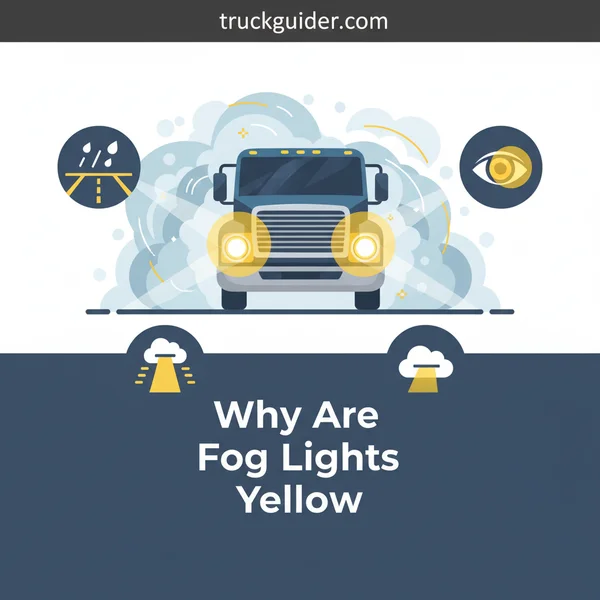
Understanding the science behind this choice is critical for any driver who prioritizes safety in low-visibility conditions. By filtering out the blue light that causes excessive glare, yellow fog lights—specifically those in the “selective yellow” range—reduce the visual noise your brain has to process. This allows you to see the actual texture of the road and the lines of the pavement when standard high-beams would leave you driving blind. This isn’t just a preference; it is a solution rooted in optical physics.
The Physics of Light Scattering: Rayleigh and Mie Theory
To understand why yellow is superior in the soup of a heavy mist, we have to look at how light interacts with particles. Light travels in waves, and the length of those waves determines how easily they are deflected by obstacles like water droplets or dust. When light hits an object smaller than its wavelength, it scatters. In a driving environment, this becomes a battle between the light you want on the road and the light that bounces off the atmosphere.

Rayleigh Scattering: The Short-Wave Struggle
Rayleigh scattering explains why the sky is blue and why blue headlights are terrible in the fog. Shorter wavelengths (blue and violet) hit gas molecules in the atmosphere and scatter much more easily than longer wavelengths like red and yellow. When you use standard white LED or modern HID headlights in fog, the significant blue light component hits the tiny water droplets and scatters immediately. This creates a hazy “bloom” that masks the road ahead rather than illuminating it.
- Blue/Violet Wavelengths: ~400-490 nanometers. These scatter the most, creating visual “noise.”
- Yellow Wavelengths: ~570-590 nanometers. These longer waves are less affected by tiny atmospheric particles.
- Red Wavelengths: ~620-750 nanometers. While red scatters the least, it is reserved for the rear of the vehicle to prevent driver confusion.
Mie Scattering and Fog Density
While Rayleigh scattering applies to very small particles, Mie scattering occurs when the water droplets in fog are roughly the same size as the wavelength of the light. Because fog droplets are relatively large compared to air molecules, they scatter all visible wavelengths to some degree. However, because yellow light has a lower frequency and longer wavelength, it is less prone to the chaotic “refraction-reflection” cycle. This allows the beam to maintain its shape for a greater distance through the mist, providing you with a clearer view of the road surface.
Combating Backscatter: Why White Light Causes ‘White-Out’
Recommended Best Deal Products

![ASPL [Upgraded 5] 48LED Roof Top Strobe Lights, High Visibility Emergency Safety…](https://m.media-amazon.com/images/I/51Z5sWt3AIL._SS500_.jpg)

The most dangerous element of driving in fog isn’t just the lack of light; it is the phenomenon known as backscatter. This occurs when the light you emit from your vehicle hits the fog and reflects directly back into your eyes. This is the primary reason you are told never to use your high beams in a thick mist. The more “blue” or “cool white” the light is, the more intense this backscatter becomes.
The Tyndall Effect and Visual Noise
When white light enters a colloid like fog, the shorter blue waves are redirected toward the driver’s seat. This is a manifestation of the Tyndall effect. Your eyes naturally gravitate toward the brightest source of light. When your own headlights are reflecting off the fog just two feet in front of your bumper, your pupils naturally constrict to protect your vision. This physiological reaction reduces your “night vision” and makes it even harder to see the dark road surface beyond the immediate glare. Yellow light, by contrast, does not trigger this constriction as aggressively.
The Physiological Benefit of Selective Yellow
By using “selective yellow” light—a specific standard that removes the blue end of the spectrum—you are essentially filtering out the most “scatter-prone” parts of the light before they ever leave the housing. This leads to several practical benefits for your drive:
- Reduced Eye Strain: Your brain doesn’t have to work as hard to “ignore” the white glare reflecting back at you.
- Increased Definition: Yellow light provides better contrast, allowing you to distinguish between a flat road and a pothole.
- Faster Reaction Times: By reducing the “white wall” effect, you can see obstacles several seconds earlier than you would with white light.
The human eye is most sensitive to the green and yellow parts of the spectrum. By focusing the light output in the 580-nanometer range, you maximize the amount of usable visual information your brain receives. You aren’t just seeing “yellow”; you are seeing the road without the distracting, high-frequency feedback that characterizes standard white lighting in poor weather.
Visual Perception: How the Human Eye Processes Yellow Light
Beyond the physics of light waves, the way our biology interacts with color plays a massive role in why yellow fog lights remain the gold standard. Our eyes aren’t equally sensitive to all colors in the spectrum. Evolution has fine-tuned human vision to be most responsive to the middle frequencies—specifically the yellow and green wavelengths.

Audible — Listen Free for 30 Days
One free credit a month and thousands of titles included.
Listen Free for 30 DaysReducing Eye Strain and Fatigue
When you drive through heavy mist or a blizzard using high-intensity white lights, your eyes are bombarded with “short-wave” blue light. This specific part of the spectrum is notoriously difficult for the human eye to process cleanly. It tends to scatter within the eyeball itself, a phenomenon known as intraocular scatter, which creates a hazy “glare” effect. Using yellow light significantly reduces this biological stress.
- Better Contrast: Yellow light helps define the edges of objects, such as road markings and debris, more clearly than white light.
- Reduced Glare: By filtering out the blue end of the spectrum, yellow lights prevent that blinding “wall of white” that often leads to driver headaches.
- Faster Reaction Times: Because the eye processes yellow light more comfortably, the brain can identify hazards a split second faster.
The Sensitivity of Human Vision
In low-light conditions, our eyes shift their sensitivity. However, pure white light—which contains a high concentration of blue—can trick the pupils into constricting, actually reducing your ability to see into the darker areas surrounding the beam. Selective yellow light provides enough illumination to see the road without triggering this “constriction reflex,” keeping your peripheral vision more active and alert to movement on the shoulder of the road.
Selective Yellow vs. Modern White LEDs: A Performance Comparison
In recent years, the automotive industry has shifted toward cool-white LEDs (typically 5000K to 6000K) for everything from headlights to fog lamps. While these look sleek and modern, they often fail the “fog test” when compared to traditional selective yellow bulbs. Understanding the difference between aesthetic appeal and functional performance is vital for safe winter and night driving.
The “White Out” Effect of High-K LEDs
The primary issue with modern white LEDs in fog is their color temperature. High-Kelvin (K) lights appear “crisp” because they mimic daylight, but they contain significant amounts of blue light. As we’ve learned, blue light reflects off water droplets more aggressively. This results in the “white out” effect, where the light bounces off the fog and back into your eyes rather than cutting through it to the pavement.
- 3000K (Selective Yellow): Deeply penetrates moisture, minimizes backscatter, and provides maximum contrast.
- 6000K (Cool White): Looks brighter to the casual observer but creates a “blinding curtain” in heavy precipitation.
- Lumens vs. Usable Light: A white LED might have a higher lumen count, but if that light is reflecting back at you, it is less “usable” than a lower-lumen yellow light.
Choosing the Right Bulb for Your Driving Conditions
If you live in an area prone to coastal mist, heavy snow, or dense morning fog, function must come before fashion. Many enthusiasts now opt for “switchback” LEDs or yellow film overlays. A practical tip is to look for bulbs specifically labeled as 3000K. These provide the classic selective yellow hue while utilizing modern LED efficiency. If your vehicle came with factory white fog lights, replacing the bulbs with high-quality yellow versions can offer a dramatic improvement in your confidence behind the wheel during a storm.
Conclusion
The science behind yellow fog lights is a perfect intersection of physics and human biology. By utilizing longer wavelengths that resist scattering and aligning with the natural sensitivity of the human eye, yellow lights provide a level of clarity that modern white lights simply cannot match in poor weather. Whether it is reducing eye fatigue or cutting through a thick “wall” of mist, the benefits of selective yellow are backed by decades of optical research.
If you are looking to improve your foul-weather visibility, consider auditing your current lighting setup. Check your local regulations regarding fog light colors, and if permitted, look into upgrading to a 3000K bulb for your next drive. Stay safe, stay visible, and give your eyes the advantage they need when the clouds roll in!
💬 Quick Questions & Answers
Why is yellow light better than white in fog?
Yellow light filters out short-wavelength blue light, which is the primary cause of glare and reflection off fog droplets.
Audible Premium Plus — Annual Membership
12 audiobook credits up front, plus the full Audible catalogue.
See Annual PlansDo yellow fog lights actually ‘cut’ through fog?
No light physically cuts through fog, but yellow light reflects less back into the driver’s eyes, making it easier to see the road.
Is it legal to use yellow fog lights?
Yes, ‘selective yellow’ is a legally recognized color for fog lamps in most countries and jurisdictions.
Can I use high beams instead of fog lights?
No, high beams reflect directly off the fog and create a blinding white wall, severely reducing visibility.
What is the best color temperature for fog lights?
A color temperature of approximately 3000K provides the ideal yellow hue for maximizing visibility in poor weather.
❓ Frequently Asked Questions
What exactly is ‘selective yellow’ and why does it matter?
Selective yellow is a specific light color that removes the blue and violet end of the visible spectrum. This matters because blue light is easily scattered by moisture, causing the hazy glare that obscures a driver’s vision.
How does yellow light help with depth perception in the rain?
By eliminating the blue light that causes ‘noise’ in our vision, yellow light helps the eye define the edges of objects and road markings. This increased contrast allows for better spatial awareness and quicker reaction times.
Is there a scientific difference between Rayleigh and Mie scattering in fog?
While many attribute fog visibility to Rayleigh scattering, fog droplets are actually large enough to cause Mie scattering. In this context, yellow light’s advantage is more about human physiology and how our eyes process contrast rather than the physical size of the droplets.
Why do many modern cars come with white fog lights instead of yellow?
Modern manufacturers often use white LEDs for fog lights to maintain a cohesive aesthetic with the main headlights. While they look modern, they are often less effective in heavy fog than dedicated selective yellow lamps.
Does the intensity of the bulb matter more than the color?
Both are important, but high intensity in a white bulb can actually make visibility worse by increasing the amount of light reflected back at you. A lower-intensity yellow light often provides superior clarity over a high-intensity white light.
Are yellow fog lights effective in snow as well as fog?
Yes, yellow lights are highly effective in snow because they reduce the blinding reflection off white snowflakes, allowing the driver to see the texture and path of the road more clearly.


![Head Gasket Leak Oil Color: Diagnosis & Repair [2026]](https://truckguider.com/wp-content/uploads/2026/03/head-gasket-leak-oil-color-featured.webp)
![Best Oil Additive for Lifters: Complete Fix Guide [2026]](https://truckguider.com/wp-content/uploads/2026/03/oil-additive-for-lifters-featured.webp)