2001 Dodge Ram 1500 Interior: Restoration & Upgrade Guide [2026]

The 2001 Dodge Ram 1500 interior is famous for its notoriously fragile dashboard, but remains a favorite for restoration enthusiasts. Modernizing the cabin with LED lighting, aftermarket head units, and premium seat covers can significantly improve the driving experience and value of this classic 2nd Gen truck.
🎯 Key Takeaways
- Replace cracked dashboards with molded plastic covers or full replacements for a clean look.
- Upgrade the stock 1.5 DIN radio to a Double-DIN using a specific dash bezel.
- Identify your trim level (ST, SLT, Laramie) to ensure correct part compatibility.
- Use UV protectants on door panels to prevent further plastic brittleness and fading.
- LED bulb swaps for the instrument cluster provide a much-needed modern visibility boost.
Restoring a 2001 Dodge Ram 1500 interior usually starts with a single, frustrating realization: the plastics used in these trucks were never designed to survive two decades of UV exposure. Whether you are dealing with a dashboard that looks like a jigsaw puzzle or door panels that crack when you pull the handle, the “Second Gen” Ram (1994–2001) has specific material failures that require more than just a quick cleaning. You are likely here because you want to stop the rattling, hide the cracks, or finally modernize a cabin that feels stuck in the late nineties.
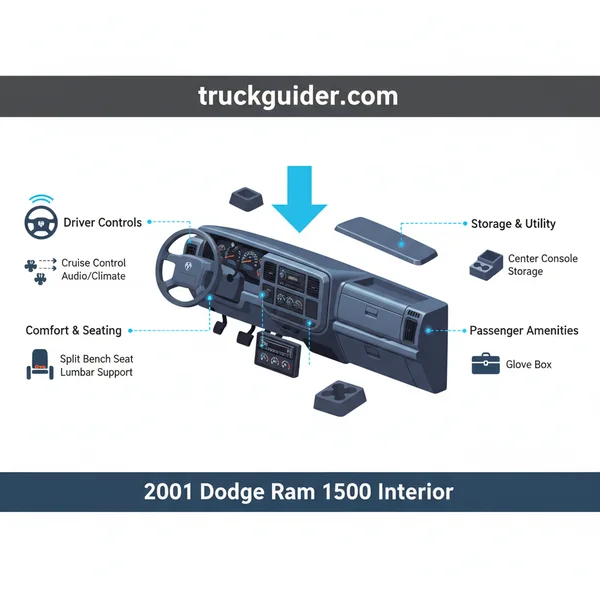
This guide skips the generic advice and focuses directly on the structural and aesthetic issues unique to the 2001 model year. By understanding exactly where these components fail and how the different trim levels like the ST, SLT, and Laramie were configured, you can make informed decisions about whether to buy OEM replacement parts, install aftermarket caps, or go for a full custom upholstery overhaul. Saving your interior isn’t just about looks; it’s about preserving the value of one of the most iconic truck designs in American history.
Identifying Common Defect Areas and Material Failures
The Infamous “Shattered” Dashboard
The number one issue with the 2001 Ram 1500 interior is the dashboard. Dodge used a high-sulfur plastic during this era that becomes incredibly brittle when exposed to heat and sunlight. It doesn’t just crack; it eventually disintegrates into sharp, jagged pieces. You will typically notice the failure starting at the defrost vents near the windshield before it spreads toward the passenger side airbag. There are three distinct levels of failure you need to identify before starting your restoration:
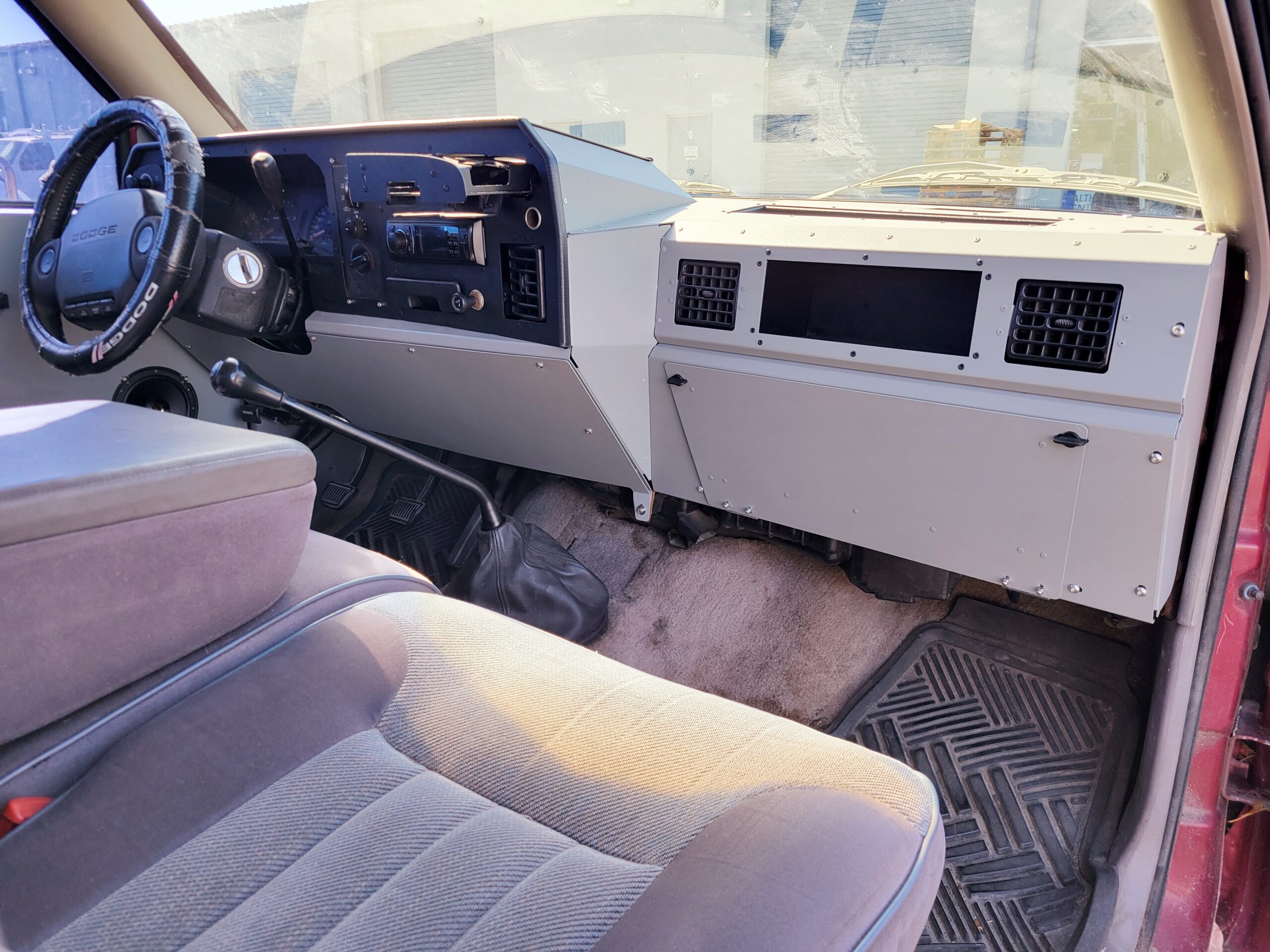
- Hairline Cracking: Small, spider-web cracks that are still structurally sound but look unsightly. These are best handled with a molded plastic dash cover (a “cap”) that glues directly over the old surface.
- Structural Failure: Large chunks of plastic missing, often exposing the yellow foam or metal supports underneath. At this stage, a simple dash mat won’t work because there is nothing for it to rest on.
- Bezel Snap: The instrument cluster bezel (the trim surrounding the radio and gauges) often snaps at the thin points around the steering column. These are held in by metal spring clips that often rip out of the brittle plastic tabs.
Brittle Door Panels and Switch Bezels
The door panels in your 2001 Ram are notorious for “chalking”—a process where the plastic loses its oils and turns a grayish, dusty color that cannot be washed away. Beyond aesthetics, the mechanical mounting points are the primary failure zone. If your door panel feels loose or rattles, the plastic “Christmas tree” clips have likely pulled through the recycled fiberboard or plastic backing. Additionally, the power window and lock switch bezels are high-traffic areas; the plastic clips underneath these bezels often snap, leaving the switches hanging loosely in the door. When restoring these, you must be extremely careful when prying, as the age of the plastic makes it prone to snapping with even the slightest pressure.
From Start to Finish: The 2001 Dodge Ram 1500 Interior Restoration Explained
The 2001 Dodge Ram 1500 is a legendary workhorse, but its interior is notorious for two things: incredible utility and a dashboard that eventually disintegrates into a jigsaw puzzle. Whether you are looking to increase the resale value of your Second Gen Ram or you simply want to enjoy a cab that doesn’t smell like twenty years of dust, this guide covers everything from deep cleaning to the structural repairs necessary for a factory-fresh feel. Following these steps ensures you don’t break fragile, aged plastic tabs while addressing the most common failure points in these specific models.
Step 1: Complete Cabin Deconstruction and Deep Cleaning
What you need: High-powered shop vacuum with crevice tool, compressed air, All-Purpose Cleaner (APC), microfiber towels, and a stiff-bristle detailing brush.
Instructions: Start by removing all loose items, floor mats, and trash. Use compressed air to blow out the dust trapped in the accordion-style vents and the deep crevices of the center console. Once the loose dust is airborne and settled, vacuum the entire cabin, including the under-seat areas and the rear storage compartment (in Quad Cabs). Apply your APC to a microfiber towel rather than spraying directly onto the electronics. Scrub the textured plastic of the door panels and the dashboard vigorously with your detailing brush to lift years of embedded oils and skin cells. This stage is crucial because it reveals the true condition of the materials beneath the grime, allowing you to see which parts need repair versus just a good cleaning.
Pro Tip: Use a dedicated “Boar’s Hair” brush for the vents. The plastic in the 2001 model is brittle, and using too much force with a plastic-bristled brush can snap the directional fins.
Step 2: Addressing the “Dreaded” Cracked Dashboard
What you need: Replacement dash cap or full dash overlay, silicone adhesive, sandpaper (80-grit), and weighted sandbags or clamps.
Instructions: The 2001 Ram dashboard is infamous for cracking due to UV exposure. If your dash is missing chunks, you must first vacuum out any loose plastic shards so they don’t rattle later. Sand down any high ridges around the cracks using 80-grit sandpaper to ensure a flush fit for the overlay. Test-fit your new dash cap or overlay before applying any glue. Once satisfied, apply a generous bead of the provided silicone adhesive along the perimeter and around the defrost vents of the underside of the cap. Lay the cap over the original dash, pressing firmly. Use weighted sandbags to hold the cap in place for at least 4 to 6 hours while the adhesive cures. This provides a structural “shell” that looks factory-original without the $1,000 cost of a full dash assembly replacement.
Pro Tip: If you are replacing the instrument cluster bezel at the same time, do it while the dash cap is being fitted to ensure the seams line up perfectly before the glue dries.
Step 3: Removing and Refreshing the Bench or Bucket Seats
What you need: 13mm and 15mm sockets, a ratchet with extension, upholstery cleaner, and a steam cleaner (optional but recommended).
Instructions: To truly clean the interior, the seats must come out. Disconnect the negative battery terminal if you have power seats to avoid any electrical shorts. Locate the four main bolts at the base of the seat tracks; these are often rusted, so a shot of penetrating oil may be necessary. Once the bolts are out, carefully tilt the seat back to disconnect the wiring harnesses for the seatbelt sensors or power motors. Lift the seats out of the cab—be careful, as the 40/20/40 bench seats are quite heavy. With the seats out, use a steam cleaner or an upholstery extractor on the fabric. The 2001 fabric is a heavy-duty knit that holds a lot of deep-seated odors. Focus on the driver’s side bolster, which typically sees the most wear and sweat accumulation.
Pro Tip: While the seats are out, inspect the seat frame for cracks. The driver-side frame on these trucks is known to crack near the rear left bolt hole, causing a “leaning” sensation while driving.
Step 4: Restoring the Headliner and Sun Visors
What you need: High-temp spray adhesive, replacement headliner fabric (roughly 3 yards), a wire brush, and a Phillips head screwdriver.
Instructions: Sagging headliners are common in older Rams. Remove the sun visors, dome light, and the plastic “A” and “B” pillar trim pieces. Carefully slide the headliner board out through the passenger door. Peel off the old fabric and use a wire brush to scrape away the orange, crumbling foam residue until you are down to the bare fiberglass board. This is the most important part; if any old foam remains, the new glue won’t stick. Spray both the board and the back of your new fabric with high-temp adhesive. Wait about 3-5 minutes until it becomes “tacky,” then carefully lay the fabric from the center outward, smoothing out wrinkles with your hands. Trim the excess, cut holes for the lights and visors, and reinstall. This immediately removes that “old truck” smell and brightens the cab significantly.
Pro Tip: Always use “High-Temp” specific adhesive. Standard craft spray glue will fail the first time your truck sits in the sun, causing the fabric to fall again within weeks.
Step 5: Door Panel and Window Switch Maintenance
What you need: Plastic pry tools, electronics cleaner, and replacement door clips.
Instructions: The door panels on the 2001 Ram are held by a few screws (behind the handle and in the pull pocket) and several plastic Christmas tree clips. Use a pry tool to pop the panel off. Once removed, disconnect the window and lock switches. These switches often become “gummy” or unresponsive. Spray them liberally with specialized electronics cleaner and toggle them back and forth to clear out oxidation. If your door speakers are original, they are likely dry-rotted; this is the perfect time to swap them for 6×9 replacements. Before reinstalling the panel, replace any broken plastic clips with new ones. This prevents the annoying “door rattle” that many Second Gen Rams suffer from when driving over bumps or playing music.
Pro Tip: Apply a small strip of thin foam weatherstripping along the bottom edge of the door panel before reinstalling. This creates a gasket that stops plastic-on-metal vibration.
Step 6: Carpet Rejuvenation or Replacement
What you need: Pressure washer (if removing carpet), carpet dye (optional), and a heavy-duty degreaser.
Instructions: With the seats already removed from Step 3, you have full access to the floor. If the carpet is simply dirty, use a heavy-duty degreaser and a pressure washer (out of the vehicle) to blast away decades of dirt. Hang the carpet to dry for at least 24 hours. If the carpet is stained or faded, you can use a specialized automotive carpet dye spray to bring back the original Agate or Mist Gray color. If the carpet is torn or smells of mildew from a leaking third brake light (a common 2001 issue), it is best to buy a pre-molded replacement. Lay the new carpet in the sun for an hour to make it pliable before installation. Ensure the jute padding underneath is dry; if it’s wet, your truck will rust from the inside out.
Pro Tip: Check the “cab corners” for rust from the inside while the carpet is out. Catching small surface rust now with a bit of POR-15 paint will save the body of your truck later.
✅ Final Checklist
- Verify all seat bolts are torqued to 30-45 ft-lbs and wiring harnesses are reconnected.
- Test all window switches, door locks, and mirror controls for smooth operation.
- Check that the dashboard overlay does not interfere with the glove box or airbag deployment seams.
- Ensure the dome light and sun visors are securely fastened and the headliner fabric is taut.
- Confirm that no “extra” screws remain; every screw in a Dodge interior has a specific purpose for structural rigidity.
Important Notes:
- Safety Warning: When working around the dashboard, be extremely careful with the passenger side airbag. Never probe airbag connectors with a multimeter.
- When to Seek Help: If you find significant electrical “rat’s nests” under the dash from previous owners’ alarm systems, consult an automotive electrician.
- Estimated Time: A full interior refresh typically takes 10-15 hours over a weekend.
- Cost Range: $150 (cleaning/supplies) to $600+ (new dash cap, carpet, and headliner).
Comparison of 2001 Trim Packages and Cab Configurations
Interior Differences: ST, SLT, and Laramie
Before ordering replacement seat covers or door components, you must identify your specific trim package, as the materials and features vary significantly. In 2001, the Ram 1500 was nearing the end of its generation, and the trim levels were well-defined:
- ST (Work Truck): This is the base model. You will find vinyl flooring instead of carpet and heavy-duty vinyl or basic cloth bench seats. These interiors are the easiest to restore because they lack the complex electronic modules found in higher trims.
- SLT: The most common trim. This introduced premium cloth upholstery, the “Business Console” (the center flip-down seat with storage), and power accessories. The fabrics here are prone to staining and “pilling” over time.
- Laramie SLT / SLT Plus: The top-tier 2001 trim. This often included leather-trimmed heated seats and woodgrain-style plastic overlays on the center stack. If you have a Laramie, your restoration will be more expensive, as matching the specific leather grain and the 40/20/40 split-bench configuration is more difficult than the base cloth versions.
Cab Styles and Seating Layouts
Your restoration plan will change based on whether you have a Regular Cab or a Quad Cab. The 2001 Quad Cab was revolutionary for its time because of its rear-opening “suicide” doors, but this design creates specific interior issues. For example, the front seatbelts are integrated directly into the seats (Integrated Seat Belt or ISB) rather than the B-pillar. This means when you look for seat covers or replacement foam, you must specify if your belts come out of the shoulder of the seat. Standard seat covers will not fit ISB seats. Furthermore, the rear bench in the Quad Cab is much narrower than the front, and the under-seat storage area is a prime spot for cracked plastic liners that often need to be reinforced or replaced with aftermarket storage bins.
Essential Upgrades for Cabin Modernization and Technology
The 2001 Dodge Ram 1500 was a powerhouse of its era, but its onboard technology hasn’t aged quite as well as its Magnum engine. Stepping into the cabin today often feels like entering a time capsule of 1990s electronics. Fortunately, the spacious dashboard design makes it an ideal candidate for modern tech integration that improves both safety and enjoyment during your daily commute or weekend hauls.
Infotainment and Connectivity
Replacing the factory head unit is the single most effective way to modernize the driving experience. While the original opening is a 1.5 DIN size, many owners opt for a Double DIN conversion kit. These kits allow for the installation of large touchscreen displays featuring modern essentials that were unimaginable when this truck first rolled off the line.
- Apple CarPlay and Android Auto: These interfaces bring seamless navigation and voice-controlled messaging directly to your dashboard.
- Backup Camera Integration: A vital safety upgrade for a full-sized truck, helping to eliminate large blind spots when reversing.
- Bluetooth Hands-Free: An essential feature for staying legal and safe while taking calls on the road.
Interior Lighting and Instrumentation
The original incandescent bulbs in the instrument cluster often dim or burn out over time, making it difficult to read your gauges at night. Swapping these for high-quality LED bulbs can transform the interior ambiance instantly. You can stick with a classic cool white or choose a custom color like “Mopar Blue” to give the cabin a personalized, updated glow. Don’t forget the dome and map lights; upgrading these to bright LEDs makes searching the cab at night significantly easier and reduces the strain on your electrical system.
Restoration Alternatives for Worn Seating and Carpeting
After decades of work and daily commutes, the soft surfaces of a 2001 Ram 1500 often show the most “battle scars.” From collapsed seat foam to stained floor fibers, these elements contribute most to that “old truck” smell and feel. Addressing these areas doesn’t just improve aesthetics; it significantly boosts comfort and support during long hauls.
Revitalizing the Bench and Bucket Seats
The most common issue in these trucks is the “Dodge Lean,” typically caused by the driver-side seat foam collapsing from years of entry and exit. You have several routes depending on your budget and the severity of the wear. While some owners prefer a quick fix, others look for a total overhaul to return the truck to its former glory.
- High-End Seat Covers: Custom-fit covers from brands like Katzkin offer leather replacements that look and feel like factory options rather than cheap slip-ons.
- Foam Reconstruction: Adding density back to the seat base with replacement foam buns solves ergonomic issues and prevents back pain.
- Seat Swaps: Some enthusiasts choose to adapt seats from 2003-2008 Ram models, which often provide better bolstering and more modern styling.
Flooring Solutions: Carpet vs. Vinyl
If your carpet is beyond the point of a deep steam clean, a full replacement is often more cost-effective than professional detailing. For a restoration that looks original, molded carpet kits are designed to fit the specific floor pans of the 2001 model exactly. However, if you use your Ram as a dedicated work truck or off-road rig, consider a heavy-duty vinyl flooring kit. It is virtually indestructible and can be cleaned with a simple damp cloth, making it a practical, rugged alternative to traditional carpet.
Conclusion
Restoring and upgrading the interior of a 2001 Dodge Ram 1500 is a rewarding project that bridges the gap between classic truck ruggedness and modern convenience. By addressing the notorious dashboard issues, integrating current technology, and refreshing the seating and flooring, you can transform a tired workhorse into a comfortable, stylish daily driver. Whether you are aiming for a concours-level restoration or a functional modern cabin, the incredible aftermarket support for these trucks makes it entirely possible.
Your first step should be prioritizing the upgrades that will impact your driving experience the most—usually a new head unit or refreshed seat foam. Once those are in place, you can move on to the finer cosmetic details. Grab your supplies and start planning your build today; your Ram deserves to look as good as it runs!
❓ Frequently Asked Questions
Why do 2001 Dodge Ram dashboards crack so easily?
The factory plastic was manufactured with a chemical composition that becomes extremely brittle when exposed to heat and UV rays over time. This leads to the ‘spider-web’ cracking and eventual crumbling common in many 2nd Gen trucks today.
What is the difference between the ST and SLT interior packages?
The ST is a base work truck trim with vinyl or basic cloth and manual windows, whereas the SLT adds power features, premium cloth, and overhead consoles. The SLT often includes the ’40/20/40′ split-bench seat with a center storage armrest.
How can I improve the night-time visibility of my instrument cluster?
Swapping the factory incandescent bulbs for high-output LED bulbs in colors like white, blue, or green is a popular and inexpensive upgrade. This provides a clearer display and allows you to customize the look of your gauges without heavy modification.
Will seats from a 2003 Ram fit in my 2001?
No, the 2002 model year for 1500s marked the start of the 3rd Gen, which uses a completely different mounting bracket system and floor pan. You should stick to 1998-2001 components (or up to 2002 for 2500/3500 models) for a bolt-on fit.
Is it better to use a dash cover or a full dashboard replacement?
A molded plastic dash cover is significantly cheaper and easier to install over an existing structure. However, if the underlying frame is missing large chunks or is no longer structurally sound, a full dashboard replacement is the only permanent solution.
What are the best options for restoring worn-out cloth seats?
Many owners opt for custom-fit seat covers from brands like Clazzio or Katzkin to achieve a leather-like look. Alternatively, finding a donor vehicle with a ‘Laramie’ interior can provide a more period-correct luxury feel with better bolster support.
![P0750 Dodge Ram Transmission Malfunction [2026]](https://truckguider.com/wp-content/uploads/2026/03/featured-bd9e93c1-768x419.webp)
![2019 Ram 2500 Oil Capacity And Lubricant: Full Specs & Data [2026]](https://truckguider.com/wp-content/uploads/2026/03/featured-1657b7c0-768x768.webp)