2002 Dodge Ram 1500 Interior Configuration, Material [2026]

The 2002 Dodge Ram 1500 marked a pivotal shift in pickup design, introducing the third-generation ‘DR’ platform that redefined interior ergonomics for the modern era. This redesign moved the Ram away from the utilitarian aesthetic of the 1990s toward a cabin that prioritized driver comfort, spatial efficiency, and technological integration. While the 2002 interior was lauded for its spaciousness and utility, aging components and material degradation now present challenges for owners seeking to maintain a professional cabin environment. This article provides a technical analysis of the 2002 Dodge Ram 1500 interior, covering everything from cab configurations and material quality to expert repair strategies for common wear items.
Standard Cab and Quad Cab Interior Configurations and Spatial Dimensions
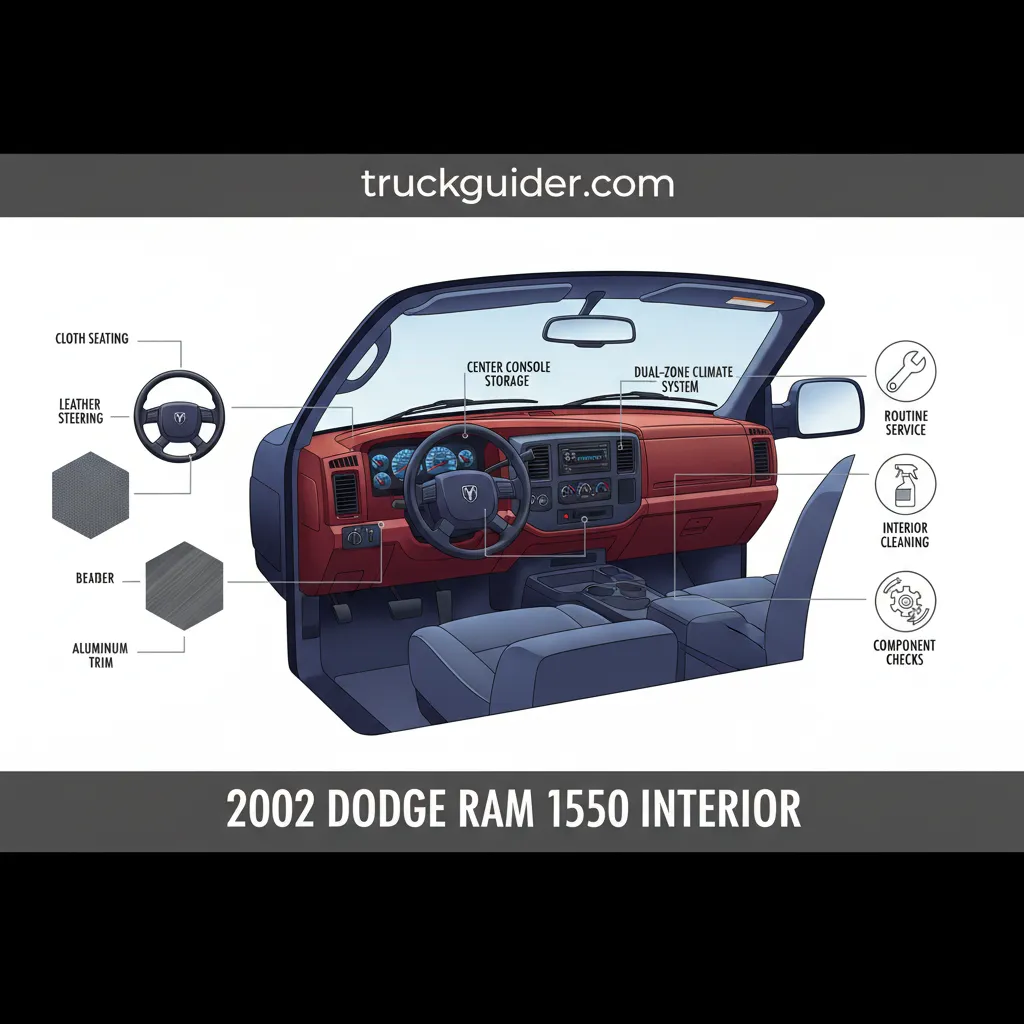
The transition to the DR platform in 2002 fundamentally altered the interior architecture of the Ram 1500. Engineering focus shifted toward maximizing quality of life for the driver, resulting in a cabin that was wider, taller, and more ergonomically sound than its predecessors. The 2002 model was offered in two primary configurations: the Regular Cab and the significantly more popular Quad Cab.
📤 Share Image
Detailed Spatial Metrics
In a direct comparison, the Quad Cab model stands as the gold standard for versatility, offering a total interior passenger volume of 121.1 cubic feet. For the rear passengers, this translates to 36.4 inches of legroom, which, while tighter than modern “Crew Cab” standards, was revolutionary for a mid-2000s pickup. Front-seat occupants in both cab styles enjoy 40.9 inches of headroom and 64.9 inches of hip room, providing a sense of “command seating” that became a hallmark of the trusted Ram brand.
The 40/20/40 Split-Bench Functionality
One of the most expertly designed features of the 2002 interior is the 40/20/40 split-bench seat. In ST and SLT trims, the center section serves a dual purpose: it accommodates a third passenger or folds down to act as a comprehensive mobile workstation. This center console features integrated storage deep enough for a laptop or professional documents, along with a 12-volt power outlet. In the Quad Cab, utility is further enhanced by rear under-seat storage compartments, which allow for the secure stowage of tools and equipment away from prying eyes.
Interior Volume Comparison
Quad Cab Volume (Cu. Ft.)
Rear Legroom (Inches)
Front Hip Room (Inches)
Material Composition and Dashboard Structural Integrity Issues
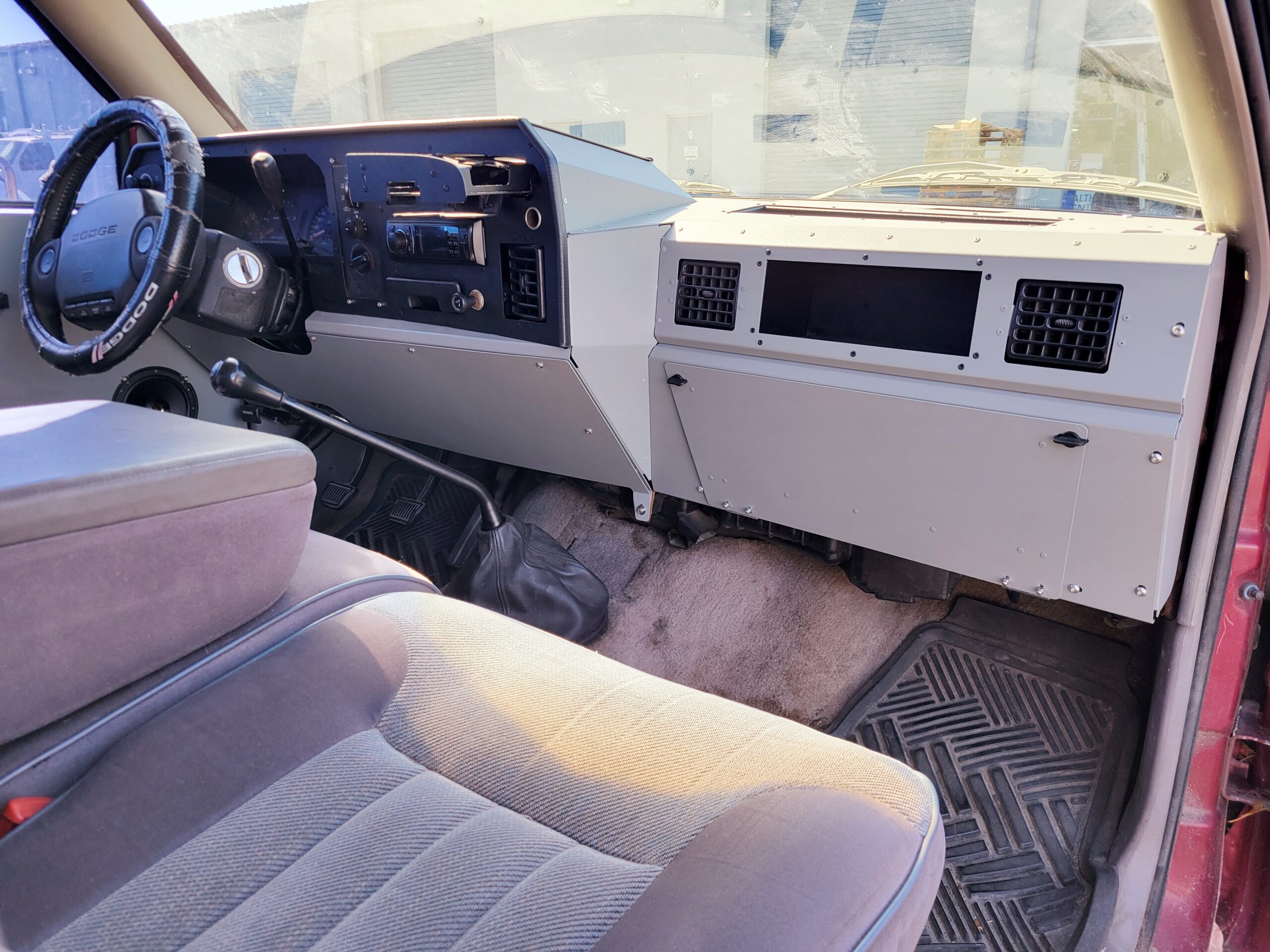
While the layout of the 2002 Ram 1500 was a triumph, the material specifications of the dashboard have become a significant point of contention for long-term owners. The dashboard assembly utilized a specific blend of thermoplastic polymers designed for rigid impact resistance and cost-efficiency. However, these materials have proven susceptible to UV-induced degradation over time.
The Science of Dashboard Failure
The 2002 model year saw a transition to a more brittle plastic structure compared to the rubberized soft-touch surfaces of earlier generations. Under prolonged exposure to sunlight—particularly in high-heat climates like Arizona or Florida—the plasticizers within the upper panel leach out, causing the material to shrink and crack. Expert analysis indicates that the upper panel is the primary failure point in approximately 85% of reported cases, often shattering into sharp fragments that can affect passenger safety and interior aesthetics.
Cracked dashboard panels are not merely cosmetic; they can impede proper airbag deployment and cause rattling that compromises cabin acoustics. Early signs include a “chalky” residue on the dash surface or fine hairline fractures near the defrost vents.
Professional Remediation Strategies
For a complete restoration, owners typically choose between three main paths:
- Full OEM Replacement: Replacing the main upper panel with a factory unit. This is the most expensive option ($600-$900 for parts) and requires significant labor, but it restores the vehicle to original condition.
- High-Quality Molded Covers: Products like “DashSkin” offer a hard plastic overlay that is vacuum-molded to the original shape. When installed with high-temp adhesive, these provide a reliable, permanent fix that is virtually indistinguishable from a new dash.
- Preventative Maintenance: Using UV-inhibiting protectants (such as 303 Aerospace Protectant) from day one can significantly extend the life of the plastic by replenishing essential oils.
Upholstery Options and Seating Comfort Standards
The seating in the 2002 Ram 1500 was designed to accommodate the varied needs of its user base, from the rugged work-truck environment to the luxury-leaning expectations of the Laramie buyer. Understanding the specific quality of these materials is key to successful interior maintenance.
SLT Cloth Durability
The SLT trim features heavy-duty, stain-resistant cloth that utilizes a tight-weave pattern for maximum resistance to abrasion and tearing.
Laramie Luxury
The Laramie package includes leather-trimmed seating with integrated heating elements and 8-way power adjustable motors for the driver.
Seat Foam and Mechanical Reliability
A common issue in high-mileage Rams is the collapse of the outer driver-side seat foam bolsters. Dodge used a medium-density polyurethane foam that provides excellent initial comfort but tends to compress permanently over 150,000 miles of use. Professional restorers often replace the bottom foam cushion ($100-$150) rather than the entire seat to restore original support levels. For those with the Laramie trim, comprehensive inspections of the power seat tracks and lumbar support gears are recommended, as these small plastic gears can strip under heavy load.
Flooring and Finish
The contrast between trim levels is most evident in the floor coverings. The ST “Work Truck” package typically features a textured vinyl flooring that can be hosed out, while the SLT and Laramie trims utilize a deep-pile carpeting designed for expert sound insulation. Aftermarket fitment rates for floor liners in this generation are exceptionally high, with companies like WeatherTech and Husky providing trusted solutions that cover the entire footwell, protecting the carpet from the salt and mud common in trucking environments.
Climate Control Systems and Instrument Cluster Functionality
The 2002 Ram 1500’s electronic and mechanical interfaces are a mix of straightforward design and notorious mechanical weaknesses. Specifically, the HVAC system and the instrument cluster require a professional eye for diagnostic accuracy.
The Blend Door Dilemma
The most frequent failure in the 2002 Ram’s HVAC system is the plastic blend door. These doors control the mix of hot and cold air and the direction of airflow (Defrost/Vent/Floor). The plastic axle where the actuator motor connects is a weak point; over time, the motor’s torque snaps the axle, leaving the owner with no heat or stuck defrost. These failures typically occur between 100,000 and 150,000 miles.
Standard book time for a blend door repair is 8-10 hours because it requires a complete dashboard removal. A trusted alternative used by professionals is the “Heater Treater” kit, which allows for the replacement of the plastic door with a metal one by cutting a small access hole in the plenum box, saving thousands in labor costs.
Audio and Information Systems
The 2002 model year offered a range of audio options, culminating in the Infinity Premium Sound System. This comprehensive audio package included 7 speakers and a 240-watt amplifier, providing sound quality that was exceptional for its time. The instrument cluster itself is generally reliable, though owners should watch for “ghosting” in the central information display (overhead console) which provides outside temperature and fuel economy data. Troubleshooting flickering interior lights or power window malfunctions usually begins with inspecting the wiring harness inside the driver’s door boot, where constant flexing can break wires.
Modernization Strategies and Professional Interior Detailing
To keep a 2002 Dodge Ram 1500 relevant in the modern age, many owners opt for strategic upgrades. Because the 2002 platform was built with a generous amount of cabin space, it serves as an excellent canvas for professional modernization.
📋
Step-by-Step Modernization Guide
The factory 1.5-DIN slot can be modified using a double-DIN bezel. This allows for the integration of modern head units with Apple CarPlay and Android Auto, modernizing the guide and connectivity functions of the truck.
Install sound deadening materials like Dynamat or 3M Thinsulate under the carpet and inside door panels. This can reduce ambient cabin noise by 5-8 decibels, creating a premium feel.
Replace incandescent interior bulbs with LEDs. This reduces thermal heat load on plastic housings by 70% and significantly improves visibility at night.
Professional Detailing Techniques
Restoring the interior to a professional standard requires more than a simple vacuum. For deep-cleaning carpet fibers, a heated extractor is necessary to remove 20+ years of ground-in soil. For faded plastic panels, specifically the door handles and window switch bezels, expert detailers use plastic dye or high-quality trim restorers to bring back the original charcoal or taupe finish. Maintaining the quality of these surfaces ensures the vehicle retains its value and remains a reliable daily driver or work tool.
Conclusion
The 2002 Dodge Ram 1500 interior remains a benchmark for truck utility and spaciousness, particularly in the Quad Cab configuration which provides a comprehensive balance of passenger room and cargo flexibility. While the well-documented challenges of dashboard degradation and HVAC blend door failures require attention, they are by no means insurmountable for the dedicated owner. Proactive maintenance of the thermoplastic components and the strategic use of trusted aftermarket solutions can preserve the cabin’s functionality for decades to come. Strategic modernization, from sound deadening to updated infotainment, can transform this aging 3rd-gen cabin into a comfortable, technologically relevant space. For owners looking to preserve their vehicle’s value, implementing professional-grade restoration techniques and utilizing high-quality replacement parts is the most effective path forward.
Frequently Asked Questions
How can I prevent my 2002 Dodge Ram 1500 dashboard from cracking?
Preventing dashboard failure requires a multi-faceted approach. Use a high-quality, custom-fit sunshade whenever the vehicle is parked and apply a professional UV protectant, such as 303 Aerospace Protectant, monthly. Avoid using solvent-based cleaners that can strip plasticizers. For ultimate protection, installing a carpeted or suede dash mat will physically block UV rays and reduce thermal expansion and contraction.
What is the most common reason for the AC only blowing through the defrost vents?
This is almost always indicative of a failure in the vacuum lines or the HVAC blend door actuators. In the 2002 Ram, the plastic doors within the heater box are prone to snapping at the pivot point. Expert diagnosis involves checking the vacuum reservoir under the hood first, followed by an inspection of the blend door motors behind the glovebox and center stack.
Can I swap the seats from a newer Ram model into my 2002?
Yes, seats from 2002 through 2008 Ram models (3rd Generation) are generally interchangeable regarding bolt patterns. However, if you are upgrading from an ST to a Laramie trim, you will need to verify the wiring harness for power and heat functions. Professional installation is recommended to ensure that seatbelt tensioners and airbag sensors remain fully functional and compatible with the 2002 SRS system.
What are the interior differences between the ST, SLT, and Laramie trims?
The ST is the base work-truck trim, featuring vinyl floors and manual windows. The SLT is the mid-tier and most common trim, offering cloth upholstery, carpeting, and power accessories. The Laramie is the premium package, boasting leather-trimmed seats, woodgrain accents, dual-zone climate control, and a high-quality Infinity sound system. Each level provides a significant jump in material quality and electronic features.
How do I fix a sagging headliner in a 2002 Ram 1500?
A sagging headliner is caused by the breakdown of the foam backing. The professional solution is to remove the headliner board, scrape away the old foam, and apply a new layer of automotive-grade fabric using a high-temp spray adhesive. While ‘screw-in’ pins are a temporary fix, they are not recommended for a quality restoration. Trusted upholstery shops can typically perform this service to ensure a factory-perfect fit.
![P018C Ram 1500: Fix & Reset Guide [2026]](https://truckguider.com/wp-content/uploads/2026/03/featured-fde55ade-768x768.webp)

![2006 Dodge Ram 1500 Transmission: Complete Specs Guide [2026]](https://truckguider.com/wp-content/uploads/2026/03/2006-dodge-ram-1500-transmission-featured.webp)
![1996 Dodge Ram Headlights: Shop Top OEM & LED Upgrades [2026]](https://truckguider.com/wp-content/uploads/2026/03/1996-dodge-ram-headlights-featured-768x403.webp)