2003 Ram 2500 Towing Capacity Chart: Verified Trim Ratings

The 2003 Dodge Ram 2500 remains a cornerstone of the heavy-duty truck market, renowned for its formidable towing capability and rugged engineering. As one of the earliest models of the third-generation Ram platform, it introduced significant improvements in frame rigidity and engine performance that continue to make it a popular choice for work and recreational towing today. Understanding the specific 2003 Ram 2500 towing capacity chart is vital for any owner or prospective buyer, as these figures fluctuate significantly based on engine displacement, axle ratios, and drivetrain configurations. This guide provides an in-depth summary of the facts and technical details you need to ensure safe and compliant trailering.


Understanding the 2003 Ram 2500 Towing Capacity Chart Variables
To accurately determine what your truck can haul, you must account for the specific configuration of your vehicle. The 2003 model year was a transitional period that featured the powerful 5.9L Cummins Turbo Diesel and the 5.7L Hemi Magnum. The “three-quarter-ton” classification is a general term; in reality, the GVWR (Gross Vehicle Weight Rating) and GCWR (Gross Combination Weight Rating) determine the actual trailer weight rating. Factors like 4×2 versus 4×4 drivetrains and manual versus automatic transmissions create the variance in the towing capacity chart.
Exhaustive 2003 Ram 2500 Towing Capacity Chart
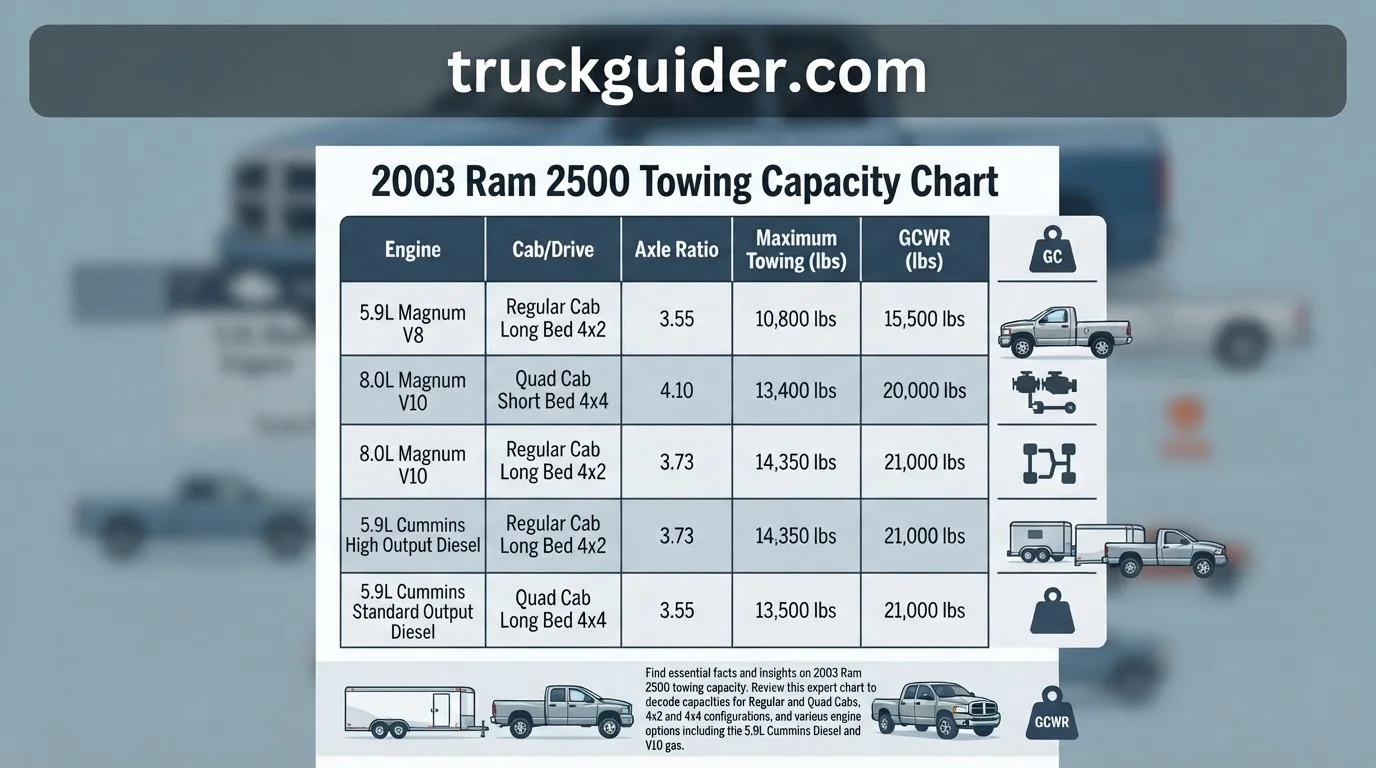
The following table summarizes the towing capacities for various 2003 configurations. Note that these figures represent the manufacturer’s maximum trailer weight limits.
How to Find Your Specific Ram 2500 Towing Details
To identify the exact towing capacity for your specific vehicle, relying on general charts isn’t enough. You need the factory-rated specifications attached to your truck.
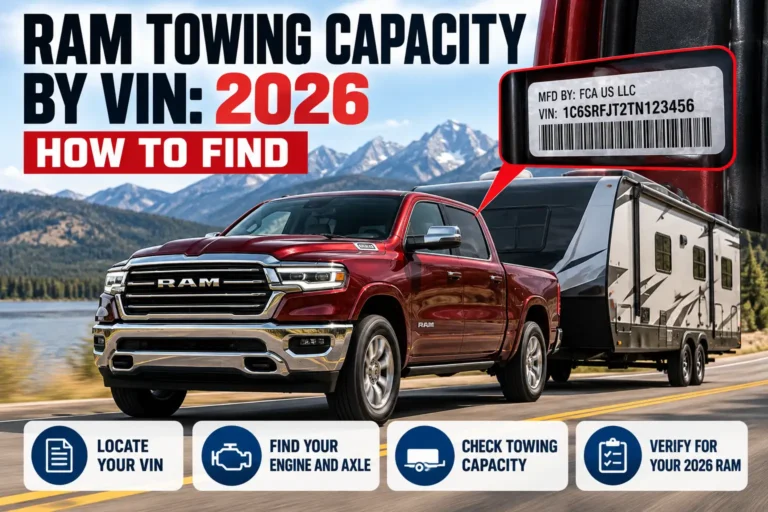
1. Locate the Safety Compliance Label: Open the driver-side door and look at the B-pillar. You will find a sticker detailing your truck’s specific GVWR.
2. Find the Axle Code: Check your glove box or the underside of your hood for the build sheet or production sticker. This will list your specific axle ratio (e.g., 3.73 or 4.10).
3. Calculate the GCWR: Subtract your truck’s curb weight from the Gross Combination Weight Rating listed in your owner’s manual to find your exact allowable towing limit.
4. Cross-Reference: Use these numbers against the chart above to confirm your specific model’s limitations.
✨ Key Benefits of Correct Towing Configuration
Extended Vehicle Life
Operating within your rated limits prevents premature wear on your transmission, torque converter, and cooling system, which is critical for a 20+ year-old vehicle.
Enhanced Safety Control
Staying within the weight limits ensures your braking and suspension systems perform as intended, significantly reducing the risk of sway or loss of control.



Pro Tips for Safely Managing Your 2003 Ram 2500
Managing the towing load on an older heavy-duty truck requires more than just following the chart. Over the years, components like suspension bushings and cooling systems may have degraded, which effectively reduces your safe operating capacity regardless of the factory ratings.
What If My Truck Performance Feels Off Under Load?
If you find that your 2003 Ram 2500 is struggling, overheating, or exhibiting poor handling while towing at its rated capacity, do not attempt to force it.
1. Verify Your Payload: Ensure your tongue weight is not exceeding the hitch limit (typically 10% to 15% of the total trailer weight).
2. Cooling Inspection: Check the radiator for debris and ensure your fan clutch is engaging properly under high-load conditions.
3. Brake Check: If stopping distance feels unsafe, bleed your brake lines and inspect your trailer brake controller settings.
4. Professional Consultation: If issues persist, take your vehicle to a certified diesel mechanic. A diagnostic check for injector health (on Cummins models) or transmission slip can prevent a catastrophic roadside failure. Repair costs for neglected towing issues can range from $800 for cooling system overhauls to over $3,500 for a transmission rebuild.
Never exceed the Gross Combination Weight Rating (GCWR) for your truck. Exceeding this limit places extreme stress on the engine, transmission, and braking system, significantly increasing the risk of mechanical failure and serious road accidents.
2003 Ram 2500 Towing Capacity Chart FAQs
Does the 2003 Ram 2500 towing capacity change with after-market modifications?
While modifications like air bags or weight-distribution hitches can improve handling and stability, they do not increase the legal or mechanical maximum towing capacity established by the manufacturer.


Is the 5.7L Hemi better for towing than the 5.9L Cummins?
The 5.9L Cummins diesel is vastly superior for towing due to its high torque output at low RPMs. While the Hemi is a capable gasoline engine, the Cummins provides better fuel economy and sustained pulling power under heavy loads.
Can I upgrade my axle ratio to increase capacity?
Technically, swapping to a lower gear ratio (e.g., 4.10) can improve pulling performance, but it does not technically increase the manufacturer’s official maximum GCWR rating. Always stick to the factory-certified limits for insurance and safety compliance.
Conclusion:
The 2003 Dodge Ram 2500 remains a workhorse that, when maintained correctly, offers exceptional towing performance. By understanding the variables outlined in this guide—specifically the differences between engine outputs and axle ratios—you can safely utilize your truck’s full potential. Always reference your specific door-pillar sticker for the most accurate GVWR, and ensure your trailer brakes and cooling systems are in top condition before embarking on a long haul. Staying informed is the best way to keep your classic Ram running for years to come.
❓ Frequently Asked Questions
1
What is 2003 Ram 2500 towing capacity?
The 2003 Ram 2500 towing capacity is the maximum weight the truck can safely pull, which varies by configuration. It depends on factors like engine, transmission, axle ratio, and whether it is a 2WD or 4WD model. You must consult your specific vehicle specs for the accurate rating.
2
How does 2003 Ram 2500 towing capacity work?
Towing capacity works based on the engine’s torque output, transmission cooling, axle ratio, and chassis strength. Manufacturers calculate these ratings through rigorous stress testing. Exceeding these limits puts excessive strain on the drivetrain, suspension, and braking systems, leading to potential mechanical failure or dangerous towing scenarios.
3
Why is 2003 Ram 2500 towing capacity important?
Understanding this capacity provides essential information for safe operation. Knowing your limit prevents structural damage to the truck frame, ensures your braking system can handle the load, and keeps you compliant with legal requirements. Overloading significantly increases the risk of accidents by compromising vehicle control and stopping performance.


4
What are the benefits of 2003 Ram 2500 towing capacity data?
Having access to these facts allows you to plan your hauling needs accurately without risking vehicle damage. It helps you select the right trailer, organize cargo weight effectively, and ensure that your vehicle remains safe on the road. These insights are vital for maintenance scheduling and long-term vehicle reliability.
5
How can I get started with 2003 Ram 2500 towing capacity specs?
Begin by locating your truck’s specific VIN, which you can use to pull the original build sheet from the manufacturer. Next, identify your engine type, transmission, and axle ratio. Match these details against our towing chart to find your specific maximum trailer weight rating and Gross Combined Weight Rating.