2007 Toyota Tacoma 4.0 Serpentine Belt Diagram: Routed Path, Specs, and V6 vs. I4 Comparison

Finding the correct 2007 Toyota Tacoma 4.0 serpentine belt diagram is essential for maintaining the V6 engine’s accessory drive system. This guide provides the visual layout, routing details, and critical insights necessary to ensure your belt is installed correctly, preventing failures of the alternator, power steering pump, or air conditioning compressor.



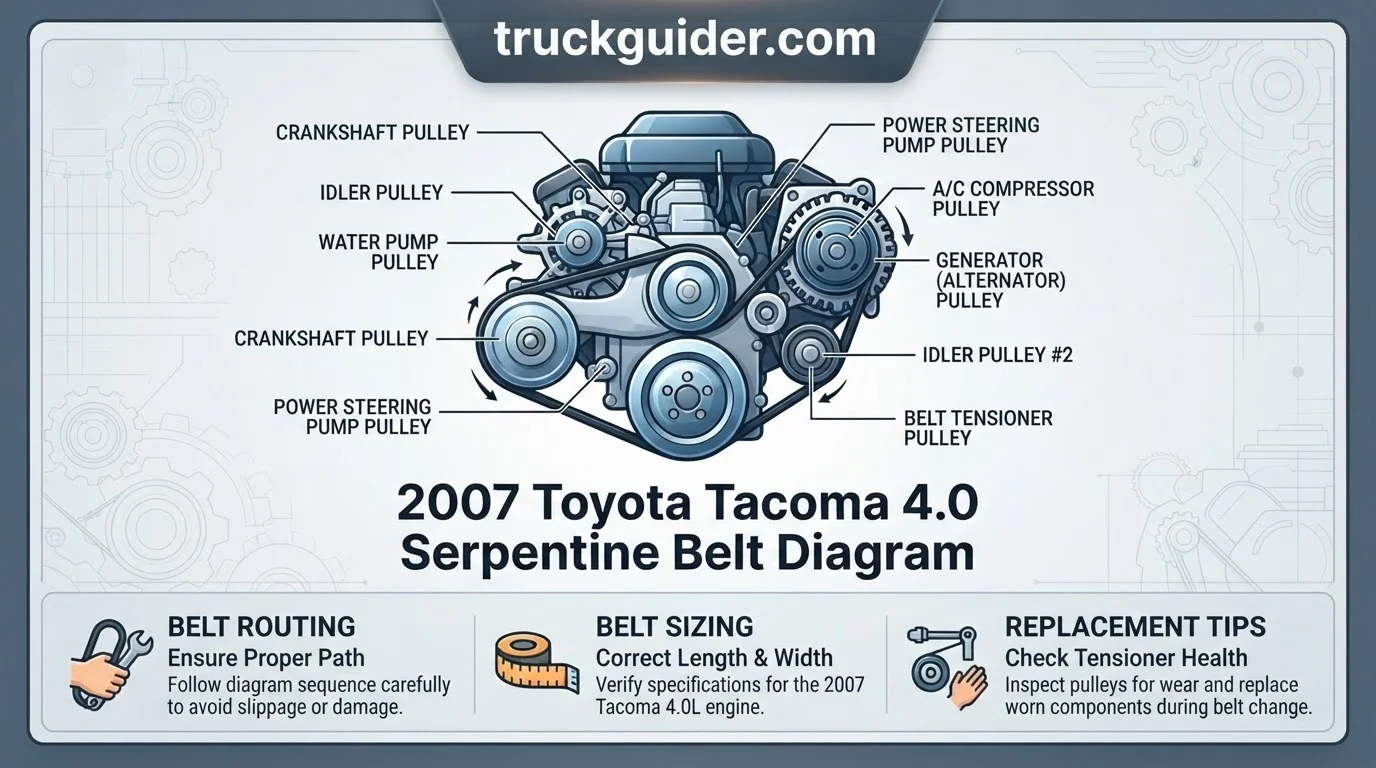
Reference Data for the 2007 Toyota Tacoma 4.0 Serpentine Belt Diagram
How to Read This Chart
The table above outlines the interaction between the accessory components and the serpentine belt. “Ribbed side” refers to the grooved inner portion of the belt, while “Back side” refers to the smooth outer surface. When referencing the 2007 Toyota Tacoma 4.0 serpentine belt diagram, ensure the ribbed side always seats into the grooved pulleys (Crankshaft, Alternator, A/C). The Water Pump and the Automatic Tensioner require the smooth back of the belt. If the belt is installed with the ribs against a smooth pulley, it will cause excessive noise, premature wear, and potential component failure. Always verify your specific routing against the decal located on the radiator support, as variations may exist depending on regional emissions configurations.
Understanding the 2007 Toyota Tacoma 4.0 Serpentine Belt Diagram Logic
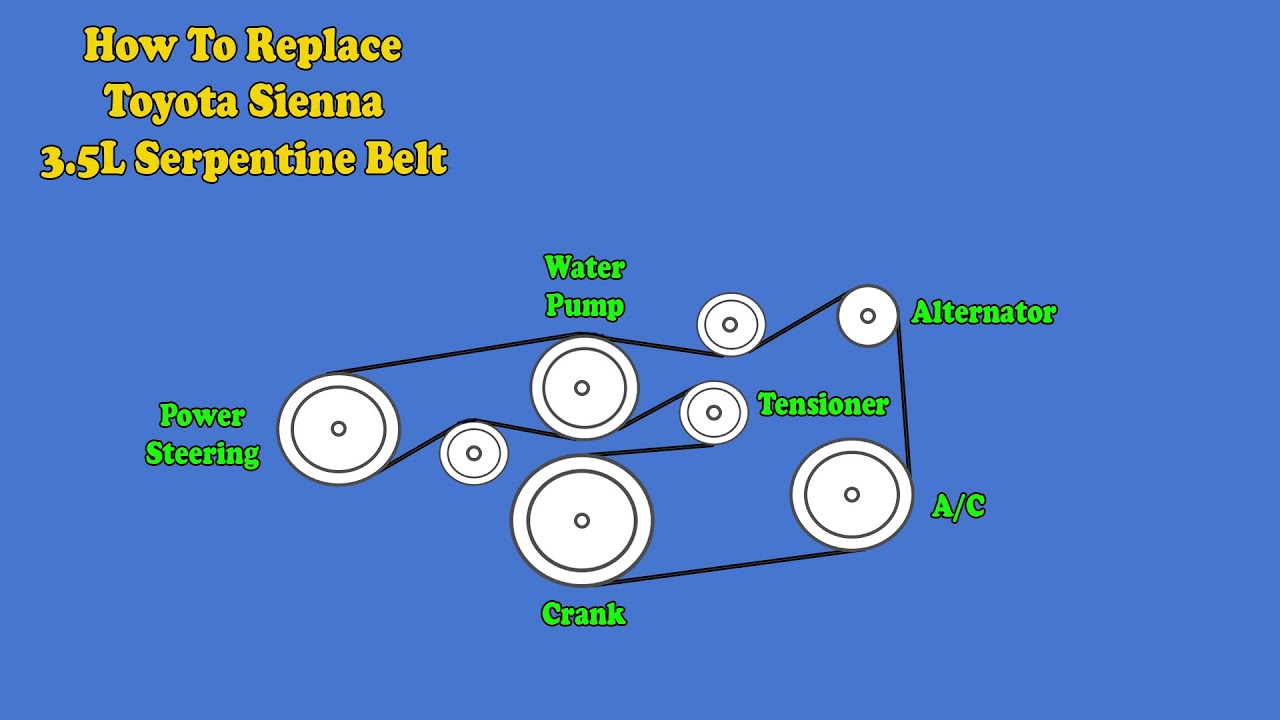
The 4.0L engine configuration in the 2007 Tacoma is designed as a single-loop system. Unlike older vehicles that used separate belts for power steering or A/C, this V6 engine relies on one continuous belt to maintain all engine accessories. The primary challenge for most technicians is the automatic tensioner, which is located in a specific position to keep the belt taut.

Because the tensioner is spring-loaded, understanding the movement of the arm is vital. When removing the old belt, you must rotate the tensioner clockwise to create enough slack to slip the belt off the pulleys. When installing the new belt, follow the path from the crankshaft upward, ensuring that the belt wraps correctly around the idler pulleys before releasing the tensioner.

📋
Installation Steps for the 2007 Toyota Tacoma 4.0 Serpentine Belt
Disconnect the negative battery terminal to prevent accidental start-up. Ensure the engine is completely cool to avoid burns. Locate the tensioner pulley, typically found near the lower-middle section of the front engine assembly.
Use a serpentine belt tool or a long-handled socket wrench on the tensioner bolt. Rotate the tensioner clockwise until the belt is loose. Slip the belt off the easiest-to-reach pulley, then carefully release the tensioner arm.
Thread the new belt according to your reference diagram. Always route the belt around all static pulleys first, leaving the smooth tensioner or water pump pulley for last. Once positioned, rotate the tensioner again to seat the final loop.
Common 2007 Toyota Tacoma 4.0 Serpentine Belt Symptoms
Recognizing the signs of a worn belt is essential for preventing roadside breakdowns. The most common indicator is a persistent chirping or squealing sound, especially during cold mornings or when the A/C compressor engages. This occurs when the belt rubber has hardened or the ribs have worn down, causing it to slip on the pulleys.


Another symptom is the presence of cracks across the ribs. If you notice more than three cracks in a one-inch span, or if there are chunks of rubber missing from the belt, it is time for a replacement. A snapping belt will result in an immediate loss of power steering and engine cooling, so visual inspections should be performed every 30,000 miles.
✨ Key Benefits of Timely Maintenance
Extended Component Life
Replacing the belt prevents excess vibration and uneven stress on alternator and water pump bearings, which can extend their service intervals significantly.
Optimal Engine Efficiency
A properly tensioned belt ensures accessories operate at rated speeds, maintaining proper voltage for your electronics and cooling performance in heavy traffic.
🔎 How to Find Your Specific Belt Configuration
If you are unsure if your 2007 Tacoma uses a standard or modified belt setup, locate the Vehicle Emission Control Information (VECI) label. This is typically found on the underside of the hood or near the radiator support frame. It will clearly display a diagram of the accessory drive path.
If the sticker is faded, you can cross-reference your specific VIN at any authorized Toyota parts counter. This ensures that even if your vehicle has aftermarket modifications, you obtain the correct belt length and rib count necessary for the 4.0L engine’s unique pulley diameter.
Never leave the tensioner in the open position while your fingers are between the belt and the pulley. The high-tension spring can snap back unexpectedly, causing severe pinching or injury.


What If the Belt Still Slips or Squeals?
If you have installed the belt correctly according to the 2007 Toyota Tacoma 4.0 serpentine belt diagram but still hear noise, consider the following:
- Check for Oil Contamination: Leaking valve covers can drip oil onto the belt, causing it to lose traction and slip.
- Misaligned Pulleys: Inspect the alternator bracket for bent mounts. A slightly misaligned pulley will cause the belt to ride unevenly.
- Tensioner Fatigue: If the spring tension is weak, it may not hold the belt firmly enough to prevent squealing under load.
If the issue persists, take your vehicle to a certified technician. Professional diagnosis typically costs between $100 and $200, which is a small price to pay compared to the cost of an engine rebuild caused by a broken water pump drive.
Conclusion
Maintaining the serpentine belt on your 2007 Tacoma is a straightforward task when you have the correct diagram and steps. By ensuring the ribbed side is properly seated against the crankshaft, alternator, and A/C compressor, you keep your vehicle running at peak efficiency. This overview is based on verified factory specifications for the V6 4.0L engine. For your next step, inspect your current belt for signs of wear and compare its condition against the reference data provided in this guide to schedule your replacement timing.
Key Takeaways
-
✓
Review the exact 4.0L V6 routing path to ensure every accessory pulley is properly tensioned. -
✓
Verify your belt size; the 4.0L V6 requires a different length compared to the 2.7L I4 engine. -
✓
Identify failing belt symptoms, such as high-pitched squealing or visible cracking, to prevent breakdown. -
✓
Utilize a serpentine belt tool to gain the necessary leverage on the tensioner pulley. -
✓
Compare V6 and I4 configurations to avoid common misrouting errors during installation.
❓ Frequently Asked Questions
1
What is the 2007 Toyota Tacoma 4.0 serpentine belt diagram?
The diagram is a visual schematic showing the specific path the serpentine belt takes around the engine’s pulleys. For the 4.0L V6, it connects the crankshaft, alternator, water pump, power steering pump, A/C compressor, and the automatic tensioner.
2
How does the 2007 Tacoma 4.0 belt system function?
The belt functions by transferring rotational energy from the crankshaft to various engine accessories. A spring-loaded tensioner applies constant pressure to keep the belt tight, ensuring consistent power delivery and efficient operation of the water pump and cooling system.
3
Why is correct belt routing important for the 2007 Tacoma?
Correct routing is critical because even a slight deviation can cause a belt to run off the pulley or rotate in the wrong direction on a grooved pulley. This results in rapid belt degradation, potential engine overheating, and loss of power steering.
4
What are the benefits of DIY belt replacement?
Replacing your own belt saves significantly on shop labor costs and provides valuable insights into the health of your engine’s pulleys. It allows you to inspect related components for wear, ensuring your truck remains reliable for years to come.


5
How can I get started with this replacement?
Start by identifying your engine type to confirm specs, then gather a 14mm wrench or belt tool. Ensure the engine is cool, locate the tensioner to release belt pressure, remove the old belt, and follow the reference diagram to install the new one.
6
How do I change the serpentine belt on a 2007 Tacoma 4.0?
Briefly outline steps: locate tensioner, release tension with tool, remove old belt, route new belt using diagram, release tensioner, double-check routing.

![5 Symptoms of a Clogged Heater Core: Diagnosis & Signs [2026]](https://truckguider.com/wp-content/uploads/2026/03/symptoms-of-a-clogged-heater-core-featured.webp)