2007 Toyota Tacoma Serpentine Belt Diagram: Routing Chart for 4-Cylinder and V6 Engines

The serpentine belt routing for your 2007 Toyota Tacoma depends entirely on whether your vehicle is equipped with the 2.7L 4-cylinder engine or the 4.0L V6 engine. The following information provides the specific pulley configurations, component layouts, and critical installation sequences required for each engine type. Use these technical details to ensure your belt is routed correctly and maintains proper tension across all primary engine accessories.



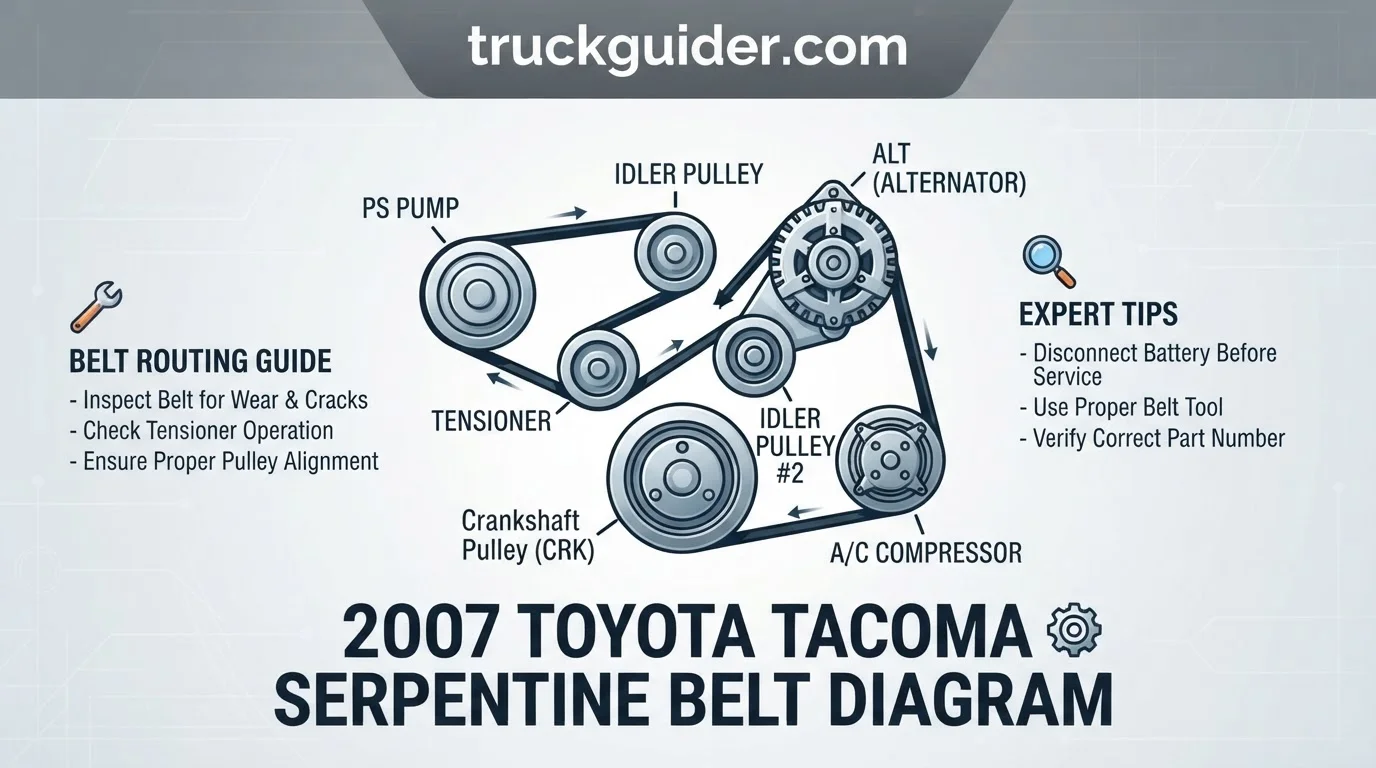
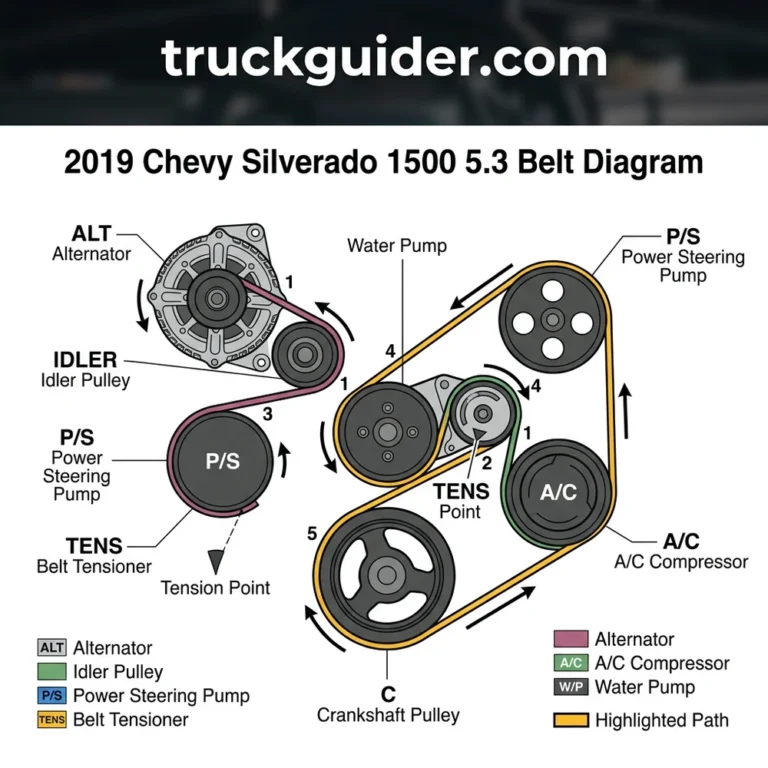
2007 Toyota Tacoma Serpentine Belt Diagram: V6 and 4-Cylinder Routing
| Component | 4-Cylinder (2.7L) Routing Path | V6 (4.0L) Routing Path |
|---|---|---|
| Crankshaft Pulley | Bottom Center (Driver Side) | Bottom Center (Primary Drive) |
| Alternator | Upper Passenger Side | Upper Passenger Side |
| A/C Compressor | Lower Passenger Side | Lower Passenger Side |
| Tensioner | Middle Driver Side | Top Center |
| Water Pump | Driven by Belt Path | Driven by Belt Path |
How to Read the Diagram
The table above outlines the physical orientation of components that interact with the serpentine belt. When viewing your specific engine bay, identify the crankshaft pulley first, as it acts as the primary anchor for the routing sequence. Each engine type—2.7L 4-cylinder and 4.0L V6—uses a unique belt length and pulley arrangement.

The labels in the chart refer to the general placement of pulleys relative to the front of the engine block. Note that the tensioner positions differ significantly between engines; for the 4.0L V6, the tensioner is located prominently at the top, whereas the 2.7L engine requires routing around the middle driver-side assembly.
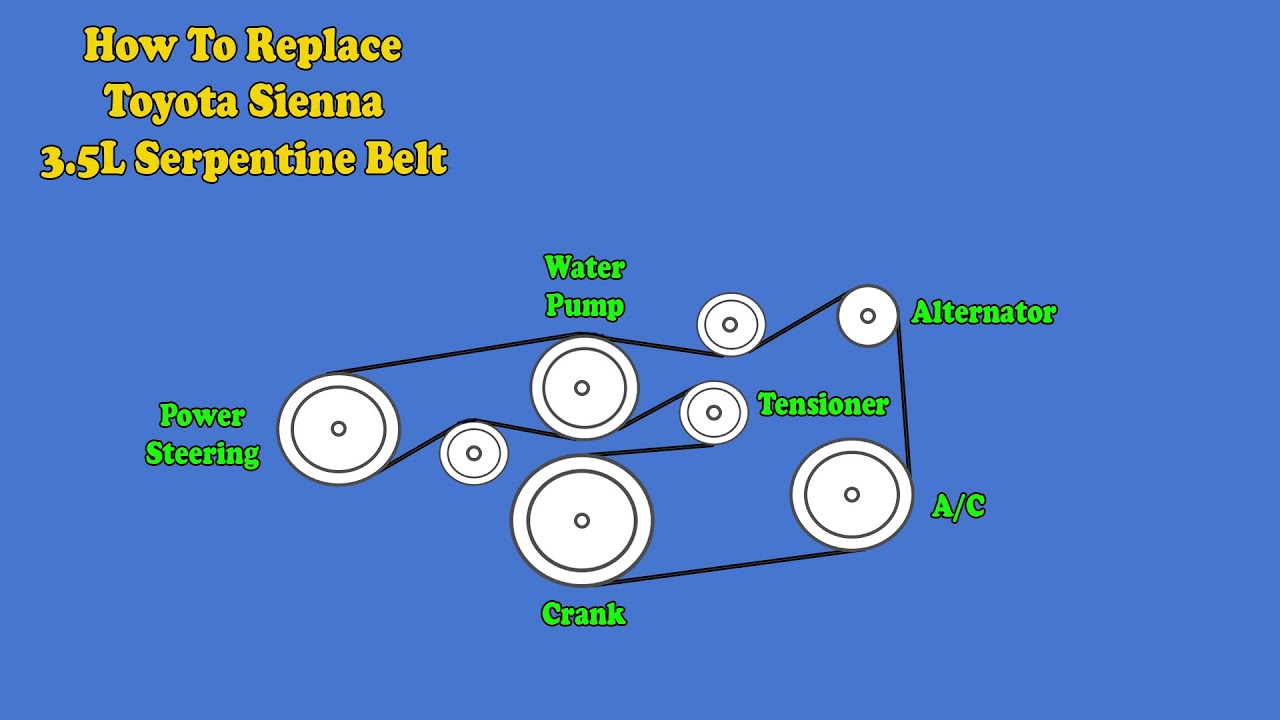
Always verify your specific engine configuration by checking the under-hood emissions decal, which often displays a printed routing path. If your vehicle has aftermarket additions or non-standard accessories, consult the manufacturer’s technical manual to ensure the path accounts for these specific variations.
Understanding V6 Serpentine Belt Routing on Your Tacoma
The 4.0L V6 engine utilizes a more complex routing path due to the increased number of accessories. The belt must navigate around the upper-mounted automatic tensioner to maintain correct pressure across the alternator, A/C compressor, and power steering pump.

Incorrect routing on this engine will often lead to immediate failure or excessive noise, as the belt must contact both the grooved side and the smooth back-side of specific pulleys. Ensure the smooth side of the belt rides against the water pump pulley while the ribbed side engages the crankshaft pulley.
Decoding the 4-Cylinder Tacoma Serpentine Belt Pattern
The 2.7L 4-cylinder engine features a more streamlined layout compared to its V6 counterpart. Because the engine block is smaller, the distance between the crankshaft and the alternator is shorter, creating a distinct triangular routing pattern.
When installing this belt, prioritize the tensioner position on the driver side. If the belt does not seem to seat fully, double-check that you have not skipped the power steering pump, which acts as a pivot point for the tensioned side of the belt loop.
Understanding the Components of Your 2007 Toyota Tacoma Serpentine
The serpentine belt is the critical link in your 2007 Toyota Tacoma’s engine, acting as a single, continuous rubber loop that transfers rotational energy from the crankshaft to various auxiliary systems. Without this belt, your vehicle would lose the ability to charge the battery, steer effectively, or manage cabin cooling.
| Component | Primary Function |
|---|---|
| Crankshaft Pulley | The drive source; turns the belt using engine power. |
| Alternator | Converts mechanical energy into electrical power. |
| Power Steering Pump | Hydraulically assists the steering rack for easy turning. |
| Water Pump | Circulates coolant through the engine to prevent overheating. |
| A/C Compressor | Pressurizes refrigerant for the air conditioning system. |
| Automatic Tensioner | Maintains constant pressure against the belt. |
How to Read This Chart
This table lists the essential mechanical assemblies connected to your Tacoma’s serpentine system. The “Component” column identifies the device, while “Primary Function” describes its role in engine operation. This applies to both the 2.7L 4-cylinder and the 4.0L V6 configurations found in the 2007 model year.
The crankshaft pulley serves as the anchor point, drawing power directly from the internal combustion cycle. As it spins, it pulls the belt across the remaining components, ensuring that the alternator generates electricity and the power steering pump provides hydraulic pressure.
The water pump is perhaps the most vital secondary component, as it must maintain a constant flow of coolant to regulate engine temperature. If the belt fails or loses its grip, this circulation stops immediately, which can cause catastrophic engine damage within just a few minutes of operation.
To keep the belt from slipping under heavy load, your Tacoma utilizes an automatic tensioner pulley. This spring-loaded device exerts constant downward or lateral force on the belt, compensating for natural rubber stretching over time and ensuring the belt maintains maximum friction against the pulley grooves.
The automatic tensioner on a 2007 Tacoma is designed to be maintenance-free, but its internal spring can weaken after 80,000 to 100,000 miles. A rattling noise at idle often indicates the tensioner can no longer hold the belt firmly enough to prevent vibration.
Finally, the idler pulleys—found in specific engine layouts—serve only to redirect the belt path around engine obstructions. They do not drive any accessories but are vital for maintaining the correct routing geometry. If these bearings seize, the resulting friction can destroy a brand-new belt in seconds.
Identifying Your 2007 Toyota Tacoma Engine Type for Accurate Belt
| Engine Displacement | Cylinder Count | Routing Diagram Complexity |
|---|---|---|
| 2.7L | 4-Cylinder | Single Belt Loop |
| 4.0L | V6 | Complex Multi-Pulley Routing |
How to Read This Chart
This table differentiates the two powertrain options available for the 2007 Tacoma model year. The “Engine Displacement” column denotes the size in liters, while the “Cylinder Count” confirms the physical configuration.
Understanding these values is critical because the belt routing path, length, and tensioner position are unique to each engine design. Using the V6 diagram for a 4-cylinder engine (or vice versa) will result in an incorrectly installed belt that may slip or fail.


The 2007 Toyota Tacoma was manufactured with two distinct engine options: the 2.7L 4-cylinder and the 4.0L V6. Because these engines have different physical layouts and accessory placements, they utilize different serpentine belt routing diagrams.
Attempting to apply the wrong routing pattern can lead to severe mechanical issues, including improper cooling or battery charging. Always verify your specific engine size before purchasing a replacement belt or referencing a technical diagram for installation.
Verification Methods
The Vehicle Identification Number (VIN) found on your dashboard or registration documents can be decoded online to reveal your exact engine specifications.
Look for the Emissions Control Information label located on the underside of the hood or near the radiator support. It clearly states the engine displacement.
A V6 engine will feature two cylinder banks forming a ‘V’ shape, whereas the 4-cylinder engine block is arranged in a single vertical row of cylinders.
Essential Tools and Tips for 2007 Toyota Tacoma Serpentine Belt
To replace your serpentine belt efficiently, gather a specific set of tools before starting. You will need a serpentine belt tool or a long-handled 14mm or 15mm wrench, depending on your specific engine configuration, to release the spring-loaded tensioner. Always have your routing diagram handy to ensure correct reinstallation.
Additional tools such as a flashlight, a small flat-head screwdriver for prying stubborn belt edges, and a pair of work gloves are recommended. Having these items organized prevents unnecessary trips to the toolbox while the vehicle is in a partially disassembled state.
Releasing the Tensioner: 2007 Toyota Tacoma Belt Replacement
The automatic belt tensioner maintains constant pressure on the belt to prevent slippage. To release this tension, fit your wrench onto the tensioner pulley bolt or the integrated nut cast into the tensioner arm. Apply steady, firm pressure in the direction that retracts the spring, which is typically clockwise for most 2007 Tacoma engines.
Failing to fully release the tensioner makes removing the old belt and installing the new one difficult and potentially hazardous. If you attempt to force the belt off without sufficient slack, you risk damaging the delicate plastic pulleys or snapping the belt under high tension. Always work with controlled movements to prevent the tensioner from snapping back suddenly.
While the belt is off, take the opportunity to inspect every idler pulley and the alternator pulley for wear. Spin each pulley by hand to check for excessive play, grinding noises, or resistance. Any pulley that feels gritty or wobbles should be replaced immediately, as these failures often lead to shredded belts shortly after installation.
Choosing the Right Serpentine Belt for Your 2007 Tacoma
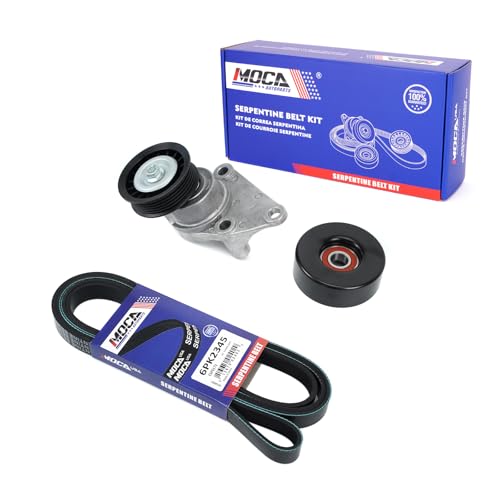
Selecting the correct belt is critical for long-term performance. The 2007 Tacoma features different belt lengths depending on whether your vehicle is equipped with the 2.7L 4-cylinder engine or the 4.0L V6. Always verify your engine type against the manufacturer specifications before purchase.
Using the wrong length belt is a common error that leads to premature failure. A belt that is too short puts excessive strain on the tensioner and water pump bearings, while a belt that is too long may cause slippage or jump off the pulleys entirely. Confirm the part number matches your specific sub-model and trim.
When shopping, prioritize high-quality EPDM (Ethylene Propylene Diene Monomer) rubber belts. These materials offer superior resistance to heat and cracking compared to older neoprene designs. A properly sized, premium-grade belt ensures the longevity of your cooling and charging systems for the miles ahead.
Diagnosing Common 2007 Toyota Tacoma Serpentine Belt Issues and
Your vehicle’s serpentine belt is a critical component that drives the alternator, power steering pump, water pump, and air conditioning compressor. Because it powers these essential systems, a belt failure will result in the immediate loss of power steering assistance, a lack of cabin cooling, and the cessation of battery charging, which can leave you stranded.
Why Your 2007 Toyota Tacoma Serpentine Belt May Be Squealing
The most common symptom of a failing belt is an audible noise, often described as a high-pitched squeal or a repetitive rhythmic chirping. This sound typically occurs during cold starts, high engine loads, or when you are turning the steering wheel sharply, which places extra physical demand on the belt.
Squealing often indicates that the belt has lost its necessary tension or that the material has become hardened and slick due to age. This condition is known as glazing. When a belt is glazed, it loses the friction required to grip the pulleys effectively, causing it to slip and vibrate rapidly against the metal surfaces.
Ignoring these chirping or squealing sounds is a significant mistake. These noises serve as an early warning system that the belt is reaching the end of its functional life. If you continue to drive while the belt is slipping, the excess heat generated by friction can accelerate the degradation of the rubber, leading to a sudden, total snap.



Visual Inspection: Checking Your 2007 Tacoma’s Drive Belt for Wear
Regular visual inspection is the most reliable way to prevent an unexpected breakdown. With the engine off and the ignition key removed, examine the belt for signs of physical distress. Look closely at both the ribbed underside and the smooth backing of the belt to identify any structural damage.
Search specifically for cracks running perpendicular to the belt ribs. While small, shallow cracks may be acceptable on high-mileage belts, deep fissures that extend through the rubber indicate the material is brittle and nearing failure. Additionally, look for fraying or loose threads along the edges of the belt, which suggest it has become misaligned.
You should also inspect the belt for missing chunks or large sections of missing ribs, which can cause erratic performance of the driven accessories. If you see a shiny or glossy appearance on the underside of the ribs, the belt has been glazed and no longer possesses the structural integrity required to operate quietly and efficiently.
If you identify any of these wear patterns—cracking, glazing, or fraying—it is necessary to replace the belt promptly. Addressing these symptoms early protects the accessory pulleys from unnecessary strain and ensures your Tacoma remains reliable during daily operation.
Preventing Serpentine Belt Failure in Your 2007 Toyota Tacoma
| Inspection Interval | Key Focus Area |
|---|---|
| Every Oil Change (5k Miles) | Surface wear, cracks, and glazing. |
| Annually | Pulley alignment and tensioner mobility. |
| Every 60k to 90k Miles | Recommended proactive replacement. |
How to Read This Chart
This table outlines the preventative maintenance cadence for your 2007 Toyota Tacoma. The inspection intervals are calibrated to catch signs of degradation before a complete snap occurs.
The “Key Focus Area” column identifies the specific component or condition you must verify during that interval. These guidelines apply to both the 4-cylinder and V6 engine configurations found in the 2007 model year.
Maintaining Optimal Tension for Your 2007 Tacoma Drive Belt
In your 2007 Toyota Tacoma, the serpentine belt system relies on an automatic tensioner pulley to maintain constant pressure. This spring-loaded component eliminates the need for manual adjustment, ensuring the belt remains taut against all engine accessories.
Periodically, you must perform a visual inspection of the belt surface. Look for signs of cracks, fraying, or a shiny, hardened “glazed” appearance. These are clear indicators that the rubber material is failing and the belt lacks sufficient grip on the pulleys.
Beyond the belt itself, always check the condition of your pulleys. If a pulley is misaligned, wobbling, or exhibits a seized bearing, it will cause premature wear or erratic belt behavior. Even a brand-new belt will fail quickly if it is riding on a damaged or misaligned pulley system.
While the automatic tensioner is robust, it can lose spring tension over time or seize due to debris and age. If you notice the belt squealing during cold starts or high-load operation, the tensioner may be failing to maintain the necessary grip, signaling a need for immediate inspection.
For most daily drivers, replacing the serpentine belt every 60,000 to 90,000 miles is the standard recommendation. However, if your Tacoma is frequently driven in dusty, high-heat, or off-road environments, check the belt more often to prevent unexpected road-side breakdowns.
Always ensure the engine is completely cool before inspecting the serpentine belt. Touching a hot engine or rotating pulleys can cause severe burns or injury.
Pitfalls to Avoid When Working With Your 2007 Toyota Tacoma
Replacing a serpentine belt is a routine task, but it requires precision. A common mistake is failing to verify the belt routing before starting the engine. Incorrect routing can cause the belt to rub against itself or force pulleys to spin in the wrong direction, leading to rapid belt shredding and total component failure within minutes of operation.
Another frequent error involves the tensioner pulley. You must release the tensioner properly using the correct wrench or serpentine belt tool to create enough slack for removal. Attempting to force the belt off without fully compressing the tensioner can lead to slippage, pinched fingers, or damage to the tensioner’s internal spring mechanism.
Always confirm that your replacement belt matches the specific length and rib count required for your 2007 Tacoma’s engine configuration. Using a belt that is even slightly too long or too short can prevent the tensioner from maintaining the required pressure, resulting in persistent squealing, alternator charging issues, or the belt jumping off the pulleys entirely.
When the old belt is removed, take the time to inspect every pulley. Ignoring a seized or noisy idler pulley is a recipe for disaster. If a pulley bearing is failing, it will quickly overheat and destroy your new belt. Spin each pulley by hand; they should rotate smoothly and quietly without any grinding sensations or side-to-side movement.


Finally, never ignore early symptoms of a failing system, such as chirping or cracking. Many owners wait until a total failure occurs on the road, which can lead to overheating if the water pump stops turning or a loss of power steering. If you notice signs of dry rot, fraying edges, or chunking rubber, replace the belt immediately to avoid getting stranded. By checking your work twice and ensuring the belt is seated firmly in the center of every grooved pulley, you protect your engine from costly secondary damages that stem from a simple, improperly installed drive belt.
Key Takeaways
-
✓
Locate the specific routing diagram based on your truck’s 2.7L or 4.0L engine configuration. -
✓
Verify your engine type using the VIN or physical identification tags before purchasing a replacement belt. -
✓
Use a serpentine belt tool to release tension on the automatic tensioner pulley safely. -
✓
Inspect all pulleys for debris or signs of bearing wear while the belt is removed. -
✓
Follow the routing path precisely to ensure all accessories function correctly.
❓ Frequently Asked Questions
1
What is the 2007 Toyota Tacoma serpentine belt?
The serpentine belt is a long, continuous rubber belt used to drive multiple peripheral devices in your engine, including the alternator, power steering pump, water pump, and air conditioning compressor. It is a critical piece of information for vehicle maintenance, as a snapped belt will disable these essential systems.
2
How does the serpentine belt routing work?
Routing is the specific path the belt takes around the various engine pulleys. The belt winds through a series of grooved and smooth pulleys, held taut by an automatic tensioner. Following the correct diagram is essential, as incorrect routing can cause the belt to spin backwards or slip, leading to engine damage.
3
Why is proper serpentine belt maintenance important?
Regular maintenance facts suggest that serpentine belts wear down over time due to heat and friction. Replacing a cracked or frayed belt before it breaks prevents roadside breakdowns and protects more expensive components like the water pump from suffering damage due to unexpected belt failure or overheating.
4
What are the benefits of checking my belt regularly?
Regular inspection provides valuable insights into the health of your Tacoma. By identifying dry rot, glazing, or missing chunks early, you can schedule a repair at your convenience rather than dealing with an emergency. This proactive approach saves on tow fees and potential secondary repairs caused by a broken belt.
5
How can I get started with replacing my belt?
Start by gathering the necessary tools, including a serpentine belt tool or a long socket wrench, and a new belt matching your exact engine type. Consult the diagram provided in this guide, clear a workspace, and ensure the engine is completely cool before attempting to release the tensioner.
6
How do I replace the serpentine belt on a 2007 Toyota Tacoma?
Briefly outline the general steps: locate diagram, release tensioner, remove old belt, install new belt following diagram, check tension, start engine. Refer to a more detailed guide for full steps.
![Are Ram Trucks Made in America? US vs Mexico Plant Locations [2026]](https://truckguider.com/wp-content/uploads/2026/03/are-ram-trucks-made-in-america-featured.webp)