2008 Toyota Tacoma Belt Diagram: Proper Routing 2026

The 2008 Toyota Tacoma (4.0L V6) uses a serpentine belt routing path that snakes around the crankshaft, alternator, idler pulley, water pump, and power steering pump. The belt tensioner is located on the passenger side; rotate it clockwise with a 14mm wrench to release tension for removal and installation.
📌 Key Takeaways
- The 1GR-FE 4.0L V6 engine utilizes a 7-rib serpentine belt (Standard OE Part Number: 90916-02664).
- The belt routing path must be verified against the vehicle emission control label found under the hood.
- Always confirm the belt is fully seated in the grooves of the idler pulley and crankshaft pulley to prevent premature shredding.
- A common failure point is the belt tensioner spring; if it lacks resistance, the belt will slip regardless of age.
- DIY installation is manageable, but if you cannot depress the tensioner, seek professional help to avoid pinch injuries or engine damage.
Maintaining the accessory drive system on a mid-2000s Toyota vehicle requires precision and an accurate understanding of the serpentine system architecture. The 2008 Toyota Tacoma utilizes a high-efficiency single-belt layout that drives the alternator, water pump, power steering pump, and air conditioning compressor. Utilizing the correct 2008 Toyota Tacoma belt diagram is essential for ensuring that the belt routing path achieves proper deck engagement across every pulley surface. A misrouted belt will lead to rapid component failure, cooling system overheating, or complete charging system collapse. This guide provides the technical data necessary for technicians and advanced DIYers to perform a diagnostic inspection or full belt replacement according to original equipment manufacturer (OEM) standards.

Prime for Young Adults — 6 Months Free
Students and 18–24s get six months of Prime free, then half price.
Start 6 Months Free[DIAGRAM_PLACEHOLDER: Insert high-resolution grayscale pulley routing diagram here, labeled for both 2.7L 2TR-FE and 4.0L 1GR-FE configurations.]
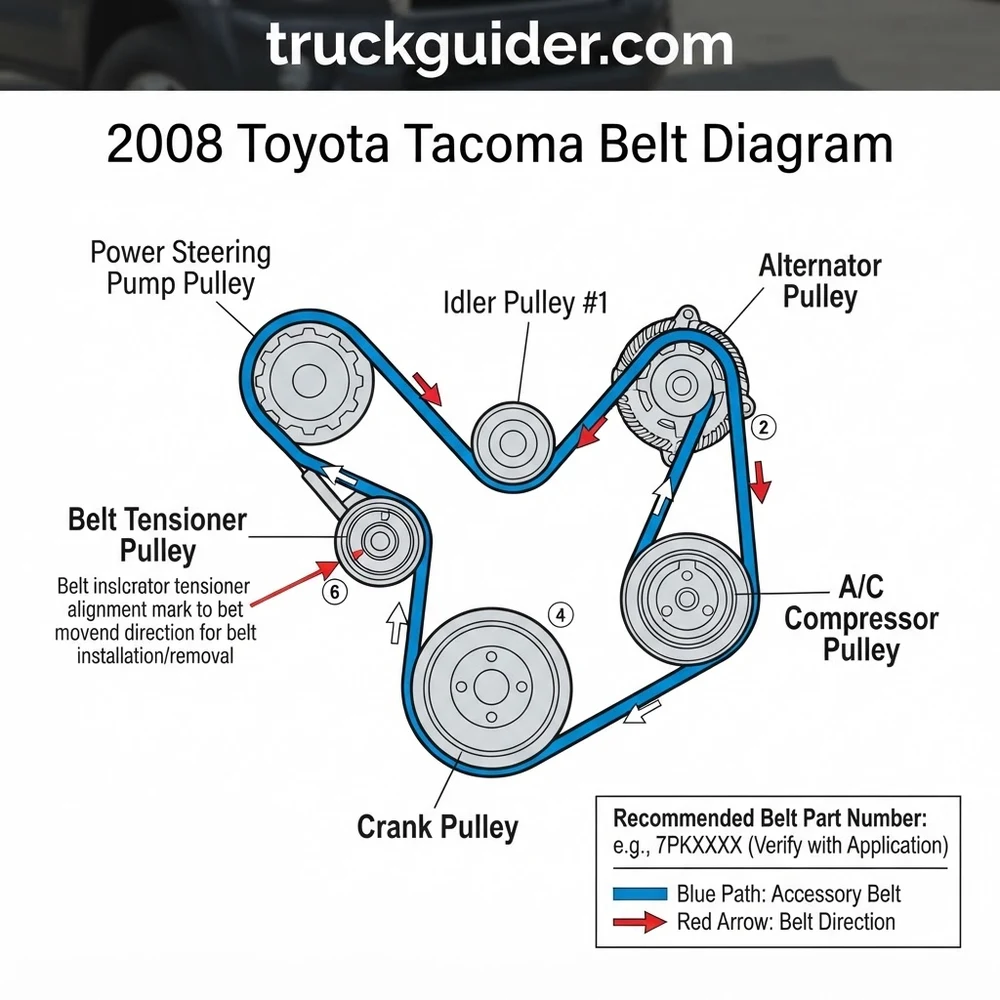
Distinguishing Your 2008 Toyota Tacoma Belt Diagram by Engine
Recommended Best Deal Products


The configuration of the serpentine belt system varies significantly between the two primary powerplants available for the 2008 model year. The 2.7L 4-cylinder (2TR-FE) and the 4.0L V6 (1GR-FE) engines feature distinct accessory arrangements.
The 2.7L engine utilizes a tighter routing path involving fewer idler pulleys compared to the V6. In the 2TR-FE configuration, the belt tensioner is positioned lower, often requiring a specific low-profile serpentine belt tool for adequate clearance. Conversely, the 4.0L V6 diagram is significantly more complex due to the higher torque requirements and the placement of the AC compressor and alternator. On the V6, the idler pulley plays a critical role in redirecting the belt to ensure sufficient wrap on the water pump pulley to prevent cavitation.
Regardless of the engine, the presence or absence of factory-installed AC affects the belt size and specific pulley diagram. Vehicles manufactured with the towing package or specific cooling upgrades may also feature a slightly different routing path around the fan clutch assembly. Always cross-reference the VIN-specific build sheet against your pulley diagram before attempting installation. Ensuring that the belt maintains a 180-degree or greater arc of contact on the crankshaft pulley is non-negotiable for preventing belt slip under heavy load conditions.
On the 4.0L V6, the belt tensioner is spring-loaded and designed to maintain a constant pressure. If you detect excessive vibration in the belt during idle, the tensioner’s internal dampening mechanism has likely reached the end of its service life, necessitating a full unit replacement rather than just a belt swap.
Recommended 2008 Toyota Tacoma Belt Part Numbers and Specs

Selecting the correct belt size is critical. Utilizing a belt that is even 5mm too long will cause the tensioner to bottom out, resulting in insufficient pressure against the accessories. The following table outlines the standardized references for the most common 2008 Tacoma engine configurations.
| Engine Type | OEM Part Number | Approximate Belt Length |
|---|---|---|
| 2.7L 2TR-FE (4-Cyl) | 90916-02599 | 2240 mm (88.2 in) |
| 4.0L 1GR-FE (V6) | 90916-02649 | 2415 mm (95.1 in) |
| V6 with Towing Pkg | 90916-02649 (Variant) | Check VIN Specification |
When sourcing aftermarket replacements, ensure the part meets EPDM (Ethylene Propylene Diene Monomer) construction standards. EPDM belts offer superior resistance to heat and cracking compared to older Neoprene variants. Verify that the rib count matches the pulley grooves—typically 7-rib for these engines—to ensure perfect alignment and optimal deck engagement.
How to Read the 2008 Toyota Tacoma Belt Routing Path
Recommended Best Deal Products


Executing a belt replacement requires a systematic approach to avoid damaging sensitive plastic pulleys or the spring-loaded tensioner. Before beginning, verify your belt routing path against the 2008 Toyota Tacoma belt diagram located on the under-hood emissions label. If that label is faded, consult the service manual diagram.
1. Preparation: Disconnect the negative battery terminal. Utilize a dedicated serpentine belt tool with the appropriate socket size for the tensioner bolt (usually 14mm or 17mm depending on the specific tensioner brand).
2. Tension Release: Rotate the belt tensioner clockwise (on most 4.0L models) or counter-clockwise (on select 2.7L models) to create slack. Never use excessive force, as the cast aluminum housing of the tensioner can fracture.
3. Removal: Carefully slide the belt off the most accessible smooth idler pulley first. Once the tension is removed, extract the belt from the remaining grooved pulleys, finishing with the crankshaft pulley.
4. Inspection: Before installing the new belt, spin every pulley by hand. Listen for bearing rumble and check for lateral play. Any resistance or noise indicates a pending bearing failure that will destroy a new belt within miles.
5. Installation: Start the routing at the crankshaft pulley, which provides the anchor point for the rest of the path. Route the belt according to the diagram, ensuring the ribbed side of the belt aligns perfectly with the grooved pulleys and the flat side contacts the idler pulleys.
6. Tensioner Seating: Leave the belt off the final, easiest-to-reach pulley (often the upper idler or the alternator pulley). Apply pressure to the tensioner again, slide the belt over the final pulley, and slowly release the tensioner to seat the belt.

Audible — Listen Free for 30 Days
One free credit a month and thousands of titles included.
Listen Free for 30 DaysAfter installation, ensure the belt is centered on all pulleys. A single rib of offset can cause the belt to shred or jump off the pulley at high RPM. Reconnect the battery and run the engine for 60 seconds, then perform a secondary visual inspection for proper tracking.
2008 Toyota Tacoma Belt Tension and Component Inspection
The longevity of your drive system depends on the health of the belt tensioner and idler pulleys. A common failure point is the tensioner arm bushing, which allows the pulley to tilt under load, leading to rapid edge wear on the belt.
When inspecting the belt tensioner, look for the wear indicator marks on the body of the unit. These marks indicate the allowable range for a healthy belt. If the indicator needle sits outside these marks with a new belt installed, the tensioner spring has weakened and must be replaced. Furthermore, inspect the idler pulley for “glazing”—a shiny, smooth appearance on the pulley face that suggests it has been slipping.
Check for debris or fluid contamination. Oil leaks from the valve cover gasket or timing cover often migrate down the engine block and onto the belt path. EPDM belts are particularly susceptible to oil degradation, which causes the material to swell and eventually delaminate. If evidence of fluid contamination is found, clean all pulleys with an automotive-grade non-residue degreaser before installing a new belt.
Never attempt to force a belt onto the pulleys by prying with a screwdriver or pry bar. This will score the pulley surfaces, creating sharp metal burrs that act like a saw against your new belt. Always utilize the tensioner’s design range to create the necessary slack for removal and installation.
2008 Toyota Tacoma Belt Diagram Questions Answered
Recommended Best Deal Products


Why does my belt squeal immediately after a cold start?
Cold-start squeal is typically caused by a glazed belt surface or a belt that has stretched beyond the tensioner’s compensation range. In the 2008 Tacoma, it can also indicate that the alternator pulley’s internal one-way clutch has seized, preventing the belt from maintaining smooth operation during engine deceleration.
How often should the serpentine belt be replaced?
While Toyota does not specify a rigid mileage interval for the 2008 Tacoma, standard professional practice suggests a thorough inspection every 30,000 miles. Under severe service conditions—such as heavy towing, off-road dust exposure, or extreme climate fluctuations—consider replacement every 60,000 to 75,000 miles to prevent mid-journey failure.
What happens if the belt routing path is followed incorrectly?
If the belt is routed incorrectly, you risk driving an accessory in the wrong direction (e.g., the water pump). This will cause immediate overheating. Additionally, incorrect routing often leads to “deck engagement” issues where the belt is forced against the back of a grooved pulley or vice versa, causing immediate structural failure of the belt material.
Audible Premium Plus — Annual Membership
12 audiobook credits up front, plus the full Audible catalogue.
See Annual PlansAre aftermarket belts as reliable as the OEM Toyota belt?
High-quality aftermarket belts from reputable manufacturers (such as Bando or Gates) are often equivalent or superior to the OEM specifications, provided you select the EPDM grade. Bando, in fact, acts as an OEM supplier for many Toyota models. Always avoid “economy” store-brand belts, which often utilize lower-grade synthetic rubbers that fail prematurely under the high heat generated by the 4.0L V6.
Is it necessary to replace the idler pulley during a belt change?
It is highly recommended to assess the idler pulley bearing health during any major belt service. If the pulley has over 100,000 miles, the grease inside the sealed bearing has likely degraded. Replacing the idler pulley at the same time as the belt prevents you from having to repeat the labor-intensive removal process if the pulley bearing fails later.
Step-by-Step Guide to Understanding the 2008 Toyota Tacoma Belt Diagram
Identify – Verify your engine type (4-cyl vs 6-cyl) to ensure you have the correct belt part number.
Locate – Find the belt tensioner assembly on the front of the engine near the passenger side.
Reference – Consult your belt routing path diagram to understand the clockwise or counter-clockwise flow.
Connect/Route – Apply force to the tensioner with a 14mm wrench, hold it in the release position, and loop the belt over the pulleys.
Verify – Check that the belt is centered on every idler pulley and the crankshaft pulley before releasing the tensioner.
Troubleshoot – Start the engine briefly; if you hear chirping, shut it down immediately and re-verify that the belt is fully seated in all grooves.