2011 Ram 1500 4.7 Towing Capacity 2026 Verified Specs

Quick Answer
The 2011 Ram 1500 equipped with the 4.7L V8 engine typically features a maximum towing capacity ranging from 3,600 lbs to 7,650 lbs, depending heavily on the cab configuration, axle ratio, and drivetrain. The absolute primary factor determining your specific limit is the combination of rear axle ratio and the presence of a factory-installed tow package. Always verify your truck’s specific limits using the door jamb payload sticker and the VIN-specific tow guide.
Unsure if your 2011 Ram 1500 is ready for the road? Don’t rely on guesswork when hauling your trailer. Many owners confuse bumper ratings with receiver hitch capacity or ignore the payload-to-towing inverse relationship, leading to unsafe setups. This guide provides the official, verified towing capacity for the 2011 Ram 1500 4.7L V8, helping you identify your specific configuration’s limits safely and effectively.
Last reviewed: August 2026. This data covers the 2011 model year Ram 1500 equipped with the 4.7L Flex-Fuel V8. Because capacities vary by wheelbase, axle ratio, and tow package, owners must consult their vehicle’s specific VIN, door jamb sticker, and the factory owner’s manual for definitive ratings.
2011 Ram 1500 4.7 Towing Capacity Specifications Chart
Recommended Best Deal Products


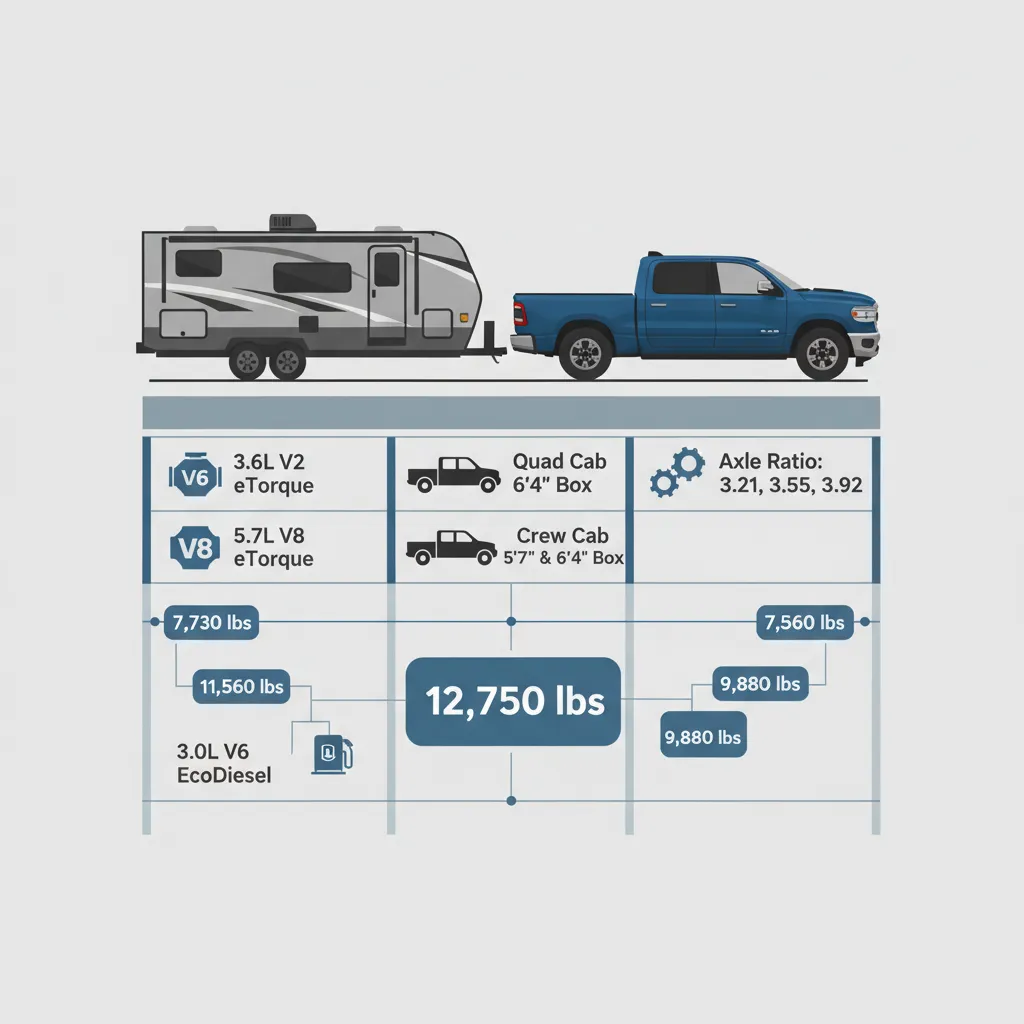
| Drivetrain | Cab / Bed | Axle Ratio | Max Tow Capacity |
|---|---|---|---|
| 2WD | Regular Cab 6’4″ | 3.55 | 7,450 lbs |
| 2WD | Crew Cab 5’7″ | 3.55 | 6,850 lbs |
| 4WD | Regular Cab 6’4″ | 3.92 | 7,250 lbs |
| 4WD | Quad Cab 6’4″ | 3.92 | 6,850 lbs |
How to Read the Ram 1500 Towing Data Table
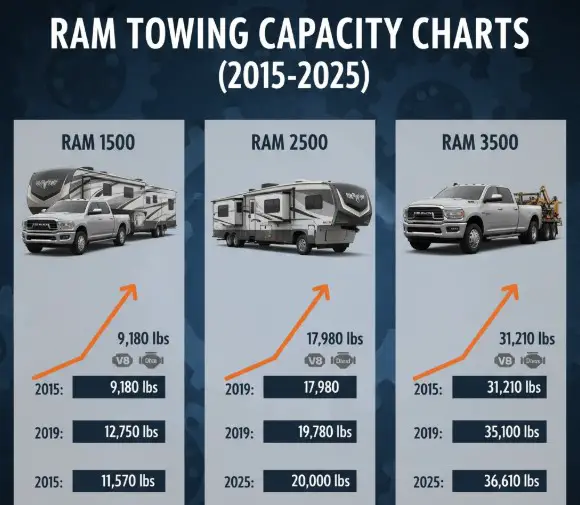
The table above represents factory baseline capacities for specific configurations. Note that these figures assume a properly equipped vehicle with the factory Class IV receiver hitch and the appropriate axle ratio. If your truck is missing the cooling upgrades often found in the “Tow Package,” your real-world capacity may be significantly lower.
The Role of Axle Ratios in Towing Performance
The axle ratio is the multiplier for your engine’s torque reaching the wheels. A 3.92 ratio provides more mechanical advantage, allowing for better towing performance and acceleration compared to the 3.55 ratio, which is optimized for highway fuel economy. When planning your tow, prioritize a 3.92 ratio if you frequently encounter steep grades.
What Limits the 2011 Ram 1500 4.7 Towing Capacity
Towing capacity is not just an engine rating; it is a system rating. The total weight the vehicle can safely move is determined by the Gross Combined Weight Rating (GCWR), which is the total weight of the truck, passengers, cargo, fuel, and the trailer itself.
Payload vs. Towing Capacity: The Critical Difference
Every pound you put inside your truck—passengers, tools, or aftermarket accessories—reduces your available payload. Because tongue weight counts as payload, a heavy trailer will consume your payload capacity rapidly. Exceeding your GVWR (Gross Vehicle Weight Rating) is just as dangerous as exceeding your tow rating.
Why the 4.7L Flex-Fuel V8 Performance Varies
The 4.7L PowerTech engine produces 310 hp. While it is flex-fuel compatible, remember that the fuel choice doesn’t change the mechanical cooling or suspension limits of the chassis. Always stick to the lower end of the capacity spectrum if you are towing in high-ambient temperature regions or mountainous terrain.
How to Find Your Specific 2011 Ram 1500 Tow Rating
Recommended Best Deal Products


Check the driver’s side door jamb for the Tire and Loading Information placard. This is the most accurate indicator of what your specific chassis can handle.
Input your VIN into the official Mopar owner’s portal to pull your original “Build Sheet,” which confirms your specific axle configuration.
Inspecting Your Factory Hitch and Receiver
The bumper capacity is almost always significantly lower than a frame-mounted Class IV receiver hitch. Check the sticker on the receiver itself; the hitch capacity is often the absolute “weakest link” that defines your maximum towing limit.
Optimizing Your Ram 1500 for Heavy Loads
Towing is demanding on your drivetrain. The 65RFE 6-speed automatic transmission is robust, but temperature is the enemy of longevity.
If you tow frequently, ensure your external transmission cooler is clear of debris to maintain optimal fluid health.
For any trailer exceeding 2,000 lbs with its own brakes, an integrated brake controller is essential for safety and control.
Comparison of Ram 1500 Engine Towing Performance
Recommended Best Deal Products


Always remember that the truck’s towing capacity is limited by the lowest-rated component in the chain, whether that is the hitch, the axle, the transmission, or the tires. Never assume the “Maximum Rating” applies to your specific vehicle without verifying the GCWR.
In summary: Always reference your door jamb sticker for your specific VIN’s payload. Your towing capacity is only as strong as your weakest link—check your hitch and axle ratio. The 4.7L engine is a capable light-to-medium duty puller, but stay within your GCWR. Check your truck’s specific build sheet today to confirm your axle ratio and max tow rating before your next haul.
2011 Ram 1500 4.7 Towing Capacity: Frequently Asked Questions
Does the 4.7L engine have enough power for a travel trailer?
The 4.7L V8 produces 310 hp and 330 lb-ft of torque, which is sufficient for light-to-mid-sized travel trailers. It handles flat terrain effectively, but you may experience slower acceleration and higher RPMs on steep mountain grades compared to the 5.7L HEMI. Always ensure the total loaded weight of the trailer stays within the manufacturer’s specified tow rating for your specific axle configuration.
How do I find my truck’s specific axle ratio?
You can find your specific axle ratio by checking the ‘Vehicle Build Sheet,’ which can be requested through the Ram owner website using your VIN. Alternatively, the axle ratio is often printed on the front differential tag or on the production build sticker located in the glove box or driver-side door jamb. Avoid guessing based on model years alone, as ratios vary by package.
Does my truck need an external transmission cooler?
If you are towing regularly or live in a hot climate, an external transmission cooler is highly recommended, even if not part of the factory tow group. Towing puts significant strain on the 6-speed automatic transmission, and heat is the leading cause of premature failure. An auxiliary cooler helps keep transmission fluid within its optimal operating temperature range under heavy load.
What is the difference between towing capacity and payload?
Towing capacity is the maximum weight a vehicle can pull behind it, including the trailer and its cargo. Payload capacity is the maximum weight the truck itself can carry, including passengers, cargo in the bed, and the ‘tongue weight’ exerted by the trailer on the hitch. Both figures are limited by the GCWR and GVWR, and exceeding either can significantly impact braking and handling.
![Service Electronic Throttle Control Ram 1500 [2026]](https://truckguider.com/wp-content/uploads/2026/03/service-electronic-throttle-control-ram-featured.webp)
![RAM 1500 Tail Light Bulb Guide: Sizes & LED Upgrades [2026]](https://truckguider.com/wp-content/uploads/2026/03/ram-1500-tail-light-bulb-featured-768x403.webp)