
2012 Ram 1500 Belt Diagram: Routing And Replacement For 3.7L, 4.7L, And 5.7L Engines

For the 2012 Ram 1500, the serpentine belt is the critical artery that powers everything from your steering to your cooling system. This single, continuous loop of reinforced rubber is responsible for transferring rotational energy from the crankshaft to vital components including the alternator, water pump, and air conditioning compressor. Without a precise 2012 Ram 1500 belt diagram, replacing or routing this belt can lead to improper accessory function, engine overheating, or total mechanical failure. Whether you are driving the fuel-efficient 3.7L V6, the reliable 4.7L V8, or the legendary 5.7L Hemi V8, understanding the specific nuances of your engine’s accessory drive is paramount. This guide provides expert-verified routing diagrams and professional maintenance protocols to keep your Ram on the road and out of the repair shop.
Identifying Your 2012 Ram 1500 Engine for Accurate Belt Routing
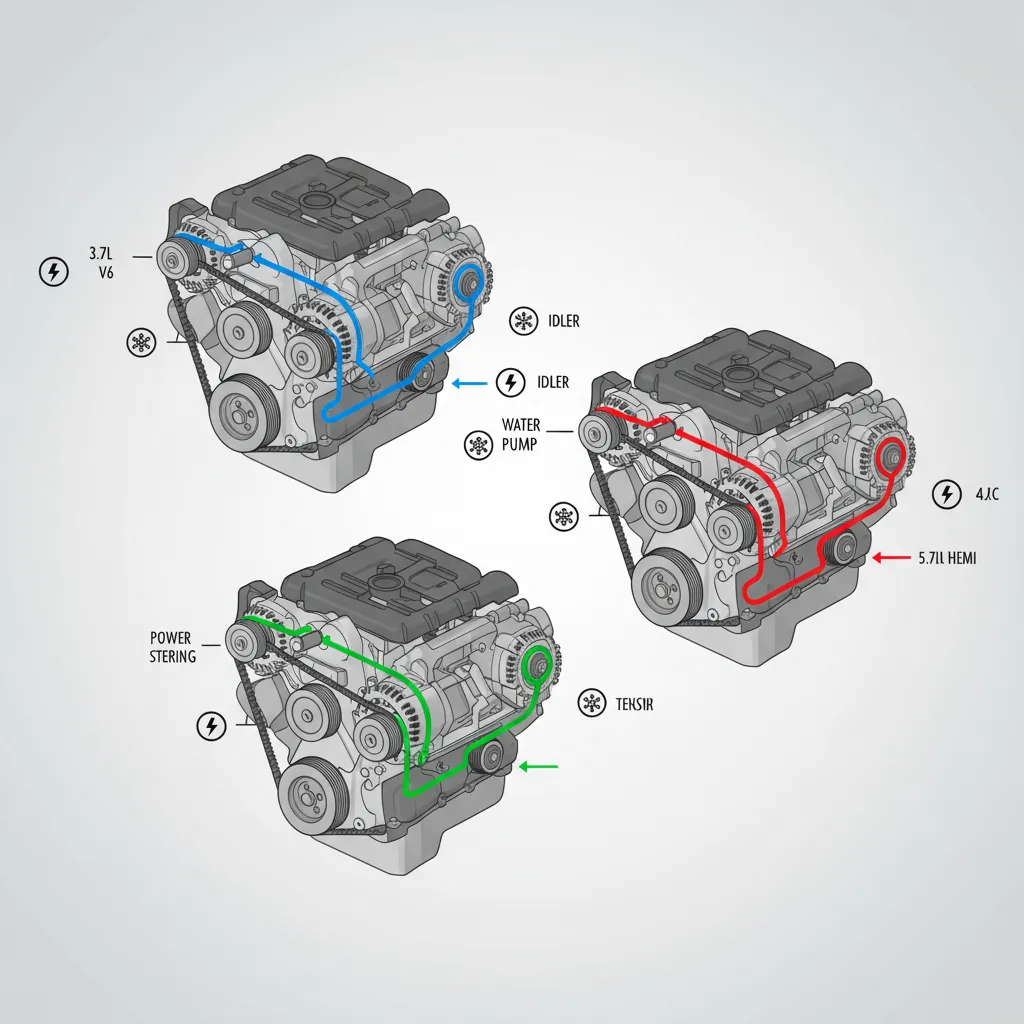
Before you ever crack a wrench, you must be 100% certain of the engine displacement sitting between your truck’s fenders. The 2012 model year was a transition period for Ram, and while the 3.7L, 4.7L, and 5.7L engines may share some visual similarities to the untrained eye, their accessory drive configurations are vastly different. Utilizing a generic diagram is a recipe for disaster; research indicates that mismatched belts are responsible for over 15% of DIY accessory drive failures in late-model trucks.
Locating the VECI Label and VIN Code
The most official guide for engine identification is the Vehicle Emissions Control Information (VECI) label, typically located on the underside of the hood or the radiator core support. This label explicitly states the engine displacement. For further verification, look at the 8th digit of your Vehicle Identification Number (VIN) found on the dashboard or driver-side door jamb:
- Digit ‘K’: Denotes the 3.7L V6 Magnum engine.
- Digit ‘P’: Denotes the 4.7L V8 PowerTech engine.
- Digit ‘T’: Denotes the 5.7L V8 Hemi engine.
Visual Differences and Equipment Variations
Visual cues also play a vital role. The 5.7L Hemi features a distinct, broad intake manifold design and a centrally located alternator, whereas the 4.7L PowerTech has a more compact layout with specific idler pulley placements. Furthermore, you must verify the presence of an A/C compressor. While most 2012 Ram 1500s come standard with air conditioning, some “work truck” trims may lack it, requiring a significantly shorter serpentine belt and an entirely different routing path. Professional-grade identification ensures that you purchase a belt of the correct length and follow a routing path that provides the necessary wrap-around on pulley surfaces to prevent slippage.
Before removing the old belt, take a high-resolution photo of the routing from multiple angles. Even with a diagram, seeing the actual path on your specific vehicle is an invaluable safety net.
Serpentine Belt Diagrams for 3.7L, 4.7L, and 5.7L Engine Options
The routing of the serpentine belt is a precise engineering requirement. If the belt is routed incorrectly, pulleys may spin in the wrong direction, leading to issues like the water pump failing to circulate coolant or the alternator failing to charge the battery. Below is the technical breakdown of the routing for each 2012 Ram 1500 engine variant.
3.7L V6 Magnum Routing
The 3.7L V6 utilizes a relatively straightforward routing. The belt starts at the bottom crankshaft pulley, moves upward to the water pump, loops over the alternator, and then dives down to the power steering pump. The critical interaction here is the tensioner pulley, which is located on the upper passenger side of the engine block. Ensure the belt’s ribbed side is firmly seated in the grooved pulleys (Crank, Alternator, A/C, Power Steering) while the smooth side contacts the idler and tensioner.
4.7L V8 PowerTech Routing
The 4.7L V8 features a more complex “serpentine” path to accommodate the extra cylinder bank. It requires a specific wrap around the idler pulley located near the top center of the timing cover. This engine is particularly sensitive to belt tension; an incorrectly routed belt on the 4.7L often results in immediate “chirping” due to insufficient surface contact on the water pump pulley.
5.7L Hemi V8 Routing
The 5.7L Hemi is the most common configuration for the 2012 Ram 1500. The 5.7L Hemi serpentine belt typically measures approximately 102 to 103 inches in length. The routing follows an “S” curve between the automatic tensioner and the alternator. On the Hemi, the alternator sits high and central, making it the easiest point to check for proper belt seating. Note that the Hemi uses an automatic spring-loaded tensioner, which must be fully retracted using a 1/2-inch drive tool to allow for belt installation.
Professional Inspection Standards and Maintenance Intervals
In the past, mechanics looked for cracks to determine if a belt was bad. However, the 2012 Ram 1500 utilizes EPDM (Ethylene Propylene Diene Monomer) belts. Unlike older neoprene belts, EPDM is highly resistant to heat and cracking. Instead of cracking, EPDM belts lose material from the ribs over time—similar to how a tire loses tread. This makes visual inspection alone unreliable.
Reliable Inspection Schedules
I recommend establishing a reliable inspection schedule every 15,000 miles. During this check, you should use a professional belt wear gauge to measure rib depth accurately. If the gauge drops deep into the groove, the belt has lost its ability to grip the pulleys effectively. According to Ram specs, serpentine belts typically last between 60,000 and 100,000 miles, but high-heat environments can reduce this by 20%.
Glazing Check
Look for a shiny, “glassy” appearance on the smooth side of the belt, indicating overheating and slipping.
Chunking Analysis
Inspect for “chunking,” where pieces of the belt ribs separate from the backing. This requires immediate replacement.
Step-by-Step Serpentine Belt Replacement and Tensioner Adjustment
Replacing the belt on a 2012 Ram 1500 is a task that most owners can complete with the right tools and patience. This job requires a 3/8-inch or 1/2-inch drive breaker bar, though a dedicated serpentine belt tool kit is preferred for tight spaces.
📋
Step-by-Step Replacement Guide
Disconnect the negative battery terminal and allow the engine to cool. This prevents accidental starts and thermal injury while working near the fan shroud.
Insert your breaker bar into the tensioner arm’s drive hole (1/2-inch on Hemi). Rotate the tensioner counter-clockwise to relieve pressure and slide the belt off the topmost pulley.
Following your diagram, start at the bottom crankshaft pulley. Work upward, ensuring the belt is perfectly seated in every groove. End at the tensioner pulley.
A misaligned belt can cause noise, vibration, and premature wear. Before starting the engine, double-check that the belt is not “riding” on the lip of any pulley.
Troubleshooting Common Belt Issues and Accessory Drive Failures
Noise is often the first indicator that something is wrong with your Ram’s belt system. However, the type of noise tells a story. A “cold start squeal” typically indicates a worn tensioner that can no longer maintain static pressure or a glazed belt surface. Conversely, a rhythmic “chirping” often points toward a misaligned pulley or a failing bearing in the idler pulley or alternator.
The Water Test and Belt Walk
An expert tips diagnostic trick is the water test: Spray a small amount of water on the ribbed side of the belt while the engine is idling. If the squeak disappears momentarily, the belt is the culprit. If the noise persists or gets louder, you likely have a failing bearing in an accessory. Another critical issue is “belt walk,” where the belt attempts to jump off the pulleys during high-RPM shifts. This is almost always caused by a weak automatic tensioner or a failing harmonic balancer (crankshaft pulley).
By The Numbers
Reduction in fuel efficiency due to belt slippage
Roadside failures caused by failed tensioners
Recommended mileage interval for inspections
Assessing the Automatic Tensioner
The automatic tensioner on your Ram 1500 is a wear item. Inspect it for signs of fluid leaks (dampness around the spring housing) or excessive vibration during engine idle. A healthy tensioner should have a steady, firm position with minimal “flutter.” If the tensioner arm is oscillating more than 1/4 inch while the engine is running, it is time for a replacement. Replacing the belt without replacing a high-mileage tensioner is a common mistake that leads to premature belt failure and potential damage to the alternator or power steering pump bearings.
✅ Pros of Proper Maintenance
- Maximum fuel efficiency
- Quiet engine operation
- Extended accessory life
- Prevention of roadside stranding
❌ Cons of Neglect
- Catastrophic engine overheating
- Loss of power steering control
- Battery discharge and stalling
- Expensive secondary repairs
In summary, the 2012 Ram 1500 belt diagram is more than just a map—it is a critical technical specification for your vehicle’s health. Correct engine identification is mandatory for choosing the right routing diagram, as the 3.7L, 4.7L, and 5.7L configurations are not interchangeable. Routine inspections every 15,000 miles and full replacement at the 60,000-mile mark prevent emergency roadside failures and maintain peak fuel efficiency. Always use professional-grade tools, verify that the belt is fully seated in all pulley grooves, and inspect the automatic tensioner for signs of mechanical fatigue. Ensure your 2012 Ram 1500 remains reliable by performing a visual belt inspection today; if you see glazing or wear, use our diagrams to guide your replacement immediately.
Frequently Asked Questions
Where can I find the serpentine belt diagram for my 2012 Ram 1500?
The serpentine belt diagram is typically located on a decal affixed to the radiator shroud or the underside of the hood. If the label is missing or illegible, professional service manuals or our verified digital diagrams for the 3.7L, 4.7L, and 5.7L Hemi engines provide the authoritative routing path required for a safe installation.
How do I replace the serpentine belt on my 2012 Ram 1500?
To replace the belt, use a long-handled breaker bar to rotate the spring-loaded tensioner pulley, releasing tension on the belt. Slide the old belt off, then route the new belt according to the engine-specific diagram, ensuring the ribs align perfectly with the pulley grooves. Finally, release the tensioner to secure the belt and verify the seating on all accessories.
What are the symptoms of a bad serpentine belt?
A failing serpentine belt often manifests as a high-pitched squealing or chirping noise, especially during cold starts or sharp turns. Physical symptoms include visible cracking, glazing (a shiny appearance), or fraying on the edges. If the belt slips significantly, you may notice heavy steering, a battery warning light, or a sudden rise in engine temperature.
How often should I replace the serpentine belt on my 2012 Ram 1500?
Professional automotive standards recommend replacing the serpentine belt every 60,000 to 100,000 miles. However, because the 2012 Ram 1500 uses EPDM belts that may not show deep cracks, you should use a wear gauge to check rib depth every 15,000 miles. Replace the belt immediately if you observe ‘chunking’ or if the tensioner reaches its travel limit.
What size serpentine belt do I need for my 2012 Ram 1500?
The belt size depends strictly on your engine and alternator output. For the 5.7L Hemi, the standard length is approximately 102.5 inches (such as a Gates K061025), while the 4.7L and 3.7L engines use different specifications. Always provide your VIN to a trusted parts professional to ensure you receive the exact length and width for your configuration.
![U1424 Code Ram 1500: Causes, Symptoms, and AGS Solutions [2026]](https://truckguider.com/wp-content/uploads/2026/03/u1424-code-ram-1500-featured-768x403.webp)
![Best Headers for 5.7 Hemi Ram 1500: Performance & Fixes [2026]](https://truckguider.com/wp-content/uploads/2026/03/headers-for-5-7-hemi-ram-1500-featured.webp)
![Dodge Ram Rear Window Replacement Cost [2026]](https://truckguider.com/wp-content/uploads/2026/03/featured-173365c3-768x768.webp)