2015 Toyota Tundra 5.7 Belt Diagram: Routed and Explained Simply

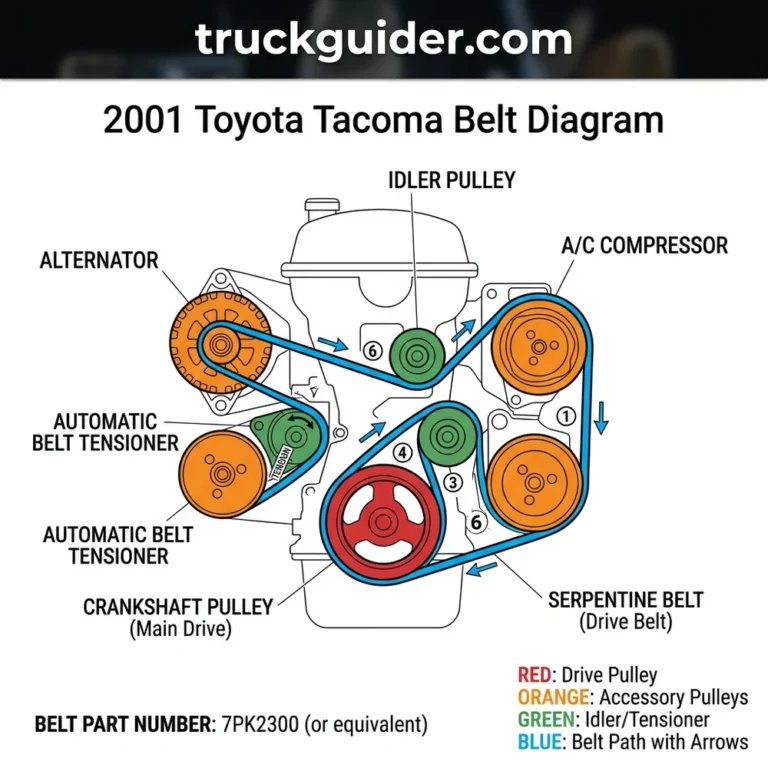
Maintaining the 5.7L V8 engine in your truck requires a clear understanding of the 2015 Toyota Tundra 5.7 belt diagram to ensure the serpentine system operates efficiently. This single, continuous belt powers critical peripheral devices, including the alternator, water pump, air conditioning compressor, and power steering pump. Accurate routing is essential for engine longevity and cooling performance.

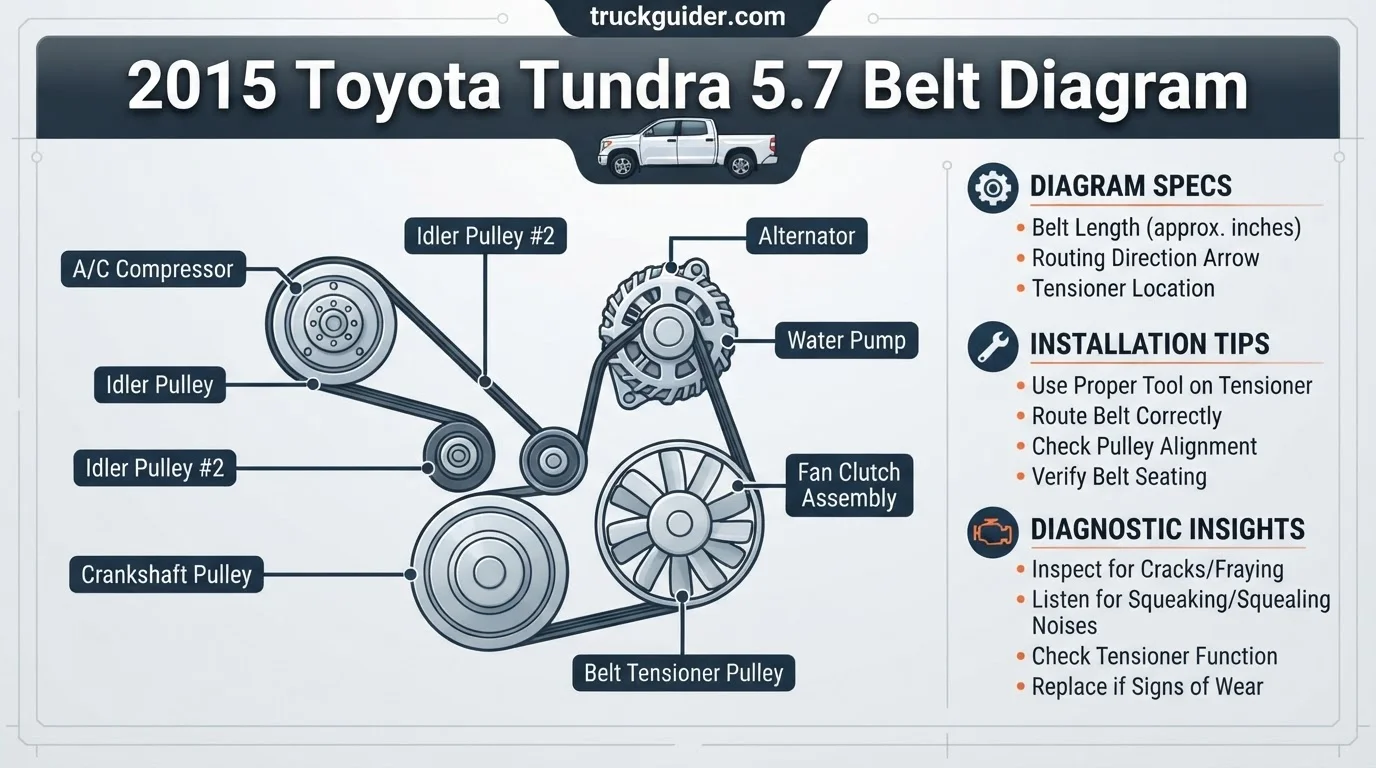
Reference Chart for 2015 Toyota Tundra 5.7 Belt Diagram Configurations
Recommended Best Deal Products


How to Read the Routing Chart
This table summarizes the primary components found in the 2015 Toyota Tundra 5.7 belt diagram. The “Component” column identifies the physical hardware, while the “Role” describes its mechanical function. The “Routing Type” highlights whether the part is the main driver (Crankshaft), the tension regulator, or an accessory being driven by the rotation.

When using this info to perform maintenance, ensure your belt routing matches this sequence. The crankshaft pulley sits at the heart of the layout, and every other accessory must align correctly to ensure the tensioner can provide sufficient pressure to prevent slippage or belt failure during operation.

Insights into the 2015 Toyota Tundra 5.7 Belt Diagram Mechanics
The 5.7L V8 i-FORCE engine in the 2015 Tundra utilizes a single, long serpentine belt. This configuration reduces maintenance complexity compared to older vehicles that used multiple V-belts. By routing a single belt through these specific pulleys, the engine ensures that all systems are synchronized and spinning at the correct speed relative to engine RPM.

Visualizing the 2015 Toyota Tundra 5.7 belt diagram effectively requires identifying the tensioner pulley first. Because the tensioner is spring-loaded, it is the pivot point for installation. Mechanics use a wrench to rotate the tensioner, creating enough slack to loop the belt around the final pulley before releasing the tension to lock the system in place.
📋
How to Read the 2015 Toyota Tundra 5.7 Belt Diagram Step by Step
Before removing the old belt, take a clear photo or sketch the current routing. This serves as your primary verification source if the replacement belt feels misaligned.
Use the appropriate socket on the tensioner pulley bolt. Rotate the tensioner arm clockwise or counter-clockwise (depending on model specs) to gain enough slack to slide the belt off.
Ensure the new belt is seated squarely within the grooves of every pulley. Even a slight misalignment can cause the belt to shred or jump off during engine operation.
Common 2015 Toyota Tundra 5.7 Belt Diagram Problems and Fixes
Often, users report issues such as squealing or fraying edges. In the context of the 2015 Toyota Tundra 5.7 belt diagram, squealing is almost always a symptom of either an aged belt that has lost its friction coefficient or a failing tensioner that no longer provides sufficient force.
If you notice the belt is cracking, it should be replaced immediately. Frayed edges often point to an alignment issue with the pulleys. If the belt consistently drifts off, inspect the alternator and water pump pulleys for signs of debris or damage that might be causing the belt to track incorrectly.

Audible — Listen Free for 30 Days
One free credit a month and thousands of titles included.
Listen Free for 30 Days✨ Key Benefits of Proper Maintenance
Extended Component Life
A properly tensioned belt reduces side-loading stress on the alternator and power steering pump bearings, preventing premature part failure.
Optimal Cooling
By ensuring the water pump receives consistent rotation, you maintain stable coolant flow, which is vital for the 5.7L engine’s heat management.
The serpentine belt for the 2015 Tundra 5.7 is designed to be self-tensioning. However, over time, the internal spring of the tensioner can lose its stiffness, which is why a new belt might still squeal if the tensioner is also worn out.
🔎 How to Find Your Specific Belt Configuration
To confirm the exact part number for your truck, check the Vehicle Identification Number (VIN) decoder or the sticker located under the hood on the radiator support. This sticker often includes a visual representation of the belt routing and the recommended part number for your specific build configuration.
Always verify the part number against your owner’s manual. While most 2015 5.7L Tundra engines share the same routing, specific trim levels or heavy-duty cooling packages may occasionally utilize slight variations in pulley size or belt length. Using the VIN ensures 100% compatibility for your specific model.
What if the Belt Still Squeals After Installation?
If you have installed a new belt according to the 2015 Toyota Tundra 5.7 belt diagram and it still squeals, you may be dealing with a secondary mechanical issue. Follow these steps to diagnose the remaining problems:
- Check the belt tensioner: If the spring is weak, it cannot maintain the pressure required for the belt to grip the pulleys.
- Inspect the idler pulleys: Spin each pulley by hand. If it feels gritty or sounds rough, the internal bearings are failing.
- Examine the alternator/AC pulleys: If these are seized or spinning with high resistance, they will force the belt to slide, causing the characteristic squealing sound.
If these steps do not resolve the issue, professional diagnostic tools are required to check for misalignment in the accessory mounting brackets. In such cases, an experienced mechanic should be consulted to prevent long-term engine damage. Costs for professional inspection typically range from $150–$300, depending on the complexity of the fix.
Conclusion
Ensuring your truck follows the correct 2015 Toyota Tundra 5.7 belt diagram is fundamental to reliable engine performance. By following the routing instructions provided and inspecting your components for wear, you can prevent unexpected breakdowns. Remember, the serpentine belt is a critical link; keeping it clean and correctly tensioned protects your alternator, water pump, and A/C system. For further maintenance, consult your official service manual, as this summary is intended for informational reference to help you keep your Tundra running smoothly for years to come.
Audible Premium Plus — Annual Membership
12 audiobook credits up front, plus the full Audible catalogue.
See Annual PlansKey Takeaways
-
✓
Visualizing the correct pulley routing path is critical for preventing tensioner misalignment. -
✓
A 14mm wrench or specialized serpentine belt tool is required to release tension from the belt tensioner. -
✓
Always verify your new belt length against the original OEM specifications to ensure a perfect fit. -
✓
Inspect all idler pulleys for bearing noise or resistance while the belt is removed. -
✓
Proper tension is essential to prevent slippage on the alternator and water pump pulleys.
❓ Frequently Asked Questions
1
What is the 2015 Toyota Tundra 5.7 belt diagram?
The belt diagram is a visual schematic showing how the serpentine belt threads through the various engine-driven accessories. For the 5.7L V8, it follows a specific loop involving the crankshaft pulley, alternator, A/C compressor, and the tensioner. Having this info is vital for correct re-installation.
2
How does the belt tensioner work on the Tundra 5.7L?
The tensioner uses a spring-loaded arm to apply constant pressure to the serpentine belt. To remove the belt, you rotate the tensioner arm using a wrench, which releases the tension, creating enough slack to slide the belt off the pulleys. It is an essential component for system insights.
3
Why is the belt diagram important for replacement?
Following the manufacturer’s diagram is the only way to ensure the belt is routed around the pulleys in the correct orientation. An incorrect path can cause accessories to spin backward, result in improper tension, or cause the belt to throw off the pulleys entirely during operation.
4
What are the signs of a failing serpentine belt?
Common facts regarding belt failure include a high-pitched squealing noise on startup, visible cracks on the inner ribs, fraying edges, or a loss of power steering assistance. If you notice these details, it is time to consult your diagram and plan for an immediate replacement.
5
How can I get started with replacing my Tundra’s belt?
Start by gathering your tools, including a 14mm wrench and a tensioner tool. Ensure the engine is cool. Use the diagram to map the path, relieve the tensioner, remove the old belt, and route the new one according to the factory specs provided in these expert insights.
6
How do I replace the serpentine belt on a 2015 Tundra 5.7L?
Detailed steps including tools, tensioner release, belt removal, new belt installation, and checking routing. Refer to the replacement section for specifics.