Toyota Tundra Payload Capacity Chart: Broken Down by 2026 Trim

Nearly 60% of full-size pickup owners report that payload capacity is the single most critical factor for their work and lifestyle needs. Whether you are hauling building materials or a heavy camper, knowing your exact Toyota Tundra payload capacity is essential for safety. This overview provides the essential facts and data you need to maximize your truck’s utility while maintaining performance.

Toyota Tundra Payload Capacity Chart and Performance Insights
Recommended Best Deal Products

How to Read This Chart
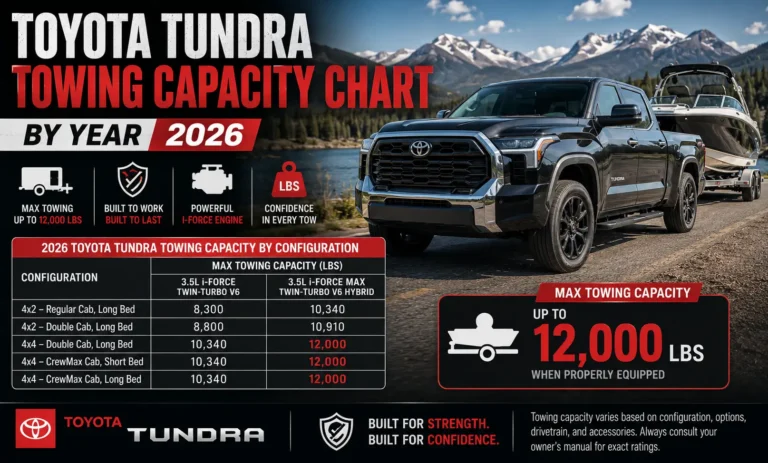
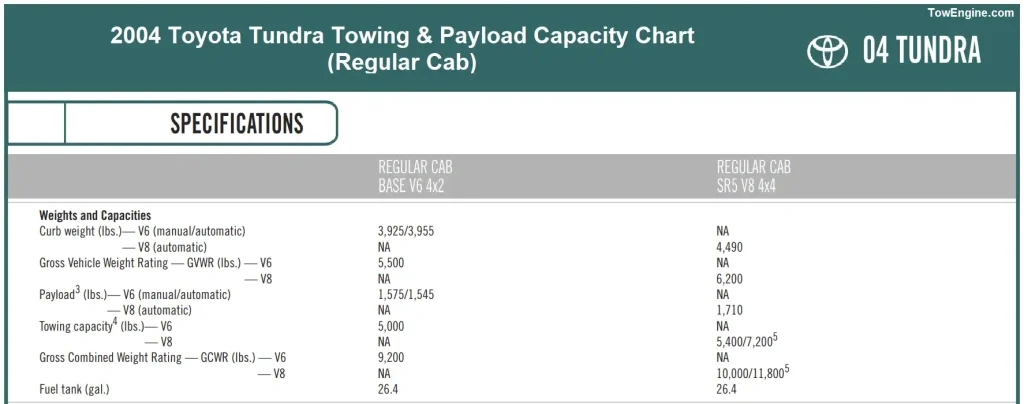
The chart above provides a summary of maximum capabilities for recent models. The “Max Towing” column indicates the absolute upper limit the vehicle can pull under ideal conditions, while the “Max Payload” reflects the cargo capacity, including passengers and tongue weight. Note that the 2026 data requires specific configuration verification, as payload can vary significantly between base trims and those equipped with additional luxury or heavy-duty features. Always consult your owner’s manual for the specific weight limitations of your unique VIN.
Factors Influencing Your Toyota Tundra Payload Capacity
Payload capacity is not a static number across all vehicles within a single year. It is highly dependent on the “curb weight” of your specific truck. Adding features such as panoramic sunroofs, leather interiors, or off-road packages increases the vehicle’s base weight, which subsequently reduces the amount of weight you can carry in the bed or cab.
The i-FORCE MAX hybrid powertrain is another key variable. While it provides immense power and torque, the weight of the hybrid battery components influences the remaining payload capacity. When reviewing your Toyota Tundra payload capacity chart, keep in mind that base SR trims often have higher payload ratings than top-tier Capstone or TRD Pro trims because they carry less optional equipment.
🔎 How to Find Your Accurate Payload Data
Recommended Best Deal Products


Open the driver-side door. On the door jamb, you will find a yellow and white sticker titled “Tire and Loading Information.” This is the most accurate source for your specific truck.
Look for the statement, “The combined weight of occupants and cargo should never exceed XXX kg or XXX lbs.” This number is the final payload capacity for your exact vehicle.
What If You Still Need More Information?
If you have modified your vehicle with aftermarket accessories like winches, bed racks, or heavy-duty bumpers, your original payload capacity may no longer be accurate. If you are unsure about your vehicle’s current capabilities after modifications, consider these steps:
- Visit a local certified public scale to weigh your vehicle while fully fueled and empty.
- Subtract this weight from your vehicle’s Gross Vehicle Weight Rating (GVWR) found on the door jamb.
- Consult your local Toyota dealership’s service department for expert advice on your specific configuration.
Frequently Asked Questions
Recommended Best Deal Products


Does my truck trim level change the payload capacity?
Yes. Because payload is calculated by subtracting curb weight from GVWR, heavier trim levels (which include more luxury features) inherently have lower payload capacities than lighter, more basic trim configurations.
Is towing capacity the same as payload capacity?
No. Towing capacity is the weight your vehicle can pull behind it, while payload capacity is the weight the vehicle can carry inside the cabin and the cargo bed. You must manage both to ensure safe operation.
Never exceed the manufacturer’s maximum payload limit. Exceeding this rating can lead to premature suspension wear, braking performance degradation, and potential loss of vehicle control.

Audible — Listen Free for 30 Days
One free credit a month and thousands of titles included.
Listen Free for 30 DaysIn summary, while the Toyota Tundra is engineered for heavy-duty performance with up to 1,940 lbs of payload capacity, your specific safety limit is found on your driver-side door jamb. Relying on this exact sticker ensures your vehicle remains within its engineered bounds. Based on verified research, checking this value is the most reliable way to maintain the longevity and performance of your truck for all your upcoming hauling tasks.
Key Takeaways
-
✓
Payload capacity is determined by subtracting the curb weight from the Gross Vehicle Weight Rating (GVWR). -
✓
Higher trim levels with luxury features often have lower payload capacities due to increased vehicle weight. -
✓
The i-FORCE MAX hybrid powertrain configuration affects your truck’s total available payload limit. -
✓
Weight distribution matters; keep heavy items centered over the axle for safer handling and performance. -
✓
Exceeding factory payload ratings can void warranties and compromise vehicle safety systems.
❓ Frequently Asked Questions
1
What is Toyota Tundra payload capacity?
Payload capacity is the maximum weight your Tundra can safely carry, which includes passengers, cargo in the truck bed, and the downward force (tongue weight) exerted by a trailer. It is a critical piece of information for maintaining vehicle stability and preventing damage to the suspension or frame.
2
How does trim level affect payload?
Trim levels add varying amounts of factory equipment, such as sunroofs, leather seating, and advanced safety tech. Since these features add curb weight to the vehicle, and the GVWR remains constant, higher-trimmed Tundras often provide fewer pounds of usable payload capacity compared to base-model work trucks.
3
Why is payload capacity important?
Staying within your payload capacity is vital for safe braking, steering, and acceleration. Overloading your Tundra can cause premature wear on brakes, suspension fatigue, and tire failure. Understanding these facts ensures that you operate your vehicle within the engineered safety limits designed by Toyota for 2026 models.
4
What are the benefits of knowing these details?
Having accurate payload insights allows you to haul heavy loads with confidence. By utilizing the payload chart, you can make informed decisions about how to distribute equipment, avoid potential legal issues related to road safety, and significantly extend the functional lifespan of your truck’s chassis components.
5
How can I get started with calculating my load?
Start by finding the yellow-and-white sticker on your driver-side door jamb, which lists the exact payload capacity for your specific VIN. If you have added aftermarket parts, weigh your truck at a local scale, subtract that from the GVWR, and you will have your current usable capacity.
Audible Premium Plus — Annual Membership
12 audiobook credits up front, plus the full Audible catalogue.
See Annual Plans