
2020 Ram 2500 Towing Capacity Guide: Gas vs Diesel Specs [2026]

The 2020 Ram 2500 features a maximum towing capacity of 19,780 pounds when equipped with the 6.7L Cummins Turbo Diesel. For gas-powered models, the 6.4L HEMI V8 offers a robust 17,540-pound limit, though actual ratings depend heavily on your axle ratio and cab configuration.
🎯 Key Takeaways
- Takeaway 1:Max towing reaches 19,780 lbs with the 6.7L Cummins Diesel.
- Takeaway 2:The 6.4L HEMI V8 provides up to 17,540 lbs capacity.
- Takeaway 3:Axle ratios (3.73 vs 4.10) significantly change gas engine limits.
- Takeaway 4:Higher trim levels usually have lower payload and towing capacities.
- Takeaway 5:Gooseneck/5th-wheel setups are required to reach maximum advertised ratings.
The 2020 Ram 2500 offers a maximum towing capacity of 19,780 pounds when equipped with the 6.7L Cummins Turbo Diesel engine. If you choose the standard 6.4L HEMI V8 gas engine, your maximum capacity tops out at 17,580 pounds. These numbers represent the absolute ceilings for the platform, but the specific truck sitting in your driveway likely has a different limit based on its configuration.
Understanding these limits is not just about bragging rights; it is about mechanical survival and legal safety. Towing beyond your truck’s specific Gross Combined Weight Rating (GCWR) puts massive strain on your transmission, brakes, and frame. To find your actual towing capacity, you must account for your engine choice, your axle ratio, and how much your specific trim level weighs before you ever hook up a trailer.
Engine Performance: 6.4L HEMI V8 vs. 6.7L Cummins Turbo Diesel
The engine is the primary factor in determining how much your 2020 Ram 2500 can pull. For this model year, Ram offered two distinct powerplants, each catering to different towing needs. The gas engine is built for payload and versatility, while the diesel is built for pure pulling torque.
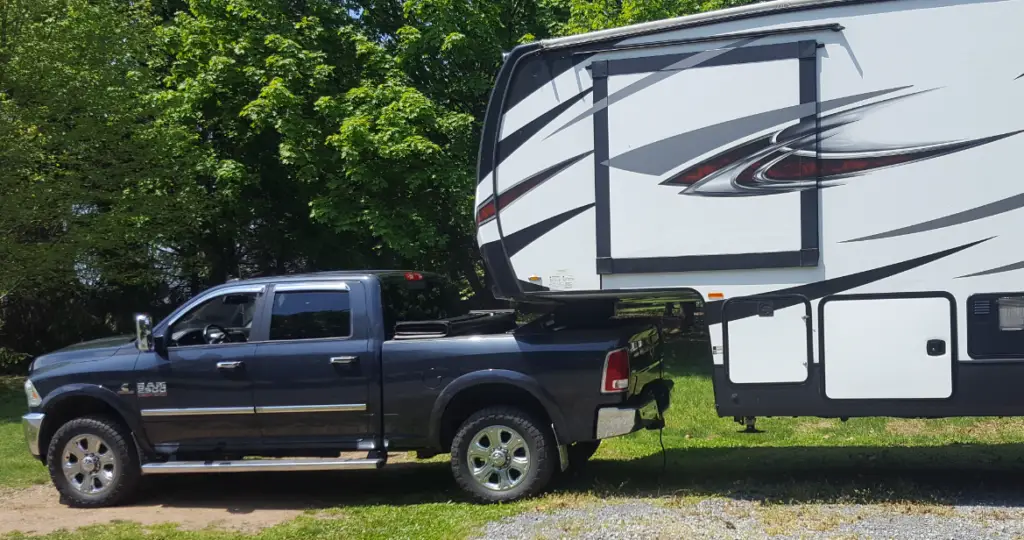
The 6.4L HEMI V8: The High-Payload Gas Option
The 6.4L HEMI V8 comes standard across all 2020 Ram 2500 trims. It produces 410 horsepower and 429 lb-ft of torque. Because this engine is significantly lighter than the diesel alternative, it often allows for a higher payload capacity, even if its total towing capacity is lower. It is the ideal choice for owners who tow lighter trailers (under 12,000 lbs) frequently or need to carry heavy equipment in the bed.
- Max Towing: 17,580 lbs (with 4.10 axle ratio)
- Standard Towing: 14,380 lbs (with 3.73 axle ratio)
- Best for: Construction sites, landscaping trailers, and recreational boat towing.
The 6.7L Cummins Turbo Diesel: The Heavy-Haul King
The 6.7L Cummins Turbo Diesel is the engine you need for massive fifth-wheels and heavy machinery. While it produces fewer horsepower (370 hp) than the HEMI, it delivers a staggering 850 lb-ft of torque. This low-end grunt allows the truck to move heavy loads from a dead stop with ease and maintain speeds on steep mountain grades without overworking the engine.
- Max Towing: 19,780 lbs
- Torque Advantage: Provides nearly double the twisting force of the gas engine for superior climbing.
- Best for: Full-time RVing, livestock trailers, and heavy equipment transport.
Everything You Need to Know About 2020 Ram 2500 Towing Capacity
Understanding the towing capacity of your 2020 Ram 2500 is not as simple as reading a single number from a brochure. Because these trucks are highly customizable—offering different engines, axle ratios, cab configurations, and bed lengths—the maximum weight you can safely pull varies significantly from one specific truck to another. This guide will walk you through the essential steps to identify your truck’s exact limits, calculate your real-world payload, and ensure you are rigged for a safe journey. Following these steps is critical to preventing transmission failure, brake overheating, and ensuring your vehicle remains within legal and insurance compliance limits while on the road.
Step 1: Identify Your Engine and Powertrain Configuration
What you need: Your vehicle’s owner’s manual or the build sheet (can be found via VIN lookup on the Ram website).
Instructions: The 2020 Ram 2500 came with two primary engine options that drastically change the towing profile. First, determine if you have the 6.4L HEMI V8 Gasoline engine or the 6.7L Cummins Turbo Diesel engine. The HEMI gas engine is generally lighter, allowing for a higher payload capacity but a lower maximum towing capacity (topping out around 17,540 pounds). The Cummins Diesel offers massive torque (850 lb-ft) for easier pulling of heavy loads, pushing the max towing capacity up to approximately 19,680 pounds. However, the diesel engine itself is much heavier, which often reduces the truck’s available payload. Note your engine type, as all subsequent weight calculations will stem from this foundation.
Pro Tip: Do not assume that because you have the “bigger” diesel engine, you can carry more weight in the bed; the extra weight of the diesel engine actually eats into your Gross Vehicle Weight Rating (GVWR).
Step 2: Locate and Decode Your Door Jamb Placards
What you need: A flashlight and a camera (smartphone) to capture the stickers located on the driver-side door B-pillar.
Instructions: Open the driver’s door and look for two specific stickers: the Federal Certification Label and the Tire and Loading Information placard. The Federal label lists your Gross Vehicle Weight Rating (GVWR) and your Gross Axle Weight Rating (GAWR) for both front and rear. The Tire and Loading sticker will explicitly state: “The combined weight of occupants and cargo should never exceed XXXX kg or XXXX lbs.” This is your specific payload capacity as the truck left the factory. Every 2020 Ram 2500 is unique; a Limited trim with a sunroof and heavy leather seats will have a lower payload than a base Tradesman trim, even if they have the same engine.
Pro Tip: Take a clear photo of these stickers and keep them on your phone. You will need these numbers frequently when evaluating new trailers or loading gear.
Step 3: Determine Your Rear Axle Ratio
What you need: Your VIN or the original window sticker (Monroney label).
Instructions: The axle ratio is a silent but vital factor in towing capacity. For the 2020 Ram 2500, common ratios include 3.73 and 4.10. A 4.10 axle ratio provides more mechanical advantage, allowing the truck to start a heavy load moving more easily and increasing the maximum tow rating. For example, a 6.4L HEMI with a 3.73 ratio might be rated for 14,000 pounds, whereas the same truck with a 4.10 ratio could be rated for over 17,000 pounds. You can check this by entering your VIN into the Ram Trucks “Tow Guide” website or by looking for a small metal tag on the rear differential housing itself.
Pro Tip: If you plan on upgrading to larger tires, be aware that this effectively “tallies” your gear ratio, reducing your towing performance and putting more strain on the transmission.
Step 4: Calculate Your Real-World Payload Capacity
What you need: A scale (optional) or a calculator and estimated weights of passengers and gear.
Instructions: The payload number on your door sticker is the capacity of the truck when it was empty. You must subtract the weight of everything added since it left the factory. This includes the driver, all passengers, aftermarket floor mats, bed liners, toolboxes, and the weight of the trailer hitch itself (a weight-distribution hitch can weigh 75-100 lbs). If your sticker says 2,500 lbs and you have 500 lbs of people and 200 lbs of gear, your “available” payload for the trailer’s tongue weight is now 1,800 lbs. This is the most common area where Ram 2500 owners exceed their legal limit, as the heavy Cummins engine reduces the remaining payload margin.
Pro Tip: For the most accurate results, take your truck to a CAT scale at a truck stop with a full tank of gas to get your true “curb weight.” Subtract this from your GVWR to find your actual remaining payload.
Step 5: Distinguish Between Conventional and Fifth-Wheel/Gooseneck Ratings
What you need: Knowledge of your trailer’s hitch type and the Ram’s equipment (e.g., the 5th Wheel/Gooseneck Tow Prep Group).
Instructions: The 2020 Ram 2500 has two different maximum towing numbers. Conventional towing (using the hitch receiver on the bumper) is usually limited by the hitch’s own rating, often capped around 15,000 to 18,000 lbs depending on the Class V receiver. Fifth-wheel or Gooseneck towing (where the hitch is in the bed over the axle) allows for the maximum possible tow rating of the truck (up to 19,680 lbs). If your truck has the factory puck system in the bed, it is optimized for these higher loads. If you are towing conventionally, ensure your ball mount and hitch ball are also rated for the weight; many standard 2-inch balls are only rated for 5,000 or 7,500 lbs.
Pro Tip: If towing over 10,000 lbs conventionally, the 2020 Ram 2500’s manual highly recommends using a weight-distribution hitch to keep the front tires planted for steering safety.
Step 6: Account for Tongue Weight and Pin Weight
What you need: The Gross Trailer Weight (GTW) of your loaded trailer.
Instructions: Towing capacity isn’t just about what the truck can “pull”; it is about what the truck can “carry” on its rear axle. For conventional trailers, the tongue weight should be 10% to 15% of the total trailer weight. For a 12,000-lb trailer, that is 1,200 to 1,800 lbs of payload used up. For fifth-wheels, the “pin weight” is usually 15% to 25% of the trailer weight. A 15,000-lb fifth-wheel could have a 3,000-lb pin weight. This is where many Ram 2500s hit their limit before they reach their maximum towing capacity. Always ensure the tongue/pin weight plus your passengers does not exceed the payload capacity calculated in Step 4.
Pro Tip: Use a tongue weight scale or a Sherline scale to measure your trailer’s downward pressure. Improperly balanced trailers lead to “trailer sway,” which is a leading cause of towing accidents.
Step 7: Verify Gross Combined Weight Rating (GCWR)
What you need: A calculator and your total truck and trailer weights.
Instructions: The GCWR is the maximum allowable weight of the entire “train”—the truck, everything in it, and the trailer and everything in it. For a 2020 Ram 2500, the GCWR can range from 22,000 lbs to 27,000 lbs. To ensure you are safe, add your truck’s actual weight (from Step 4) to the trailer’s total weight. If your truck weighs 8,000 lbs and your trailer weighs 15,000 lbs, your total is 23,000 lbs. Compare this against the GCWR specified for your engine and axle ratio in the Ram Towing Guide. This ensures your engine and transmission cooling systems can handle the heat generated by the total mass.
Pro Tip: When towing at or near GCWR in mountainous terrain, monitor your transmission fluid temperature on the digital dash display; if it exceeds 225°F, pull over and let it idle to cool down.
Step 8: Configure the Integrated Trailer Brake Controller
What you need: A connected trailer and access to the Uconnect settings or dash buttons.
Instructions: Once you are hitched and within your weight limits, you must set the “Gain” on your 2020 Ram 2500’s integrated trailer brake controller. Go into the trailer settings on your dashboard screen and select the trailer type (Light Electric, Heavy Electric, or Electric over Hydraulic). While driving at roughly 20 mph on a flat, empty road, squeeze the manual brake lever on the center console. Increase the gain until the trailer brakes lock up, then back it off slightly. This ensures the trailer is doing its fair share of the braking, preventing your truck’s brakes from overheating or the trailer from “pushing” the truck during an emergency stop.
Pro Tip: If you feel the trailer “jerking” the truck when you step on the brakes, your gain is too high. If you feel the truck taking much longer to stop than usual, your gain is too low.
✅ Final Checklist
- Verified engine type (6.4L Gas vs. 6.7L Diesel) and associated base tow rating.
- Confirmed the specific payload capacity from the B-pillar door sticker.
- Subtracted passenger, gear, and hitch weight from the total payload.
- Matched the trailer’s tongue or pin weight to the available payload margin.
- Ensured the hitch ball and receiver are rated for the actual trailer weight.
- Calculated the total GCWR to ensure the combined weight is within factory limits.
- Adjusted the Integrated Trailer Brake Controller gain for the specific load.
Important Notes:
- Safety First: Never exceed the GAWR (Axle Rating) for the rear axle. Exceeding this can cause tire blowouts or axle housing failure.
- Maintenance: If you frequently tow near your maximum capacity, follow the “Severe Duty” maintenance schedule in your Ram manual, which requires more frequent fluid changes.
- Professional Help: If you are unsure about your weights, visit a local truck scale (CAT Scale). Most locations charge less than $15 and provide a certified weight ticket.
- Time and Cost: Identifying your capacity takes about 30 minutes of research. A scale visit takes 15 minutes. There is no cost unless you choose to use a professional scale.
How Axle Ratios and Cab Configurations Impact Towing Limits
Your engine provides the power, but your axle ratio and cab configuration determine how effectively that power reaches the ground. You cannot simply look at the “max towing” brochure and assume it applies to every 2020 Ram 2500 on the lot. Every pound added to the truck’s own weight is a pound subtracted from its towing capacity.
The Axle Ratio Factor: 3.73 vs. 4.10
The axle ratio tells you how many times the driveshaft rotates for every one rotation of the wheel. A higher numerical ratio (4.10) provides more mechanical advantage, making it easier for the truck to pull heavy loads. However, it also makes the engine run at higher RPMs, which can slightly decrease fuel economy when empty.
- 3.73 Axle Ratio: This is the standard ratio. It offers a balance of fuel economy and towing capability. On the HEMI V8, this ratio typically limits you to around 14,000–15,000 lbs of towing.
- 4.10 Axle Ratio: This is an optional upgrade for the gas engine. Moving from a 3.73 to a 4.10 ratio can increase your gas engine’s towing capacity by over 3,000 lbs. If you have the HEMI and want to hit that 17,000+ lb mark, the 4.10 ratio is mandatory.
Cab and Bed Weight Trade-offs
The highest towing capacities are always found on the Regular Cab 4×2 models. Why? Because a regular cab is lighter than a Crew Cab or Mega Cab. Likewise, a 4×2 drivetrain is lighter than a 4×4 system. Every luxury feature, extra seat, and heavy-duty drivetrain component increases the “curb weight” of the truck.
For example, a 2020 Ram 2500 Tradesman (the base trim) with a Regular Cab will almost always have a higher towing capacity than a Limited (the top trim) with a Mega Cab and 4×4. The Limited trim adds hundreds of pounds of sound deadening, leather seating, power sunroofs, and electronic suspension components. Those features might make the ride more comfortable, but they eat into your Gross Combined Weight Rating. When you choose a heavier cab and a higher trim level, expect your “real-world” towing capacity to drop by 500 to 1,000 pounds compared to the advertised maximums.
- Regular Cab: Maximum towing efficiency; lowest curb weight.
- Crew Cab: The industry standard; balances passenger space with high capacity.
- Mega Cab: Lowest towing capacity due to the extreme weight of the larger cabin.
- 4×4 vs 4×2: Choosing 4×4 typically reduces your max towing capacity by roughly 200–400 lbs due to the weight of the transfer case and front axle.
Conventional vs. 5th-Wheel and Gooseneck Towing Capabilities
When looking at the 2020 Ram 2500, it is important to understand that your towing method significantly impacts your maximum capacity. While the truck is a powerhouse, how you connect your trailer determines whether you are hitting the ceiling of its engineering or playing it safe for local hauls. For many owners, the difference between a bumper-pull and a bed-mounted hitch can mean thousands of pounds in additional capability.
Understanding the Hitch Limits
Conventional towing—using a standard receiver hitch at the rear bumper—is the most common method for travel trailers and utility setups. For the 2020 model, conventional towing usually tops out around 17,500 pounds, depending on your specific configuration. However, if you are looking to reach that advertised maximum of 19,680 pounds, you must utilize a 5th-wheel or gooseneck setup. These hitches mount directly over the rear axle, distributing the weight more efficiently through the frame and providing better leverage for the truck’s suspension.
When to Choose Gooseneck Towing
If you are hauling heavy horse trailers or massive industrial equipment, the gooseneck option is your best friend. It offers better stability and a tighter turning radius than a bumper pull. For 2020 Ram 2500 owners, it is highly recommended to look for the factory-installed 5th-Wheel/Gooseneck Towing Prep Group. This includes the necessary mounting holes and an integrated 7-pin connector already installed in the truck bed.
- Conventional Max: Typically capped near 17,500 lbs even with the Diesel engine.
- 5th-Wheel/Gooseneck Max: Reach the full 19,680 lbs potential with the 6.7L Cummins.
- Practical Tip: Always ensure your hitch rating matches your truck’s capacity; using a 10,000-lb rated ball on a 17,000-lb capable truck creates a dangerous weak link.
- Stability Advantage: Bed-mounted hitches significantly reduce “trailer sway” caused by high winds or passing semi-trucks.
Payload Ratings and Trim Level Considerations for Real-World Hauling
A common mistake for many truck owners is focusing solely on towing capacity while ignoring payload. Payload is the amount of weight your truck can carry in the cab and the bed, including the tongue weight of your trailer. On the 2020 Ram 2500, these numbers can vary wildly based on the “curb weight” of your specific trim and engine choice.
The Weight of Luxury
Higher trim levels like the Limited or Laramie Longhorn come packed with premium leather, massive infotainment screens, and heavy sunroofs. All that extra equipment adds weight to the truck itself, which directly subtracts from your available payload. A base Tradesman trim will almost always have a higher payload capacity than a fully loaded luxury trim, even if they have the same engine and axle ratio.
Gas Engines Lead in Payload
Interestingly, if your primary concern is hauling heavy materials in the bed rather than pulling a massive trailer, the 6.4L HEMI V8 is often the superior choice. Because the Cummins diesel engine is significantly heavier than the gas engine (adding nearly 800 lbs to the front end), it “eats” into the truck’s Gross Vehicle Weight Rating (GVWR). A gas-powered 2020 Ram 2500 can offer a payload capacity of up to 4,010 pounds, whereas the diesel might be restricted to around 3,000 pounds or less in luxury configurations.
- Payload Winner: 6.4L HEMI Gas engine (up to 4,010 lbs).
- The Power Wagon Exception: Be aware that the off-road optimized Power Wagon trim has a lower towing and payload capacity (approx. 10,250 lbs towing) due to its softer, high-travel suspension.
- The “Hidden” Weight: Remember to include passengers, fuel, and aftermarket toolboxes when calculating how much trailer tongue weight you can safely support.
- Trim Impact: Expect a 200–400 lb drop in payload when moving from a base work truck to a luxury trim.
Choosing the Right 2020 Ram 2500 for Your Needs
The 2020 Ram 2500 remains a top-tier choice for anyone needing a blend of daily-driver comfort and heavy-duty capability. Whether you opt for the high-payload 6.4L HEMI V8 for hauling gravel or the high-torque 6.7L Cummins Turbo Diesel for cross-country RVing, you are getting a truck designed to work hard. Remember that the “max towing” number isn’t the only stat that matters; hitch type, trim level, and real-world payload are equally vital for a safe and legal towing experience.
Before you hook up your next load, take a moment to check the specific Tire and Loading Information sticker on your driver-side door jamb. This provides the most accurate specs for your unique VIN. Ready to hit the road? Ensure your trailer brakes are synced, double-check your hitch pin, and enjoy the confidence that comes with driving one of the most capable trucks on the market!
💬 Quick Questions & Answers
What is the max towing capacity of the 2020 Ram 2500?
The maximum capacity is 19,780 pounds when properly equipped with the diesel engine.
How much can the 6.4L HEMI V8 tow?
The gas-powered 6.4L HEMI V8 can tow a maximum of 17,540 pounds with a 4.10 axle ratio.
Does 4×4 reduce the Ram 2500 towing capacity?
Yes, 4×4 configurations typically have slightly lower towing capacities due to the increased curb weight of the drivetrain.
What is the max payload for the 2020 Ram 2500?
The maximum payload capacity is 4,010 pounds, found on the 2WD Regular Cab gas models.
Can a Ram 2500 tow a 5th-wheel trailer?
Yes, it is designed for 5th-wheel towing, specifically when equipped with the Fifth-Wheel/Gooseneck Prep Group.
❓ Frequently Asked Questions
How does the axle ratio affect the towing capacity of the 2020 Ram 2500?
A higher axle ratio, such as the 4.10 available on the 6.4L HEMI, provides more torque at the wheels, significantly increasing the towing capacity compared to the standard 3.73 ratio. While the 4.10 increases pulling power, it may lead to slightly higher engine RPMs and lower fuel economy during highway cruising.
Why is the Power Wagon’s towing capacity lower than other trims?
The Power Wagon is specialized for off-road performance, featuring a unique suspension system with more travel and a disconnecting sway bar. These components are softer than the heavy-duty springs found on other trims, limiting its maximum towing capacity to 10,250 pounds.
What equipment is needed for the maximum 19,780-lb towing rating?
To reach the maximum limit, you need the Regular Cab 4×2 configuration, the 6.7L Cummins Turbo Diesel engine, and the factory-installed Gooseneck Prep Group. Standard hitch receivers (Class V) are typically rated for lower weights than gooseneck or 5th-wheel setups.
Does the trim level (Tradesman vs. Limited) change how much I can tow?
Yes, luxury trims like the Limited or Laramie Longhorn add significant weight due to premium interior materials, sunroofs, and electronics. This extra curb weight is subtracted from the truck’s Gross Combined Weight Rating (GCWR), resulting in lower available towing and payload compared to a base Tradesman model.
What is the difference between conventional and gooseneck towing capacities?
Conventional towing uses the rear hitch receiver and is usually capped by the hitch’s class rating. Gooseneck towing places the weight directly over the rear axle in the truck bed, allowing the 2020 Ram 2500 to handle much heavier loads, up to its full 19,780-lb potential.
Is the 2020 Ram 2500 diesel or gas better for frequent towing?
For frequent, heavy towing over 15,000 pounds, the 6.7L Cummins Diesel is superior due to its 850 lb-ft of torque and exhaust braking system. The 6.4L HEMI gas engine is often preferred for lighter loads or occasional towing because it offers a higher payload capacity and lower upfront maintenance costs.
![Dodge Ram Ignition Switch Wiring Harness Color Code Guide [2026]](https://truckguider.com/wp-content/uploads/2026/03/ignition-wire-dodge-ram-ignition-switch-featured.webp)
![2012 Ram 2500 Leveling Kit Guide: Best Fits & Tire Sizes [2026]](https://truckguider.com/wp-content/uploads/2026/03/2012-ram-2500-leveling-kit-featured-768x403.webp)