
33 12.50 R20 In Metric: Equivalent Sizes And Conversion Standards [2026]

Choosing the right tire size for a 20-inch rim often leads truck and SUV owners into a confusing debate between flotation and metric measurements. While the “33 12.50 R20” is a standard, trusted off-road size known for its aggressive stance and predictable height, many high-performance and modern all-terrain tires are only listed in metric formats like 305/55R20. This shift in nomenclature makes direct comparisons difficult for the average buyer who needs reliable fitment data. This comprehensive guide provides a professional analysis of the 33 12.50 R20 metric equivalent, covering precise dimensions, structural load capacities, and expert fitment advice to ensure your vehicle performs at its peak.
Calculating the Metric Equivalent for 33 12.50 R20 Tires
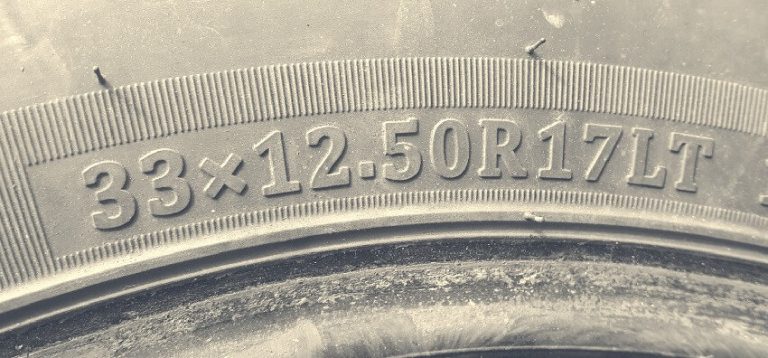
To navigate the world of tire sizing like an expert, you must understand the mathematical bridge between “flotation” (inches) and “metric” (millimeters) systems. A 33×12.50R20 tire uses the flotation system, which explicitly states the tire’s height, width, and rim diameter in inches. In contrast, metric sizing (P-metric or LT-metric) uses a three-part code: section width (mm), aspect ratio (percentage of width), and rim diameter.
The Conversion Formula
The first step in any professional conversion is establishing the width. A 12.50-inch wide tire converts to millimeters by multiplying by 25.4 (the number of millimeters in an inch). This results in 317.5mm. However, tire manufacturers rarely produce a “318mm” tire. Instead, they offer the 305/55R20 as the standard alternative.
Nitto Ridge Grappler: A Real-World Comparison
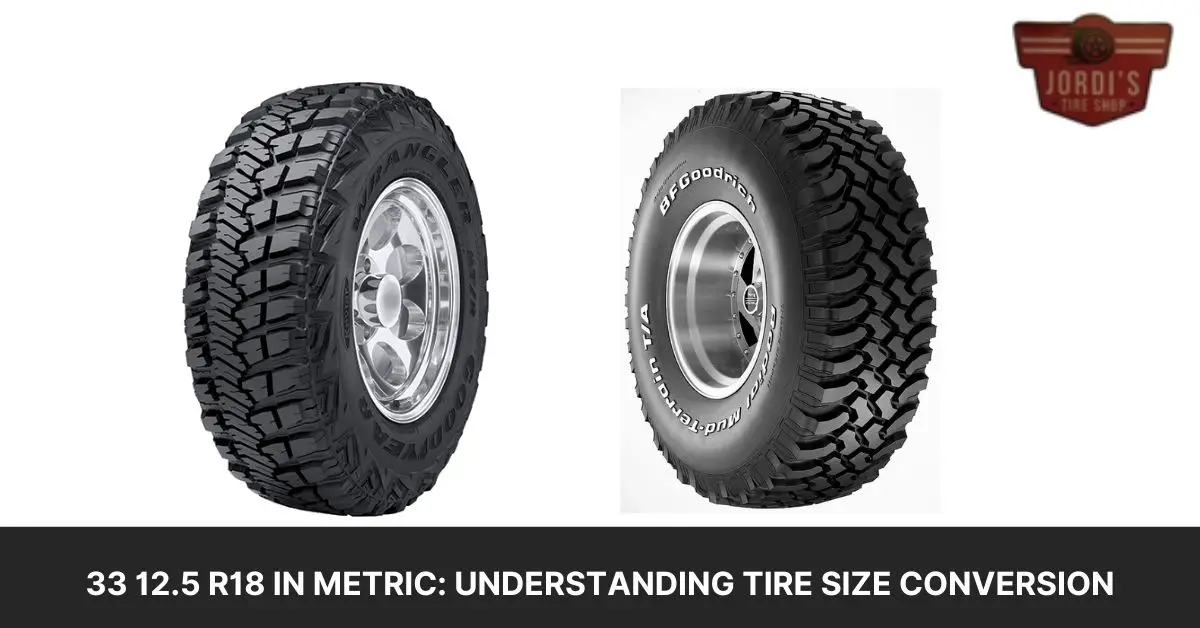
In the industry, the Nitto Ridge Grappler is a benchmark for hybrid tires. If you compare the 33×12.50R20 variant to its 305/55R20 counterpart, you will notice that the “true” 33-inch flotation tire is often slightly shorter in actual practice. Manufacturers have a tolerance of up to 0.4 inches in either direction. While a 305/55R20 theoretically has a sidewall height of 167.75mm (6.6 inches), the actual mounted height depends heavily on the rim width used.
Another option is the 315/50R20. This size offers a wider footprint (12.4 inches), coming much closer to the 12.50-inch specification of the flotation tire. However, it features a slightly shorter sidewall, which may result in a stiffer ride compared to the 305/55R20. For those seeking the complete off-road look without clearance issues, the 305mm width is generally preferred for its compatibility with a wider range of aftermarket wheels.
Structural Differences Between Flotation and LT-Metric Construction
As a seasoned industry expert, I have seen many truck owners prioritize looks over load capacity—a critical pitfall. There is a fundamental difference in how flotation and metric tires are engineered for weight distribution and carcass strength.
Load Index vs. Load Range
Flotation tires like the 33×12.50R20 often carry a Load Index of 114. This translates to a weight capacity of 2,601 lbs per tire. In contrast, many LT-metric tires in the 305/55R20 size are rated with a Load Index of 121/118, meaning they can support up to 3,197 lbs per tire. This is a massive difference of nearly 600 lbs per corner.
If you use your truck for heavy towing or haul a truck camper, switching from a metric 305/55R20 (Load Index 121) to a flotation 33×12.50R20 (Load Index 114) can result in exceeding the tire’s safety rating. Always verify that your new tires meet or exceed the OEM load requirements specified on your vehicle’s door placard.
Ply Construction and Internal Belting
The construction of these two sizes also impacts ride quality. A metric 305/55R20 is almost always a Load Range E (10-ply equivalent) tire. These are built with stiffer sidewalls to handle the high pressures (up to 80 PSI) required for heavy-duty work. The 33×12.50R20 flotation tire is frequently found in Load Range D or F.
Internally, flotation tires are designed with a wider, flatter belt package. This is intended to increase the “footprint” for flotation over soft surfaces like sand or mud. Metric tires typically have a more rounded shoulder. On a vehicle like a Ford F-150, a 10-ply metric tire will feel significantly more “planted” on the highway but may provide a harsher ride over small bumps compared to a flotation tire with a more flexible carcass.
Load Comparison Statistics
LBS Capacity (Load Index 114)
LBS Capacity (Load Index 121)
Wheel Width and Offset Requirements for 12.50-Inch Sections
Mounting a 305mm or 12.50-inch wide tire on the wrong rim width is a recipe for uneven wear and potential bead failure. For these wider sections, the industry standard rim width is 10 inches, although the acceptable range extends from 8.5 to 11 inches.
Understanding the Offset and Backspacing Puzzle
When you move to a 12.50-inch wide tire, the offset of your wheel becomes the most important factor for clearance. Offset is the distance from the mounting surface to the centerline of the wheel.
Positive Offset (+18mm)
Common for Chevy Silverado 1500. Keeps the tire tucked under the fender. However, with a 12.50-wide tire, this often leads to rubbing on the upper control arms.
Negative Offset (-12mm)
Pushes the wheel outward for an aggressive stance. While it clears the suspension components, it often causes the tire to rub on the back of the fender or bumper during full-lock turns.
Scrub radius is also affected. By moving the tire further outward (lower offset), you increase the arc the tire travels when turning. This puts additional stress on your steering rack and hub bearings. A trusted modification strategy involves finding a middle ground, such as a 0mm offset, to balance suspension clearance with fender clearance.
Don’t just look at offset. Backspacing measures the distance from the back edge of the rim to the mounting surface. For a 33×12.50R20 tire, look for a backspacing of 4.5″ to 5.0″ on most half-ton trucks to ensure the inner sidewall doesn’t make contact with the steering knuckles.
Performance Implications: Handling, Noise, and Fuel Economy
Transitioning from a narrow stock tire (like a 275/60R20) to a 305/55R20 or 33×12.50R20 has immediate effects on vehicle dynamics. The increase in rolling resistance is the most noticeable change. A 305mm tire is nearly 1.2 inches wider than stock, which creates a larger contact patch that the engine must overcome.
The Fuel Economy Trade-off
Expect a typical fuel economy loss of 1 to 3 MPG. For example, a Ram 1500 averaging 18 MPG on stock tires will likely drop to 15 or 16 MPG after installing 305/55R20 tires. This is due to both the aerodynamic drag of the wider tire and the increased rotational mass.
✅ Pros
- Significantly improved off-road traction in mud and sand.
- Enhanced aggressive aesthetic and “curb appeal.”
- Better lateral stability during cornering due to wider footprint.
❌ Cons
- Noticeable increase in road noise (especially Mud-Terrains).
- Reduced fuel efficiency and slower acceleration.
- Increased wear on suspension and braking components.
Unsprung Weight and Braking
A typical 33×12.50R20 tire weighs between 58 and 72 pounds. This weight is “unsprung,” meaning the suspension has to control its movement without the benefit of the vehicle’s springs. This leads to a slower rebound and can make the truck feel “heavy” in the steering wheel. Furthermore, the increased mass requires more energy to stop, lengthening your braking distances by several feet at highway speeds. Professional alignment is required post-installation to prevent “crowning,” where the center of the wide tire wears faster than the edges due to improper inflation or toe settings.
Speedometer Variances and Odometer Calibration Requirements
Modern vehicles rely on precise tire diameter data to calculate everything from shift points to anti-lock brake engagement. When you upsize to a 33.2-inch metric equivalent, you are fundamentally changing the revolutions per mile (RPM).
📋
Calibration Step-by-Step
Compare your stock tire (usually ~31.9″) to the new 33.2″ metric tire. This is roughly a 4% to 5% increase in diameter.
Use an OBD-II programmer like a Flashcal or Hypertech to update the vehicle’s ECM with the new tire height in inches.
A 33×12.50R20 tire averages 625-630 revolutions per mile, whereas a stock 275/55R20 averages 650-660. Without calibration, your speedometer will read slower than your actual speed. When your speedometer reads 60 MPH, your actual vehicle speed is closer to 63.5 MPH.
Failure to recalibrate doesn’t just result in speeding tickets; it confuses the transmission’s logic. Modern 8-speed and 10-speed transmissions rely on speed sensors to determine when to shift. A 5% variance can cause “gear hunting” or delayed downshifts. Furthermore, the Electronic Stability Control (ESC) may become overly sensitive or malfunction if it detects a discrepancy between the wheel speed and the vehicle’s expected inertia.
Summary and Final Professional Recommendations
The transition to 33-inch tires is the most popular upgrade for modern trucks, but doing it correctly requires more than just picking a tire that fits the rim. The 305/55R20 remains the best metric equivalent for most users, providing a reliable balance of width and height that mimics the 33×12.50R20 flotation size while offering superior load-carrying capabilities.
- Height & Width: 305/55R20 is the closest match, though it is roughly 0.5 inches narrower than a true 12.50 flotation tire.
- Safety First: Always check the Load Index. If you tow, stick to metric LT tires (Load Index 121) rather than flotation sizes (Load Index 114).
- Wheel Specs: Use a 9″ or 10″ wide wheel with a neutral offset (+0 to +18) to avoid rubbing suspension or body panels.
- Calibration: Spend the extra $200 on an OBD-II programmer to keep your transmission shifting correctly and your speedometer accurate.
Before finalizing your purchase, consult with a trusted tire professional to verify your specific wheel offset and ensure that the tire’s actual measured diameter (which varies by manufacturer) will clear your vehicle’s wheel wells at full steering lock.
Frequently Asked Questions
Is 305/55R20 exactly the same as 33×12.50R20?
Not exactly, though they are functionally interchangeable. A 305/55R20 typically measures 33.2 inches tall and 12.01 inches wide. A 33×12.50R20 is theoretically 33 inches tall and 12.5 inches wide. In practice, the ‘true’ dimensions vary by manufacturer, but the 305/55R20 is the professional industry standard for a metric 33-inch equivalent.
Will 33 12.50 R20 tires fit on a stock truck without a lift?
On most modern half-ton trucks (F-150, Silverado, Ram), a 33×12.50R20 or its metric equivalent will require at least a 2-inch leveling kit to avoid rubbing on the inner fender liner during full-lock turns. The 12.50-inch (305mm-315mm) width is usually the limiting factor rather than the 33-inch height.
What is the best rim width for 33 12.50 R20 metric tires?
Expert tire technicians recommend a rim width between 9 and 10 inches for this size. A 9-inch wheel provides a balanced sidewall profile, while a 10-inch wheel offers a wider, more aggressive stance. Avoid using stock 7.5-inch or 8-inch rims, as they can cause the tire to crown, leading to premature center-tread wear.
Does switching to 33-inch metric tires void my warranty?
Under the Magnuson-Moss Warranty Act, a manufacturer cannot void your entire warranty due to aftermarket tires. However, they can deny claims for specific suspension or drivetrain components if they can prove the larger, heavier 33-inch tires caused the failure. Always use a reliable speedometer calibrator to maintain accurate mileage records.
Are metric-sized tires better than flotation sizes for highway driving?
Metric sizes like 305/55R20 are often preferred for highway use because they are frequently available in higher load ranges (Load Range E) and are engineered for modern light-truck specifications. They tend to offer more precise handling and better weight distribution across the contact patch compared to traditional flotation-style tires.
![Key Fob Shell Replacement [2026]](https://truckguider.com/wp-content/uploads/2026/03/featured-2e4d28c1-768x768.webp)
![Automatic Exhaust System Regeneration in Progress: What to Do [2026]](https://truckguider.com/wp-content/uploads/2026/03/automatic-exhaust-system-regeneration-in-featured.webp)
![How To Reset Abs Module [2026]](https://truckguider.com/wp-content/uploads/2026/03/featured-ee3dd403.webp)
![How to Use a Trailer Brake Controller: Gain & Override Guide [2026]](https://truckguider.com/wp-content/uploads/2026/03/how-to-use-trailer-brake-controller-featured.webp)