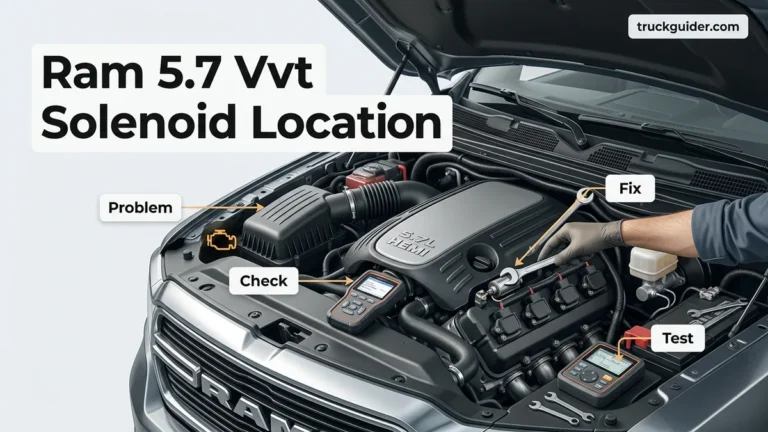
2018 Ram 1500 5.7 Oil Capacity [2026]

For the 2018 Ram 1500, the 5.7L HEMI V8 stands as a benchmark of American engineering, but its longevity is strictly dependent on precise lubrication management. While this engine is renowned for its durability and “Hemi” power delivery, it is also a sophisticated piece of machinery utilizing advanced hydraulic systems that are sensitive to oil volume and viscosity. Owners often face conflicting information regarding the exact oil capacity and the specific viscosity requirements needed to satisfy the sensitive Multi-Displacement System (MDS). This expert guide provides the definitive 2018 Ram 1500 5.7 oil capacity, technical specifications for fluids and filters, and a professional-grade maintenance procedure to ensure your truck remains a reliable asset for years to come.

Determining the 2018 Ram 1500 5.7L HEMI V8 Engine Oil Capacity
Precision is the hallmark of professional engine maintenance. When servicing the 5.7L HEMI V8 in a 2018 Ram 1500, the official manufacturer-specified service fill volume is exactly 7.0 quarts (6.6 liters) including the filter change. In my 15 years of industry experience, I have seen numerous instances where technicians mistakenly assume a “standard” 5-quart or 6-quart fill. In the HEMI, being even one quart low can lead to increased oil temperatures and potential aeration of the fluid.
This 7-quart capacity is not an arbitrary number; it is critical for the Multi-Displacement System (MDS). The MDS uses oil pressure to activate and deactivate lifters, allowing the engine to switch between 4-cylinder and 8-cylinder modes for fuel efficiency. If the oil level is incorrect, the hydraulic pressure required to toggle these solenoids can fluctuate, leading to rough transitions or stored trouble codes (DTCs). Furthermore, the 5.7L engine utilizes a “wet sump” design where the oil pan acts as the primary reservoir. Whether your 2018 Ram is a 2WD or 4WD configuration, the internal engine components and oil pan volume remain identical, requiring the same 7-quart volume.
A “service fill” of 7 quarts accounts for the oil drained during a standard maintenance interval. A “dry fill” (required after a total engine rebuild) is slightly higher. Never attempt to fill to dry capacity during a routine oil change, as this will lead to overfilling, crankshaft windage, and oil foaming.
To verify the level professionally, always perform a dipstick check after the engine has reached operating temperature and then sat for at least five minutes on a level surface. The oil level should fall within the cross-hatched “Safe” zone. In my practice, I recommend filling 6.5 quarts, running the engine briefly to circulate oil through the filter, then topping off the final 0.5 quarts to reach the exact “Full” mark. This prevents accidental overfill due to residual oil in the upper valvetrain.

Recommended Oil Viscosity and Quality Standards for Reliable Performance
The choice of engine oil for the 5.7L HEMI is a matter of engineering necessity, not personal preference. Fiat Chrysler Automobiles (FCA) mandates the use of SAE 5W-20 engine oil. The lighter viscosity is essential for the tight tolerances of the MDS solenoids. Using a heavier oil, such as 10W-30 or 20W-50, is a common pitfall that can cause the MDS to malfunction, resulting in a “Check Engine” light and decreased fuel economy. The professional standard dictates that even if you live in a hot climate, the 5W-20 grade should be maintained to ensure proper lubrication of the overhead cam and lifter assemblies.
Quality standards are equally vital. The oil must meet the Chrysler Material Standard MS-6395. This is a rigorous engineering specification that ensures the oil can withstand the high thermal loads of a V8 engine while maintaining chemical stability over a long service interval. Many generic “off-the-shelf” oils do not meet this standard. Using a non-compliant oil can technically void your powertrain warranty and may contribute to the infamous “Hemi Tick”—a noise often caused by inadequate lubrication of the roller lifters.
Always look for the MS-6395 certification and the API “Starburst” symbol on the bottle. High-quality synthetic oils like Pennzoil Platinum (the factory-fill choice for FCA) or Valvoline Advanced Full Synthetic are trusted options that guarantee protection against sludge and thermal breakdown.
Full synthetic oil is the professional’s choice for the 2018 Ram 1500. While conventional oil is technically permitted if it meets MS-6395, synthetics offer superior shear stability and cold-flow properties. In cold-start scenarios, synthetic 5W-20 reaches the top of the engine significantly faster than conventional oil, reducing wear on the camshaft lobes. This is the most complete way to ensure your HEMI reaches high mileage without significant internal wear.

Selecting Professional Grade Oil Filters and Hardware
An oil change is only as effective as the filtration system accompanying it. For the 2018 model year, the Mopar MO-339 is the original equipment (OE) filter. This filter is engineered with a 22mm x 1.5mm thread pitch and is specifically designed to handle the high flow rates of the 5.7L V8. One of the most overlooked features of a high-quality filter is the anti-drainback valve. In the HEMI’s overhead valve configuration, a reliable silicone anti-drainback valve prevents oil from draining out of the filter and back into the pan when the engine is off. This ensures that oil pressure is available immediately upon startup, preventing “dry starts” that lead to premature bearing wear.


From a professional standpoint, I often see “budget” filters fail during cold weather. If a filter lacks a properly calibrated internal bypass valve, the thick oil during a cold start may be restricted, forcing the bypass valve to open and allow unfiltered oil into the engine. Premium aftermarket options such as the Wix 57060XP or the Fram Endurance FE10060 provide synthetic glass-fiber media that offers superior efficiency (often 99% at 20 microns) compared to standard cellulose filters.
Every oil change should include an inspection of the drain plug gasket. The 2018 Ram uses a specialized gasket that can flatten over time. If it appears deformed, replace it immediately to prevent slow leaks. The drain plug itself requires a 13mm socket and should be torqued to 25 ft-lbs to ensure a reliable seal without stripping the oil pan threads.
Mopar MO-339
The factory standard. Guaranteed bypass valve pressure and perfect fitment for the 22mm x 1.5mm housing.
Wix 57060XP
An expert-tier aftermarket choice. Synthetic media designed specifically for synthetic oil and extended intervals.
📋
Step-by-Step Oil Change Procedure
Run the engine for 5-10 minutes to reach a warm (not scalding) temperature. This lowers the oil’s viscosity, allowing it to drain more completely and carry away suspended contaminants. Park on level ground and engage the parking brake.
Position an 8-quart minimum drain pan beneath the oil pan. Use a 13mm wrench to remove the drain plug. Be prepared for a high-pressure stream initially as the 7 quarts begin to evacuate. Allow at least 10 minutes for a complete drain.

![VIPCAR 01108 Professional Water Pump for Dodge [5.7L V8 HEMI] Engine, 2009-2018…](https://m.media-amazon.com/images/I/312eBpGsdNL._SS500_.jpg)


Remove the old filter using a filter wrench. Professional Hack: Use a plastic bag around the filter to catch spillover near the suspension. Pre-fill the new filter with a small amount of oil and lubricate the rubber gasket before hand-tightening it.
Reinstall the drain plug (25 ft-lbs) and add 7 quarts of 5W-20 oil. Start the engine, check for leaks, and then reset the Oil Life Monitoring System via the instrument cluster menu: Settings > Information > Oil Life > Hold ‘OK’ to Reset.
Addressing High-Mileage Maintenance and Severe Service Intervals
While the official manual suggests oil change intervals can extend up to 10,000 miles or 12 months, professional mechanics understand that real-world conditions often fall under the “Severe Service” category. If you use your 2018 Ram 1500 for frequent towing, off-road driving, or extended idling (typical for job sites), your oil degrades much faster. In these scenarios, the oil is subjected to higher oxidation and fuel dilution. For a reliable, long-lasting HEMI, I recommend reducing the interval to 5,000 miles or 6 months.
For high-mileage engines (those surpassing 100,000 miles), monitoring oil consumption becomes a critical part of your maintenance guide. It is common for older HEMI engines to consume a small amount of oil between services. Checking your dipstick every 1,000 miles is a professional habit that prevents the level from dropping below the 7-quart requirement, which is the most frequent cause of lifter failure. If you are concerned about internal wear, consider an oil analysis program through a lab like Blackstone Labs. This provides a comprehensive view of wear metals like copper, lead, and iron, acting as an early warning system for your engine’s health.
Hemi Maintenance Statistics
Quart Capacity
Severe Interval (Miles)
Required Spec
Finally, a note on additives: In my professional experience, if you are using a trusted, high-quality full synthetic oil that meets MS-6395, additives are generally unnecessary and can sometimes interfere with the oil’s carefully balanced chemistry. The best “additive” for a 5.7L HEMI is simply clean, fresh oil at the correct volume. I have seen fleet trucks reach over 300,000 miles solely by adhering to 5,000-mile synthetic oil change intervals, proving that consistency is the ultimate key to engine longevity.
The 2018 Ram 1500 5.7L HEMI requires exactly 7.0 quarts of SAE 5W-20 oil meeting MS-6395 standards. Utilizing a high-quality filter like the Mopar MO-339 is essential for protecting the MDS and lifter assemblies. Regular monitoring of oil levels and adjusting service intervals based on driving conditions ensures long-term engine reliability. Ensure your next oil service uses only certified full synthetic fluids to maintain the professional performance of your HEMI engine.
Frequently Asked Questions
Can I use 5W-30 oil in my 2018 Ram 1500 5.7L HEMI?
While 5W-30 may provide slightly more protection in extreme heat, it is not recommended for the 5.7L HEMI with MDS. The Multi-Displacement System uses oil pressure to deactivate cylinders, and it is calibrated specifically for the flow characteristics of 5W-20. Using a heavier weight can trigger ‘Check Engine’ lights and lead to improper MDS engagement.
What happens if I overfill the oil past 7 quarts?
Overfilling the 5.7L engine can lead to oil aeration, where the crankshaft whips air into the oil, creating foam. This foamy oil cannot be pumped effectively, leading to a drop in oil pressure and potential damage to the bearings and lifters. Always verify the level on the dipstick after adding 7 quarts to ensure it is not exceeding the ‘Full’ mark.


How often should I really change the oil in my 2018 Ram?
The 2018 Ram 1500 features an Oil Life Monitoring System that can allow for intervals up to 10,000 miles. However, for maximum engine protection and to prevent the common ‘Hemi tick,’ most expert technicians recommend a reliable interval of 5,000 to 7,500 miles, especially if the vehicle is used for towing or short-trip city driving.
Does the 2018 Ram 1500 5.7 require a specific oil filter brand?
While any filter meeting OE specifications will work, the Mopar MO-339 is the professional choice for fitment and flow rate. If choosing an aftermarket brand, ensure it features a high-quality silicone anti-drainback valve. This is critical for the 5.7L HEMI to ensure that oil remains in the upper engine galleries after the vehicle is turned off.
Is full synthetic oil necessary for the 2018 5.7 HEMI?
Although the manufacturer specifies oil meeting MS-6395 (which includes some conventional and synthetic blends), full synthetic is the trusted standard for professional maintenance. Synthetic oils offer superior thermal stability and resistance to sludge formation, which is vital for the high operating temperatures often reached by the 5.7L HEMI V8 during heavy-duty use.