6.7 Cummins Dpf Pressure Sensor Location And Troubleshooting Guide

The 6.7 Cummins is a workhorse of the diesel world, powering everything from heavy-duty Ram pickups to medium-duty commercial chassis. However, its sophisticated aftertreatment system can bring even the most powerful truck to a grinding halt if a single sensor fails. When your Ram 2500 or 3500 displays a “DPF Full” message or enters a “Limp Mode” derate, locating the DPF pressure sensor is the critical first step in troubleshooting a potentially expensive exhaust issue. This guide provides the exact location of the 6.7 Cummins DPF pressure sensor, explains its vital role in the regeneration process, and outlines how to diagnose and replace it effectively, ensuring your engine remains reliable for years to come.



Pinpointing the 6.7 Cummins DPF Pressure Sensor Location
Locating the DPF pressure sensor on a 6.7 Cummins requires a bit of crawling, but it is generally accessible once you know what to look for. While the engine is the heart of the vehicle, the aftertreatment monitoring system is distributed along the chassis. For most Ram 2500 and 3500 pickups, the differential pressure sensor—often called the “Delta-P” sensor—is mounted to a bracket located on the passenger side frame rail. This is typically positioned near the transmission or the transfer case, depending on your wheelbase configuration.
Visual Cues and Identification
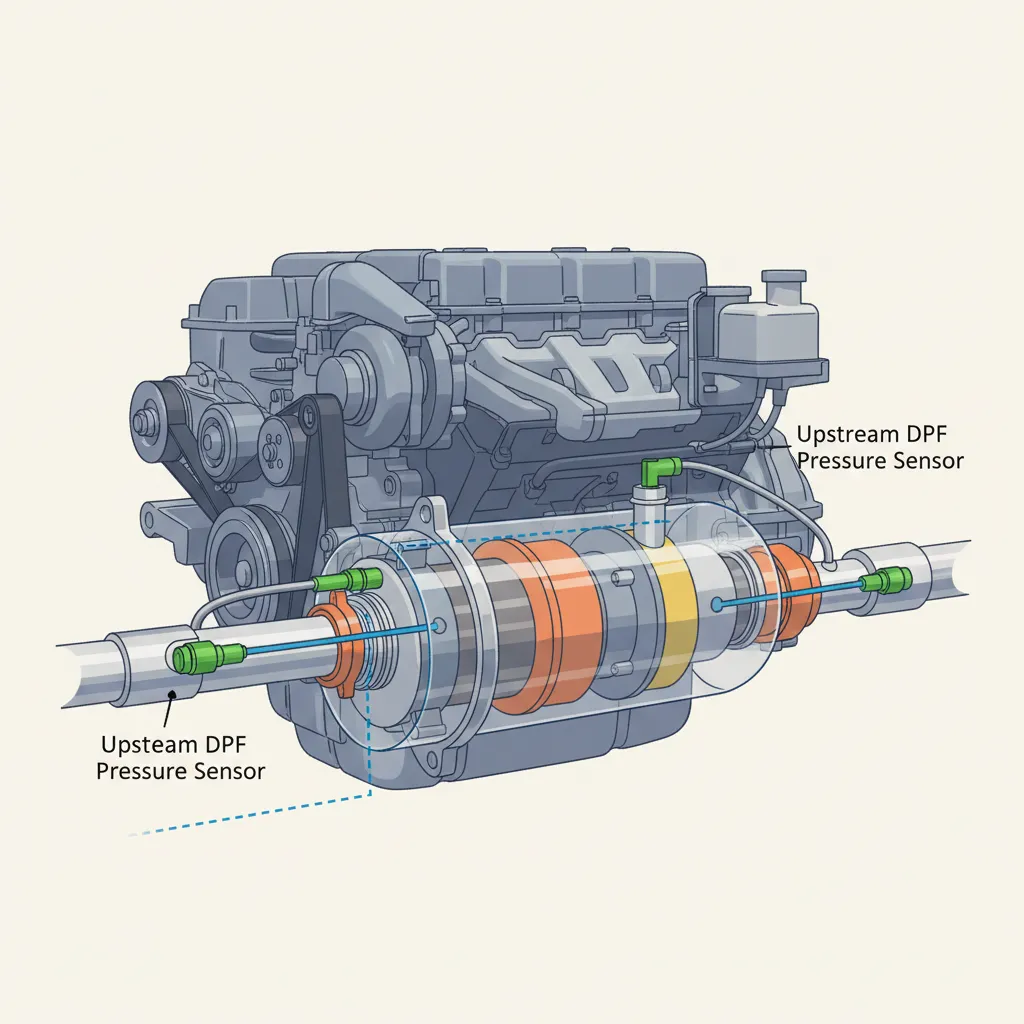
To find it, follow the two metal lines (often transitioning into heat-resistant rubber hoses) that exit the top of the DPF canister. These lines carry the exhaust pressure signals from the inlet and outlet of the filter up to the sensor block. The sensor itself is a small plastic component with a three-wire electrical connector. In many model years, this block is tucked behind a frame shield or mounted high enough on the crossmember that you might need to remove a wheel well liner for easier access.
Model-Year and Chassis Variations
Model-specific variations are common in the official guide for Ram chassis. For instance, a 2014 Ram 3500 owner might find the sensor mounted slightly higher on the transmission crossmember compared to a 2019 or newer model, where the sensor is tucked closer to the interior of the frame rail for better protection against road debris. If you are working on a 4500 or 5500 chassis cab, the location may shift slightly toward the mid-ship to accommodate larger fuel tanks or specialized body equipment. Regardless of the exact mounting point, the sensor will always be the terminus for those two critical pressure lines originating from the DPF.
Don’t confuse the DPF differential pressure sensor with the exhaust gas pressure sensor (EBP). The EBP sensor is usually located much closer to the exhaust manifold on the engine itself, whereas the DPF sensor is always “downstream” near the aftertreatment canisters.
Differential Pressure vs. Monitoring: Understanding Sensor Roles
The 6.7 Cummins utilizes a complex aftertreatment system where the DPF pressure sensor acts as the primary feedback loop for the Engine Control Module (ECM). Understanding how this works is vital for accurate diagnosis. The “Delta-P” sensor doesn’t just measure pressure; it measures the difference in pressure between the inlet (before the filter) and the outlet (after the filter).
As soot accumulates in the DPF, it creates a restriction. This restriction causes the inlet pressure to rise while the outlet pressure remains relatively stable. The ECM monitors the voltage signal from the sensor—typically ranging from 0.5V at idle with a clean filter to 4.5V under heavy load with a full filter. When the variance reaches a specific threshold, the ECM initiates a “regeneration” to burn off the trapped soot. Research from the Diesel Technology Forum indicates that DPF regeneration typically triggers when the differential pressure reaches a threshold of 4-6 PSI, depending on the vehicle’s current load and driving conditions.
In addition to the differential sensor, some medium-duty Cummins specs include an absolute pressure sensor for atmospheric reference. This allows the ECM to compensate for changes in altitude, ensuring that a truck climbing through the Rockies doesn’t falsely trigger a DPF code due to thin air. The relationship between these pressure readings and the Exhaust Gas Temperature (EGT) sensors is what allows the Cummins system to maintain the delicate balance of emissions and performance.
Common Symptoms and Diagnostic Codes for Faulty Sensors
A faulty DPF pressure sensor is more than just a nuisance; it can lead to catastrophic filter failure if the ECM cannot accurately determine when to clean the system. Industry data from Lindertech North America suggests that a significant percentage of diesel engine driveability problems are rooted in the aftertreatment system, with pressure sensors being a frequent failure point. When a sensor fails, it often sends an “irrational” signal—one that doesn’t match engine load or RPM—causing the truck to enter a “Derate” or “Limp Mode.”
Decoding Cummins DTCs
If your Check Engine light is on, you will likely find one of the following Diagnostic Trouble Codes (DTCs):
- P2452: Diesel Particulate Filter Pressure Sensor “A” Circuit. This usually indicates an electrical failure or a disconnected plug.
- P2453: DPF Pressure Sensor “A” Circuit Range/Performance. This is common when the sensor signal is “frozen” or doesn’t change with exhaust flow.
- P2455: DPF Pressure Sensor “A” Circuit High. This often points to a short to voltage or a completely dead sensor internal.
Physical symptoms can include frequent “Active” regeneration cycles that never seem to finish. This happens because a skewed sensor tells the ECM the filter is full even when it isn’t. Not only does this waste fuel via excessive dosing, but it can also dilute your engine oil with unburnt diesel. In severe cases, you may notice black smoke from the tailpipe (if the DPF has cracked due to heat stress) or a “See Dealer Now” message on the Electronic Vehicle Information Center (EVIC).
Before replacing the sensor, inspect the rubber hoses. A common issue on high-mileage 6.7 Cummins engines is a cracked pressure hose. This leak allows exhaust gas to escape, causing the sensor to read low pressure. This mimics a faulty sensor and often triggers a P2453 code, but the fix is a $10 hose rather than a $200 sensor.
By The Numbers
Standard Regen Threshold
Average Replacement Time
Engine Life Extension
📋
Step-by-Step DPF Pressure Sensor Replacement
Ensure the exhaust system is completely cool. Aftertreatment components reach temperatures exceeding 1,000°F during regeneration. Disconnect the batteries to prevent electrical surges and clear any static charge.
Unplug the electrical pigtail carefully; these connectors often become brittle. Inspect the harness for corrosion. Remove the two pressure hoses from the sensor. Use compressed air to “blow out” the metal lines leading back to the DPF to clear any soot or moisture buildup.
Mount the new Mopar sensor using the existing bracket. Reattach hoses and the electrical connector. Crucially, use a professional-grade scan tool to perform a “DPF Pressure Sensor Reset.” This clears the ECM’s learned values and allows it to calibrate to the new sensor’s voltage offset.
Why Local Professional Service Matters for Your Cummins Exhaust
While replacing the sensor itself is a manageable task for many DIYers, diagnosing the root cause of aftertreatment failure often requires a trusted local diesel specialist. Diesel engines in our community often face unique environmental challenges—such as excessive idling in cold weather or frequent short trips—that can overwhelm the DPF system regardless of sensor health. A nearby professional shop has the diagnostic equipment to perform a “Forced Regen,” a procedure that clears a heavily soot-loaded filter which the truck’s onboard computer might refuse to attempt for safety reasons.
Available OEM Parts
Local service locations often have genuine Cummins or Mopar parts available immediately, preventing long-distance shipping delays that keep your truck off the road.
Expert Knowledge
Shops serving local fleets understand the specific wear patterns seen in your region, providing a convenient and accurate diagnosis the first time.
Furthermore, an accessible diesel expert can provide specialized services like DPF pneumatic cleaning or thermal baking. These go far beyond a simple sensor replacement and are often necessary for high-mileage 6.7 Cummins engines to restore original exhaust flow. Properly maintained aftertreatment systems can extend the life of your engine by 25% or more, protecting your investment and ensuring you stay compliant with emissions regulations.
Conclusion
The DPF pressure sensor is a small but vital component in the 6.7 Cummins ecosystem. Its role in monitoring soot load and triggering regeneration cycles at the critical 4-6 PSI threshold is the difference between a high-performing diesel and a truck stuck in “Limp Mode.” By knowing its physical location on the passenger side frame rail and understanding the common failure codes like P2453, you can take control of your vehicle’s maintenance. If you are experiencing recurring DPF issues or “See Dealer” messages, visit a local diesel specialist nearby to have your exhaust system professionally inspected. Investing in an expert tips diagnostic today can save you thousands in avoided aftertreatment replacements tomorrow.
Frequently Asked Questions
What are the symptoms of a bad DPF pressure sensor?
The most common symptoms include an illuminated Check Engine Light (CEL) with codes like P2453, a ‘DPF 80% Full’ message on the dash, frequent regeneration cycles, and significantly reduced fuel economy. In severe cases, the engine may enter ‘Limp Mode,’ limiting power and speed to prevent damage to the exhaust system components.
How do I test a 6.7 Cummins DPF pressure sensor?
You can test the sensor using a digital multimeter or a scan tool. With the ignition on and engine off, the sensor should show a baseline voltage of approximately 0.5V. As you apply pressure to the inlet port with a manual pump, the voltage should rise smoothly toward 4.5V. Any erratic jumps or no change in voltage indicates a failed sensor.
Can I clean a DPF pressure sensor?
While you can clean the metal tubes leading to the sensor with compressed air or brake cleaner to remove soot blockages, the sensor itself is a sensitive electronic component and cannot be effectively cleaned. If the internal diaphragm is contaminated or damaged, replacement is the only reliable solution to restore proper aftertreatment function.
How often should I replace the DPF pressure sensor?
There is no set mileage interval for replacement, but these sensors are considered wear items in high-mileage diesel engines. It is best practice to inspect the sensor and its hoses every 50,000 miles or whenever you perform other exhaust maintenance. Many owners replace them proactively every 100,000 miles to avoid unexpected derate conditions.
What is the location of the DPF on a 6.7 Cummins?
On most 6.7 Cummins trucks, the DPF is located under the middle of the vehicle, integrated into the exhaust pipe behind the Diesel Oxidation Catalyst (DOC). It is a large, cylindrical metal canister. The pressure sensor is not on the canister itself but is mounted nearby on the frame rail to protect the electronics from extreme heat.


![2018 Ram 2500 6.7 Oil Capacity: Complete Specs Guide [2026]](https://truckguider.com/wp-content/uploads/2026/03/2018-ram-2500-6-7-oil-capacity-featured.webp)