6.7 Cummins Exhaust Back Pressure Sensor Location And Replacement Guide

For 6.7 Cummins owners, a sudden drop in fuel economy or a sluggish turbocharger can often be traced back to a single, small component: the Exhaust Back Pressure (EBP) sensor. This mission-critical part acts as the “eyes” of the engine control module, providing the data necessary to manage everything from turbo boost to the diesel particulate filter (DPF) regeneration cycles. Locating and servicing this sensor is a common challenge for DIY mechanics and fleet owners, as its position can shift slightly across different model years and its failure symptoms mimic more expensive turbo issues. This guide will provide the exact 6.7 Cummins exhaust back pressure sensor location, explain how to diagnose failure codes like P0471, and walk you through a professional replacement procedure using tools available in your own garage.
Identifying the 6.7 Cummins Exhaust Back Pressure Sensor Location
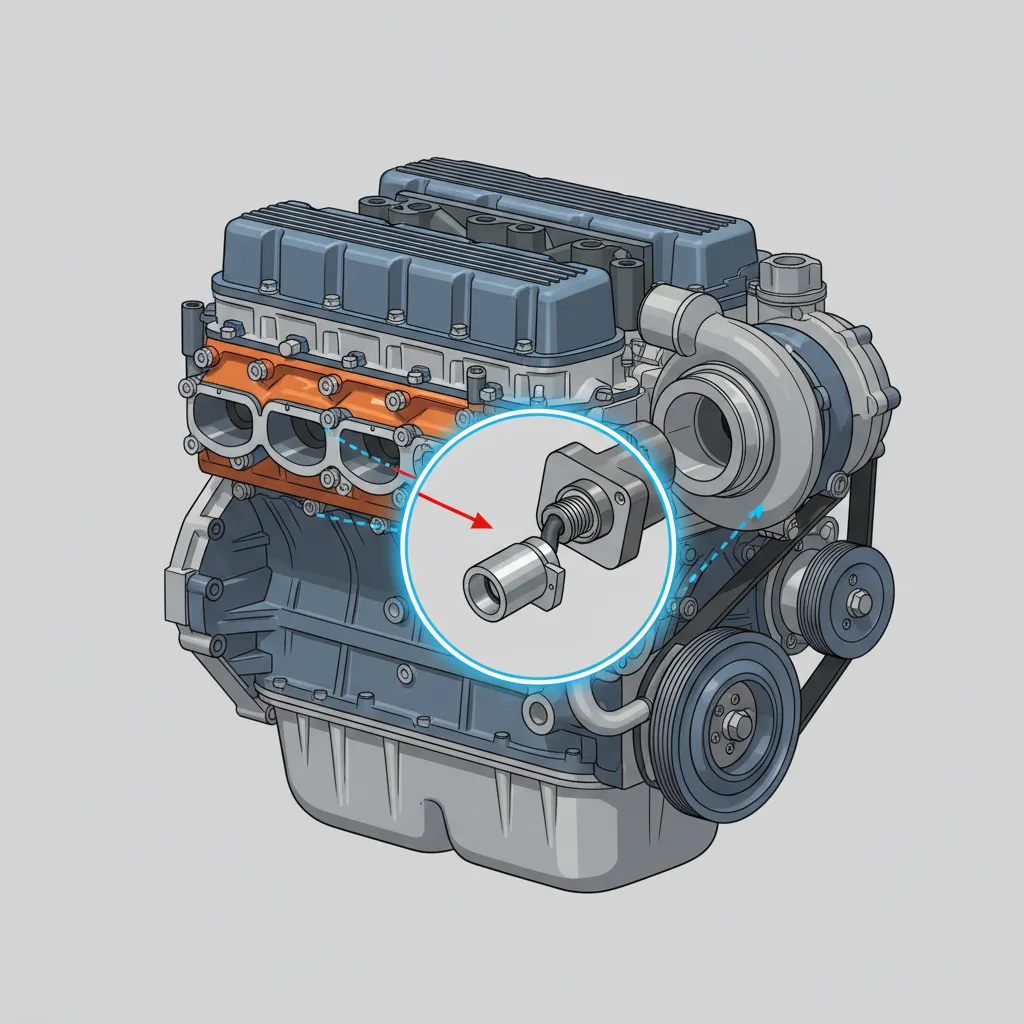
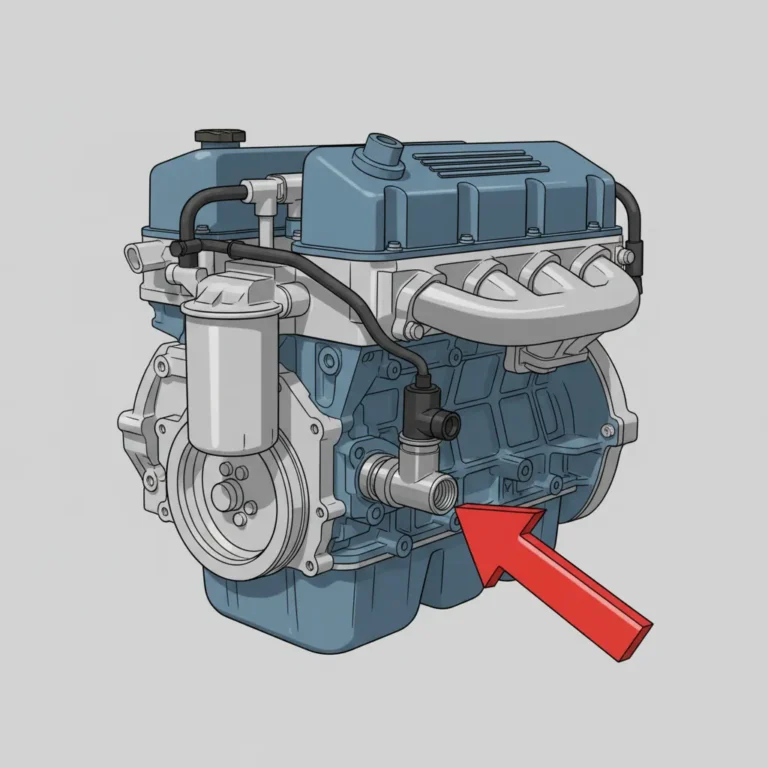
Finding the 6.7 Cummins exhaust back pressure sensor location can feel like a scavenger hunt if you aren’t familiar with the evolution of the 6.7L platform. Since its introduction in mid-2007, the 6.7L Cummins has utilized the same fundamental pressure-sensing technology to comply with stringent EPA emissions standards, yet the physical packaging has evolved alongside EGR and cooling system updates. In its most basic configuration, the EBP sensor is situated on the passenger side of the engine. It is a small, cylindrical component equipped with a three-wire electrical connector and a threaded base that secures it to a pressure tube.
Model Year Variations: 2007.5 to Present
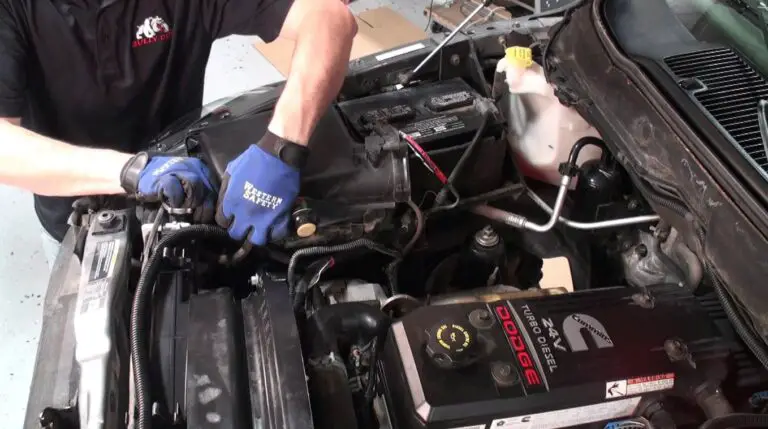
On early 6.7L models (roughly 2007.5 through 2012), the sensor is typically found near the front of the engine, mounted to a bracket close to the thermostat housing or the top front corner of the valve cover. It is highly accessible once the plastic engine beauty cover is removed. However, for 2013 and newer models, Cummins engineers tucked the sensor slightly lower and further back. In these later configurations, the sensor is often integrated near the EGR cooler assembly. A common scenario involves an owner of a 2015 RAM 2500 struggling to find the sensor because it is obscured by updated EGR plumbing and heavy-duty coolant lines that weren’t present on older 6.7L models.
The Tube Routing Method
Regardless of the model year, the most authoritative way to find the sensor is to follow the “trail.” A dedicated stainless steel tube connects the exhaust manifold directly to the sensor. This tube is designed to dissipate the extreme heat of the exhaust gases before they reach the delicate sensor diaphragm. If you locate the exhaust manifold on the passenger side and look for a thin, metal line (about 1/4 inch in diameter) that leads upward toward the top of the engine, you will find the EBP sensor at the end of that line. This method bypasses the confusion of model year changes and ensures you are looking at the correct component every time.
Removing the air intake ducting or the plastic engine cover is highly recommended. While the sensor is “accessible,” having an unobstructed line of sight will prevent you from accidentally damaging the brittle plastic locking tabs on the electrical connector.

Common Symptoms and DTCs of a Faulty EBP Sensor
The EBP sensor is a primary input for the Variable Geometry Turbo (VGT) logic. When it fails, the results are rarely subtle. According to Cummins forum discussions, DTC P0471 (Exhaust Pressure Sensor Range/Performance) is cited in over 40% of exhaust-related sensor complaints for the 6.7L platform. This code indicates that the data being sent to the ECM is outside of the expected parameters based on current engine load and RPM.
Erratic Turbo Boost
Since the ECM uses EBP data to adjust VGT vanes, a failing sensor causes hunting or surging boost levels, especially during highway towing.
Limp Mode
To protect the engine from over-pressurization, the ECM may trigger a ‘limp mode,’ significantly reducing horsepower and torque output.
Beyond the dash lights, drivers often report a noticeable degradation in fuel economy. This occurs because incorrect backpressure readings lead to inefficient combustion cycles and frequent, unnecessary DPF regenerations. In many professional diagnostics, we find that the sensor isn’t actually electrically dead; rather, the stainless steel tube is completely clogged with carbon soot. This prevents the sensor from “feeling” the actual manifold pressure, leading to the same performance issues as a fried circuit. Monitoring expert tips from the community can help you distinguish between a software glitch and a physical blockage.

Step-by-Step EBP Sensor Diagnosis and Testing
Before you spend money on parts, it is imperative to verify that the sensor is the root cause. Many owners prematurely replace sensors only to find the wiring harness or the tube was the culprit. A professional-grade diagnosis starts with live data monitoring. Using an OBD-II scanner, you should compare the ‘Exhaust Pressure’ reading against the ‘Barometric Pressure’ with the key on and the engine off. Under these conditions, both readings should be nearly identical (usually around 14.7 psi at sea level).
By The Numbers
Average Repair Cost (Parts & Labor)
Frequency of DTC P0471 Reports
If the readings differ by more than 1-2 psi, you likely have a sensor or wiring issue. Check for a 5-volt reference signal from the ECM at the harness connector using a multimeter. If the voltage is correct, perform the “Blow-Through” test. Remove the sensor and check if the tube is clear by applying low-pressure compressed air or using a simple paperclip to probe the tube for carbon. Research indicates that a study by RepairPal found that the average cost to replace an Exhaust Back Pressure Sensor is between $132 and $180, but a simple cleaning of the tube can often save you that entire expense if the sensor is still functional.
Inspect the harness pins for “green crust” or moisture intrusion. This is especially common in vehicles serving in high-salt winter communities where road brine can wick up into the electrical connectors, causing intermittent signal drops that mimic a failed sensor.
Tools and Procedure for 6.7 Cummins EBP Sensor Replacement
Replacing the EBP sensor is a straightforward job, provided you have the right tools to handle the heat-cycled hardware. Because the sensor and its tube are exposed to thousands of exhaust temperature cycles, seizing is common. Always apply a high-quality penetrating oil to the threads at least 30 minutes before you attempt removal. Failure to do so often results in a snapped tube or rounded-off fitting.
📋
Replacement Guide
Clean the area around the sensor to prevent debris from entering the tube. Apply penetrating oil to the sensor base and the tube nut.
Disconnect the electrical connector. Use a 1-inch deep-well socket to unscrew the sensor from the mounting bracket or tube.
Use a stiff wire or carburetor cleaner to ensure the pressure tube is 100% free of carbon soot. This step is non-negotiable for a lasting repair.
Apply anti-seize to the new sensor threads. Hand-thread to avoid cross-threading, then torque to 15-20 ft-lbs.
Expert insights suggest that applying anti-seize compound to the threads of the new EBP sensor can reduce future removal time by an estimated 50%. However, be extremely careful to avoid getting any compound on the sensor tip itself, as this will contaminate the diaphragm and lead to immediate failure. After installation, you must use a scan tool to clear any stored DTCs and reset the “learned values” for the exhaust pressure system to ensure the ECM recognizes the new, accurate data stream.
Finding Reliable Parts and Service Serving Your Community
When it comes to sensors, the 6.7L Cummins engine is notoriously picky. While “no-name” sensors available on general online marketplaces might be cheap, they often have incorrect resistance values that trigger ghost codes. For the best performance and longevity, always choose high-quality replacement parts from reputable manufacturers like Cummins, Bosch, or Delphi. These brands are the ones trusted local diesel performance shops and fleet managers use to ensure maximum uptime.
If you find that your sensor is completely seized or the stainless tube has rusted through, it may be time to consult a professional technician serving your local area. Professional shops have access to induction heating tools that can remove stuck components without damaging the more expensive exhaust manifold. You can often find official guide resources or Ram specs through authorized dealer networks nearby. Joining local truck owner groups is another convenient way to find trusted local mechanics who specialize in Cummins emissions systems and can get you back on the road with minimal delay.
✅ Pros of OEM Sensors
- Exact fit for existing harness
- Maintains emissions compliance
- Accurate VGT vane positioning
- Better fuel economy data
❌ Cons of Delaying Repair
The 6.7 Cummins exhaust back pressure sensor location is strategically placed to protect the engine’s most sensitive components. By understanding where it is, how to test it, and the importance of using professional-grade parts, you ensure your truck remains a reliable workhorse for years to come. Whether you are performing the work yourself or visiting a technician nearby, maintaining this small sensor is one of the most cost-effective ways to optimize your 6.7L’s performance.
In summary, the EBP sensor is located on the passenger side of the 6.7 Cummins engine, connected via a stainless steel pressure tube. DTC P0471 and reduced turbo performance are the primary indicators of a clogged tube or failed sensor. Proper maintenance involves cleaning the pressure tube and using high-quality OEM replacement parts. If you are experiencing these symptoms, check the sensor location today or visit a nearby diesel specialist to have your backpressure levels tested professionally.
Frequently Asked Questions
What are the symptoms of a bad exhaust back pressure sensor on a 6.7 Cummins?
The most common symptoms include a noticeable drop in fuel mileage, inconsistent turbo boost, and the exhaust brake failing to engage properly. You will likely see a Check Engine Light with code P0471. In severe cases, the engine may enter a ‘derate’ or limp mode to protect the DPF from clogging due to incorrect pressure readings.
How do I test an exhaust back pressure sensor?
You can test the sensor using a diagnostic scanner to check ‘live data.’ With the engine off, the exhaust pressure should match atmospheric pressure (approx. 14.7 psi at sea level). If the reading is static or wildly different, check the sensor tube for soot blockages. You can also test the 5V reference wire with a multimeter to ensure the ECM is sending power.
What tools do I need to replace an exhaust back pressure sensor?
To perform a replacement, you will need a 1-inch deep-well socket for the sensor itself and a 9/16-inch wrench (preferably a flare nut wrench) for the pressure tube fitting. It is also highly recommended to have penetrating oil like PB Blaster or WD-40 Specialist to break loose soot-bonded threads, and a small wire brush to clean the bracket.
Where can I buy a replacement exhaust back pressure sensor for my 6.7 Cummins?
Reliable sensors are available nearby at local Cummins distributors, RAM dealerships, or specialized diesel parts retailers. It is highly recommended to purchase an OEM Cummins or Bosch sensor rather than cheap aftermarket alternatives, as the 6.7L ECM is very sensitive to the voltage calibration of these specific sensors.
Is it safe to drive with a bad exhaust back pressure sensor?
While the truck may remain drivable for short distances, it is not recommended. A faulty EBP sensor prevents the ECM from managing the VGT turbo and DPF regenerations correctly. Prolonged driving can lead to a completely plugged DPF or turbocharger vane damage, turning a $150 sensor repair into a multi-thousand dollar emissions system overhaul.