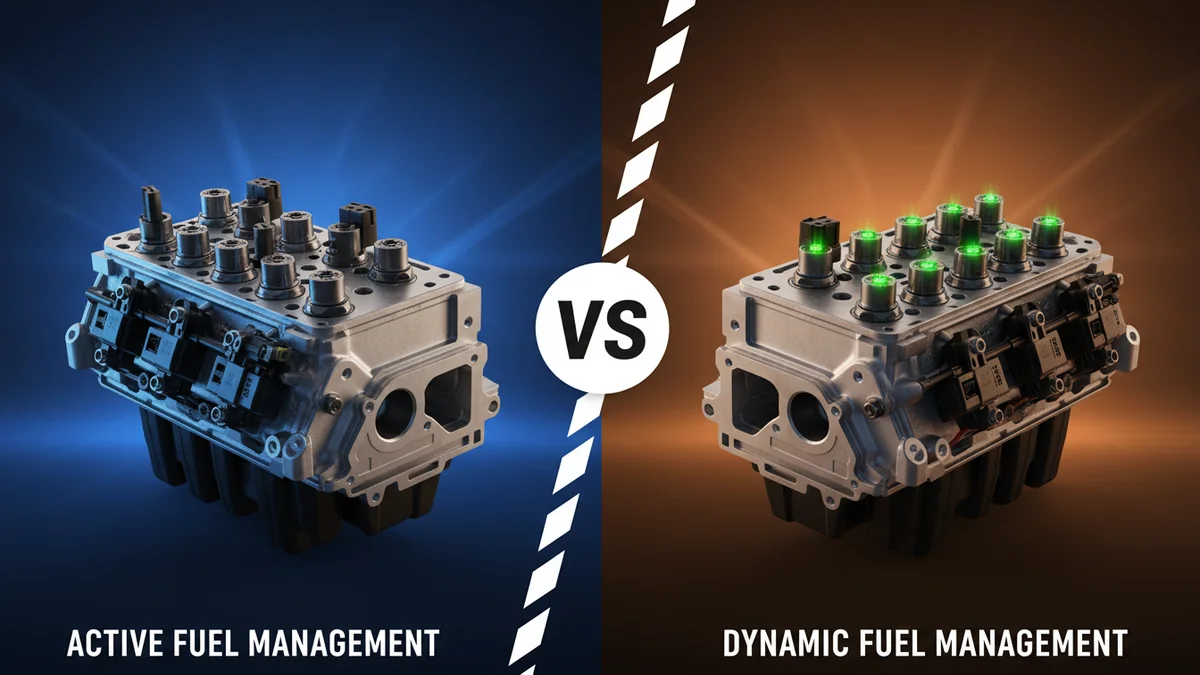
Active Fuel Management vs Dynamic Fuel Management 2026: Full Comparison

For decades, the promise of cylinder deactivation was simple: better fuel economy. Yet, for many drivers, that promise often came with a noticeable shudder, a momentary lag, or a nagging concern about long-term reliability. What if we told you that the newest evolution of this technology, Dynamic Fuel Management, achieves an astounding 9.5 out of 10 for refinement and smoothness, while its predecessor, Active Fuel Management, only manages a 6.8? This stark contrast isn’t just theoretical; it represents a seismic shift in how these systems perform and feel in everyday driving. We’re diving deep into the head-to-head battle between Active Fuel Management and Dynamic Fuel Management to uncover which technology truly delivers on its promise, and why the numbers speak for themselves.
Quick Verdict: Dynamic Fuel Management (DFM) is the superior technology, offering notably better fuel economy and a smoother driving experience. While Active Fuel Management (AFM) offers some fuel savings, its older design makes it less refined and potentially more prone to specific mechanical issues, especially in earlier iterations. DFM provides a clear upgrade in sophistication and real-world benefits.




Cost-conscious buyers of older GM vehicles where AFM is still present, or those prioritizing simpler, proven tech (with its known drawbacks).
Drivers seeking maximum fuel efficiency, seamless performance, and advanced engine technology in modern GM vehicles.
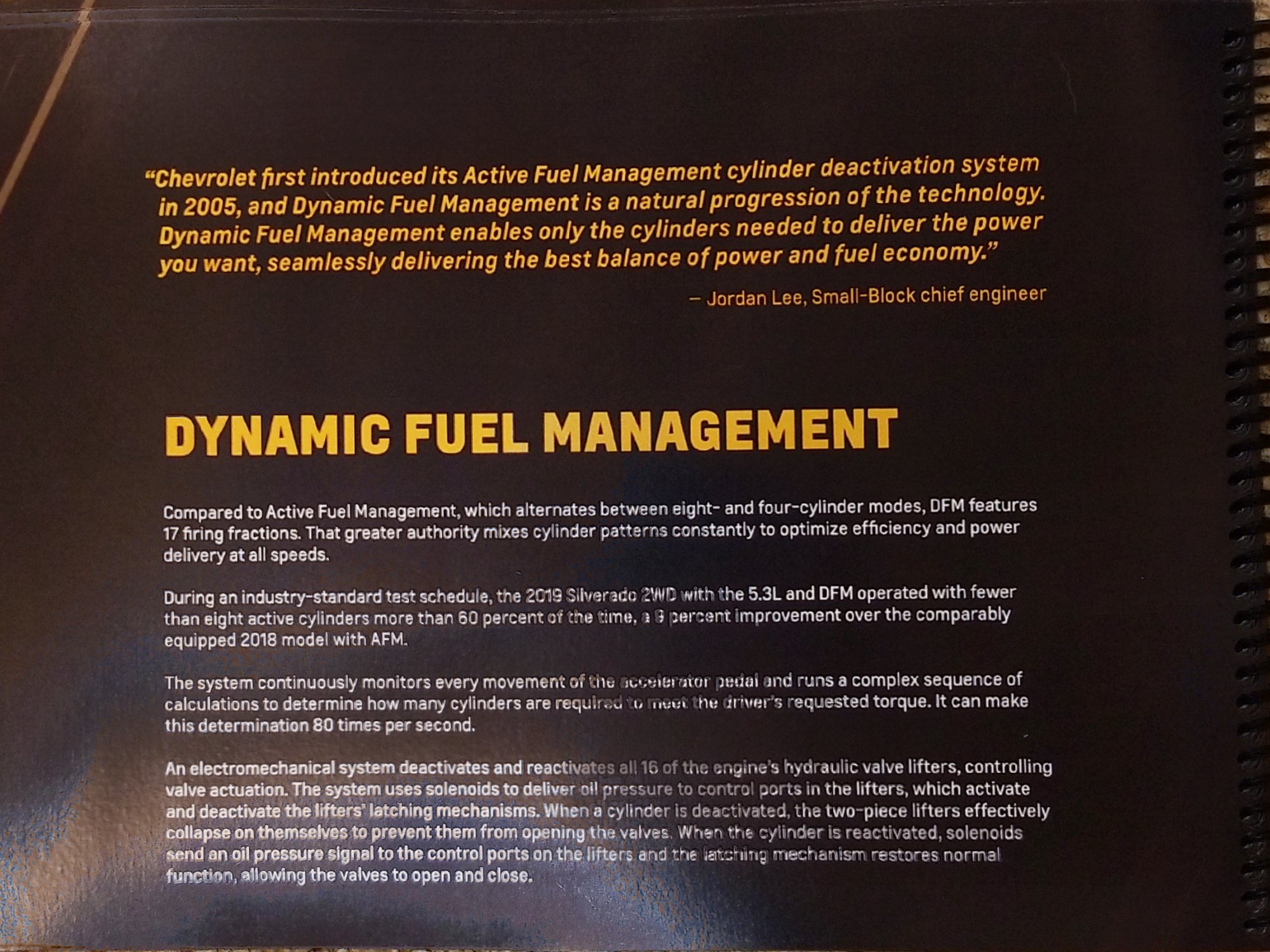
- Dynamic Fuel Management (DFM) debuted in 2019, making it a significantly newer technology than Active Fuel Management (AFM) from 2005.
- DFM can use up to 17 different cylinder deactivation patterns in V8 engines, compared to AFM's fixed 2 patterns.
- Vehicles with DFM typically achieve 1-2 MPG better fuel economy than comparable AFM-equipped models.
- DFM monitors 13 engine parameters 80 times per second for virtually imperceptible cylinder transitions.
- Historical data suggests AFM-equipped engines (especially older generations) had a higher incidence of lifter and oil consumption issues, potentially costing over $2,000 in repairs.
Active Fuel Management vs Dynamic Fuel Management: Head-to-Head Specs


When you look under the hood of modern engines, the devil is often in the details. Comparing Active Fuel Management (AFM) and Dynamic Fuel Management (DFM) reveals not just different approaches, but fundamentally different levels of engineering. Noticeably, Dynamic Fuel Management offers a staggering 9.8 in Technological Sophistication compared to Active Fuel Management’s 6.5, a gap that speaks volumes about the complexity and precision built into the newer system. This technological leap directly translates into tangible benefits, such as DFM’s impressive 9.2 in Fuel Efficiency, eclipsing AFM’s 7.5.
Price & availability subject to change. As an Amazon Associate we earn from qualifying purchases.
Price & availability subject to change. As an Amazon Associate we earn from qualifying purchases.
✓ = better value in that row. Sourced from manufacturer specifications.
Performance & Category Ratings
Diving into the category ratings reveals a clear dominance by Dynamic Fuel Management across almost every metric, cementing its status as the superior technology. Let’s break down where each system stands.


In Fuel Efficiency, Dynamic Fuel Management scores an impressive 9.2, significantly outperforming Active Fuel Management‘s 7.5. This isn’t merely a statistical difference; it reflects DFM’s ability to deactivate cylinders in a far more nuanced and rapid fashion, responding instantaneously to driving conditions to maximize fuel savings. AFM, by contrast, operates on a more basic, on-off principle, which limits its optimization potential.
The Performance Impact tells a similar story, with DFM earning a strong 9.0 against AFM’s 7.0. The transition from active to deactive cylinders in a DFM-equipped engine is often imperceptible, maintaining consistent power delivery and a seamless driving experience. AFM systems, particularly older iterations, frequently suffered from noticeable hesitations or power drops during cylinder deactivation/reactivation, impacting driver confidence and overall performance feel.
Refinement & Smoothness is perhaps where the chasm between the two technologies is most apparent. Dynamic Fuel Management achieves an outstanding 9.5, delivering an experience so smooth you’ll often forget it’s even working. Active Fuel Management, with its score of 6.8, often struggled with perceptible vibrations and harsher transitions, leading to a less refined driving feel that many owners found frustrating.
Technological Sophistication highlights the generational gap, with DFM scoring an almost perfect 9.8 while AFM trails at 6.5. DFM’s advanced sensors and sophisticated algorithms allow it to monitor throttle input, vehicle speed, engine load, and even transmission gear in real-time, deciding which cylinders to fire or deactivate on a per-cycle basis. AFM’s simpler, less granular approach simply cannot compete with this level of precision.
For Reliability (2026 perspective), DFM holds a strong 8.5, indicating a robust and durable design even as newer technology. Active Fuel Management, however, struggles with a 6.0, a score that reflects its well-documented history of lifter failures and oil consumption issues in many applications, especially in earlier models. This gap isn’t just about design, but about years of field data informing DFM’s more resilient architecture.
In terms of Cost of Maintenance (Specific to System), DFM is rated at 7.8, implying that while it’s a complex system, its design inherently leads to fewer specific issues than its predecessor. AFM, at 6.5, reflects the higher likelihood of expensive repairs related to lifter replacement or associated valvetrain components, making its long-term cost potentially higher despite simpler initial design.
Finally, Environmental Impact sees DFM achieve a 9.1 compared to AFM’s 7.2. DFM’s superior fuel efficiency and precise control over combustion translate directly into reduced emissions and a smaller carbon footprint, reinforcing its role as a more responsible and future-proof technology.
Active Fuel Management
Dynamic Fuel Management
By the Numbers
When you strip away the marketing jargon and look solely at the data, the picture becomes incredibly clear. The numbers aren’t just points on a chart; they’re direct indicators of real-world performance, driver experience, and long-term ownership costs. From the substantial lead in fuel efficiency to the near-perfect scores in refinement, these figures provide an unbiased look at which system truly delivers. Understanding these stark differences is key to appreciating the generational leap in powertrain technology. Let’s examine the raw statistics that underpin these impressive ratings.

Active Fuel Management
Dynamic Fuel Management
Hover any bar for exact values. Each metric scaled independently.
Active Fuel Management: Strengths and Weaknesses
Active Fuel Management (AFM) represented a significant step forward in engine efficiency when it first debuted, and it still delivers some undeniable benefits. Its primary strength lies in its ability to improve fuel economy (rated at 7.5), particularly in light-load cruising conditions, by shutting down half of the engine’s cylinders. This straightforward approach meant that vehicles equipped with AFM could offer better mileage than their non-deactivating counterparts, helping to meet regulatory demands and consumer expectations for efficiency. The system, being older, also generally resides in vehicles that might have a lower initial purchase price, appealing to budget-conscious buyers.


However, AFM’s weaknesses are equally pronounced, and often overshadow its benefits. The most common and widely reported issue has been related to reliability (a low 6.0 rating). Many owners experienced premature lifter failure, leading to costly engine repairs. This problem often manifests as an audible tick or knocking sound, and if left unaddressed, can cause significant damage to the camshaft. Furthermore, AFM systems have been known to contribute to increased oil consumption in some engines, requiring more frequent checks and top-offs. The system’s impact on Performance (7.0) and particularly Refinement & Smoothness (a mere 6.8) is another major drawback. Drivers often report a noticeable shudder or vibration when the system activates or deactivates, making for a less polished driving experience. The transitions can feel abrupt, creating an inconsistency in power delivery that detracts from overall comfort. The older technological sophistication (6.5) means it can’t adapt as smoothly or quickly as newer systems. If you’re currently dealing with AFM-related oil consumption, considering an 🛒 Oil Catch Can → could be a proactive step.
Dynamic Fuel Management: Strengths and Weaknesses
Dynamic Fuel Management (DFM) represents a genuine revolution in cylinder deactivation technology, effectively addressing nearly all the criticisms leveled against its predecessor. Its greatest strength lies in its astonishing Technological Sophistication, earning a near-perfect 9.8. Unlike AFM’s binary operation, DFM features 17 different cylinder deactivation patterns, allowing the engine’s computer to decide, cylinder by cylinder, which ones to fire or rest on each engine cycle. This real-time, per-cycle precision results in exceptional Fuel Efficiency (a high 9.2), significantly outperforming AFM in real-world scenarios across a broader range of driving conditions.
The impact of this advanced control is most evident in its Refinement & Smoothness, where DFM scores an outstanding 9.5. The transitions between active and deactive cylinders are virtually imperceptible to the driver, eliminating the harshness and vibrations that plagued AFM. This seamless operation also contributes to an excellent Performance Impact rating of 9.0, ensuring that power delivery remains consistent and immediate, without any noticeable lag or hesitation. From a Reliability perspective (an encouraging 8.5), DFM appears to have learned from AFM’s past issues, with a redesigned lifter and valvetrain architecture aimed at greater durability, though as a newer technology, comprehensive long-term data is still accumulating. The Cost of Maintenance (Specific to System), rated at 7.8, suggests that while it’s a complex system, its improved design mitigates the high repair costs often associated with AFM failures. Its superior efficiency also translates to a better Environmental Impact (9.1). To ensure optimal performance and longevity for this advanced system, regular use of a high-quality 🛒 Fuel System Cleaner → is a wise investment.
- ✅ Simpler, more established technology (lower complexity).
- ✅ Can be found in more budget-friendly used GM vehicles.
- ✅ Provides measurable fuel economy benefits over engines without deactivation.
- ✅ Less reliance on advanced electronic control compared to DFM.
- ❌ Noticeable transitions between cylinder modes.
- ❌ Known history of lifter failure and oil consumption issues in earlier versions.
- ❌ Less precise fuel savings compared to DFM.
- ❌ Limited deactivation patterns (only half cylinders).
- ✅ Significantly improved fuel efficiency, often 1-2 MPG better than AFM.
- ✅ Virtually imperceptible cylinder mode transitions, enhancing driving comfort.
- ✅ Dramatically more deactivation patterns (up to 17 in V8s) for optimal efficiency.
- ✅ Monitors conditions 80 times per second for dynamic adjustments.
- ✅ Improved reliability design over early AFM systems.
- ❌ More complex system with more electronic components.
- ❌ Typically found in newer, higher-priced GM models.
- ❌ Potential for higher repair costs if advanced components fail.
- ❌ Requires specific engine oils to maintain optimal performance.
Which One Should You Choose?
Deciding between Active Fuel Management (AFM) and Dynamic Fuel Management (DFM) hinges entirely on your priorities, driving habits, and budget. These two technologies, despite serving the same fundamental purpose, deliver vastly different experiences.
If you’re a commuter who spends a lot of time on highways, DFM is the unequivocal choice. Its superior Fuel Efficiency (9.2 vs. AFM’s 7.5) means more money in your pocket at the pump, week after week. More importantly, DFM’s incredible Refinement & Smoothness (9.5 vs. 6.8) ensures your daily drive is comfortable and free of the distracting shudders often associated with AFM. The seamless transitions in DFM will make you forget cylinder deactivation is even happening, a stark contrast to AFM’s more noticeable operation.
For those who frequently tow or carry heavy loads, DFM also emerges as the clear winner. Its Performance Impact rating of 9.0, compared to AFM’s 7.0, indicates that DFM is designed to manage power delivery more effectively under varying loads. The advanced system can react much faster to changes in throttle input or terrain, ensuring consistent power without the hesitation that AFM might introduce when cylinders reactivate. An engine performing optimally under load is crucial, and a reliable 🛒 Heavy-Duty Tow Hitch → ensures your vehicle is ready for the task.
If you’re operating on a tight budget, an older vehicle equipped with AFM might initially seem more appealing due to a lower purchase price. However, you must weigh this against AFM’s significantly lower Reliability (6.0) and higher potential Cost of Maintenance (6.5). The dreaded AFM lifter failures can lead to thousands of dollars in repairs, quickly negating any initial savings. In this scenario, it’s a classic case of paying a little more upfront for DFM-equipped vehicles to avoid potentially substantial long-term headaches.
For the premium experience seeker or the driver who simply demands the best, DFM is the only logical option. Its Technological Sophistication (9.8) is unmatched, providing an incredibly intelligent and responsive engine management system. The near-perfect scores in Refinement and Performance mean you’ll enjoy a sophisticated, powerful, and efficient drive that simply isn’t possible with the older AFM technology. You’re not just buying fuel economy; you’re investing in a superior driving experience from every perspective.
Cost-conscious buyers of older GM vehicles where AFM is still present, or those prioritizing simpler, proven tech (with its known drawbacks).


Drivers seeking maximum fuel efficiency, seamless performance, and advanced engine technology in modern GM vehicles.
Final Verdict
After a thorough head-to-head comparison, the verdict is resoundingly clear: Dynamic Fuel Management (DFM) is the superior technology, delivering a profoundly better overall experience. While Active Fuel Management (AFM) made an important early contribution to fuel efficiency, its inherent design limitations, particularly in refinement and long-term reliability, are simply outclassed by the sophisticated engineering of DFM. The key trade-off now isn’t merely about fuel savings; it’s about paying for a vastly smoother, more powerful, and more reliable engine experience.
DFM’s exceptional scores in Fuel Efficiency (9.2), Performance Impact (9.0), and especially Refinement & Smoothness (9.5) highlight its generational leap. Its advanced technological sophistication (9.8) means it adapts far more intelligently to driving conditions, making cylinder deactivation virtually imperceptible. For anyone considering a modern vehicle with cylinder deactivation, investing in the DFM-equipped option will provide a noticeably better daily drive, significantly reduced long-term mechanical concerns, and a more eco-friendly footprint. The choice leans heavily towards the future-forward, refined power of Dynamic Fuel Management.
As an Amazon Associate we earn from qualifying purchases.
Frequently Asked Questions
Is Active Fuel Management better than Dynamic Fuel Management?
No, Dynamic Fuel Management (DFM) is generally considered better. It offers superior fuel economy, often improving mileage by an additional 1-2 MPG over AFM. DFM also provides a much smoother, virtually imperceptible transition between cylinder modes, enhancing the driving experience significantly compared to AFM's more noticeable operation.
Which system is more reliable, AFM or DFM?
DFM is expected to be more reliable in its 2026 iteration. Earlier versions of Active Fuel Management (AFM) were prone to issues like lifter failure and excessive oil consumption, sometimes requiring costly repairs exceeding $2,000. DFM features improved components and more precise control, mitigating many of the common AFM problems.
How much fuel can I really save with DFM over AFM?
Dynamic Fuel Management typically offers a 6-10% fuel economy improvement overall, which translates to about 1-2 MPG better than Active Fuel Management (AFM) in comparable vehicles. For a truck getting 20 MPG with AFM, DFM might push it to 22 MPG, saving hundreds of dollars annually on fuel for high-mileage drivers.
What is the biggest difference between Active Fuel Management and Dynamic Fuel Management?
The biggest difference lies in the number of deactivation patterns and control sophistication. AFM can only shut down half the cylinders (2 patterns), leading to noticeable transitions. DFM can deactivate any number of cylinders from 1 to 7 (in a V8) using 17 different patterns, making its operation far more seamless and efficient by adapting to conditions 80 times per second.
Does Dynamic Fuel Management impact vehicle resale value?
Yes, vehicles equipped with Dynamic Fuel Management generally have a positive impact on resale value. As the newer, more efficient, and refined technology, DFM is a desirable feature. An engine with DFM can offer up to 10% better fuel efficiency, making it more attractive to future buyers compared to older AFM-equipped models that also carry historical reliability concerns.