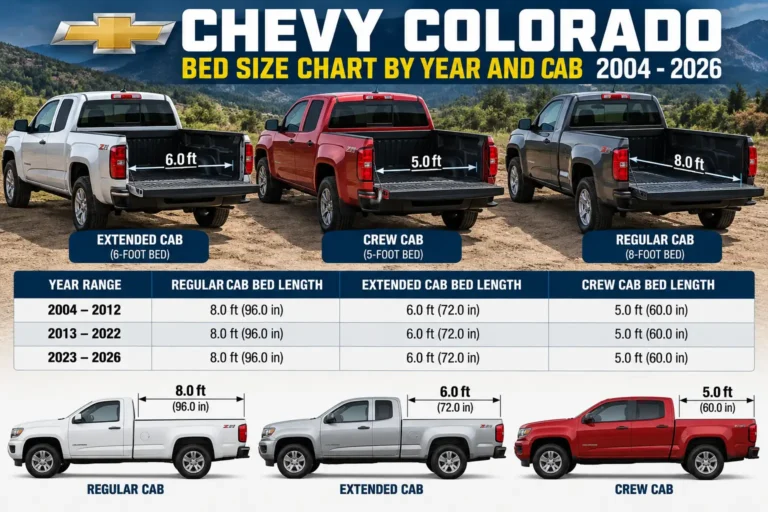
Chevy Silverado 2500 Bed Size Chart Diagram: Component Breakdown 2026

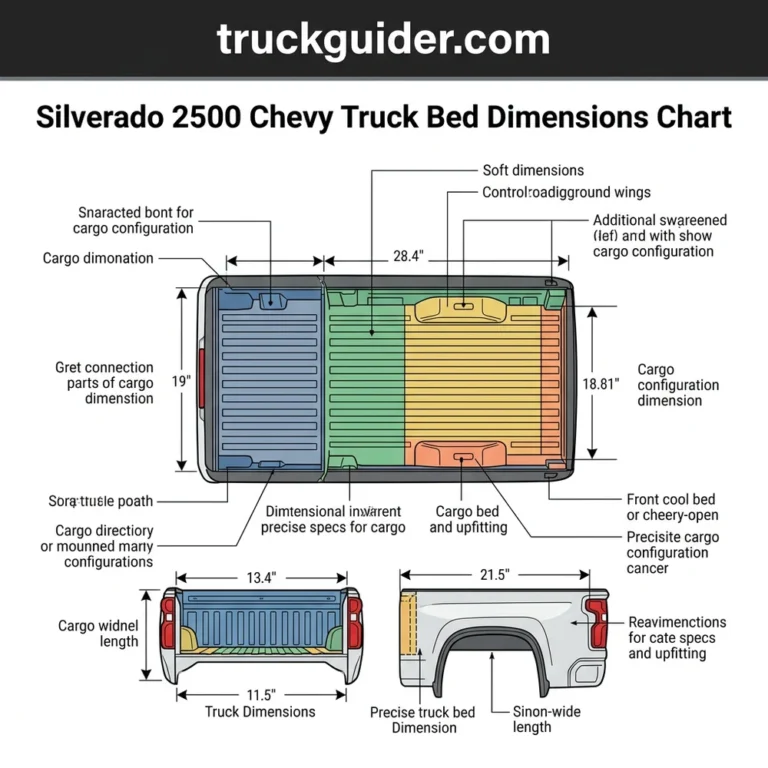
The Chevy Silverado 2500 bed size chart outlines three primary configurations: Standard Bed (approx. 79.4 inches), Long Bed (approx. 98.3 inches), and Crew Cab short bed variants. Dimensions include floor length, width between wheel wells (50.6 inches), and side wall height, which are essential for proper cargo system component integration.
📌 Key Takeaways
- The standard bed offers 69.5 cubic feet, while the long bed provides 83.5 cubic feet of volume.
- Crucial identification: measure from the inside of the tailgate to the bulkhead for true internal length.
- Payload capacity is highly dependent on the truck bed structure and suspension configuration.
- Most common error is failing to account for the spray-in bedliner thickness when installing rigid components.
- Professional assistance is recommended for structural bed modifications to avoid compromising warranty coverage.
Selecting the correct cargo capacity for your heavy-duty fleet or personal vehicle requires a granular understanding of the Chevy Silverado 2500 bed size chart. For technicians, fabricators, and equipment operators, accurate dimensions are not merely a matter of convenience; they are critical for ensuring the structural integrity of custom upfits, the safe installation of fifth-wheel hitches, and the precise fitment of bed-mounted auxiliary systems. Whether you are performing a shell installation or configuring a service body, relying on precise OEM engineering schematics prevents costly compatibility errors. This guide delineates the precise physical footprints of the current and preceding generations, providing the technical data necessary for professional-grade modifications and equipment mounting.




Chevy Silverado 2500 Bed Size Chart: Detailed Specifications

The engineering blueprint of the Chevrolet Silverado 2500 HD dictates distinct variations based on model year and cab configuration. Unlike light-duty platforms, the 2500 series integrates high-strength steel bed structures designed to support significantly higher payload capacities. When evaluating your specific chassis, it is vital to differentiate between the standard box (approximately 6.5 feet) and the long box (approximately 8 feet). The following data represents the standardized interior dimensions required for fabrication and accessory procurement.
| Bed Configuration | Inside Length (Floor) | Width (Wheel Wells) | Total Bed Depth |
|---|---|---|---|
| Standard Box (6.75′) | 82.25 inches | 50.60 inches | 21.00 inches |
| Long Box (8.0′) | 98.25 inches | 50.60 inches | 21.00 inches |
| Cab Chassis (Flatbed) | Variable/Custom | 34.00 inches (Frame) | N/A |
When comparing the 2500 HD platform to the 1500 series, you must account for the Durabed structural differences. The HD configuration utilizes a roll-formed high-strength steel floor that is significantly more resistant to impact fatigue. Additionally, the vertical sidewall geometry varies slightly in the 2500 HD to accommodate reinforced mounting points for gooseneck hitch systems. If you are sourcing aftermarket equipment, always verify the generation code. The T1 platform, introduced in 2020, expanded the interior width of the bed floor compared to the K2XX series (2015-2019), meaning that bed liners and drop-in accessories are rarely interchangeable between these two major manufacturing windows.
For models equipped with the factory-installed gooseneck/fifth-wheel prep package, the mounting pucks are located at specific coordinates relative to the axle centerline. Always cross-reference the Chevy Silverado 2500 bed size chart dimensions with the specific bolt pattern of your hitch head to ensure chassis clearance.
Chevy Silverado 2500 Bed Size Chart: Essential Components

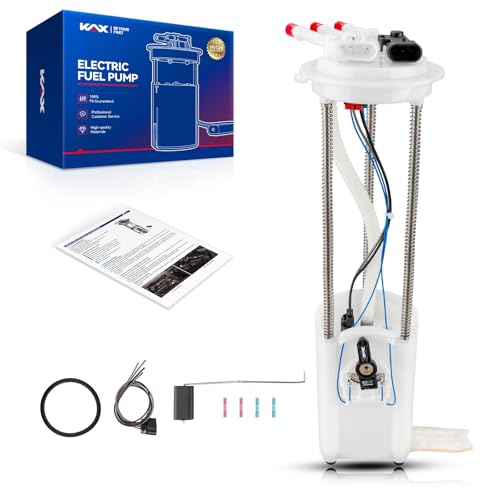
Understanding the anatomy of the Durabed is essential for any technician involved in custom upfitting. The system is composed of several high-wear, load-bearing components that demand precise measurements. The tailgate structure, for instance, is engineered with a power-release mechanism that requires specific clearance to prevent binding when an aftermarket tonneau cover or bed slide is installed. The interior bed floor features twelve fixed tie-down points, each rated for 500 pounds of force, which serve as the primary anchors for equipment stabilization. When measuring for bulkheads or tool boxes, you must account for the inward taper of the inner fender wells, which reduces the usable width at the floor level to 50.6 inches.
The structural layout of the bed floor includes recessed channels designed for water drainage. If you are installing a spray-in liner or a custom floor decking, these channels must remain unobstructed to prevent premature corrosion of the underlying steel. The mounting flanges located at the top of the bed rails serve as the primary interface for cap and topper installations. Note that on the 2500 HD, these rails are significantly reinforced compared to the 1500, requiring longer mounting hardware (typically M8 x 1.25 bolts) to achieve the necessary clamp load for heavy-duty rack systems. When planning your installation, ensure the wiring harness for any bed-mounted auxiliary lighting is properly routed through the factory-provided grommet locations located behind the taillight assembly, maintaining the integrity of the weather sealing system.
Torque specifications for factory tie-down hardware are standardized at 45 lb-ft. When installing aftermarket bed-mounted accessories, ensure that fasteners do not compromise the integrity of the bed’s inner skin or the underlying fuel filler housing.


How to Measure Your Truck Bed for Custom Modifications
Precision is paramount when executing modifications based on the Chevy Silverado 2500 bed size chart. Follow these systematic steps to ensure your measurements align with manufacturer tolerances and aftermarket product requirements.
- Determine the Primary Length: Measure from the inside of the bulkhead (cab-side wall) to the inside of the tailgate. Perform this measurement at both the floor level and the top rail level, as the slight rake of the bed can create a variance of up to 0.5 inches.
- Verify Width Between Wheel Wells: Use a digital caliper or a precision-calibrated tape measure to find the distance between the two inward fender bulges. This is the critical bottleneck for any item—such as plywood or sheet metal—intended to lie flat on the floor.
- Account for Tailgate Arc: If you are installing a permanent bed slide or a pull-out kitchen system, measure the arc of the tailgate when open. Ensure that the clearance to the ground is maintained even when the vehicle is loaded to its GVWR (Gross Vehicle Weight Rating).
- Inspect Gooseneck/Fifth-Wheel Access: If your vehicle is equipped with the prep package, identify the four mounting pucks. Measure the distance from the bulkhead to the center of the forward-most pucks to verify compatibility with your specific kingpin or gooseneck ball assembly.
- Assess Vertical Clearance: Measure from the floor to the top of the bed rail. When adding a tonneau cover, subtract 1.5 inches from this value to account for the rail-mount hardware, which often encroaches into the vertical load space.
Always verify these measurements against the specific blueprint provided by the accessory manufacturer. Many custom-fit components are laser-cut and designed to tight tolerances; therefore, any deviation in your measurement—caused by bed liners or accumulated debris—can result in alignment failures during assembly.
Common Chevy Silverado 2500 Bed Size Chart Issues and Fixes
Even seasoned professionals encounter challenges when interpreting truck bed schematics. The most frequent errors involve misidentifying the model year generation or confusing the Silverado 2500 HD specs with the GMC Sierra 2500. While these two vehicles share the same chassis, there are minor variations in the exterior cladding and bed side panel profiles that can affect the mounting of specific topper models.
- Misalignment Due to Bed Liners: A thick drop-in plastic bed liner can alter internal measurements by up to 0.75 inches. Always measure the bare metal surface for critical installations to ensure a true fitment.
- Cab Configuration Confusion: Users often confuse the “Standard Box” available on Crew Cabs with the “Long Box” available on Regular or Double Cabs. Double-check your VIN-encoded configuration before purchasing expensive cargo management systems.
- Hardware Interference: When installing bed racks, ensure that the bolts do not collide with the hidden structural reinforcement members of the Durabed. Always use the factory-recommended mounting holes located on the bed rails.
- GMC Sierra vs. Chevy Silverado: While mechanical components like engines and transmissions are cross-compatible, external body accessories such as bed caps, rail protectors, and tonneau covers often feature unique trim profiles. Verify that your part number is explicitly designated for the Chevrolet Silverado 2500 series.
- Inconsistent Measurements: Never take a single measurement. Due to the high payload capacity, the bed structure is prone to minor “flex” over time. Take three measurements at the front, middle, and rear to ensure the bed is not bowed.
Under no circumstances should you drill into the center of the bed floor without first verifying the locations of the fuel tank and fuel lines underneath the chassis. Consult the vehicle’s structural schematic or the chassis-cab manual before mounting heavy equipment.
Chevy Silverado 2500 Bed Size Chart Questions Answered
Is the 2024 Silverado 2500 HD bed the same size as the 2020 model?
Yes, both the 2020 and 2024 models belong to the T1 platform generation. The interior cargo bed dimensions remain consistent between these years, meaning most accessories such as tonneau covers, bed slides, and rack systems are cross-compatible within this generation.



Does the bed size of a Silverado 2500 change if it is a Dually?
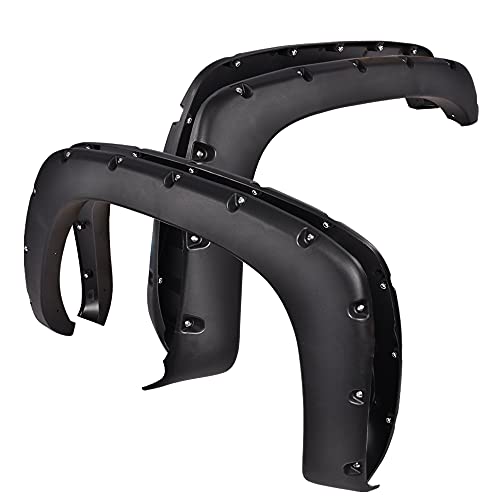
The interior cargo space (floor width and length) remains identical between Single Rear Wheel (SRW) and Dual Rear Wheel (DRW) models. The outer width of the truck is increased by the fender flares on the DRW, but the internal bed structure is unchanged.
Can I use a 1500 Silverado bed liner in a 2500 HD?
Generally, no. The 2500 HD bed floor structure and sidewall configurations differ from the 1500 to support higher payloads and provide different anchor point locations. Attempting to force a 1500 liner into a 2500 HD bed will likely block factory drainage points and create interference with tie-down hooks.
What is the distance between the bulkhead and the first puck of the fifth-wheel kit?
This varies by the specific hitch kit manufacturer (e.g., Curt, B&W, or factory OEM). You must consult the mounting template provided with your specific hitch, as measurements are calculated from the rear axle centerline rather than the bulkhead. Always verify against the specific Chevy Silverado 2500 bed size chart for your model year to confirm frame clearance.
Step-by-Step Guide to Understanding the Chevy Silverado 2500 Bed Size Chart
Identify – Determine your Silverado 2500 cab/box configuration from your VIN or owner manual.
Locate – Find the specific row in the bed size chart that matches your 2026 model specifications.
Reference – Use the technical diagram to cross-verify the internal width and length against your desired component.


Connect/Route – Align your accessory mounting brackets with the confirmed bed floor and side-wall structural points.
Verify – Measure the final clearance after component installation to ensure no obstruction to the tailgate or bed lights.
Troubleshoot – If dimensions mismatch, inspect for non-factory liners or existing bed damage that may shift mounting points.