Cummins Engine Generations Chart (1st Gen to 6.7L)

Cummins has powered Dodge and Ram heavy duty trucks through six distinct engine generations since 1989, and the generation matters more than the model year when you are shopping parts, diagnosing a problem, or comparing a used truck.
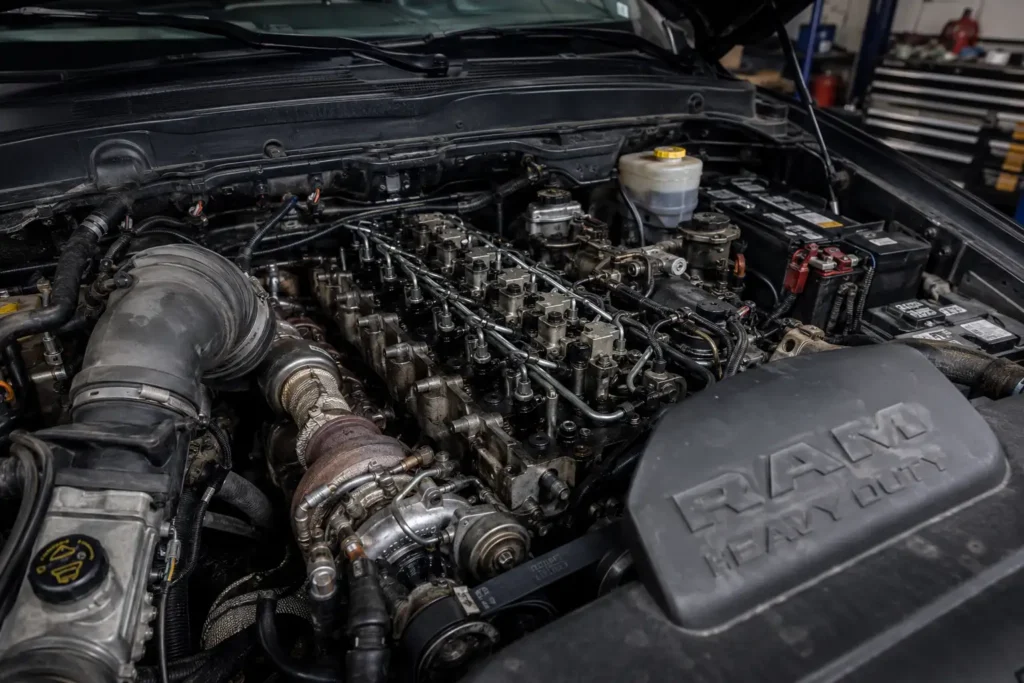
Each generation swapped fuel systems, valve counts, and emissions hardware, so a repair that works on one 6.7L Cummins can be completely wrong for another built five years later.
This guide breaks down every Cummins generation from the original 12-valve 5.9L through the revised 2025 to 2026 6.7L, with the specs that actually change between them. Here is the full chart, generation by generation.
Cummins Engine Generations 1989 To 2026
Six generations of Cummins diesel power in Dodge and Ram trucks
Cummins Engine Generations Chart 1989 To 2026
Recommended Best Deal Products


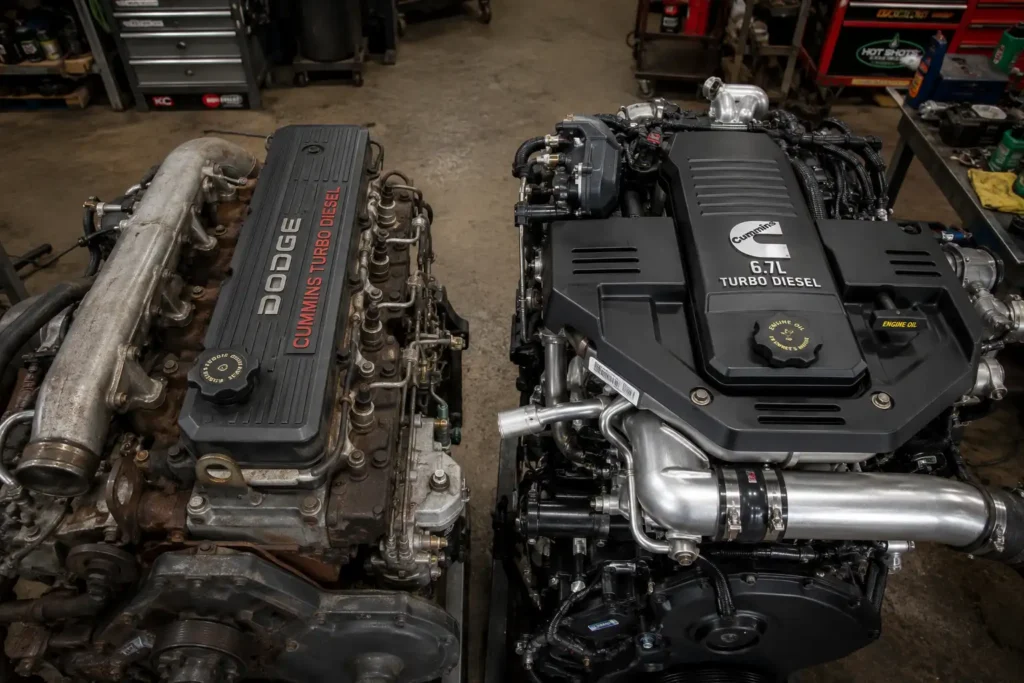
Use this table as a fast reference before reading the generation by generation breakdown below.
| Generation | Years | Displacement | Valves | Injection System | HP and Torque | Emissions Equipment |
|---|---|---|---|---|---|---|
| 1st Gen | 1989 to 1993 | 5.9L | 12 | Bosch VE rotary pump | 160 hp / 400 lb-ft | None |
| 2nd Gen | 1994 to 1998 | 5.9L | 12 | Bosch P7100 mechanical | 160 to 215 hp / 420 to 440 lb-ft | None |
| 3rd Gen | 1998.5 to 2002 | 5.9L | 24 | Bosch VP44 electronic | 235 to 245 hp / 460 to 505 lb-ft | Basic catalytic converter |
| 4th Gen | 2003 to mid-2007 | 5.9L to 6.7L transition | 24 | Bosch common rail | 305 to 350 hp / 555 to 650 lb-ft | DPF introduced mid-2007 |
| 5th Gen | 2010 to 2024 | 6.7L | 24 | Bosch CP3 common rail | 370 to 420 hp / 800 to 1,075 lb-ft | EGR, DPF, SCR, DEF |
| 6th Gen | 2025 to 2026 | 6.7L | 24 | Bosch CP8 piezo common rail | 360 to 430 hp / 800 to 1,075 lb-ft | EGR, DPF, SCR, DEF |
Horsepower and torque climbed from 160 hp and 400 lb-ft on the original 1989 engine to as much as 430 hp and 1,075 lb-ft on the current 6th generation. Every jump in power after 1998 came bundled with new emissions hardware, which is the biggest trade-off buyers weigh when choosing a generation.
1st Generation Cummins 1989 To 1993 12 Valve
The original Cummins in a Dodge pickup made 160 hp and 400 lb-ft from a 5.9L inline six with a Bosch VE rotary injection pump and a 12-valve head. Early trucks ran without an intercooler, which Dodge added partway through the run around 1991.5, giving the engine a modest bump in cooling efficiency under load.
There was no emissions equipment on this generation at all. That simplicity is exactly why 1st generation trucks are still running today and why they remain the benchmark for mechanical reliability among Cummins owners.
For a side by side look at how far the platform has come, our 6.7 Cummins engine diagram shows the modern layout this engine eventually grew into.
By 1994, Cummins revised the pump while keeping the 12-valve head.
2nd Generation Cummins 1994 To 1998 P7100 12 Valve
Recommended Best Deal Products

The 2nd generation kept the 12-valve head but swapped in a Bosch P7100 mechanical inline injection pump, often called the P-pump. Output ranged from 160 hp on early automatic trucks up to 215 hp and 440 lb-ft on later manual transmission models.
This is the generation most prized by diesel enthusiasts for modification. The P7100 pump is fully mechanical and rebuildable, which means power upgrades do not depend on reflashing software the way modern Cummins trucks do.
1998.5 brought the biggest shift yet, the move to 24 valves.
3rd Generation Cummins 1998.5 To 2002 24 Valve VP44
Cummins moved to a 24-valve cylinder head and an electronically controlled Bosch VP44 injection pump for the 3rd generation, unlocking 235 to 245 hp and up to 505 lb-ft depending on the standard or high output trim. The switch to four valves per cylinder and electronic timing control improved airflow and responsiveness significantly over the 12-valve engines.
That power increase came with a well documented trade-off. The VP44 pump is the known weak point of this generation, and failures are common enough that most 3rd generation trucks on the road today have already had the pump replaced at least once.
2003 brought a fuel system overhaul that defined the 4th generation.
4th Generation Cummins 2003 To 2007 Common Rail Transition
Recommended Best Deal Products


Cummins introduced Bosch common rail injection in 2003, replacing the VP44 with a fully electronic high pressure fuel system that eliminated the older pump’s failure points. Power climbed steadily through this generation, starting around 305 hp and reaching 325 to 350 hp and up to 610 lb-ft by 2006 and 2007 on the 5.9L.
Mid-2007 is where the story splits. Dodge introduced the all-new 6.7L Cummins ISB alongside the outgoing 5.9L to meet EPA 2007 emissions standards, and this is the point where a Diesel Particulate Filter first appeared on a Cummins pickup engine. Trucks built in the first half of the 2007 model year still carry the 5.9L, while those built later that year switched to the 6.7L, so the model year alone will not tell you which engine you have without checking the build date or VIN.
By 2010, the 6.7L had fully replaced the 5.9L and settled into what most owners call the 5th generation.
5th Generation Cummins 2010 To 2024 Standard And High Output
The 5th generation 6.7L ran the longest of any Cummins generation, from 2010 through 2024, and carries the full modern emissions suite. EGR, or Exhaust Gas Recirculation, routes exhaust back into the intake to lower combustion temperatures. DPF, or Diesel Particulate Filter, traps soot from the exhaust stream. SCR, or Selective Catalytic Reduction, and DEF, or Diesel Exhaust Fluid, work together to convert nitrogen oxide emissions into harmless nitrogen and water, and both were added to the platform in the following years as regulations tightened further.
Standard Output trucks settled around 370 hp and 800 to 850 lb-ft, while High Output trucks climbed as far as 420 hp and 1,075 lb-ft by 2021 and later. Manual transmission availability ended after 2018, when the G56 and NV5600 options were dropped in favor of automatic-only lineups. For the exact torque figures by year and transmission, our 6.7 Cummins torque specs guide breaks down every combination in detail, and our 6.7 Cummins years to avoid guide covers which model years in this generation carry the most reported issues.
For 2025, Cummins overhauled the platform again, marking the current 6th generation.
6th Generation Cummins 2025 To 2026 Piezo Injection
Cummins and Stellantis unveiled a revised 6.7L Turbo Diesel for the 2025 Ram Heavy Duty lineup, extending their partnership through 2030. The headline change is a switch to top-feed piezo injectors running over 30,000 psi, fed by a new Bosch CP8 high pressure pump, replacing the common rail injector design that had carried over for two decades.
Every Cummins truck in this generation is now built exclusively with a ZF-built Powerline 8AP eight-speed automatic, replacing both the long-running 68RFE and the Aisin automatic options. High Output ratings reached 430 hp and 1,075 lb-ft for pickups, while chassis cab trucks are rated at 360 hp and 800 lb-ft. Cummins has stated the changes target long standing weak points on the previous generation, including intake grid heater failures and transmission durability, alongside improved cold start performance and driveability.
So how do you tell which generation your own truck has? Here’s the fast way to check.
How To Identify Your Cummins Generation By VIN
The 8th digit of your VIN identifies the engine and fuel system on most Dodge and Ram Cummins trucks, but the exact letter or number assigned to each engine changes from year to year rather than following one fixed code across the whole platform. A 6 or 7 in that position means something different on a 2001 truck than it does on a 2007 or 2019 truck.
The most reliable way to confirm your generation:
- Find your VIN on the driver’s side dashboard, visible through the windshield, or on your registration and title.
- Note the 8th character and cross-reference it against a current decoder rather than a general chart, since the codes shift by model year. The NHTSA VIN decoder is a free option that pulls factory data directly.
- Confirm with the engine identification sticker on the side of the block or valve cover, which lists the exact horsepower rating for your specific engine.
Now that you know your generation, here’s how that affects buying and ownership decisions.
What Cummins Generation Should You Own
Early 12-valve generations trade power for mechanical simplicity, while every generation after 1998 adds power alongside more electronics and more emissions hardware to service. Neither approach is wrong, it depends on whether you value ease of repair or modern towing capability and lower emissions.
Use the chart above as your fast reference any time you need to confirm what fuel system, valve count, or emissions equipment a specific Cummins engine year runs. If you already know your generation and want to get more out of it, our Best 6.7 Cummins Upgrades guide is the next place to look.
Frequently Asked Questions
How many generations of Cummins engines are there?
There are six generations of Cummins engines in Dodge and Ram trucks, running from the 1989 12-valve 5.9L through the 2025 to 2026 revised 6.7L. Each generation is defined by a change in injection system, valve count, or major emissions equipment rather than model year alone.
What is the difference between 12 valve and 24 valve Cummins?
The 12-valve Cummins uses two valves per cylinder and ran through 1998, while the 24-valve Cummins introduced four valves per cylinder starting mid-1998 for improved airflow. The 24-valve engines also switched to electronic fuel control with the Bosch VP44 pump, replacing the fully mechanical systems used before it.
Which Cummins generation is most reliable?
The 1st and 2nd generation 12-valve engines, built from 1989 to 1998, are widely regarded as the most mechanically reliable because they carry no emissions equipment and use simple, rebuildable fuel systems. Later generations trade some of that simplicity for significantly more power and lower emissions.
What generation is a 2019 to 2024 Cummins?
A 2019 to 2024 Cummins is part of the 5th generation, running the 6.7L ISB with full EGR, DPF, SCR, and DEF emissions equipment. High Output versions from this window reached up to 420 hp and 1,075 lb-ft.
What changed with the 2025 Cummins 6.7L?
The 2025 Cummins 6.7L switched to top-feed piezo fuel injectors and a new Bosch CP8 high pressure pump, and every truck now uses a ZF-built Powerline 8AP eight-speed automatic transmission. High Output ratings reached 430 hp and 1,075 lb-ft, making it the most powerful Cummins generation to date.