
Does a Cold Air Intake Void Warranty? Legal Rights Explained [2026]

Installing a cold air intake cannot legally void your entire vehicle warranty thanks to the Magnuson-Moss Warranty Act. A manufacturer can only deny a specific claim if they prove the aftermarket part directly caused the failure of a component.
🎯 Key Takeaways
Recommended Best Deal Products


- The Magnuson-Moss Act protects your right to use aftermarket parts.
- Dealers cannot void your entire warranty for one modification.
- The burden of proof lies with the dealer to show causation.
- Only claims directly linked to the intake can be legally denied.
- Keep your stock intake parts in case of major engine issues.
Installing a cold air intake does not automatically void your vehicle’s factory warranty. This is the most common myth in the automotive world, but federal law is actually on your side. Under the Magnuson-Moss Warranty Act, a manufacturer cannot legally “cancel” your entire warranty just because you swapped out the stock air box for an aftermarket intake system.

Prime for Young Adults — 6 Months Free
Students and 18–24s get six months of Prime free, then half price.
Start 6 Months Free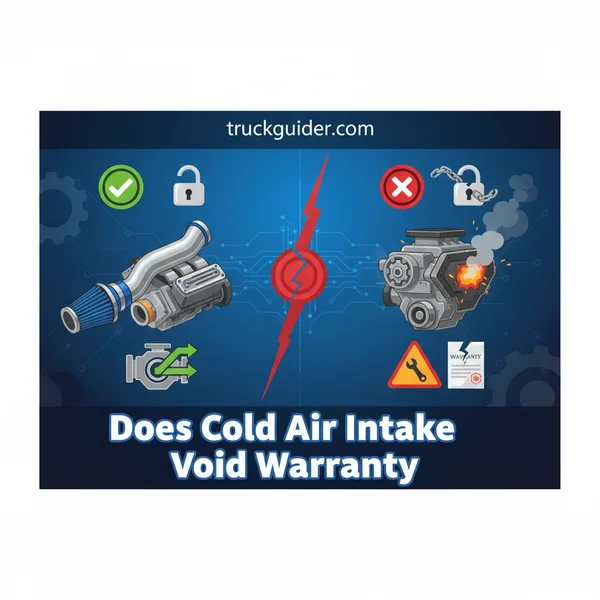
Understanding your rights is crucial because service advisors may occasionally try to use your modifications as an excuse to avoid expensive repairs. While they can deny a specific claim if they prove the intake caused a failure, the rest of your warranty remains fully intact. This protection ensures you can personalize your vehicle without losing the safety net provided by the manufacturer.
Understanding the Magnuson-Moss Warranty Act Protections
The Magnuson-Moss Warranty Act of 1975 is a federal law that governs consumer product warranties. Its primary goal is to ensure that warranties are fair and not used to create a monopoly on parts and services. For car owners, this means a dealership cannot force you to use only original equipment manufacturer (OEM) parts to maintain your coverage. This law provides the legal framework that allows you to install a cold air intake without losing your bumper-to-bumper protection.
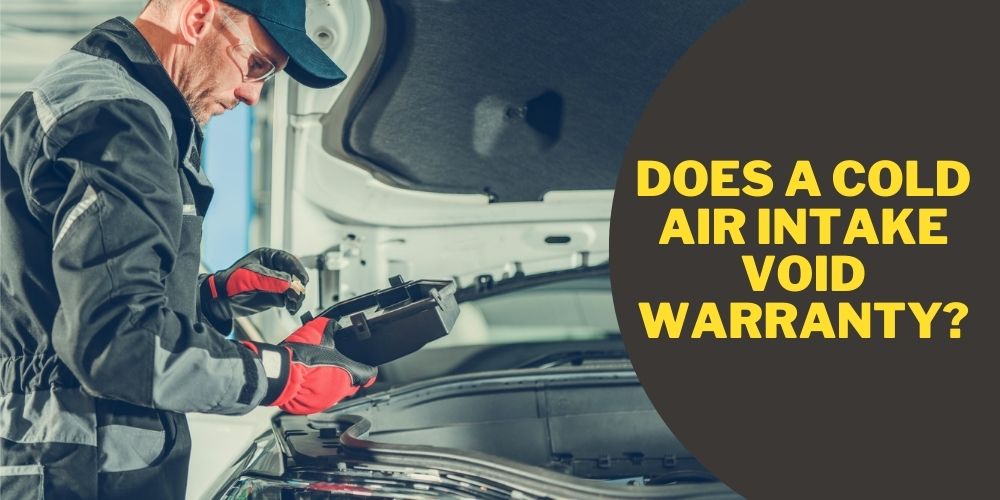
Your Legal Shield Against Dealership Pushback
The law was designed to prevent “tie-in sales” provisions. In the past, manufacturers tried to claim that using any non-brand part would instantly terminate the warranty contract. The Magnuson-Moss Act made this practice illegal. If you walk into a dealership with a cold air intake, the service department cannot legally tell you that your powertrain warranty is “gone.” They are required by law to honor the warranty for every component that has not been negatively impacted by your modification.
- The 1975 Federal Mandate: This act covers all consumer products, including vehicles, ensuring that aftermarket parts don’t automatically trigger a total warranty loss.
- Consumer Rights: You have the right to use any aftermarket part you choose as long as it does not cause a direct failure of a warranted component.
- FTC Enforcement: The Federal Trade Commission (FTC) oversees these regulations and has repeatedly warned manufacturers against implying that aftermarket parts void warranties.
The Burden of Proof is on the Manufacturer
One of the most important aspects of the Magnuson-Moss Act is the “burden of proof.” If a dealership wants to deny a warranty claim, they cannot simply point at your cold air intake and say “no.” Legally, the burden of proof rests entirely on the manufacturer or the dealer. They must demonstrate, through clear evidence, that the specific aftermarket intake you installed was the direct cause of the mechanical failure you are trying to get fixed.
For example, if your power window motor fails, the dealer cannot blame your intake. There is no logical connection between the air going into your engine and the electronics in your door. To deny a claim, they would have to provide a technical explanation of how the intake led to the specific damage. If they cannot prove that connection, they are legally obligated to perform the repair under warranty.
The Difference Between a Denied Claim and a Voided Warranty
Recommended Best Deal Products


It is vital to distinguish between a “denied claim” and a “voided warranty,” as these terms are often confused by both drivers and service writers. A voided warranty means the entire contract is nullified, which is almost impossible to do legally with just a bolt-on part like an intake. A denied claim is much more common and happens on a case-by-case basis. Understanding this distinction helps you stand your ground if a dealership tries to give you the cold shoulder during a service visit.
Why a “Voided” Warranty is Extremely Rare
To truly void a vehicle’s entire warranty, a manufacturer usually has to prove extreme circumstances, such as a salvage title, odometer tampering, or using the vehicle for professional racing. Installing a cold air intake is considered a minor modification. Even if a dealer successfully proves that your intake caused an engine issue, your warranty still covers the transmission, the electronics, the suspension, and the air conditioning. The warranty is a massive contract covering thousands of parts; one modification does not sink the entire ship.
- Bumper-to-Bumper Protection: This covers almost everything from the radio to the door locks. An intake has no impact on these systems.
- Powertrain Warranty: This covers the engine and transmission. While this is the most likely area for a claim dispute, the intake only affects specific engine parameters.
- Partial Coverage: Even if one engine sensor is blamed on the intake, the rest of the engine’s internal components remain under warranty unless they were also affected.
Identifying the Causal Link
The “causal link” is the legal bridge between your modification and a mechanical failure. In the eyes of the law, a warranty claim can only be denied if there is a direct line of causality. If you install an intake and your mass airflow (MAF) sensor fails because of excess oil from a reusable filter, the dealer has a strong case to deny the claim for that specific sensor. However, they still cannot deny a claim for a leaking radiator or a faulty alternator.
Practical examples of causal links include:

Audible — Listen Free for 30 Days
One free credit a month and thousands of titles included.
Listen Free for 30 Days- Hydro-locking: If your intake is positioned so low that it sucks in water during a rainstorm, causing engine failure, the manufacturer will deny the claim because the intake was the direct cause.
- Lean Conditions: If a poorly designed intake changes the air-to-fuel ratio significantly enough to cause engine knocking or piston damage, the dealer may deny the engine repair.
- Unrelated Failures: If your transmission starts slipping, the dealer cannot blame the intake because the intake does not control the mechanical gears of the transmission.
By focusing on the causal link, you can narrow the conversation with a service manager. Ask them specifically: “Can you provide a technical explanation of how this intake caused this specific part to fail?” If they can’t, they generally have to honor the warranty.
The Burden of Proof: Why the Dealer Must Prove Causation
A common misconception in the automotive world is that the moment a technician spots an aftermarket cold air intake (CAI), your entire factory warranty is instantly null and void. Legally, this is simply not true. Under federal law, specifically the Magnuson-Moss Warranty Act, a manufacturer or dealer cannot deny warranty coverage unless they can demonstrate that the aftermarket part directly caused the specific failure in question.
The Direct Link Requirement
The dealer carries the “burden of proof.” This means they must establish a clear, causal link between your modification and the mechanical issue. For example, if your power window motor or air conditioning compressor fails, it is virtually impossible for a dealer to argue that a cold air intake caused it. These systems are unrelated. However, if your Mass Air Flow (MAF) sensor fails because it was coated in oil from an over-oiled intake filter, the dealer has a much stronger legal case to deny that specific repair.
- Causation is Key: The failure must be a documented, direct result of the intake’s presence or performance.
- Denials are Isolated: A denied claim for an engine sensor does not “blackflag” the warranty for your suspension, transmission, or interior electronics.
- Written Explanation: You are entitled to a written explanation if a dealer refuses a claim based on an aftermarket modification.
Understanding “Reasonable Basis”
Dealerships need a “reasonable basis” to deny a claim; they cannot rely on vague assumptions or personal preferences against modifications. If you suspect a denial is being issued purely because the service department “doesn’t like” performance parts, you have the right to ask for a detailed technical report. This report should explain how the increased airflow, intake temperature changes, or physical design of your specific intake led to the component failure.
Expert Tips for Navigating Dealership Disputes and Documentation
Recommended Best Deal Products


Dealing with a stubborn service department can be frustrating, but being prepared makes all the difference. Knowing your rights is only half the battle; the other half is proving that you are a responsible vehicle owner who maintains their car correctly. High-quality documentation acts as your best defense when a warranty question arises.
Keep Your Service Records Organized
The best defense against a warranty denial is a meticulous paper trail. If the dealer tries to claim your cold air intake caused engine wear, showing that you have performed regular oil changes and followed the manufacturer’s maintenance schedule can debunk their claims of neglect. Always keep receipts for the intake itself, and if you installed it yourself, note the date and mileage in a logbook.
- Save All Receipts: This includes the purchase receipt for the intake and any cleaning kits or replacement filters you buy.
- Photographic Evidence: Take photos of the installation to show it was done securely and that all vacuum lines and sensors were properly reattached.
- Research “Mod-Friendly” Dealers: Some dealerships are enthusiasts themselves and are far less likely to nitpick aftermarket parts compared to others.
Communication Strategies for the Service Desk
When you drop your car off for service, be transparent but firm. You do not need to be aggressive, but subtly mentioning that you are aware of your rights under the Magnuson-Moss Act often signals to the service advisor that you are an informed customer. If you face a denial, stay calm and ask to speak with the Service Manager or the regional manufacturer representative. Often, a second set of eyes—or the threat of escalating the issue to a corporate level—will result in a more favorable outcome for the car owner.
Conclusion
In short, installing a cold air intake does not automatically void your warranty. While it may lead to a denied claim if the part is directly responsible for a mechanical failure, the law protects you from blanket denials. By choosing high-quality parts, ensuring proper installation, and keeping meticulous records, you can enjoy the performance benefits and enhanced engine sound of a CAI without losing your peace of mind. Your vehicle is an investment, and you have every right to enhance it as long as you do so responsibly.
Audible Premium Plus — Annual Membership
12 audiobook credits up front, plus the full Audible catalogue.
See Annual PlansNext Steps: First, check if your intake manufacturer offers their own “supplemental warranty” for added protection. Second, keep your original factory intake in your garage just in case you need to revert to stock for troubleshooting. Have you ever faced pushback from a dealer regarding your modifications? Let us know your experience in the comments below!
💬 Quick Questions & Answers
Will a cold air intake void my entire warranty?
No, it only allows the dealer to deny claims for damage directly caused by the intake itself.
Can a dealer refuse to fix my radio because of an intake?
No, because there is no causal link between an air intake and the electrical system for the radio.
Who has to prove the intake caused an engine problem?
The dealership or manufacturer legally carries the burden of proof to show the intake caused the failure.
Is the Magnuson-Moss Act a federal law?
Yes, it is a United States federal law that protects consumers from deceptive warranty practices.
Should I keep my original factory intake?
Yes, keeping the stock parts allows you to revert to factory settings if a major engine dispute arises.
❓ Frequently Asked Questions
What exactly does the Magnuson-Moss Warranty Act say about modifications?
The act prohibits manufacturers from conditioning a warranty on the use of any specific brand of part. They cannot legally void your warranty simply because you installed an aftermarket cold air intake unless they can demonstrate that the part caused a specific mechanical failure.
Can a dealer deny a transmission claim because of a cold air intake?
No, they cannot. There is no logical causal link between an air intake and a transmission failure. The dealer must show that the intake specifically caused the part in question to fail in order to deny that specific claim.
What happens if water enters my engine through the intake?
This is known as hydrolock. If the design of your aftermarket intake caused water to be sucked into the engine, the manufacturer is legally allowed to deny the warranty claim because the part was the direct cause of the damage.
How should I handle a service advisor who says my warranty is void?
Politely ask the service advisor to provide the denial in writing, including the specific technical evidence that proves the intake caused the failure. Mentioning your knowledge of the Magnuson-Moss Act often prompts them to reconsider a blanket denial.
Are there certain intakes that are ‘warranty-safe’?
Parts sold under a manufacturer’s performance brand (like TRD, Ford Performance, or Mopar) are often ‘factory-approved’ and may come with their own warranty that integrates seamlessly with your vehicle’s existing coverage.
Does a cold air intake trigger a check engine light that voids coverage?
An intake might trigger a Lean Code (P0171/P0174) if it alters airflow across the MAF sensor. While this doesn’t void the warranty, the dealer will likely charge you for the diagnostic time if the intake is found to be the source of the light.
![RAM 1500 Under Seat Storage: Best Fitment & Review Guide [2026]](https://truckguider.com/wp-content/uploads/2026/03/ram-1500-under-seat-storage-featured.webp)
![2 In 2 Out Muffler vs 2 Mufflers: Expert Review [2026]](https://truckguider.com/wp-content/uploads/2026/03/2-in-2-out-muffler-vs-2-mufflers-featured.webp)