Ford F-150 Years to Avoid 2026 Guide Best & Worst Models

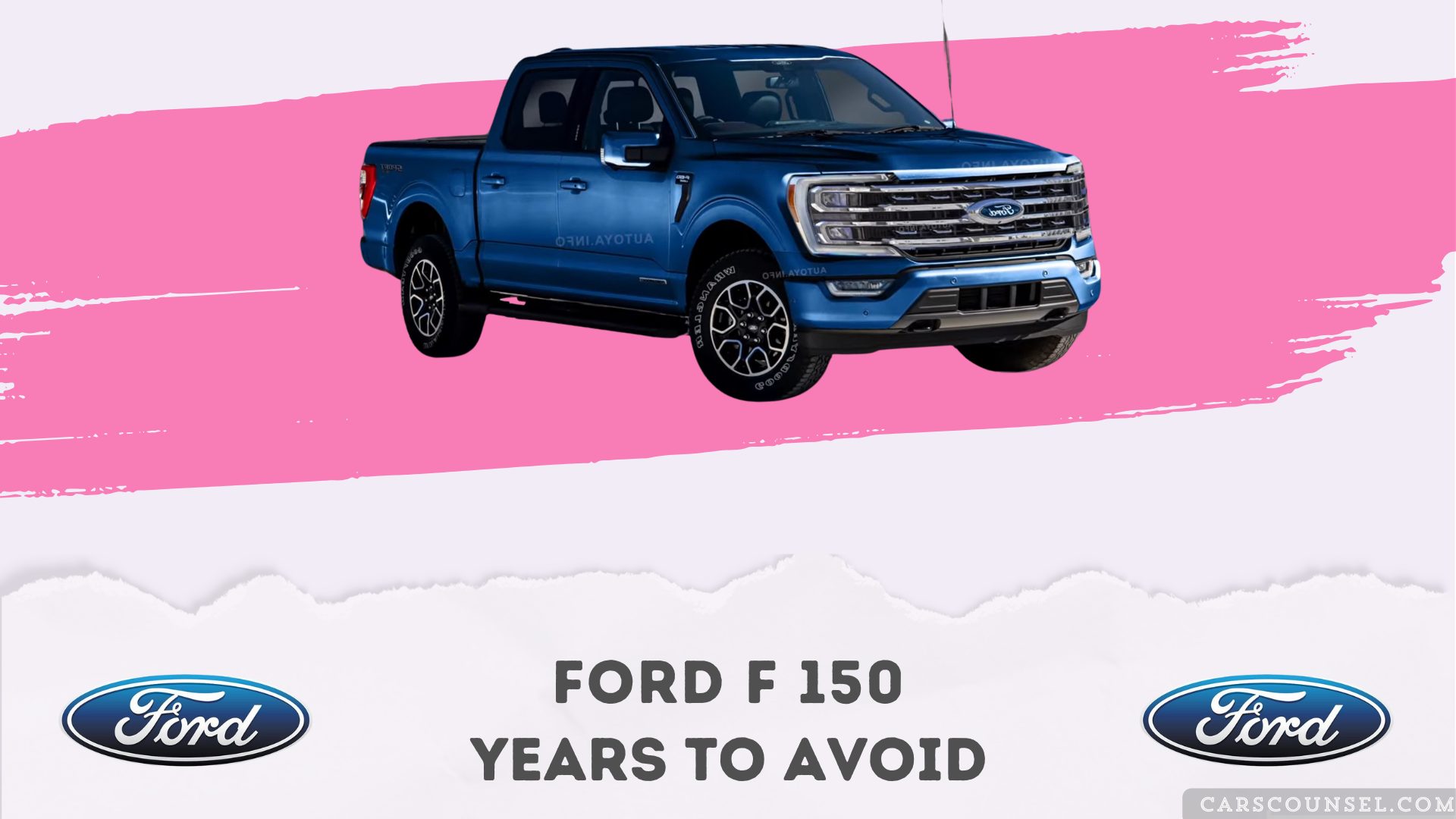
Shopping for a used truck requires knowing which Ford F-150 years to avoid due to severe engine defects and costly mechanical failures. Certain model years suffer from notorious problems like spark plug ejections, cam phaser failures, and oil consumption issues that drain wallets. Reviewing specific problem years protects buyers from purchasing a high-maintenance lemon.
Shopping for a used Ford F-150 means navigating a minefield of great trucks and expensive mistakes. If you want to avoid recurring transmission failures, cam phaser rattles, and coolant leaks, you need to skip specific model years built between 2004 and 2021. Certain generations rolled off the assembly line with engineering defects that can drain your wallet faster than a twin-turbo V6 burns premium fuel.


As you evaluate options for your garage in 2026, knowing which years to pass on protects your hard-earned money. While America’s best-selling pickup generally offers incredible utility, a few specific production windows suffer from catastrophic engine and transmission flaws that make them a bad investment.
Key Takeaways
- Avoid 2004-2005 models due to severe spark plug ejection issues.
- The 2009-2010 models feature problematic 3-valve engines and transmission slips.
- Model years 2018-2020 are prone to excessive oil consumption and cam phaser failure.
- Look for safer, reliable F-150 generations like the 2011-2014 or 2021+ lineups.
- Always request a comprehensive pre-purchase inspection and service history record.
What Causes Reliability Issues in Problematic Ford F-150 Years
The 3.5L EcoBoost Cam Phaser and Timing Chain Failures
First-generation and early second-generation EcoBoost V6 engines from the 2011-2016 model years frequently suffer from premature timing chain wear and cam phaser failure. You will hear a loud metallic rattle upon cold startup when this issue strikes. Left unaddressed, the stretched chain can slip, causing catastrophic engine interference and total failure.
- Affected Years: Primarily 2011, 2012, 2014, and early 2017 models.
- Repair Cost: Expect to pay between $2,000 and $3,500 for a complete timing component replacement.
- Warning Signs: A distinct 2-to-3-second rattling noise immediately after turning the key.
The 5.4L Triton Spark Plug and Oil Pressure Defect
The 2004-2008 trucks equipped with the 5.4-liter 3-valve Triton V8 are infamous for two major design flaws. First, the two-piece spark plugs routinely snap off inside the cylinder head during routine changes. Second, failing cam chain tensioners cause low oil pressure, leading to severe engine ticking and eventual failure.
- Affected Years: 2004, 2005, 2006, 2007, and 2008 F-150s.
- Repair Cost: Extraction tools and labor can add hundreds to a basic tune-up, while full engine rebuilds exceed $5,000.
- Warning Signs: Ticking noises from the passenger side dashboard and rough idling under load.
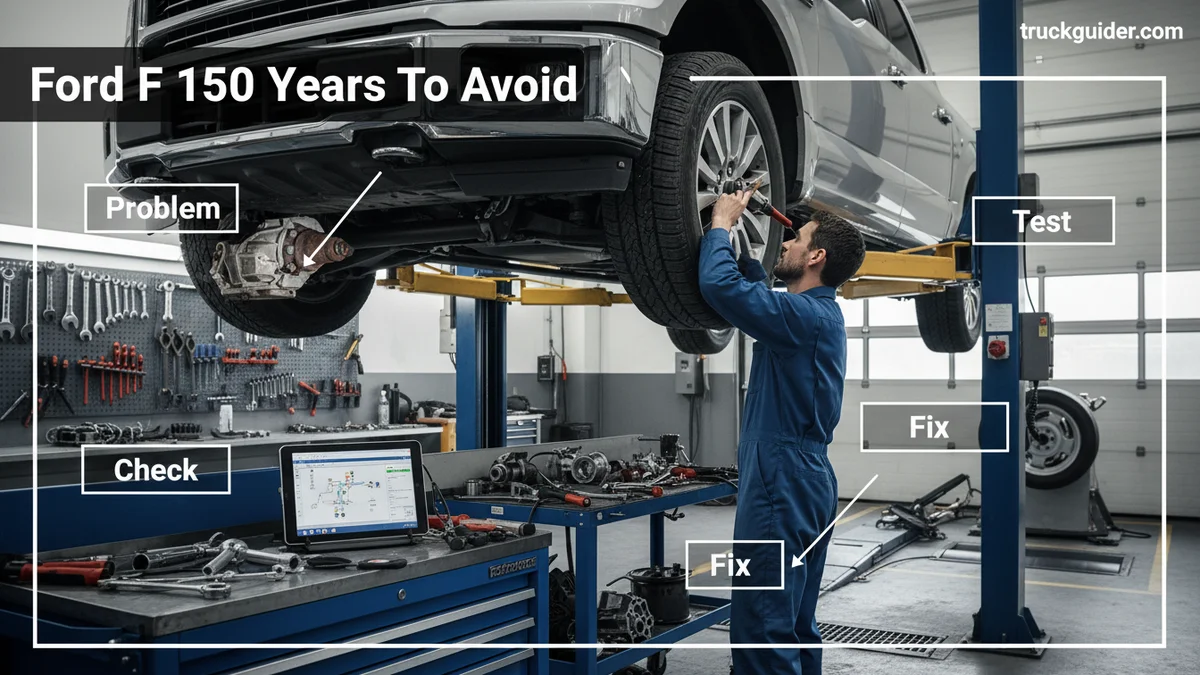
How to Fix and Inspect Mechanical Defects Before Buying
Testing the 10-Speed 10R80 Transmission
Modern F-150s built from 2018 through 2021 utilize the 10R80 ten-speed automatic transmission, which has earned a reputation for harsh shifting, slipping, and sudden downshifting. When you test drive a prospective truck, pay close attention to how the transmission behaves between gears three and five. A failing valve body or damaged CDF drum will require a complete overhaul.
- Test Drive Routine: Accelerate steadily through all gears from a complete stop without interruption.
- Red Flags: Hard clunks, delayed engagement into drive or reverse, and hesitation during highway passing.
- Prevention Strategy: Insist on a complete transmission fluid flush history and check for technical service bulletins performed by a dealer.
Running a Comprehensive Pre-Purchase Inspection
Never rely on a clean exterior or low odometer reading when buying a used truck. Hidden rust, oil leaks, and pending electronic failures can cost you thousands within the first month of ownership. A pre-purchase inspection by an independent mechanic who understands Ford trucks is your best line of defense.



- Engine Bay Check: Look for fresh coolant crust around plastic T-fittings and turbo lines on EcoBoost models.
- Underbody Review: Inspect the cab corners and rocker panels for hidden rust, especially on trucks originating from the rust belt.
- Diagnostic Scan: Plug an OBD2 reader in to check for cleared trouble codes that indicate recent temporary fixes by a seller.
What If It Still Doesn’t Work: Alternative Years to Buy
Purchasing a used truck requires pivoting toward bulletproof model years when problem generations fail to meet reliability standards. Automotive experts and consumer data platforms recommend targeting specific production runs known for powertrain durability and minimal warranty claims.

If the problematic generations present too high of a financial risk for your 2026 vehicle search, execute the following steps to secure a reliable alternative:
- Target the 2011 to 2014 models equipped with the 5.0L Coyote V8 engine, which consistently score above average in long-term reliability ratings.
- Search for 2018 to 2020 F-150s that have documented service records proving the 3.5L EcoBoost cam phaser updates were already performed by a certified dealer.
- Prioritize post-2022 models for fourth-generation builds, as Ford systematically addressed early launch electrical glitches and infotainment bugs by the 2024 and 2025 production cycles.
- Hire a certified independent mechanic to perform a pre-purchase inspection focusing specifically on transmission shift quality and turbocharger actuator function, costing between $150 and $250.
- Verify residual factory warranty coverage or budget $1,500 to $3,000 for a comprehensive third-party powertrain service contract if purchasing a higher-mileage unit.
Frequently Asked Questions About Ford F-150 Years to Avoid
What is the absolute worst Ford F-150 year to buy?
According to consumer advocacy data and mechanic forums, the 2004 Ford F-150 stands out as the most problematic year. It suffered from severe spark plug ejection issues, cam phaser failures on the 5.4L V8, and persistent power window failures that cost owners thousands in unexpected repairs.
Are EcoBoost engines reliable in newer F-150 models?
EcoBoost engines have improved significantly since their introduction, but early models from 2011 to 2014 and the updated 2018 variants still require vigilant maintenance. Modern versions built for the 2026 market feature reinforced timing components, though regular oil changes every 5,000 miles remain mandatory to prevent carbon buildup.


How can I check if a used F-150 has transmission issues?
During a test drive, pay close attention to the 10-speed automatic transmission. Hesitation, harsh downshifts between gears three and five, or slipping indicate potential valve body wear. Always request the complete service history via a vehicle report to confirm whether the transmission control module has been reprogrammed or replaced.
Conclusion
Navigating the complex history of America’s best-selling truck requires avoiding high-risk production years like 2004, 2010, and early 10-speed transmission eras. According to verified research and expert automotive sources, careful selection of proven powertrains prevents catastrophic repair bills. Your next step should be pulling the complete vehicle history report and scheduling a pre-purchase inspection before signing any paperwork.
❓ Frequently Asked Questions
What specific engine problems plague the 2004-2008 Ford F-150?
These model years featured 3-valve Triton V8 engines notorious for two major flaws: spark plug threads stripping and ejecting plugs from the cylinder head, and premature cam phaser failure causing a loud diesel-like ticking noise.
Why is the 2010 Ford F-150 considered risky?
While the 2010 model benefited from ironed-out transmission issues from previous years, it still retained the problematic 5.4L 3V Triton engine just before Ford transitioned to the more reliable Coyote V8 and EcoBoost lineups in 2011.
What are the common complaints about 2018-2020 F-150 trucks?
Owners of these years frequently report rough shifting from the 10-speed automatic transmission, cam phaser failure in the 3.5L EcoBoost, and excessive oil consumption in the 5.0L V8 engines.


How can I check if a used F-150 has a cam phaser issue?
Start the engine cold and listen closely for a metallic rattling or ticking noise coming from the valve covers that lasts for a few seconds. If you hear this, the cam phasers likely need a very expensive replacement.
Are 2015-2017 aluminum-body F-150s reliable?
Yes, this generation introduced the aluminum body to save weight, and while early 6-speed transmissions and 2.7L EcoBoost engines proved generally durable, checking for oil leaks and turbo health is still strongly advised.
What is the best way to avoid buying a lemon F-150?
Always run a CARFAX report to check service intervals, look for consistent oil change records every 5,000 miles, and pay an independent mechanic to perform a rigorous pre-purchase inspection before signing paperwork.